Best AI Treatment Tracking Platforms for Dental Practices in 2026
Modern dental practices are turning to AI-driven treatment tracking to streamline diagnostics, documentation, patient engagement, and compliance—while keeping clinicians focused on care. An AI treatment tracking platform is software that uses artificial intelligence to automate and improve the process of monitoring patient treatment progress, case acceptance, and clinical workflows. From radiograph intelligence to voice-activated charting and remote monitoring, today’s tools address access gaps, documentation burden, and variable outcomes. Studies and vendor reports point to meaningful gains, including faster documentation and caries detection sensitivity reported up to 91% in leading radiograph AI, helping clinicians present cases more objectively and efficiently, with fewer missed steps throughout the journey (see ScanoAI’s 2026 roundup). This guide compares top tools—and showcases Toothfairy’s clinically led approach—to help clinics select the best AI-driven treatment tracking system for dental clinics in 2026.
Toothfairy AI Treatment Tracking
Toothfairy’s platform blends patented AI with continuous remote dentist supervision to track treatment safely and transparently for UK patients. The workflow connects app-based photo uploads with on-demand consultations, digital prescriptions, and supervised follow-ups, so patients receive timely guidance without unnecessary travel or prolonged waits. This model helps bridge postcode-based disparities, long NHS waitlists, and inconsistent engagement by automating reminders, triaging concerns, and escalating to a clinician when needed.
What stands out is clinical governance: dentist-led oversight, NHS-minded validation, GDPR-aligned data handling, and plain-language progress updates that build trust. For time-pressed adults, the experience removes friction—upload, review, and next steps are orchestrated without chasing calls or paperwork. Practices benefit from structured records, progress flags, and adherence nudges that reduce no-shows and missed recalls. For a deeper look at the workflow and safety guardrails, see Toothfairy’s AI Track feature overview.
Patient feedback highlights faster access to advice and clearer expectations; paired with transparent pricing and evidence-based care pathways, this keeps convenience aligned with safety and outcomes.
scanO Engage
Patient engagement AI refers to technology that automates follow-ups and customises communication to drive higher case acceptance. scanO Engage focuses on chairside case presentation and behavioural analytics—turning clinical findings into patient-friendly visuals and automating tailored post-visit nudges. Key capabilities include automated follow-up, behaviour/history analysis, personalised education media, and recall tracking to keep patients on plan.
Pros:
- Higher treatment acceptance via clearer visuals and consistent post-visit messaging.
- Faster explanations that shorten chair time while improving understanding.
- Data-driven recall tracking to reduce attrition.
Cons:
- Dependent on clean PMS/CRM integration for accurate personalization.
- Staff may need brief onboarding to standardize new engagement workflows.
Reports in ScanoAI’s 2026 roundup describe measurable lifts in acceptance and reduced explanation time when visual decision support is introduced in the operatory.
Overjet
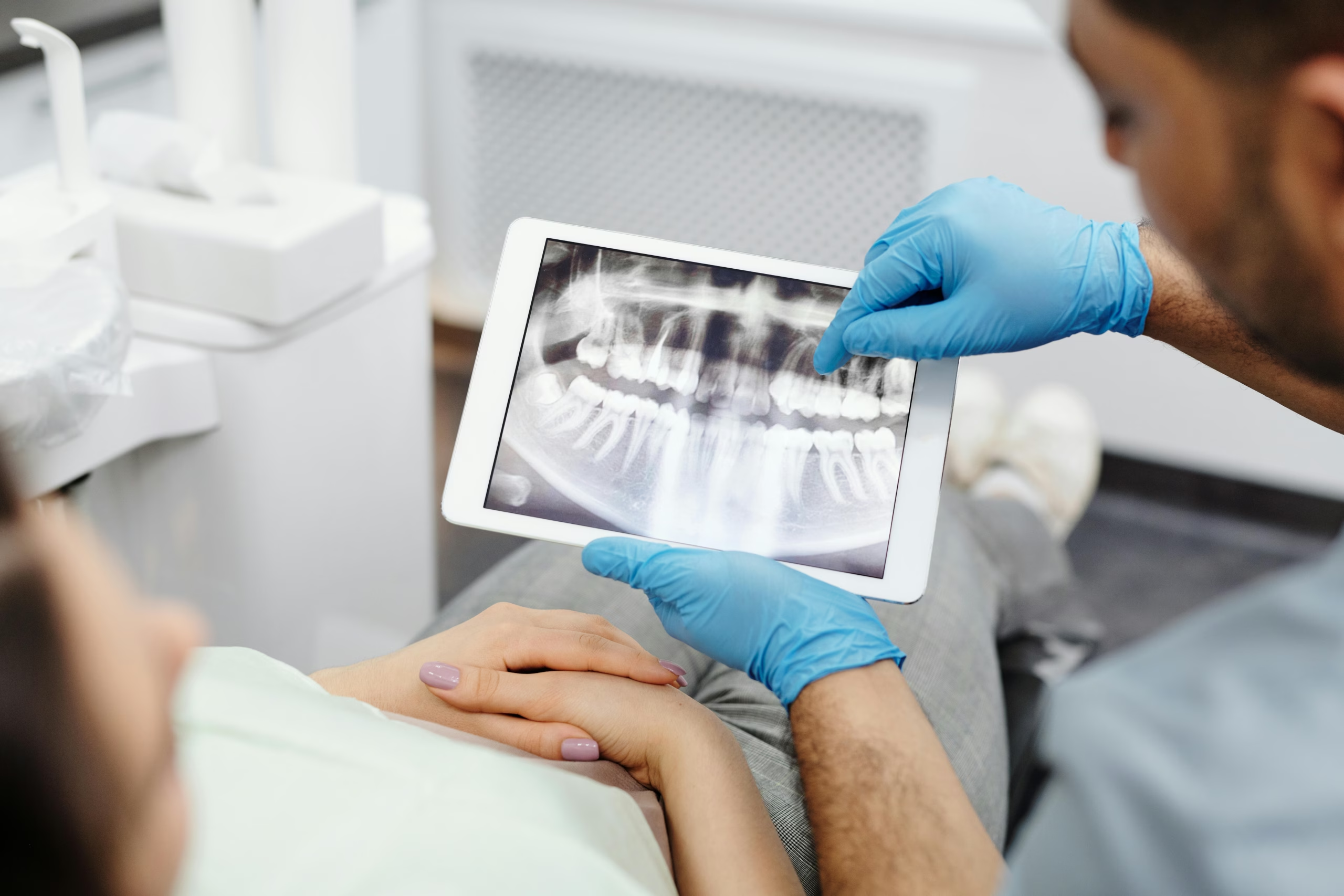
Radiograph AI is software that scans and interprets dental X-rays to support decisions such as caries detection and bone level measurement. Overjet is widely recognized for radiograph intelligence, providing quantified bone-level measurements and visual overlays that support restorative and periodontal diagnoses. Its patient-friendly visuals shorten chairside explanations and create more objective case presentations that can support both internal discussions and payer documentation. Overjet’s approach and clinical applications are summarized in Overjet’s treatment planning guide.
Pros:
- FDA-cleared support for objective findings that aid diagnosis and documentation.
- Patient-ready visuals that improve comprehension and acceptance.
- Potential to standardize imaging workflows across providers and sites.
Limitations:
- May require minor imaging workflow adjustments.
- Payer negotiation and documentation standards still vary by market.
DentalMonitoring
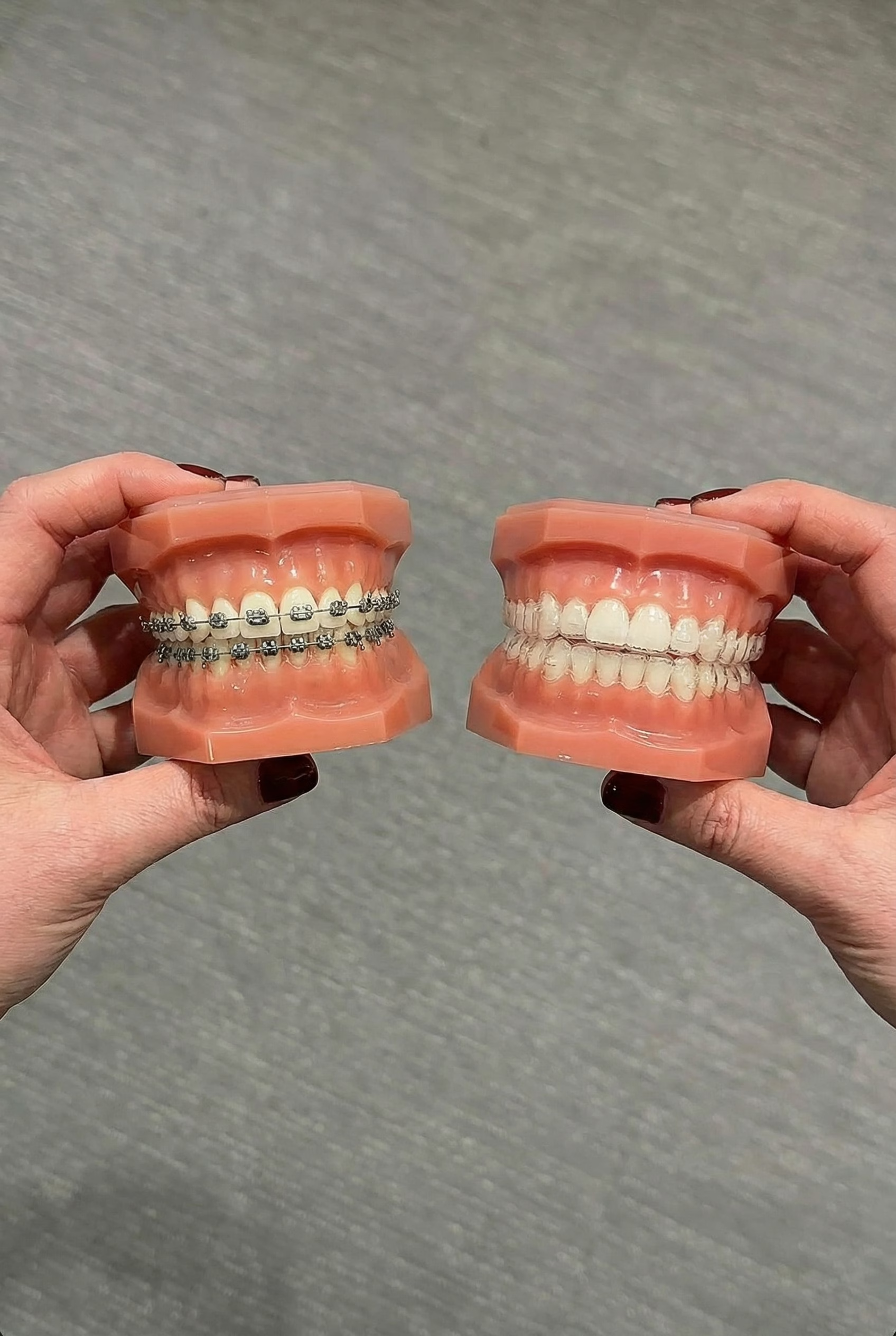
Remote dental monitoring uses AI to analyse patient-uploaded photographs to track tooth movement and appliance fit between visits. DentalMonitoring is optimised for orthodontic and aligner programmes, enabling fewer in-person review appointments while maintaining close supervision. Practices can scale aligner caseloads without proportionally increasing chair time.
Pros:
- Fewer routine visits and targeted in-person reviews.
- Scalable oversight for digital-first aligner programmes.
Cons:
- Depends on patient compliance with photo submissions.
- Teams must adapt scheduling and escalation protocols for remote flags.
ScanoAI’s 2026 review notes a strong fit for aligner-heavy clinics seeking efficiency without compromising outcomes.
Denti.AI
An AI dental scribe transcribes, structures, and organises clinical notes and perio charts via voice commands. Denti.AI packages voice-first clinical documentation with Voice Perio charting; public bundle pricing is noted at £399/month for Scribe + Voice Perio with stated HIPAA compliance in Twofold’s 2026 review of AI for dental notes.
Why it matters: automated, structured documentation reduces admin time, lowers the risk of missed records, and standardises charting quality across providers. Implementation is typically straightforward, with integrations into common practice software and minimal disruption beyond light microphone and template setup.
DentalBee
DentalBee positions itself as a cost-transparent communications and compliance hub with workflow automation. Published pricing is listed at £129 per office per month, with HIPAA-focused marketing and business associate agreement (BAA) availability referenced in the same 2026 review. For smaller offices, the value proposition is clear: affordable automation for follow-up scheduling, centralised communications, and documented compliance.
Strengths:
- Transparent, low per-office pricing.
- Practical automation for reminders and follow-ups.
Limitations:
- Feature depth may be lighter than enterprise platforms.
- Reliance on defined templates may require customisation to local policies.
Bola AI
Voice charting AI enables hands-free record entry and period tracking via natural speech. Bola AI emphasises high-throughput perio charting, BAA support, and integrations—including a Dentrix Voice partnership cited in the 2026 notes review—so that hygienists and dentists can record findings quickly without compromising ergonomics.
Where it helps:
- Streamlines perio measurements and clinical narration.
- Reduces back-and-forth between keyboard and patient.
- Requires clear consent configuration and mic etiquette for accuracy.
Kiroku
Template-driven clinical notes use structured forms and smart prompts to speed documentation and align with regulatory requirements. Kiroku focuses on customizable templates, guidance for compliance (HIPAA/GDPR), and practical help resources surfaced in the 2026 documentation tools overview. It’s ideal for teams who prefer structured inputs to a blank page.
Pros:
- Reduces “blank-page” time and variability in notes.
- Supports audit-ready documentation.
Cons:
- Less free-form; providers seeking ambient voice capture may prefer a scribe.
Adit
Adit brings AI to call intelligence, recall, and after-hours scheduling. Its system listens to calls for missed booking opportunities, automates outreach to rebook, and can score staff performance to highlight training needs. After hours, an AI Agent can answer common questions and secure appointments, helping reduce no-shows and leakage to competitors. For capabilities and positioning across practice software, see Adit’s 2026 software list.
How to Choose the Best AI Treatment Tracking Platform for Your Dental Practice
Use this quick comparison to match tools with your goals, integrations, and compliance needs.
| Platform | Primary AI function | Indicative pricing | Best for | Key integrations | Compliance notes | |
| Toothfairy | Remote AI tracking with clinician oversight, patient app, digital Rx | Transparent, patient-facing pricing; contact for partnerships | UK clinics seeking NHS-aligned remote monitoring and continuity | Mobile app, secure messaging, remote imaging workflows | GDPR/NHS-minded governance, clinician oversight | |
| scanO Engage | Patient engagement AI (case presentation, follow-ups) | Varies by package | Boosting case acceptance and recalls | PMS/CRM, chairside displays | HIPAA/BAA expected; confirm vendor docs | |
| Overjet | Radiograph intelligence (caries, bone levels) | Contact vendor | Standardising imaging and case presentation | Imaging suites, PMS, payer portals | FDA-cleared modules; HIPAA/BAA | |
| DentalMonitoring | Remote photo-based ortho tracking | Contact vendor | Aligner-heavy ortho workflows | Patient app, imaging, PMS | HIPAA/BAA; GDPR for UK/EU | |
| Denti.AI | AI scribe + Voice Perio charting | £399/month (Scribe + Perio) | Documentation and perio efficiency | Major PMS, microphones | HIPAA claims; BAA | |
| DentalBee | Communications + compliance automation | £129/office/month | Small offices needing automation on a budget | PMS, messaging | HIPAA marketing; BAA available | |
| Bola AI | Voice-driven perio/charting | Contact vendor | High-throughput perio capture | PMS, Dentrix Voice | HIPAA/BAA; consent configs | |
| Kiroku | Template-driven notes | Published tiered pricing | Consistent, audit-ready notes | PMS, document storage | HIPAA/GDPR statements | |
| Adit | Call AI, recall, AI Agent scheduling | Contact vendor | Reducing no-shows and recovering bookings | Phones, scheduling, messaging | HIPAA/BAA; audit logs |
What to prioritise:
- Integration: look for open APIs and proven PMS/imaging interoperability.
- Privacy controls: HIPAA/BAA, GDPR alignment, role-based access, audit logs.
- Pricing transparency: clear tiers, BAAs included, and overage policies.
- Measurable KPIs: acceptance rate, chair time per patient, documentation time, and no-show rate.
Pilot plan (4–8 weeks):
- Baseline KPIs; 2) Limited-scope rollout; 3) Staff training and scripts; 4) Weekly adjustments; 5) Compare KPIs; 6) Go/no-go and scale.
Key Benefits of AI Treatment Tracking in Dentistry
- Improved diagnostic accuracy: leading radiograph AI reports caries detection sensitivity up to 91%, turning X-rays into clearer, quantified visuals (ScanoAI’s 2026 roundup).
- Faster radiograph review and objective case presentation that boosts patient understanding and acceptance.
- Workflow automation: voice-first notes and templates reduce documentation time per visit, as summarised across AI dental notes resources.
- Higher treatment acceptance and fewer no-shows with automated, personalised follow-ups and recall outreach (see Adit’s 2026 software list).
- Better compliance: structured notes, audit trails, and standardised imaging support payer and regulatory readiness.
- Enhanced patient communication: app-based updates, remote checks, and clear visuals improve confidence and continuity.
AI-driven treatment tracking means leveraging artificial intelligence to automatically monitor, document, and follow up on every stage of a dental patient’s journey.
Example before/after impact (typical ranges; verify locally):
- Acceptance rate: +5–20% with visual/radiograph AI plus automated follow-ups.
- Chair time: −5–10 minutes per case presentation with clearer visuals and scripts.
- Documentation time: −3–8 minutes per visit using voice or templates.
- No-shows: −10–30% with automated reminders and rebooking outreach.
Integration and Implementation Considerations for AI Platforms
- Systems fit: ensure seamless connections to your PMS, imaging stack, phones, and messaging. Favour vendors with open APIs and documented integrations.
- Compliance: confirm HIPAA/BAA, GDPR alignment, encryption in transit/at rest, role-based permissions, and audit logging; published pricing that includes BAAs reduces surprises.
- Onboarding: map current workflows, define success KPIs, and train staff with concise scripts. Pilot in one op or provider cohort, then scale with measured ROI.
- Data hygiene: standardise provider/fee codes and patient records before go-live to maximise AI accuracy and reporting fidelity.
- Change management: appoint a champion, schedule weekly stand-ups for the first month, and capture quick wins to build momentum.
Frequently Asked Questions about AI Treatment Tracking in Dental Practices
- What does an AI treatment tracking platform actually do?
It automates monitoring of treatment progress, documentation, and follow-ups, surfacing timely actions for both patients and clinicians. - Which platform is best for my dental office?
Match the tool to your top bottleneck—radiographs (Overjet), remote aligner checks (DentalMonitoring), documentation (Denti.AI/Bola/Kiroku), engagement (scanO), or end-to-end remote care (Toothfairy). - How accurate is radiograph AI?
Leading systems report high sensitivity for caries and quantified bone levels; verify performance and FDA clearances with your imaging mix. - Will AI really save time for dentists?
Yes—voice notes, templates, and automation consistently trim minutes per visit and standardise records, improving throughput and audit readiness. - Is AI dental software compliant with HIPAA/GDPR?
Reputable vendors offer BAAs, encryption, and audit logs; always review security documentation and map roles/permissions before launch. - How much does it cost?
Pricing varies: some publish transparent tiers (e.g., Denti.AI, DentalBee), while enterprise imaging and monitoring tools are typically quote-based. - How do we measure ROI?
Track baseline vs. pilot for acceptance rate, chair time, documentation time, and no-show percentage; expand only if KPIs improve. - Will this work for NHS-focused or mixed private practices?
Yes—prioritise platforms with strong governance and patient-friendly workflows; Toothfairy, for example, aligns remote oversight with NHS-minded validation.
Last updated on March 13, 2026

Toothfairy Care Team
Toothfairy, is the world's smartest dental app, that connects patients to a dentist for a range of issues, from emergencies, cosmetics, prescriptions to virtual exams.
Toothfairy Care Team
Toothfairy, is the world's smartest dental app, that connects patients to a dentist for a range of issues, from emergencies, cosmetics, prescriptions to virtual exams.