Can Clear Aligners Fix a Crossbite? A UK Guide
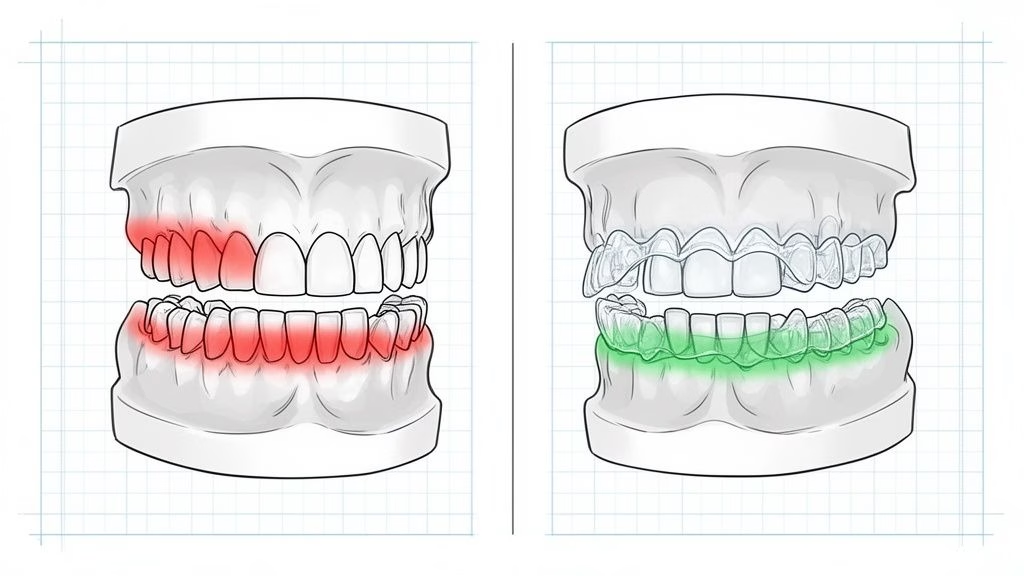
Yes, in many cases, clear aligners can be a fantastic way to fix a crossbite. The key is understanding the type and severity of your specific bite issue, but for a lot of people with mild to moderate crossbites, these modern aligners offer a powerful—and very discreet—path to a healthier smile.
Getting to Grips with Crossbites
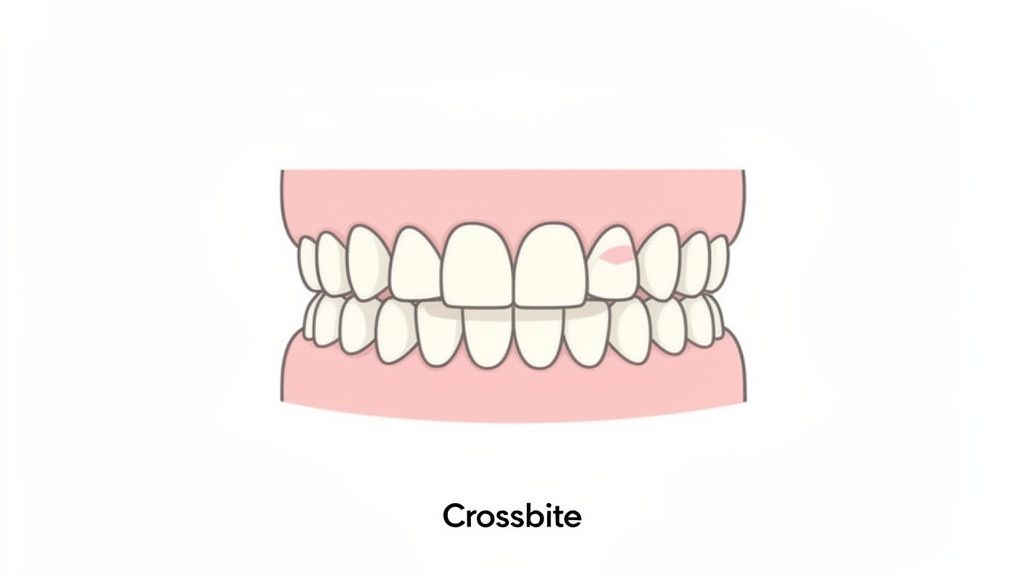
When you bite down, do you notice some of your top teeth slipping inside your bottom teeth instead of fitting neatly over them? That’s what we call a crossbite.
Think of your jaws like a box with a lid. Ideally, your upper arch (the lid) should sit just outside your lower arch (the box). When you have a crossbite, that lid doesn’t quite fit, causing one or more teeth to be out of sync.
This isn’t just about how your smile looks. A misaligned bite can cause real problems down the line, including premature tooth wear, receding gums, and even jaw pain. Fixing it is a big step towards protecting your long-term dental health.
The Different Types of Crossbite
Crossbites aren’t all the same, and knowing the difference helps your dentist plan the best way forward. They usually fall into two main categories based on where the issue is.
- Anterior Crossbite: This involves the front teeth. You’ll notice it when one or more of your upper front teeth sit behind your lower front teeth, almost like a localised underbite.
- Posterior Crossbite: This affects your back teeth. It’s when your upper molars or premolars bite down on the inside of the lower ones. This can happen on just one side of your mouth or on both.
A crossbite is more than just a cosmetic quirk—it’s a functional misalignment that affects how your teeth work together. Correcting it isn’t just about aesthetics; it’s an investment in your comfort and health.
A Modern Route to a Straighter Smile
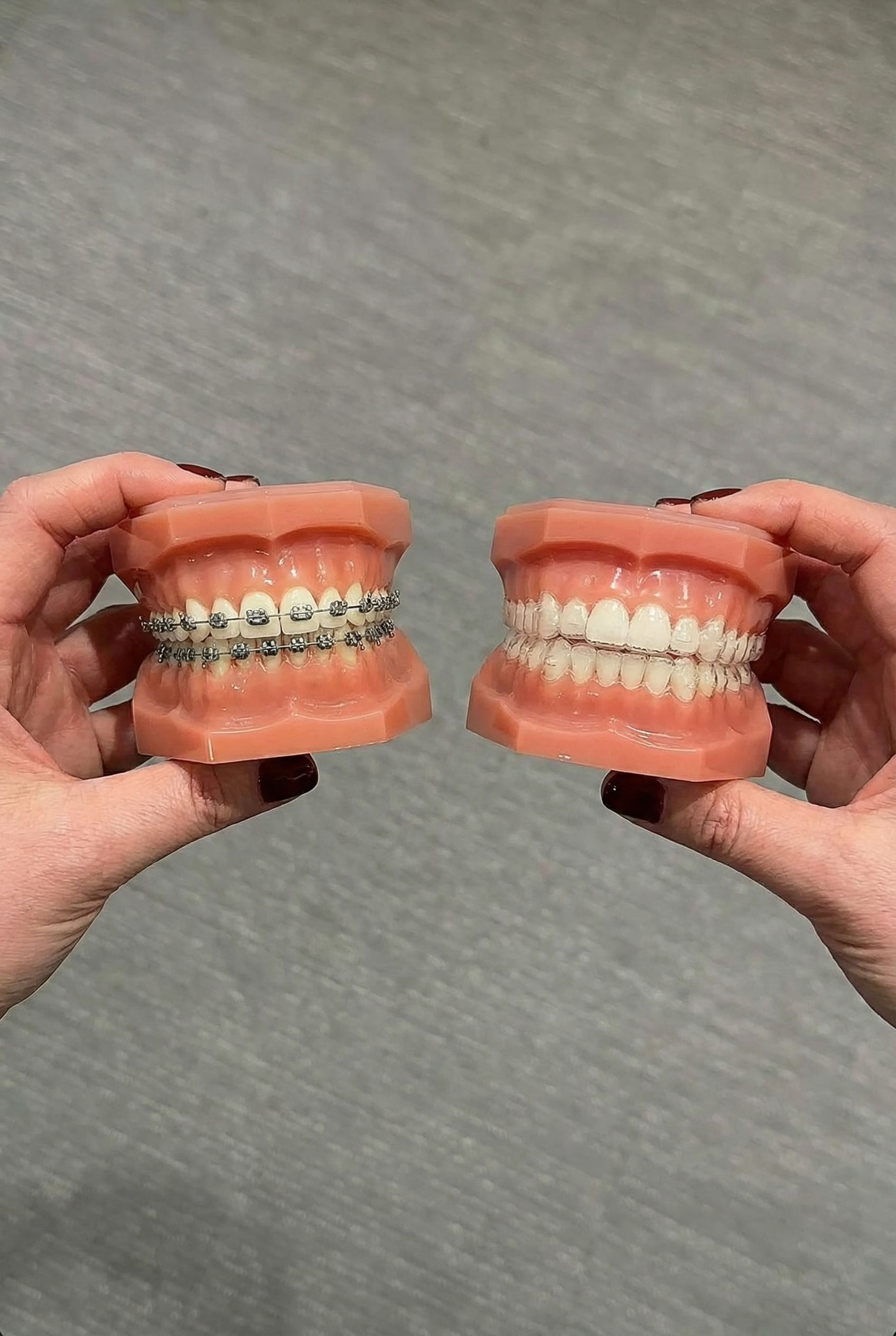
For a long time, the only real option for fixing a crossbite was traditional metal braces. They certainly work, but the fixed brackets and wires aren’t ideal for everyone, especially adults with busy professional and social lives.
Luckily, things have moved on. Clear aligner therapy gives you a much more flexible and subtle way to straighten your teeth. This approach uses a series of custom-made, clear plastic trays that gently and progressively shift your teeth into the right place.
Services like Toothfairy have brought this dentist-led treatment right into the 21st century, making it more accessible and affordable for people across the UK. Using a simple app, you can get professional orthodontic care and monitoring from home, fitting treatment seamlessly into your life without endless clinic appointments.
How Clear Aligner Technology Corrects Your Bite
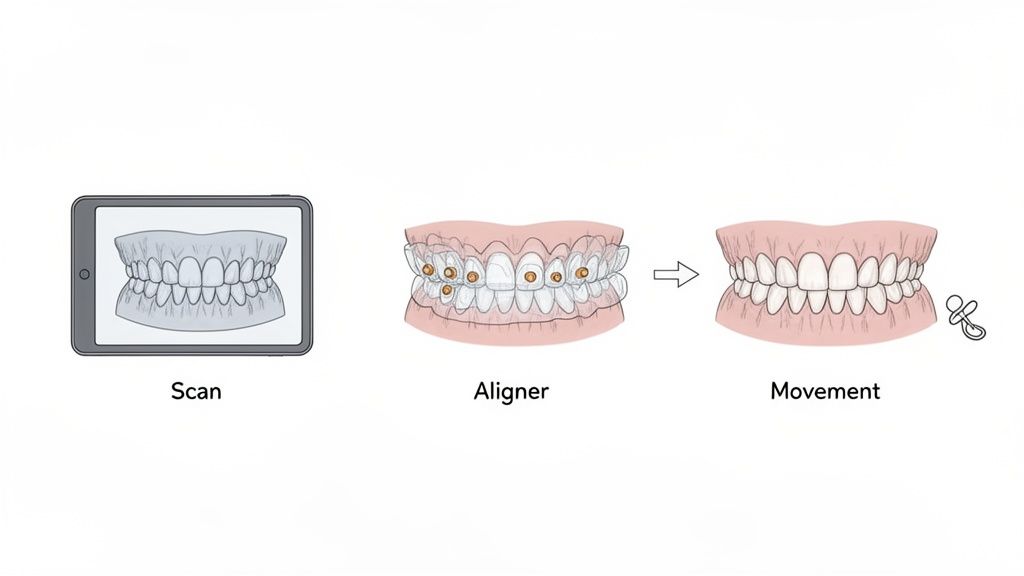
So, how does a simple-looking plastic tray actually fix something as complex as a crossbite? It’s a clever combination of sophisticated digital planning and the application of gentle, relentless pressure over time. The whole journey starts with a highly accurate 3D scan that creates a perfect digital map of your mouth.
This isn’t just a static picture. It’s the dynamic blueprint for your entire smile transformation. A qualified UK dentist—like the experts who oversee your care with Toothfairy—uses this digital model to plot every single tooth movement from start to finish. Each tiny shift is carefully planned to guide your teeth out of the crossbite and into their correct places.
From this master plan, a whole series of custom-fit aligners are made just for you. It helps to think of each aligner as a single step on a journey. You’ll wear one for about a week or two, and it will gently nudge specific teeth a fraction of a millimetre before you switch to the next one, which takes you a little further. This steady, targeted pressure is what makes the magic happen.
Adding Precision for Complex Movements
Fixing a crossbite often involves more than a simple push. Teeth might need to be twisted, tilted, or even moved vertically to get the bite just right. This is where a couple of extra bits of kit come in to give the aligners some added muscle.
-
Attachments: Ever seen little tooth-coloured bumps on someone’s teeth during their aligner treatment? Those are attachments. They’re tiny dots of dental composite temporarily bonded to your teeth, acting like handles for the aligner to grip. This gives the aligner the leverage it needs to perform more complex movements, like rotating a stubborn tooth.
-
Elastics: For some crossbites, small rubber bands are needed. These elastics hook onto tiny buttons on the upper and lower aligners, creating a gentle force that helps guide your jaw and improve how your top and bottom teeth meet.
These clever additions are what allow a discreet aligner to tackle some surprisingly tough orthodontic work.
The real genius of clear aligners is in the precision. Each tray is engineered to execute a very specific, pre-planned movement, and all those small steps add up to correct your crossbite.
The Science Behind the Smile
This kind of technology is a game-changer for many people in the UK. Crossbites are surprisingly common, with some research showing they can affect up to 53.6% of people with their adult teeth. For the mild to moderate cases—especially misalignments of 2mm or less—clear aligners are a fantastic solution.
With a service like Toothfairy, the entire process is overseen by qualified UK dentists. They keep a close eye on your progress remotely, making straightening your teeth a smarter, more affordable reality without you even having to leave home.
Are You a Good Candidate for Crossbite Correction?
Deciding on the right way to fix your bite starts with a simple truth: not all crossbites are created equal. Clear aligners are a fantastic tool, but they have their sweet spots. Understanding where your own smile fits in is the first step towards getting the right treatment.
Generally speaking, clear aligners really shine when dealing with dental crossbites. This is when the misalignment is all about the teeth – not the jawbone itself. Maybe a tooth or two just decided to pop up in the wrong place, creating that awkward bite. If that’s the case, there’s an excellent chance aligners can gently nudge them right back where they belong.
These situations are typically classed as mild to moderate, and they’re exactly what modern aligner technology is designed to handle.
When a Different Approach Is Needed
Now, let’s talk about the other side of the coin: skeletal crossbites. Here, the issue runs deeper than just the teeth. It’s about the very structure of your jaw. For instance, your upper jaw might be too narrow to fit properly over your lower jaw.
A good way to picture it is this: a dental crossbite is like having perfectly good books arranged messily on a shelf. A skeletal crossbite is like the shelf itself being too small.
For more severe skeletal issues, clear aligners on their own might not have enough power to do the job. These complex cases often require a different game plan, or at least some extra help alongside the aligners. Your orthodontist might suggest:
- Palatal Expanders: A device, most common in younger patients whose jaws are still growing, that gradually widens the upper jaw.
- Traditional Braces: The brackets and wires of fixed braces can sometimes provide the specific type of force needed to tackle tougher skeletal problems.
- Jaw Surgery: For adults with significant jaw discrepancies, corrective surgery (known as orthognathic surgery) may be necessary to physically reposition the bones.
To help clarify, here’s a quick breakdown of how well aligners typically work for different crossbite scenarios.
Clear Aligner Suitability for Different Crossbite Types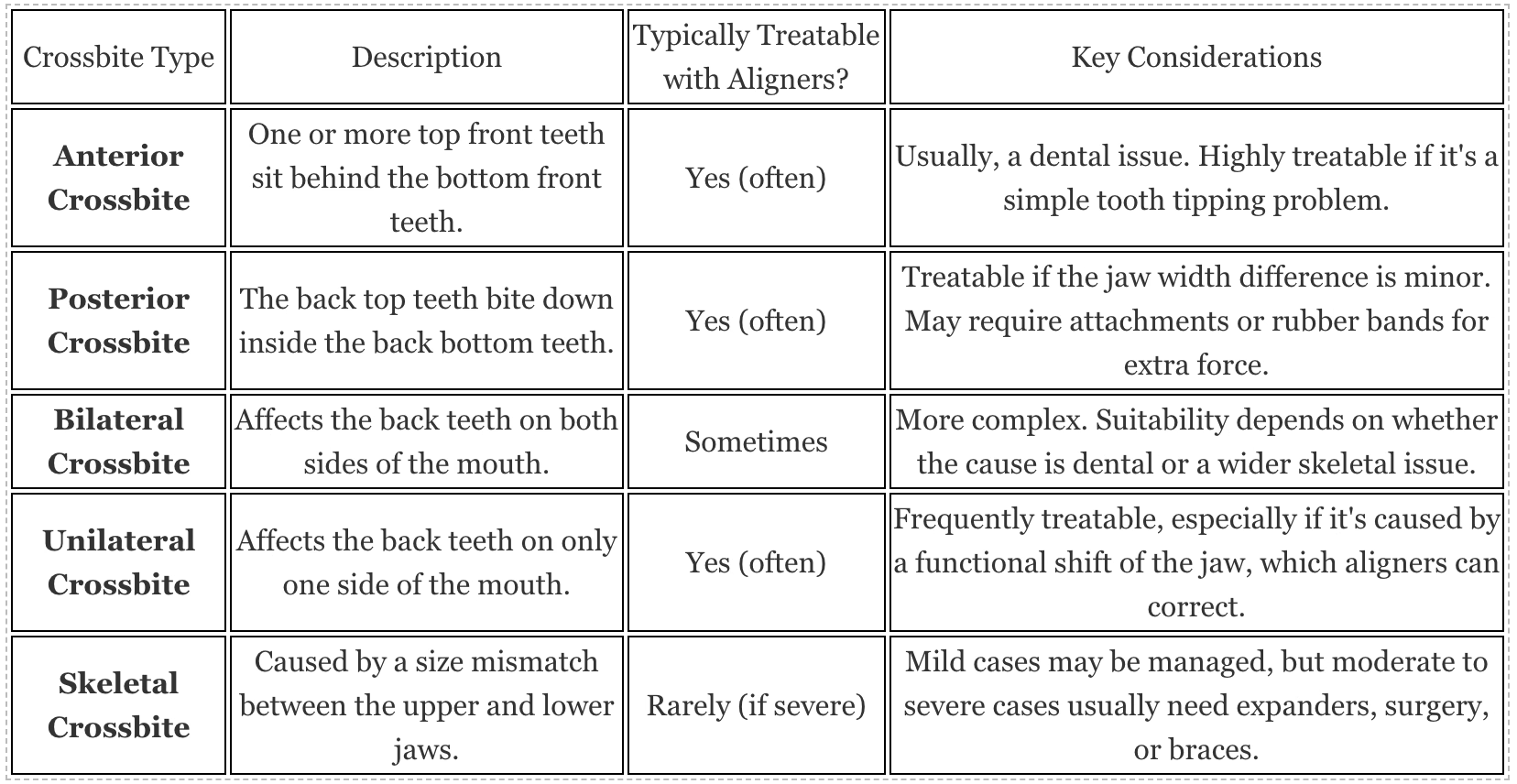
As you can see, the answer isn’t always a simple ‘yes’ or ‘no’. It truly depends on the underlying cause of the crossbite.
Finding Out Where You Stand
So, can a specific aligner brand fix your crossbite? Absolutely, but only if your misalignment fits the criteria. The problem is, trying to figure out whether your issue is dental or skeletal on your own is next to impossible. You really need a professional eye.
This is where getting expert advice is non-negotiable, but it doesn’t have to mean endless appointments and high costs.
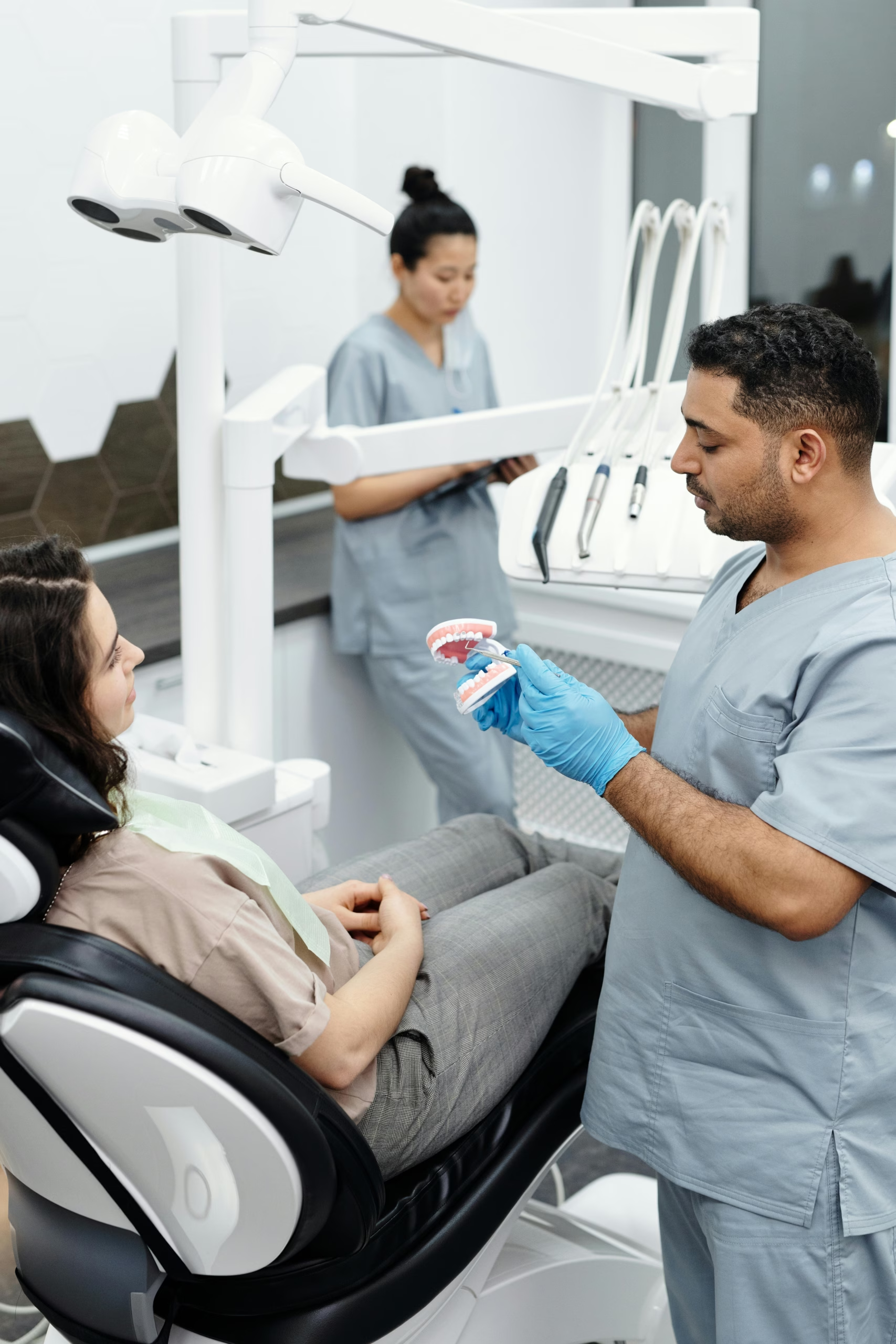
With Toothfairy, UK residents can get a clear answer without the usual hassle. Our simple digital consultation connects you with a registered dentist who can assess your smile right from your sofa. Just by using our app, you can find out if a smarter, more affordable aligner treatment is the right path for you on your journey to a healthier, straighter smile.
Your Crossbite Treatment Journey From Start to Finish
So, you’re thinking about fixing your crossbite with clear aligners. It’s a pretty straightforward process when you break it down, and understanding the steps involved can make the whole experience feel less daunting. It’s amazing how a series of simple, see-through trays can create such a significant change.
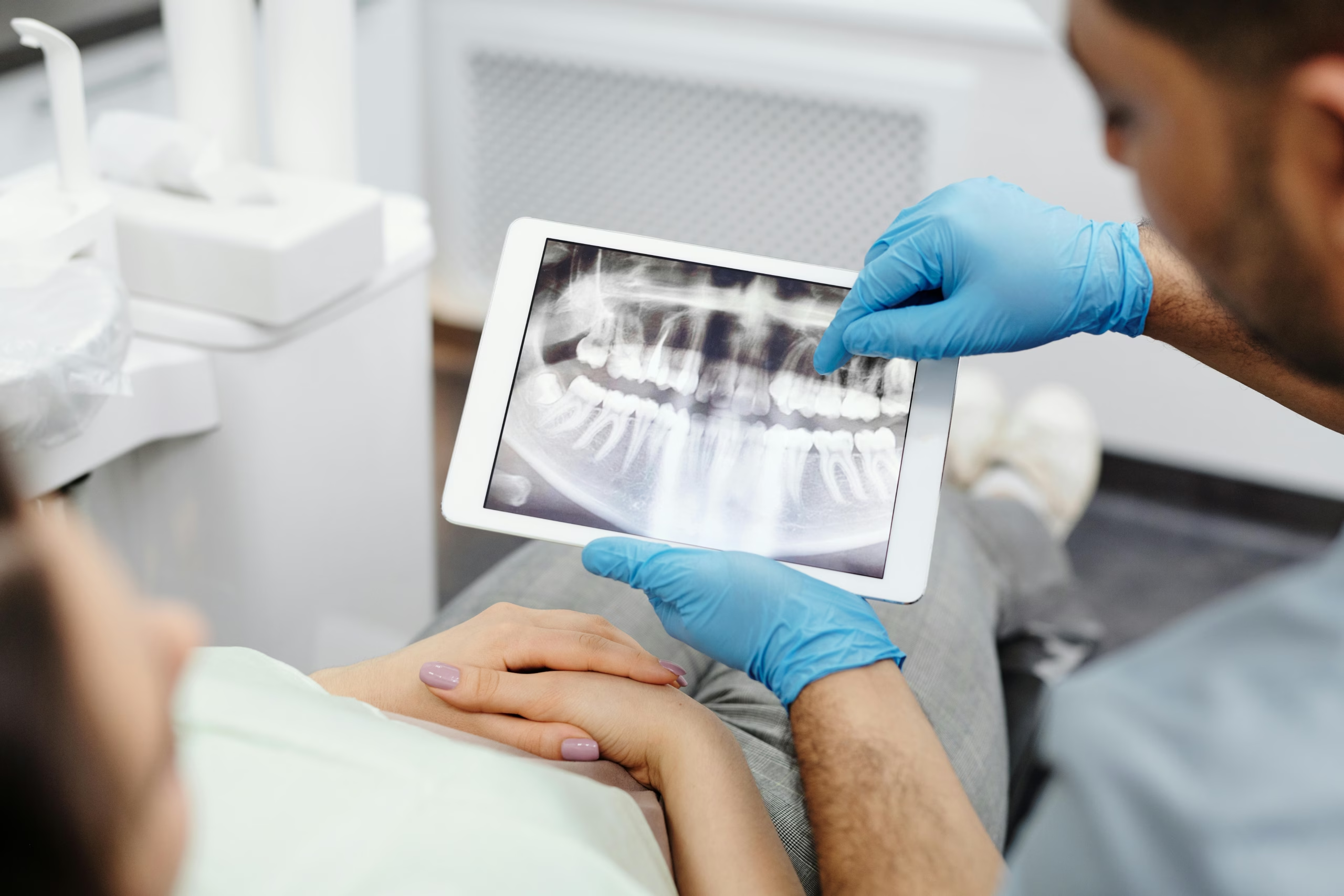
Everything kicks off with an initial consultation where we get a good look at what’s going on. This usually involves a high-tech 3D scan of your teeth. This scan creates a perfect digital replica of your mouth, giving a qualified dentist the blueprint they need to meticulously map out every single tooth movement required to sort out your crossbite. From this detailed plan, your set of custom-made aligners is produced.
The Milestones of Your Treatment
Once your aligners arrive, the real work begins. You’ll wear each set of trays for about a week or two before switching to the next one in the series. Every new aligner you pop in applies gentle but persistent pressure, nudging your teeth ever so slightly closer to their final, correct positions. This is the heart of the treatment, and consistency is absolutely key.
Honestly, the biggest factor in your success is you. For the aligners to do their job properly, you have to wear them for 20-22 hours every single day. It’s a bit like a partnership: the technology gives you the tools, but your dedication is what powers the journey. If you skimp on the wear time, you’ll only slow things down and might not get the result you were hoping for.
This simple decision tree can help you see if your crossbite might be a good candidate for clear aligner treatment.
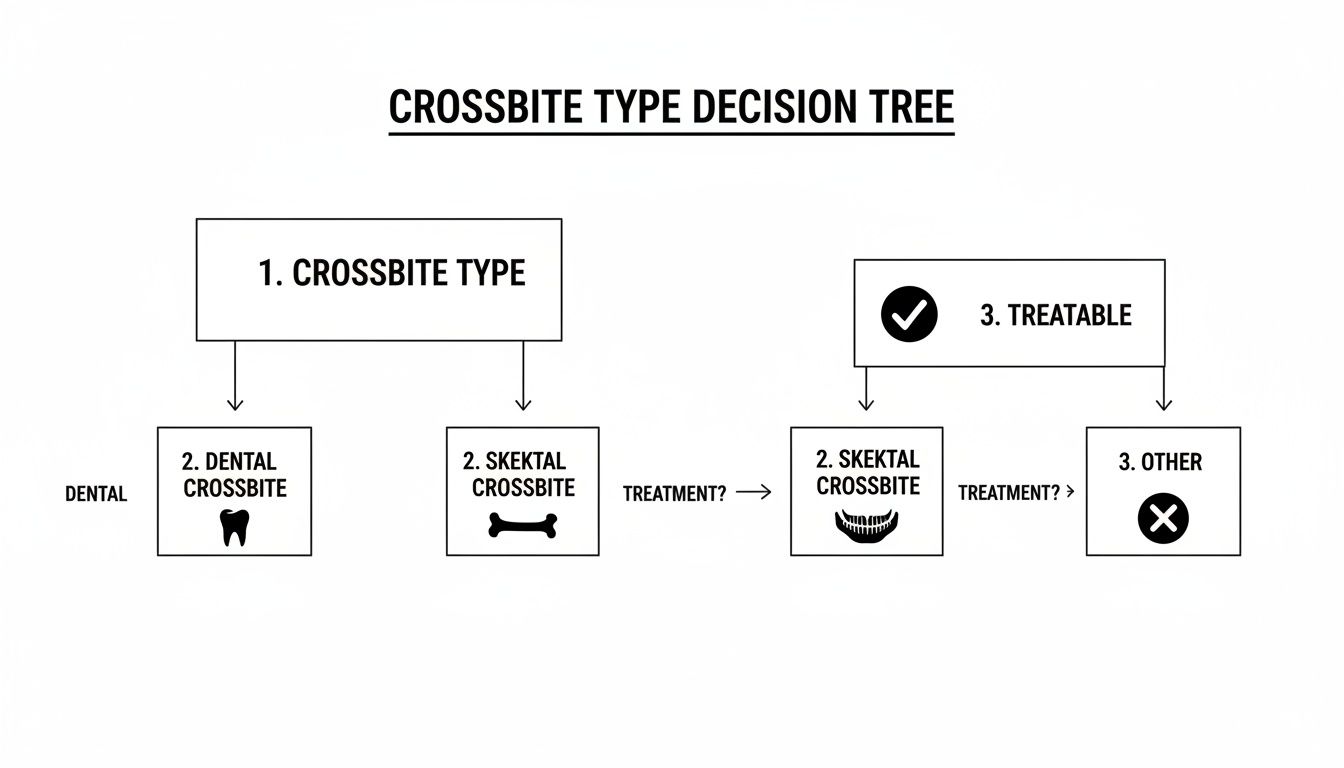
As you can see, clear aligners are often a fantastic fix for dental crossbites—where the problem is just the position of the teeth. If the issue is skeletal and rooted in the jawbone itself, aligners might not be the go-to solution on their own.
Protecting Your New Smile for Life
After you’ve worn your last aligner and your teeth are beautifully straight, you move into the final, and arguably most crucial, phase: retention. Your teeth are in their new homes, but the bone and ligaments that hold them in place need time to firm up. If you don’t use a retainer, your teeth have a natural tendency to wander back towards their old spots.
Wearing a retainer exactly as your dentist advises isn’t just a friendly suggestion—it’s the only way to protect the time and money you’ve invested. It ensures your newly aligned smile lasts a lifetime.
The success of your crossbite correction doesn’t end with the last aligner. Consistent retainer wear is the only way to lock in your results and prevent your teeth from relapsing.
On average, fixing a crossbite with clear aligners can take anywhere from 6 to 24 months, with most mild-to-moderate cases falling somewhere in the one-to-two-year range. With the current dental crisis in the UK, it’s no surprise that many adults are looking for affordable and accessible care. This is where Toothfairy comes in, offering professionally monitored clear aligner treatment for crossbites under 2mm. It’s a great option for busy people or anyone who struggles to get to a clinic. You can read more about crossbite treatment timelines to see how modern solutions are making a real difference.
Comparing Treatment Costs and Care in the UK
Let’s be honest, one of the first questions on anyone’s mind when considering dental work is, “How much is this going to cost?” If you’re looking to fix a crossbite in the UK, getting a clear picture of the financial side of things is essential before you commit. The price for orthodontic treatment can swing quite a bit, depending on the route you take and how much work your teeth need.
Go the traditional route with an in-clinic aligner brand, and you’re typically looking at a bill somewhere between £3,000 and £5,500. That figure isn’t just for the aligners; it’s covering countless in-person appointments, the high running costs of a physical clinic, and often, the brand name itself. It’s a proven method, but that price tag can unfortunately put it out of reach for many people.
A More Affordable Path to a Straighter Smile
This is exactly where teledentistry is changing the game. By reimagining how orthodontic care is delivered, services like Toothfairy offer the same quality, dentist-led treatment at a much friendlier price. We’ve simply stripped away the expensive overheads of a high-street practice and passed those savings straight to you.
What you get is a smarter, more cost-effective way to fix your crossbite. You’ll receive a full set of custom-made clear aligners, with your progress tracked by a qualified UK dentist every step of the way, but without the premium cost. It’s the professional care you need, delivered in a way that actually fits into a modern budget.
The high cost of in-clinic aligners isn’t always about the treatment itself—it’s often about the overheads. Teledentistry removes these barriers, making professional, dentist-led care more affordable than ever.
Navigating the UK Dental System
We all know that getting dental care in the UK can feel like an uphill battle. Between the long waiting lists for NHS orthodontics and the steep prices of private clinics, it’s easy to feel like you’re stuck with no good options. Trying to squeeze appointments into a busy work and family life can be the final straw, leading many to put off small issues until they become much bigger problems.
This is why an app-based approach feels like such a breath of fresh air. With Toothfairy, you can get started immediately. Forget waiting lists or taking time off work for check-ups. Our platform gives you instant access to professional dental advice and treatment monitoring, all from your phone.
- No Waiting Lists: Kick off your assessment and get your treatment plan whenever you’re ready.
- Fits Your Schedule: All monitoring is done remotely, fitting neatly into your daily life.
- Professional Oversight: A UK-registered dentist guides and supervises your entire journey.
It’s a modern solution designed to tackle the common frustrations head-on, offering an efficient and affordable way to fix your crossbite. It puts you back in the driver’s seat of your own dental health, ensuring you get the expert care you deserve, when you need it, at a price that just makes sense.
Take the First Step to a Healthier Smile
So, now you know how clear aligners can tackle a crossbite, doing far more than just improving your smile’s appearance. Correcting your bite is a serious investment in your long-term health, helping you sidestep future problems like uneven tooth wear and nagging jaw pain.
Getting started on that journey is easier than you might think, and there’s no need to put it off.
Forget about endless waiting lists and pricey clinic visits. With Toothfairy, you get a smarter, more affordable way to straighten your teeth, with qualified UK dentists guiding you at every turn. It’s professional dental care, designed for real life.
Leaving a crossbite untreated isn’t just a cosmetic issue; it can snowball into more complex dental problems down the line. Acting now is one of the best things you can do for your future oral health.
Your journey starts with one simple step. Take our quick online assessment to see if you’re a good fit, or download the Toothfairy app to chat directly with a dental professional from your phone.
It’s time to stop worrying about your bite and start moving towards a healthier, more confident smile. Your new smile is waiting.
Your Crossbite Questions Answered
Got a few more questions about tackling a crossbite with clear aligners? Let’s run through some of the most common ones I hear from patients. The goal here is to give you clear, straightforward answers so you can feel confident about your next steps.
How Do I Know if Aligners Are Right for My Crossbite?
This is the big one. Generally speaking, the best candidates for clear aligners have what we call a dental crossbite. This simply means the issue stems from the position of the teeth themselves, not a problem with the jawbone. If you’ve got a single tooth jutting out of line or a slight misalignment when you bite down, there’s a good chance aligners will work beautifully.
On the other hand, if you have a skeletal crossbite—where the upper and lower jaws don’t line up correctly—we might need a different approach. This could involve things like palatal expanders to widen the upper jaw or, in more significant cases, corrective surgery. The only way to know for sure is to have an expert take a look. An online assessment, like the one offered by Toothfairy, is a brilliant starting point.
Is Correcting a Crossbite with Aligners Painful?
You’ll definitely feel something, but it’s more of a gentle pressure than actual pain. Expect some mild discomfort for the first day or two after you pop in a new set of aligners. Honestly, that feeling is a good sign—it’s how you know your teeth are on the move!
Most people describe it as a dull ache, which is a world away from the sharp pokes and scrapes you can get with old-school metal braces. The feeling fades quickly as your mouth gets used to the new aligner, and it’s easily managed.
How Long Does Crossbite Treatment Actually Take?
It really depends on what we’re working with. For a straightforward crossbite involving just one or two teeth, you could be done in as little as six months. More complex cases, where we need to make bigger shifts, might take closer to 12 to 24 months.
The biggest variable, though, is you. Sticking to the plan is crucial. You have to wear your aligners for the recommended 20-22 hours a day, without fail. That commitment is what keeps everything on track and gets you to the finish line as quickly as possible.
While a specific aligner brand can fix many crossbites, your success hinges on a professional diagnosis and your own dedication to the treatment plan. Consistent wear is non-negotiable for achieving a healthy, aligned smile.
Can My Teenager Use Aligners for Their Crossbite?
Absolutely. Clear aligners are often a fantastic choice for teenagers and even some older children. Many brands have features designed just for them, like tiny compliance dots that fade with wear to show parents (and dentists!) if the aligners are being worn as much as they should be.
Catching and treating a crossbite early, while the jaw is still growing, can be a game-changer. It often prevents minor issues from spiralling into much bigger problems down the road.
Ready to see if a smarter, more affordable aligner solution is right for you? With Toothfairy, you get dentist-led care that fits your life and your budget. Take the first step towards a healthier bite by visiting https://www.toothfairyapp.co.uk today.
Last updated on February 14, 2026

Toothfairy Care Team
Toothfairy, is the world's smartest dental app, that connects patients to a dentist for a range of issues, from emergencies, cosmetics, prescriptions to virtual exams.
Toothfairy Care Team
Toothfairy, is the world's smartest dental app, that connects patients to a dentist for a range of issues, from emergencies, cosmetics, prescriptions to virtual exams.