Finding the Best Retainer Cleaner for a Sparkling Smile
So, what's the best way to clean your retainer? The simple answer is to use a cleaner that's actually designed for your specific type of appliance. It needs to be tough on bacteria and plaque but gentle on the retainer's material.
Many people swear by effervescent tablets for a thorough soak, while others prefer the high-tech approach of an ultrasonic cleaner. Honestly, either one is leagues better than just running it under the tap. What's right for you will come down to your daily routine, budget, and the kind of retainer you have.
Protecting Your Smile with Proper Retainer Care
You've finally got that straight smile, whether you went the traditional route or used a smarter, more affordable approach like Toothfairy's app-monitored aligners. Now comes the crucial part: protecting your investment. Your retainer spends a lot of time in your mouth, which, unfortunately, makes it the perfect home for bacteria, plaque, and tartar if you don't clean it every single day.
This build-up doesn't just look unpleasant; it can cause bad breath, stain your appliance, and even lead to bigger problems like gum irritation.
A quick rinse under the tap just won't cut it. You need a proper daily cleaning routine with a dedicated cleaner to get rid of the microscopic nasties and keep both your mouth and your retainer healthy.
Why Your Cleaning Routine Matters
With more and more people seeking straighter teeth, knowing how to care for retainers has never been more important. In the UK alone, the orthodontics market has boomed, growing from £113.5 million in 2020 to a projected £370.3 million by 2027, thanks in large part to the popularity of clear aligners.
But here's the catch: poor hygiene can completely undo all that good work. Studies have shown that up to 80% of patients see significant plaque build-up on their retainers within just a few weeks if they aren't cleaned properly. You can discover more insights about the retainer cleaner market and its growth.
A clean retainer isn't just about appearances—it's a fundamental part of your long-term oral health. Forgetting to clean it is like deciding not to brush your teeth; you're just letting harmful bacteria set up camp.
This guide will walk you through the main types of cleaners out there, helping you figure out the best option for your needs. From the "drop-and-fizz" tablets to powerful ultrasonic devices, getting to grips with what's available is the key to keeping your smile bright and healthy for years to come.
A Breakdown of Retainer Cleaner Types
Choosing the right retainer cleaner can feel a lot like picking the perfect tool for a job. There's no one-size-fits-all answer, and what works brilliantly for one person might not be the best fit for another. To really protect the smile you've worked so hard for, it helps to understand what's actually happening with each cleaning method.
Let's dive into the main options out there, from the simple "fizzing" tablets everyone knows to some more high-tech gadgets. This will give you a clear picture of how each one keeps your retainer fresh, clean, and hygienic.
Effervescent Cleaning Tablets
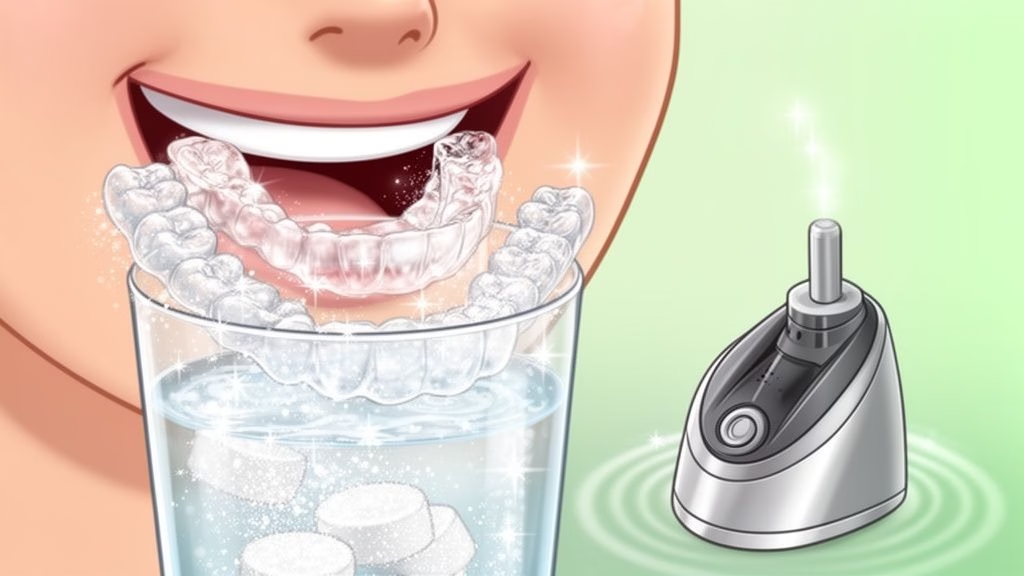
You've probably seen these—the classic "fizz-and-soak" solution. You just pop a tablet into a glass of water with your retainer, and it immediately gets to work, releasing thousands of tiny, oxygen-powered bubbles. This isn't just for show; it's a chemical reaction that creates a cleaning agent strong enough to lift away plaque and bacteria but gentle enough not to harm your appliance.
Their biggest selling point is convenience. They're dead simple to use every day and perfect for travel. Plus, they’re specifically formulated to be safe on the materials used in retainers and clear aligners, so you don't have to worry about the kind of damage harsh household chemicals can cause.
It's no surprise that this market is booming. The global dental cleaning tablet industry is expected to jump from $379.9 million in 2025 to $668.1 million by 2032. For anyone who values straightforward, effective dental care, these tablets are a fantastic way to cut infection risks by up to 60%. It’s a simple step that supports the great results you've already achieved.
Ultrasonic Retainer Cleaners
Think of an ultrasonic cleaner as a professional deep-cleaning spa for your retainer. This little device uses high-frequency sound waves to generate microscopic bubbles in water, a process known as cavitation. These bubbles might be tiny, but they implode with surprising force when they hit your retainer, blasting away stubborn gunk from every nook and cranny.
An ultrasonic cleaner offers a level of deep, non-abrasive clean that you just can't get by brushing alone. It's especially good at tackling hardened tartar (calculus) and getting rid of bacteria hiding in those impossible-to-reach spots.
It’s true they cost more upfront than a pack of tablets, but they're a powerful, long-term investment in keeping your retainer pristine. All you have to do is add water (or a special cleaning solution), drop your retainer in, and let the machine do its thing for a few minutes.
Cleaning Gels and Foams
Need a quick clean when you're out and about? Gels and foams are your answer. These are made for direct application—just pump the foam or squeeze the gel onto your retainer, give it a gentle scrub with a soft-bristled brush, and rinse.
This method is ideal for a midday refresh or when you just don't have time for a full soak. It's great at getting rid of surface grime and knocking out the bacteria that cause bad odours, leaving your appliance feeling instantly fresher.
DIY Home Remedies: A Word of Caution
A quick search online will bring up plenty of suggestions for cleaning retainers with household items like vinegar or baking soda. And while it's true they have some mild antibacterial properties, they also carry some serious risks.
Acidic solutions like vinegar can slowly eat away at the plastic, making it brittle and prone to cracking. Baking soda is abrasive and can create tiny scratches on the surface, which ironically become perfect hiding spots for even more bacteria. For a better sense of how different common chemicals work, you can learn about disinfectants like hydrogen peroxide and rubbing alcohol to understand their proper uses.
When it comes down to it, the safest bet is always to use products specifically designed and tested for oral appliances. It’s the best way to make sure your retainer lasts as long as it should.
How to Choose the Right Cleaner for Your Needs
Picking the right retainer cleaner is less about grabbing the first box you see and more about finding a perfect match for your specific situation. Think of it this way: you’ve already invested time and money into getting a fantastic smile, so choosing the right cleaner is the final, crucial step to protect that investment.
The great thing is, it's not complicated once you know what you’re looking for. Whether you have a classic wire-and-acrylic retainer or modern clear plastic aligners, the right cleaning method will keep your appliance fresh, hygienic, and crystal clear without any hassle.
Key Factors in Your Decision
To narrow down the options and find the best fit, a few key questions will point you in the right direction. It really comes down to your retainer type, your daily routine, and your budget.
-
Your Retainer Type: This is the most important factor. Clear plastic aligners and retainers are sensitive and can be warped or scratched by harsh chemicals or abrasive cleaners. On the other hand, Hawley retainers (the ones with a wire across the front) are tougher, but you still need to care for them properly to stop the metal from corroding or the acrylic from degrading. Always double-check that a cleaner is marked as safe for your retainer’s material.
-
Convenience and Lifestyle: Are you constantly on the move? Quick-dissolving tablets or specialised cleaning gels are brilliant for their portability and ease of use. If you’d rather have a more hands-off routine at home, an ultrasonic cleaner gives you a really deep clean with almost zero effort each day.
-
Effectiveness: At the end of the day, you need something that kills bacteria and stops plaque from hardening into tartar. Effervescent tablets are fantastic for daily disinfection, while ultrasonic cleaners are the champions at shaking loose the microscopic gunk that manual brushing just can't reach.
This decision tree can give you a quick visual guide to get you started.
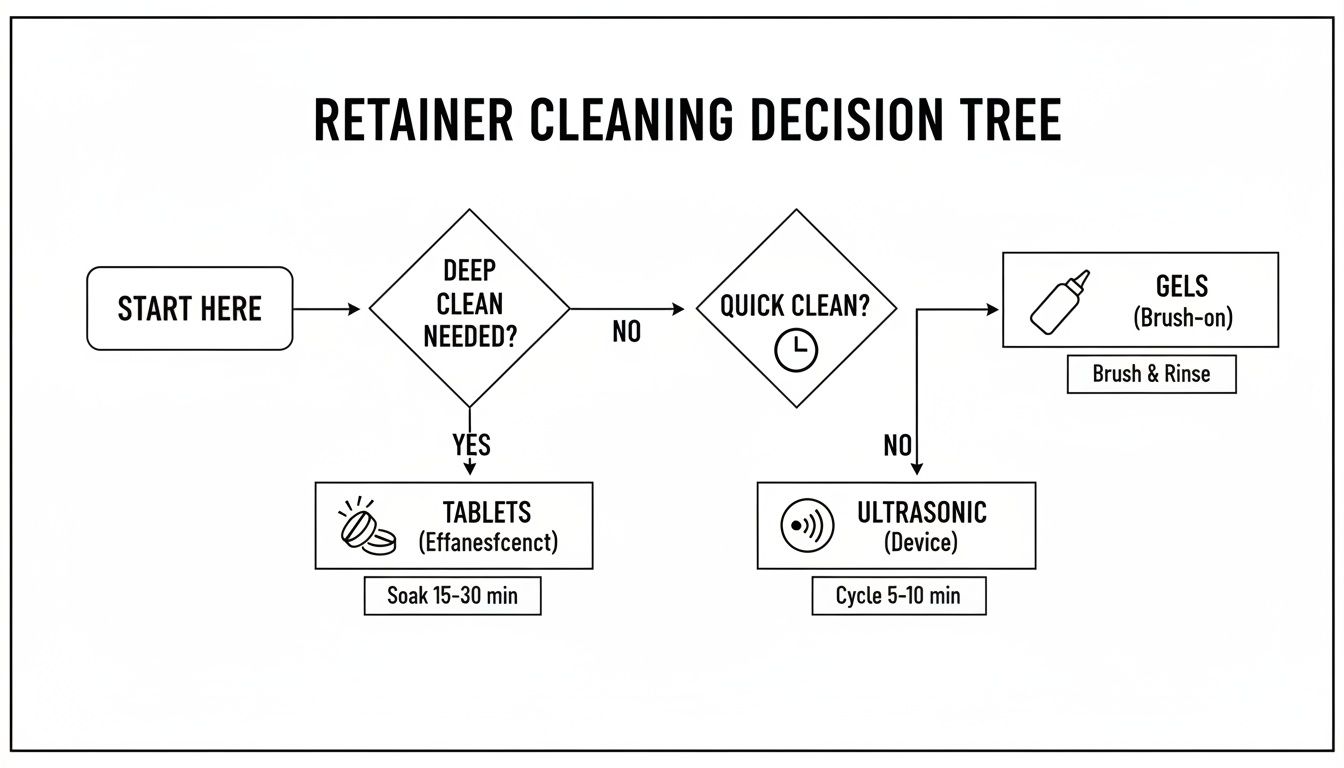
As you can see, your own priorities—whether that's deep cleaning power or grab-and-go convenience—will guide you straight to the best solution for you.
What to Look For and What to Avoid
When you're looking at different products, the ingredients list is your best guide. Knowing a little about what's inside can save you from accidentally damaging the appliance you worked so hard to get, especially if you used a convenient and affordable service like Toothfairy to straighten your teeth.
Look for gentle but powerful disinfecting agents like sodium bicarbonate and citric acid in cleaning tablets. With ultrasonic cleaners, the magic is in the high-frequency vibrations, so plain water is often all you need. The main takeaway is to avoid anything that could break down the materials of your retainer.
Here are a few specific things you should always steer clear of:
- Alcohol: Many mouthwashes contain alcohol, which can dry out the plastic in clear retainers, making them brittle and prone to cracking.
- Bleach and Harsh Chemicals: These are simply too aggressive. They can degrade the materials of your retainer, causing them to discolour, weaken, or even change shape.
- Abrasives: Never use toothpaste, particularly whitening formulas, on your retainer. It contains tiny abrasive particles that will etch microscopic scratches into the surface, creating the perfect hiding spots for bacteria to thrive.
In the end, the "best" retainer cleaner is the one you’ll actually use every day. By thinking about your retainer type and your lifestyle, you can easily find a method that protects both your smile and your health.
Your Simple Daily Retainer Cleaning Routine
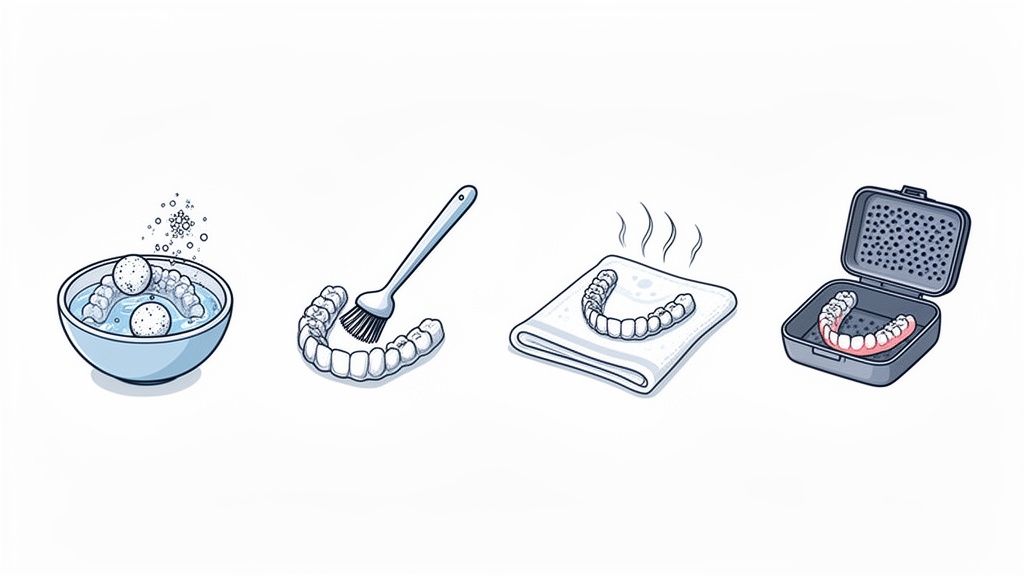
Consistency is everything when it comes to keeping your retainer pristine. A simple daily routine takes only a few minutes but pays huge dividends in protecting the smile you’ve worked so hard for. It doesn't matter if you used a major aligner brand or a smarter, more affordable solution like Toothfairy; this daily habit is your best bet for a fresh appliance and a healthy mouth.
Think of it just like brushing your teeth—it’s a non-negotiable part of your day. By turning retainer care into a habit, you stop bacteria and plaque from building up in the first place, which is the key to keeping your appliance crystal clear and free from any unwanted odours.
Your Step-By-Step Guide to a Flawless Clean
Ready to lock in a powerful cleaning habit? The process itself is surprisingly simple, whether you're using cleaning tablets or an ultrasonic device. The goal is to be thorough but gentle, which is vital for preserving the integrity of your retainer’s material.
Using Effervescent Tablets
- Rinse First: Always start by giving your retainer a quick rinse under lukewarm tap water. This gets rid of any loose bits of food or saliva. A word of caution: never use hot water, as it can easily warp the delicate plastic.
- Soak Thoroughly: Pop one cleaning tablet into a glass of warm (but not hot) water and make sure your retainer is completely submerged. Let it fizz and soak for the time recommended on the packet, which is usually around 15-20 minutes.
- Final Brush and Rinse: Once it's finished soaking, take a separate, soft-bristled toothbrush (not the one you use on your teeth!) and gently brush away any plaque that the tablet has loosened. Give it one last, thorough rinse under cool running water before you pop it back in your mouth or store it away.
Using an Ultrasonic Cleaner
- Prepare the Unit: Fill the machine’s basin with lukewarm water, making sure there's enough to completely cover the retainer. For an extra cleaning boost, you can add a specialised ultrasonic cleaning solution, but water often does the trick on its own.
- Run the Cycle: Place your retainer inside, close the lid, and switch it on. A typical cleaning cycle lasts about 5-10 minutes. The high-frequency vibrations are fantastic at dislodging tiny particles from every nook and cranny.
- Rinse and Dry: When the cycle finishes, take the retainer out and give it a final rinse under cool water to wash away any dislodged debris.
Don’t forget this crucial last step: proper drying is just as important as cleaning. After the final rinse, gently pat your retainer dry with a clean cloth or simply let it air-dry completely before putting it in its case. A damp retainer in a closed container is a perfect breeding ground for bacteria.
Finishing Touches for Long-Term Success
This daily routine is absolutely vital, especially when you consider the UK's orthodontic market is projected to hit an incredible £370.3 million by 2027. With millions of us relying on aligners, simple habits like these are the best defence. For businesses, promoting good oral health through services like Toothfairy can even cut down on employee absences, since oral health problems cost UK firms £4 billion a year in sick leave. For patients, consistent daily cleaning has been shown to improve outcomes by as much as 40%. You can learn more about these UK orthodontics market findings and their impact on oral health.
Lastly, always store your dry retainer in its ventilated case. This simple action protects it from airborne germs and accidental damage, ensuring your investment stays safe, clean, and ready to keep your smile perfectly aligned.
Common Retainer Cleaning Mistakes to Avoid
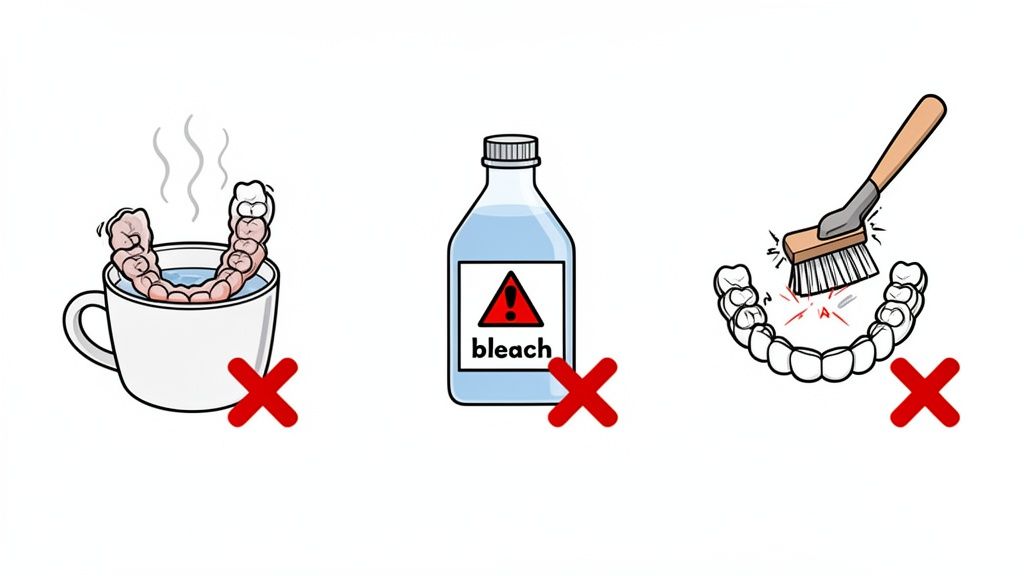
You’ve put in the time and effort to get your perfect smile; now the goal is to protect it. It’s surprisingly easy, even with the best intentions, to slip into habits that could damage your retainer and even harm your oral health.
Knowing what not to do is just as important as knowing what you should be doing. After all, the last thing you want is to accidentally ruin the very device keeping your teeth in place. Let’s walk through the most common pitfalls so you can steer clear of them.
Avoiding Heat and Harsh Chemicals
One of the biggest culprits is hot water. It might seem like the obvious choice for killing germs, but high temperatures can permanently warp the delicate plastic of your retainer or aligner. A warped retainer won't fit correctly, and that can spell trouble for your teeth. Always, always stick to lukewarm or cool water.
Another major misstep is turning to everyday household cleaners. Things like bleach, alcohol-heavy mouthwashes, and harsh soaps can wreak havoc on your retainer’s material. Over time, they can make it brittle, cloudy, or discoloured.
Using the wrong cleaner can be just as bad as not cleaning at all. Harsh chemicals can leave behind residues that irritate your gums and mouth, while also slowly destroying the appliance itself.
The Problem with Abrasives and Improper Storage
Scrubbing your retainer with your regular toothpaste seems like a good idea, right? Unfortunately, it’s one of the worst things you can do. Most toothpastes contain abrasive particles that are great for scrubbing tough tooth enamel, but they're far too rough for plastic.
These tiny particles create thousands of microscopic scratches on the surface of your retainer. This is a problem for two key reasons:
- They ruin the clarity: All those little scratches make a clear retainer look cloudy and dull.
- They create a home for bacteria: The new grooves are the perfect hiding place for bacteria to multiply, which ironically makes your retainer dirtier and harder to clean.
Finally, don't just leave your retainer lying around on the side. When it’s exposed to the air, it’s a magnet for bacteria and dust. It also dramatically increases the chances of it getting lost, thrown away, or even chewed by a pet.
Always put it back in its ventilated case when it's not in your mouth. This simple habit keeps it clean, safe, and protects the investment you made in your smile with a smarter service like Toothfairy. Avoiding these common mistakes will make sure your cleaning routine is actually helping, not hurting.
When to Ask a Dentist for Professional Help
Daily cleaning is your first and best line of defence against buildup and bacteria, but even the most diligent routine has its limits. Sometimes, your retainer just needs a professional eye to keep it—and your smile—in top shape. Knowing when to pick up the phone and call your dentist can stop a minor issue from turning into a major headache.
Think of it like a car's MOT. You handle the day-to-day upkeep, but an expert mechanic spots the problems you can't. If you've noticed stubborn white spots or a chalky film that just won’t wash off, you're likely dealing with hardened mineral buildup, also known as calculus. Most at-home cleaning methods simply aren't powerful enough to tackle this.
Signs You Need an Expert Opinion
Visible damage is an immediate red flag. If you see any cracks, fractures, or warping in the plastic, stop wearing the retainer straight away and get in touch with your dentist. A damaged retainer won't fit properly and could even start shifting your teeth back out of alignment.
You should also look out for:
- A persistent bad smell that just won't go away, even after a thorough clean.
- Discolouration or stubborn stains that cleaning tablets and even ultrasonic cleaners can’t seem to shift.
- Any change in how the retainer fits—if it suddenly feels too loose or uncomfortably tight.
For anyone who has invested time and money in straightening their teeth, keeping a professional in the loop is crucial. With modern services like Toothfairy, getting that expert opinion is easier than ever. You can often get advice over a quick video call, bridging the gap between your daily care and 24/7 dental support.
Don't forget to bring your retainer with you to all your regular dental check-ups. This gives your dentist the chance to inspect it, give it a professional clean, and make sure it still fits perfectly, safeguarding your investment for years to come.
Got Questions About Retainer Cleaning? We've Got Answers.
Even with the best cleaning routine, it's natural for questions to pop up. Let's tackle some of the most common ones we hear from people trying to keep their retainers in top shape.
How Often Should I Really Deep Clean My Retainer?
Daily cleaning is your first line of defence, but a weekly deep clean is where you really knock out any lingering nasties. Think of it as a reset for your retainer.
For most people, a good deep soak once a week using the best retainer cleaner for the job—like a good effervescent tablet or a session in an ultrasonic cleaner—is spot on. This helps break down any tough plaque or mineral buildup that a quick daily brush might not catch, keeping your retainer crystal clear and odour-free.
Of course, if you start to notice a stubborn film or a bit of a funky smell, feel free to do it more often. Just stick to the instructions on your chosen cleaner.
Can I Just Use Denture Cleaner? It's Cheaper.
We get asked this a lot, but it’s a hard no from us. Denture cleaners are formulated for much tougher, more porous acrylic materials. The chemicals they use are often far too harsh for the plastics used in modern retainers, especially the clear aligner-style ones you get with affordable teeth straightening treatments.
Using denture cleaner is a shortcut that can backfire. Those aggressive ingredients can make the plastic cloudy, yellow, or even brittle over time, potentially ruining your expensive retainer. It’s always safer to use a product specifically designed for retainers.
What's the Easiest Way to Clean My Retainer When I'm Travelling?
When you’re on the move, convenience is everything. Retainer cleaning tablets are a traveller's best friend. They're incredibly lightweight, take up almost no space in your bag, and all you need is a glass of water to get them working.
Another fantastic option for life on the go is a specialised cleaning foam or spray. These are designed to work quickly—often in just a few minutes—without needing a long soak. Whichever you pack, don't forget your protective case! It’s the best way to keep your retainer safe and clean wherever your travels take you.
Keeping your smile straight and healthy is a lifelong journey, and having professional backup can make all the difference. With Toothfairy, you can connect with qualified dentists right from your home, whenever you need to. Get your retainer care questions answered by the experts, quickly and professionally. Explore our smarter approach to dental care at Toothfairyapp.co.uk.
Last updated on January 24, 2026

Dr. Deepak
ToothFairy Care Team.
Dr. Deepak
ToothFairy Care Team.