Best Teeth Straightening Options: Find Your Ideal Smile Today
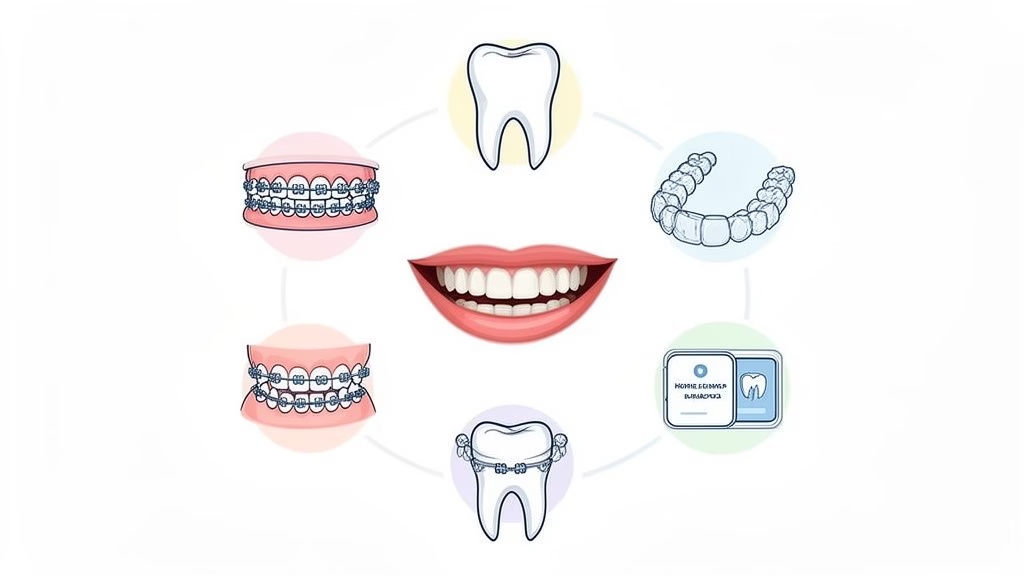
Achieving a straighter, healthier smile is more accessible than ever, but navigating the vast array of orthodontic treatments can feel overwhelming. From traditional methods to modern, technology-driven solutions, understanding the nuances of each option is crucial for making an informed decision that suits your lifestyle, budget, and clinical needs. This guide is designed to cut through the confusion and provide a clear, comprehensive comparison of the best teeth straightening options available today.
We will break down everything you need to know, moving beyond generic advice to offer actionable insights. You will learn about the mechanics, ideal candidates, typical treatment timelines, and realistic cost expectations for everything from classic metal braces to advanced clear aligner systems. We will also explore specialised treatments like surgical orthodontics and accelerated options for those seeking faster results.
Our goal is to empower you with the knowledge to discuss your goals confidently with a dental professional. This article will detail the pros and cons of each method, outline potential risks, and explain the long-term maintenance required to protect your investment. Whether you're considering treatment for yourself or a family member, exploring discreet, smarter, and more affordable paths to a perfect smile, this definitive guide provides the clarity you need. We'll even cover what to do in a dental emergency and how virtual care can play a role in your orthodontic journey. Let's explore the path to your ideal smile.
1. Traditional Metal Braces
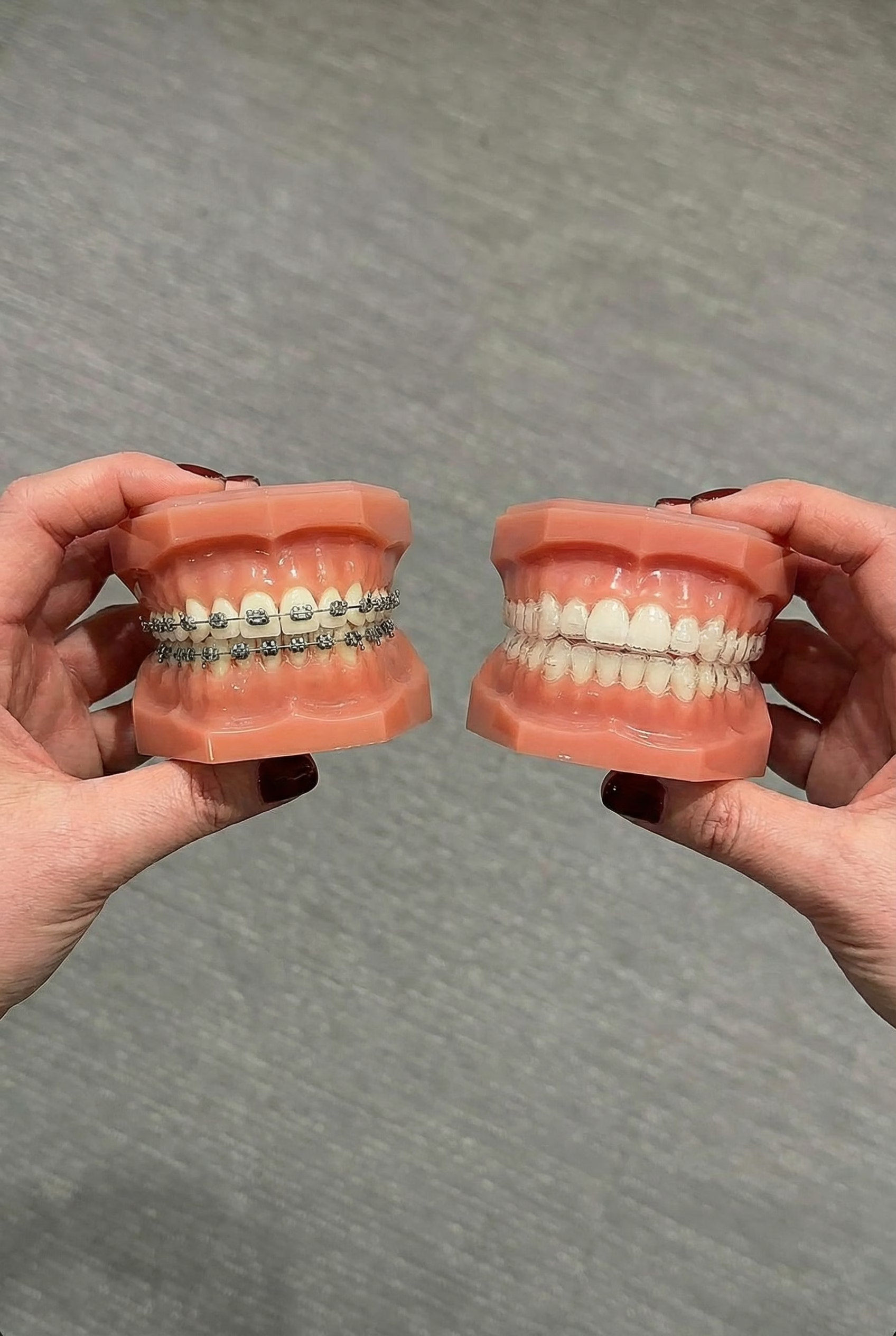
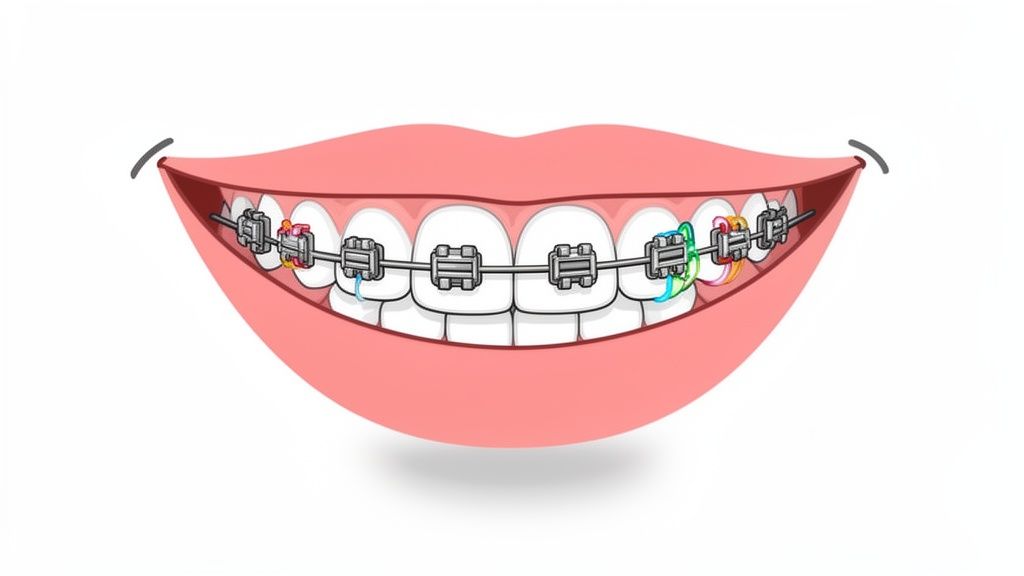
Traditional metal braces are often what people first picture when they think of orthodontic treatment. This time-tested method consists of high-grade stainless steel brackets that are cemented to the front of each tooth. A thin metal archwire runs through these brackets, and small elastic bands hold the wire in place. This system works by applying gentle, constant pressure, which an orthodontist periodically adjusts to guide your teeth into their correct positions over time.
Who Are They Best For?
Metal braces are widely considered the gold standard for treating complex and severe orthodontic issues. They are highly effective for correcting significant bite problems (overbites, underbites, crossbites), severe crowding, large gaps, and rotated teeth that other options, like some clear aligner brands, may not be able to fix as efficiently. Their fixed nature ensures compliance, making them an excellent choice for teenagers and adults who need comprehensive correction without the daily responsibility of removable appliances.
Key Considerations & Actionable Tips
While they are one of the best teeth straightening options for complex cases, they require meticulous care.
- Treatment Time: Typically 18-24 months, but can vary.
- Typical Cost: £1,500 – £3,000.
- Maintenance: Use specialised floss threaders or interdental brushes to clean around brackets and wires effectively.
- Dietary Adjustments: Avoid hard, sticky, or crunchy foods like toffee, hard sweets, and popcorn to prevent damaging the brackets.
- Post-Treatment: Consistent retainer wear is non-negotiable to maintain your new smile and prevent teeth from shifting back.
Expert Insight: Traditional braces provide your orthodontist with maximum control over individual tooth movement. This precision is why they remain the top recommendation for achieving dramatic and stable results in complicated cases. They are a reliable and powerful tool for foundational smile correction.
2. Ceramic Braces
Ceramic braces offer a more discreet alternative to their metal counterparts, blending the robust mechanics of traditional orthodontics with enhanced aesthetics. This system uses clear or tooth-coloured ceramic brackets that are cemented to your teeth, making them significantly less noticeable. A thin metal archwire, which can also be coated to be less visible, runs through the brackets to apply gentle, consistent pressure and guide your teeth into their desired alignment.
Who Are They Best For?
Ceramic braces are an excellent choice for adults and older teenagers who are conscious about their appearance but require the powerful corrective capabilities of a fixed brace system. They are highly effective for treating moderate to severe orthodontic issues, including complex bite problems, significant crowding, and rotated teeth. This option provides a fantastic middle ground, delivering the clinical effectiveness of metal braces without the prominent metallic look, making it one of the best teeth straightening options for professionals.
Key Considerations & Actionable Tips
While aesthetically superior, ceramic braces require careful attention to maintain their discreet appearance and structural integrity.
- Treatment Time: Typically 18-36 months, sometimes slightly longer than metal braces.
- Typical Cost: £2,000 – £4,500.
- Maintenance: The clear elastic ties used can stain. Minimise consumption of coffee, red wine, and curries, and maintain excellent oral hygiene.
- Dietary Adjustments: The ceramic material is strong but can be more brittle than metal. Be cautious with extremely hard or crunchy foods to avoid chipping the brackets.
- Post-Treatment: Just like with any fixed appliance, wearing your retainer as prescribed is crucial to prevent your newly straightened teeth from relapsing.
Expert Insight: Ceramic braces provide the same level of precise control over tooth movement as traditional metal braces, but with a significant cosmetic advantage. They are the ideal solution for patients who need comprehensive orthodontic correction but prefer a less conspicuous treatment journey.
3. Lingual Braces
Lingual braces offer a completely discreet way to straighten teeth by functioning just like traditional braces, but with one major difference: they are placed on the inner (lingual) surface of your teeth. This clever positioning makes them virtually invisible from the outside, providing a powerful orthodontic solution without the aesthetic concerns of visible appliances. The custom-made brackets and wires work behind the scenes, applying gentle pressure to guide your teeth into perfect alignment.
Who Are They Best For?
Lingual braces are an ideal choice for adults and older teenagers who require the comprehensive control of a fixed brace system but desire maximum discretion. They are highly effective for correcting complex issues such as significant crowding, bite problems, and rotations, making them one of the best teeth straightening options for professionals, performers, or anyone who feels self-conscious about wearing traditional braces. This method combines the robust mechanics of braces with a totally hidden appearance.
Key Considerations & Actionable Tips
While aesthetically superior, lingual braces require a significant commitment to oral hygiene and an initial adjustment period.
- Treatment Time: Typically 18-36 months.
- Typical Cost: £3,000 – £10,000, as they are custom-made and require specialist expertise.
- Maintenance: Use a high-powered water flosser and interdental brushes to effectively clean around the hidden brackets.
- Speech and Comfort: Practice speaking clearly as your tongue adjusts to the brackets. Orthodontic wax can help soothe initial tongue irritation.
- Post-Treatment: Just like with any orthodontic method, lifelong retainer wear is essential to prevent your teeth from relapsing and to protect your investment.
Expert Insight: Lingual braces represent the pinnacle of discreet orthodontic treatment. The customisation process and specialised fitting technique allow for precise, individualised tooth movement, making them capable of correcting even the most severe malocclusions without anyone knowing you're undergoing treatment.
4. Clear Aligners
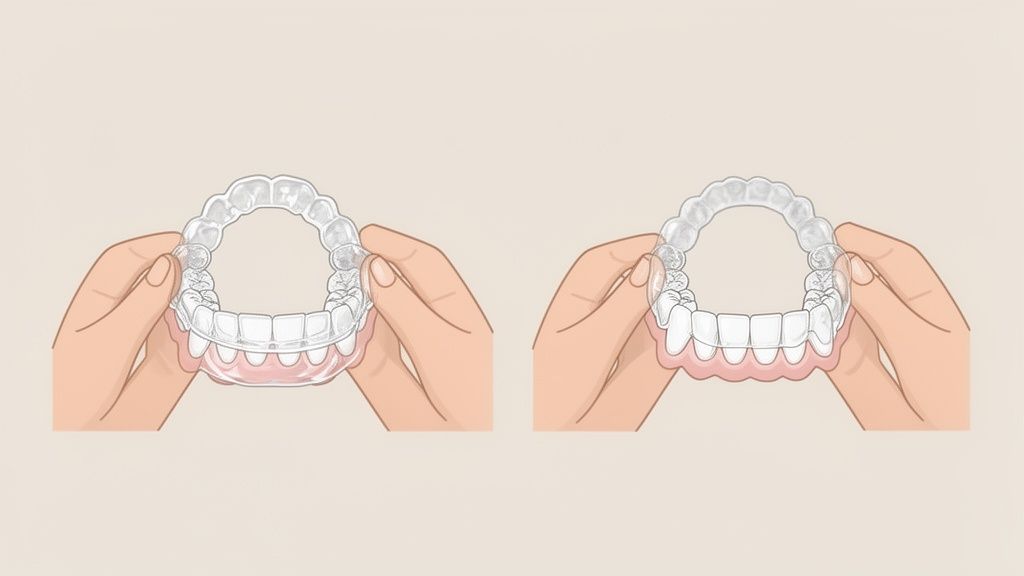
Clear aligners have revolutionised orthodontics by offering a discreet and flexible alternative to fixed braces. This popular method uses a series of custom-made, transparent plastic trays that fit snugly over your teeth. Each aligner is worn for one to two weeks, applying controlled pressure to specific teeth, before you move on to the next set in the series, gradually shifting your smile into its ideal alignment based on a precise digital treatment plan.
Who Are They Best For?
Clear aligners are one of the best teeth straightening options for adults and older teens with mild to moderate orthodontic issues, such as minor crowding, small gaps, or slightly crooked teeth. They are perfect for individuals who prioritise aesthetics and convenience, as the trays are nearly invisible and can be removed for eating, drinking, and special occasions. This makes them a favoured choice for professionals and anyone who feels self-conscious about wearing traditional braces.
Key Considerations & Actionable Tips
Success with clear aligners is heavily dependent on patient compliance. They offer great freedom, but this comes with responsibility.
- Treatment Time: Typically 6-18 months, depending on case complexity.
- Typical Cost: £1,500 – £5,000+.
- Maintenance: You must wear your aligners for 20-22 hours per day. Remove them only to eat, drink anything other than water, and clean your teeth.
- Hygiene: Clean your aligners and your teeth thoroughly after every meal to prevent plaque build-up and staining.
- Post-Treatment: Just like with braces, wearing a retainer after treatment is essential to prevent your teeth from relapsing to their old positions.
Expert Insight: The effectiveness of clear aligners hinges on consistent wear. While some specific aligner brands are widely recognised, the technology has evolved, and it's worth exploring the various smarter clear aligner options available that deliver excellent results, often more conveniently and affordably for busy adults.
5. Self-Ligating Braces
Self-ligating braces are an advanced evolution of traditional fixed braces. They use a specialised bracket system with a built-in metal gate or clip that holds the archwire in place, removing the need for the small elastic bands (ligatures) used in conventional braces. This innovative design reduces friction between the wire and the bracket, which can allow teeth to move more freely and potentially more comfortably into their desired positions. Popular systems include the Damon System, In-Ovation, and Empower braces.
Who Are They Best For?
Self-ligating braces are an excellent choice for patients who need the comprehensive control of a fixed appliance but are looking for a more modern and potentially faster treatment experience. They are highly effective for a wide range of orthodontic issues, from moderate crowding to more complex bite corrections. Because they don't use elastic ties, which can stain, they can be a more discreet fixed option, and the smoother bracket design often makes them easier to keep clean, appealing to both teenagers and adults.
Key Considerations & Actionable Tips
While offering a modern twist on fixed braces, proper care is still crucial for achieving the best results with this teeth straightening option.
- Treatment Time: Often 12-24 months, sometimes slightly faster than traditional braces.
- Typical Cost: £2,000 – £4,500.
- Maintenance: The absence of elastic bands makes cleaning simpler. Use an interdental brush to easily clean around the slicker bracket surfaces.
- Dietary Adjustments: The same rules apply as with traditional braces; avoid hard, sticky, and chewy foods that could damage the clip mechanism.
- Post-Treatment: Just like any orthodontic treatment, lifelong retainer wear is essential to prevent your teeth from relapsing to their original positions.
Expert Insight: The primary advantage of self-ligating braces is the reduction in friction, which can lead to more efficient tooth movement and fewer adjustment appointments. This technology represents a significant step forward in fixed orthodontic care, offering a refined and comfortable journey to a perfectly aligned smile.
6. Rapid Palatal Expansion (RPE)
A Rapid Palatal Expander (RPE) is a specialised orthodontic appliance used to widen the upper jaw (maxilla). This device fits in the roof of the mouth and works by applying gentle, gradual pressure on the two halves of the palate, encouraging them to separate and allowing new bone to form in the gap. It is a foundational treatment, often used before other orthodontic methods to create the necessary space for permanent teeth to align correctly.
Who Are They Best For?
RPEs are most effective in children and pre-teens (typically before the age of 15) because their palatal suture has not yet fully fused, making the jaw more malleable. This treatment is ideal for correcting posterior crossbites, where the upper teeth sit inside the lower teeth, and for alleviating significant crowding by creating more space in the dental arch. By widening the jaw, it can prevent the need for tooth extractions later and provide a proper foundation for subsequent treatments like braces or clear aligners.
Key Considerations & Actionable Tips
While RPE is a highly effective preliminary treatment, it requires diligent patient participation and care.
- Treatment Time: The active expansion phase typically lasts 3-6 weeks, followed by a stabilisation period of several months where the appliance remains in place.
- Typical Cost: £700 – £2,000 as part of a larger orthodontic plan.
- Maintenance: Meticulous cleaning is crucial. Use a water flosser or syringe to flush food particles from under the expander.
- Activation: Follow your orthodontist's instructions for turning the key precisely, usually once or twice a day. A small gap may temporarily appear between the front teeth, which is a normal sign of success.
- Post-Treatment: After expansion, a comprehensive straightening treatment like braces or clear aligners from an expert-led provider like Toothfairy is almost always required to align the teeth within the newly created space.
Expert Insight: Think of RPE as creating the proper canvas for a masterpiece. It doesn't straighten individual teeth itself, but it resolves underlying structural issues like a narrow palate, which is one of the root causes of severe crowding. This makes it one of the best teeth straightening options for young patients with specific jaw discrepancies, ensuring a more stable and functional long-term result.
7. Accelerated Orthodontics (AcceleDent and Similar)
Accelerated orthodontics refers to supplementary treatments used alongside primary methods like braces or clear aligners to potentially speed up tooth movement. These technologies, such as AcceleDent or Propel, aim to stimulate the bone remodelling process that allows teeth to shift. This is typically achieved either through gentle micropulses (vibrations) or micro-osteoperforations, tiny dimples made in the bone to encourage a faster biological response. The goal is to reduce the overall time you spend in orthodontic treatment.
Who Are They Best For?
This approach is ideal for individuals who are already committed to braces or a specific clear aligner brand but are looking for ways to reach their desired smile goal more quickly. It is often chosen by adults with tight deadlines, such as an upcoming wedding or major life event, who want to complete their treatment as efficiently as possible. It can be particularly effective for patients with dense bone structure, which can sometimes slow down tooth movement during standard orthodontic treatment.
Key Considerations & Actionable Tips
While promising, the effectiveness of these devices can vary, and they add to the overall cost of treatment.
- Treatment Time: Can potentially reduce total treatment time by 30-50%, though results vary.
- Typical Cost: £500 – £1,200 (in addition to the cost of your braces or aligners).
- Maintenance: Follow the manufacturer's instructions precisely, typically involving a short, daily session of 20 minutes.
- Consistency is Key: Use the device at the same time each day to build a consistent routine and maximise its potential benefits.
- Realistic Expectations: Discuss what a realistic time reduction looks like for your specific case with your orthodontist before committing. It is a supplementary tool, not a standalone solution.
Expert Insight: Accelerated orthodontics works by enhancing your body's natural cellular response to the forces applied by your braces or aligners. Think of it as a catalyst for the main treatment. While not essential for everyone, it represents an innovative option for those prioritising speed and efficiency in achieving their perfect smile.
8. Functional Appliances (Orthopedic Braces)
Functional appliances are a specialised type of orthodontic treatment, often used in growing children and adolescents. Unlike braces that move individual teeth, these devices work on a larger scale by guiding the growth of the jaws to correct skeletal discrepancies and bite problems. Appliances like the Twin Block or Herbst appliance apply gentle forces to encourage or redirect jaw development, creating a more harmonious facial balance and bite before all permanent teeth have erupted.
Who Are They Best For?
Functional appliances are most effective for children and teenagers (typically aged 8-14) who are still actively growing. They are specifically designed to treat significant bite issues rooted in jaw misalignment, such as a prominent overjet (where the top teeth stick out far beyond the bottom teeth) or an underbite. By intervening during a growth spurt, these appliances can produce dramatic skeletal corrections that might otherwise require jaw surgery in adulthood. This early intervention is often the first phase of a two-phase treatment plan.
Key Considerations & Actionable Tips
This treatment leverages natural growth, making timing and compliance crucial for success.
- Treatment Time: Typically 9-12 months, often followed by a second phase with braces or aligners.
- Typical Cost: £1,000 – £2,500 for the functional appliance phase.
- Maintenance: Removable appliances must be cleaned daily according to your orthodontist’s instructions. Fixed appliances require careful brushing around all components.
- Compliance is Key: For removable appliances, consistent wear (often 22 hours a day) is essential. Help your child understand its importance.
- Adjustment Period: Expect a short period of adjustment for speech and eating. Regular orthodontic monitoring is necessary to track progress.
Expert Insight: Functional appliances are a cornerstone of early interceptive orthodontics. By addressing the underlying jaw problem first, they simplify the second phase of treatment, potentially reducing the overall time needed in fixed braces and improving the final stability of the result. It's a proactive approach to creating a balanced facial profile and a healthy bite.
9. Surgical Orthodontics (Orthognathic Surgery with Braces)
Surgical orthodontics, also known as orthognathic surgery, is a comprehensive treatment that combines orthodontic work (usually braces) with corrective jaw surgery. This powerful approach addresses severe alignment issues rooted in the skeletal structure of the jaw itself, problems that cannot be fully corrected by moving the teeth alone. The process involves an orthodontist first aligning the teeth within each jaw, followed by an oral and maxillofacial surgeon surgically repositioning the upper and/or lower jaw for optimal function and facial harmony.
Who Is It Best For?
This treatment is reserved for adults with significant skeletal discrepancies that affect both their bite and facial profile. It is the most effective solution for severe overbites or underbites (known as Class II or Class III malocclusions), asymmetrical jaw growth, significant open bites where the front teeth don't meet, and other functional problems like difficulty chewing or sleep apnoea related to jaw position. It is for cases where orthodontic treatment alone would be a compromise, failing to address the underlying skeletal cause.
Key Considerations & Actionable Tips
This is a major undertaking that requires careful planning and commitment between you, your orthodontist, and a surgeon.
- Treatment Time: Typically 18-36 months, including pre- and post-surgical orthodontics.
- Typical Cost: £8,000 – £20,000+ (often covered by the NHS if medically necessary).
- Preparation: Your orthodontist and surgeon must work closely. Choose an experienced, coordinated team you trust.
- Recovery: Plan for a significant recovery period of 2-4 weeks off work or school. Follow all post-surgical dietary and hygiene instructions meticulously to ensure proper healing.
- Post-Treatment: After the surgical phase, a final period of orthodontic refinement is needed, followed by lifelong retainer wear to maintain the stability of your new bite and smile.
Expert Insight: While it sounds intensive, orthognathic surgery is one of the best teeth straightening options for transforming lives. It not only creates a functional, stable bite but can also dramatically improve facial aesthetics, breathing, and overall quality of life by correcting the foundational issue, not just camouflaging it.
10. At-Home Clear Aligner Systems (Direct-to-Consumer)
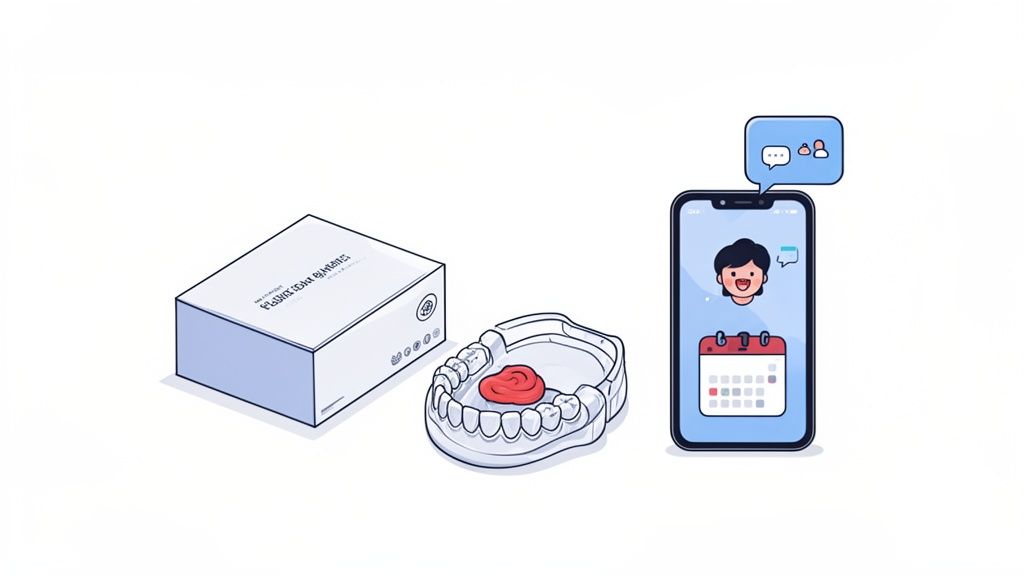
At-home clear aligner systems, often called direct-to-consumer options, offer a convenient and often lower-cost alternative to traditional in-office orthodontic care. This model bypasses regular clinic visits by having you take dental impressions at home with a kit or visit a partner location for a 3D scan. A remote dentist or orthodontist then plans your treatment, and the aligners are mailed directly to you for a fraction of the cost of some aligner brands.
Who Are They Best For?
These systems are designed exclusively for individuals with very mild to minor cosmetic dental issues, such as slight crowding or small gaps between the front teeth. They appeal to adults seeking a discreet, affordable, and convenient way to make minor adjustments to their smile without the commitment of regular appointments. However, they are not suitable for correcting bite problems or more complex alignment issues that require direct supervision from an orthodontist.
Key Considerations & Actionable Tips
While the convenience is a major draw, this approach carries significant risks and requires careful consideration.
- Treatment Time: Typically 4-8 months for mild cases.
- Typical Cost: £1,000 – £2,000.
- Verify Professional Oversight: Ensure a registered UK dentist or orthodontist is genuinely involved in planning and monitoring your treatment.
- Manage Expectations: Understand that the results may be limited to minor cosmetic changes and cannot replicate the comprehensive correction offered by in-person care.
- Check for Accountability: Research the company's policies on revisions, refunds, and what happens if your treatment does not go as planned. Your oral health is a priority, so accountability is key.
Expert Insight: The direct-to-consumer model has made cosmetic teeth straightening more accessible, but it removes the crucial element of in-person clinical assessment. Without proper examinations, underlying issues like gum disease or complex bite problems can be missed, potentially worsening your dental health. For a smarter, more affordable, and professionally guided experience, consider services like Toothfairy, which combine the affordability of remote monitoring with the safety of expert-led care.
Top 10 Teeth-Straightening Options Comparison
| Option | 🔄 Implementation complexity | ⚡ Resource requirements | ⭐ Expected outcomes | 📊 Ideal use cases | 💡 Key advantages / tips |
|---|---|---|---|---|---|
| Traditional Metal Braces | Moderate — fixed system, routine wire adjustments | Frequent orthodontist visits; instruments; cost $3,000–$7,000 | ⭐⭐⭐⭐ — highly effective for complex cases; 18–24 months | Severe crowding and bite problems; all ages | Durable and cost-effective; use floss threaders, avoid hard/sticky foods |
| Ceramic Braces | Moderate — similar workflow to metal but more delicate | Orthodontist care; fragile brackets; cost $4,000–$8,000 | ⭐⭐⭐⭐ — effective for complex cases; may move slightly slower | Image-conscious patients needing strong correction | Less visible than metal; avoid staining beverages, handle gently |
| Lingual Braces | High — custom fabrication and specialist technique | Specialist orthodontist; longer appointments; cost $8,000–$10,000+ | ⭐⭐⭐⭐ — equally effective; completely hidden from front | Professionals/public figures; severe misalignment with desire for invisibility | Invisible outcome; expect initial speech/tongue irritation, meticulous hygiene |
| Clear Aligners (Invisalign etc.) | Low–Moderate — digital planning, staged trays; patient-driven | Fewer in‑office visits; strict daily wear 20–22 hrs; cost $3,000–$8,000 | ⭐⭐⭐ — very good for mild–moderate cases; 12–18 months typical | Adults/teens prioritizing aesthetics and removability | Nearly invisible, easy oral care; requires high compliance, clean and wear as directed |
| Self-Ligating Braces | Moderate — specialized brackets, fewer ligatures | Orthodontist care; fewer adjustment visits; cost $4,000–$8,000 | ⭐⭐⭐ — efficient tooth movement; treatment may be shorter | Patients wanting fixed braces with potentially fewer appointments | Reduced friction and appointments; maintain hygiene and avoid hard foods |
| Rapid Palatal Expansion (RPE) | Moderate — appliance activation protocol, short active phase | Appliance plus caregiver/clinician activations; cost $1,500–$3,000 | ⭐⭐⭐ — effective skeletal expansion in growing patients (3–6 months active) | Children (6–14) with narrow maxilla or crossbite | Creates space without extractions; follow activation and hygiene instructions |
| Accelerated Orthodontics (AcceleDent etc.) | Low — add-on devices or minor procedures used alongside treatment | Device cost $1,500–$3,000 extra; daily home use ~20 min | ⭐⭐–⭐⭐⭐ — may shorten treatment 25–50%; evidence still evolving | Patients seeking reduced treatment time and willing to invest | Non-invasive adjunct; use consistently and set realistic expectations with clinician |
| Functional Appliances | Moderate — timing-sensitive, removable or fixed options | Pediatric orthodontist; high compliance needed; cost $2,000–$5,000 | ⭐⭐⭐ — effective for redirecting jaw growth during growth spurts | Growing children with skeletal Class II/jaw discrepancies | Can correct skeletal issues non‑surgically; ensure compliance and monitoring |
| Surgical Orthodontics (Orthognathic) | Very high — multidisciplinary planning, pre/post braces and surgery | Orthodontist + oral/maxillofacial surgeon; hospitalization; cost $10,000–$30,000+ | ⭐⭐⭐⭐⭐ — definitive correction for severe skeletal problems; permanent | Severe skeletal discrepancies not correctable with orthodontics alone | Dramatic functional/aesthetic improvement; requires experienced surgical team and recovery planning |
| At‑Home Clear Aligner Systems (DTC) | Low for patient — remote workflow, limited in‑person oversight | Low cost $800–$2,500; impression kit or local scan; remote monitoring | ⭐–⭐⭐ — effective for mild–moderate cases; higher risk without close supervision | Mild crowding/spacing for budget‑conscious adults comfortable with remote care | Convenient and inexpensive; verify licensed clinician involvement, not suitable for complex cases |
Making Your Choice: Your Action Plan for a Straighter Smile
Embarking on the journey to a straighter smile is a significant commitment, one that involves careful consideration of your unique dental needs, lifestyle, and financial circumstances. We have explored a comprehensive spectrum of the best teeth straightening options, from the steadfast reliability of traditional metal braces to the discreet convenience of modern clear aligners, and even the specialised applications of surgical orthodontics. Each path offers a distinct set of advantages, potential drawbacks, and expected outcomes. The key takeaway is that the "best" option is not a one-size-fits-all solution; it is the one that aligns perfectly with your specific situation.
Recapping Your Options: The Core Decision Factors
Let's distill the crucial factors you need to weigh. Your decision will likely pivot on a balance between these key elements:
- Clinical Complexity: For severe malocclusion, crossbites, or significant jaw alignment issues, options like traditional braces, lingual braces, or even surgical orthodontics may be necessary. Milder to moderate cases of crowding or spacing are often ideal candidates for clear aligner systems.
- Aesthetics and Lifestyle: If discretion is your top priority, ceramic braces, lingual braces, and clear aligners are designed to be less conspicuous. Consider your daily habits, such as professional commitments, public speaking, or dietary preferences, as they will influence which treatment integrates most seamlessly into your life.
- Budget and Insurance: The financial investment varies dramatically across treatments. Before making any decisions, it's vital to get a clear picture of your budget. Investigating your dental insurance policy is a crucial first step, as coverage can significantly offset costs. Properly understanding key health insurance terminology will empower you to have productive conversations with your provider and fully grasp what is and isn't covered.
- Treatment Duration and Maintenance: Are you looking for the fastest possible results, perhaps with accelerated orthodontics, or is a longer, more gradual treatment acceptable? Be realistic about the level of discipline required for removable options like clear aligners, which demand consistent wear and meticulous hygiene.
Your Actionable Checklist for Moving Forward
Feeling overwhelmed? Don’t be. Transform this information into action with a structured approach. Here is your step-by-step plan to confidently choose the right path for your new smile.
- Define Your Personal Priorities: Grab a piece of paper and rank the following from most to least important for you: aesthetics, cost, treatment speed, comfort, and the severity of your dental issue. This personal scorecard will be your guide.
- Conduct a Financial Audit: Determine your budget. Research your insurance coverage and find out if your employer offers any flexible spending or health savings plans that can be applied to orthodontic work.
- Schedule Professional Consultations: This is the most critical step. Book consultations with at least two different qualified dentists or orthodontists. Discuss your priorities, ask pointed questions based on the options in this article, and get their professional assessment of your case.
- Compare Treatment Plans: Don't just compare prices. Look at the proposed treatment duration, the specific technology being used (e.g., a specific clear aligner brand versus another), and the included follow-up care. Ask for a detailed breakdown of all associated costs.
- Trust Your Gut and Make Your Choice: After gathering all the professional advice and financial details, revisit your list of priorities. The right choice should feel like a logical and comfortable fit for both your dental needs and your life.
Ultimately, investing in orthodontic treatment is an investment in your long-term health, confidence, and well-being. By arming yourself with knowledge and following a clear action plan, you can navigate the world of teeth straightening with confidence, ensuring the choice you make today leads to the brilliant, healthy smile you deserve for years to come.
Ready to explore a smarter, more affordable, and incredibly convenient way to achieve your dream smile? Toothfairy combines advanced clear aligner technology with the flexibility of virtual consultations, putting professional orthodontic care right at your fingertips. Discover if our innovative approach is the perfect fit for you by visiting Toothfairy today.
Last updated on December 24, 2025

Dr. Deepak
ToothFairy Care Team.
Dr. Deepak
ToothFairy Care Team.