What Is a Dental Hygienist and Why Are They Key to Your Oral Health
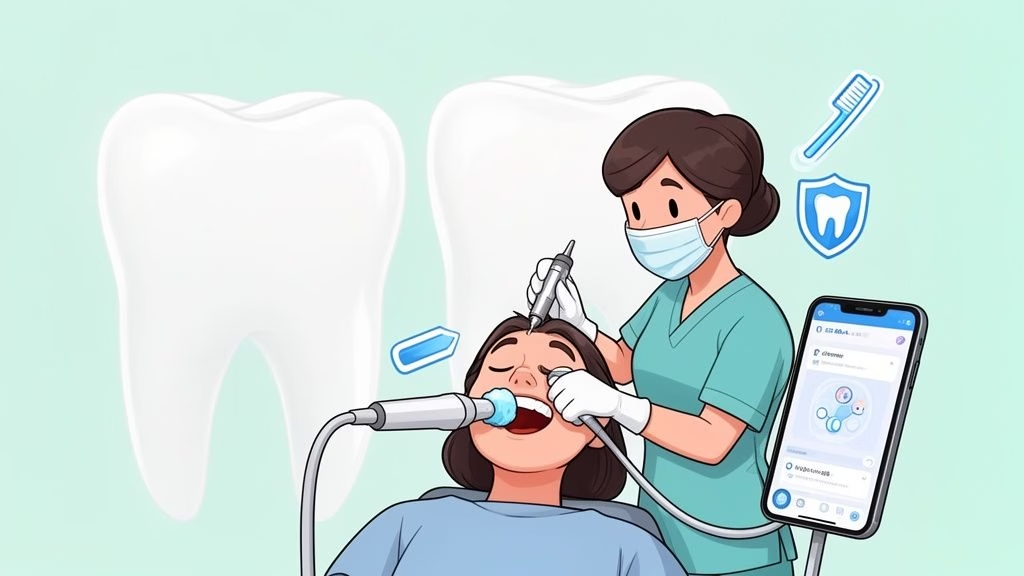
When you think of a dental visit, you probably picture a dentist fixing a problem. But what if you could stop that problem from ever starting? That’s where a dental hygienist comes in.
Think of them less as just a "cleaner" and more as a personal trainer for your mouth. Their entire focus is on preventative care—keeping your teeth and gums in top condition to head off issues like decay and gum disease before they take hold. They really are the unsung heroes of the dental world.
Your Oral Health's Unsung Hero
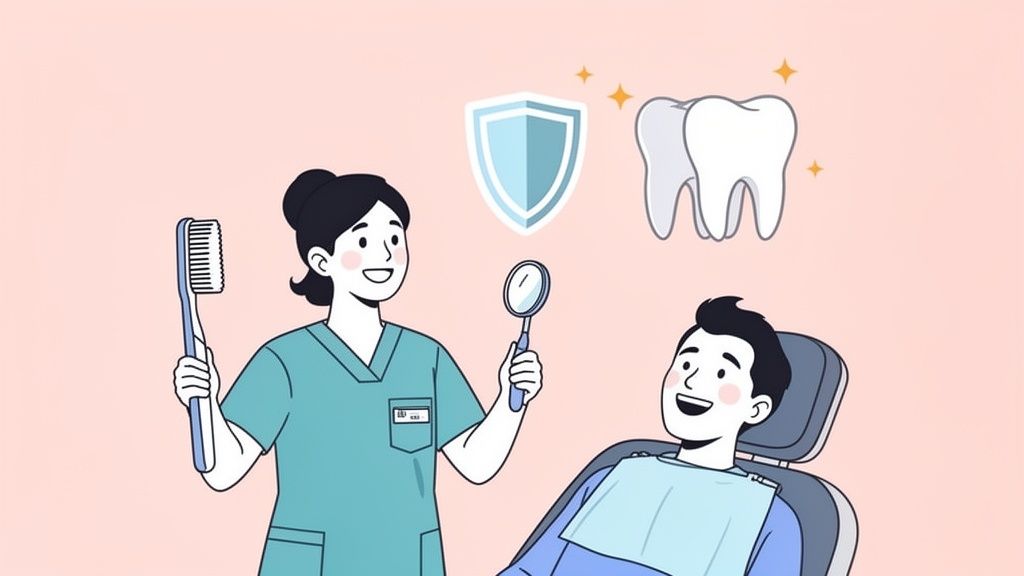
While a dentist's work often involves treatment and repair, a hygienist's primary goal is proactive maintenance. They empower you with the knowledge and tools to maintain your oral health between visits, helping you avoid more complex and costly procedures down the road.
Their work is the foundation of a healthy smile, providing the professional cleaning and personalised advice that builds a strong defence against dental disease.
Core Duties of a Dental Hygienist
A trip to the hygienist is far more than a quick polish. It’s a strategic session designed to get your oral health on track. Here’s a look at what they do:
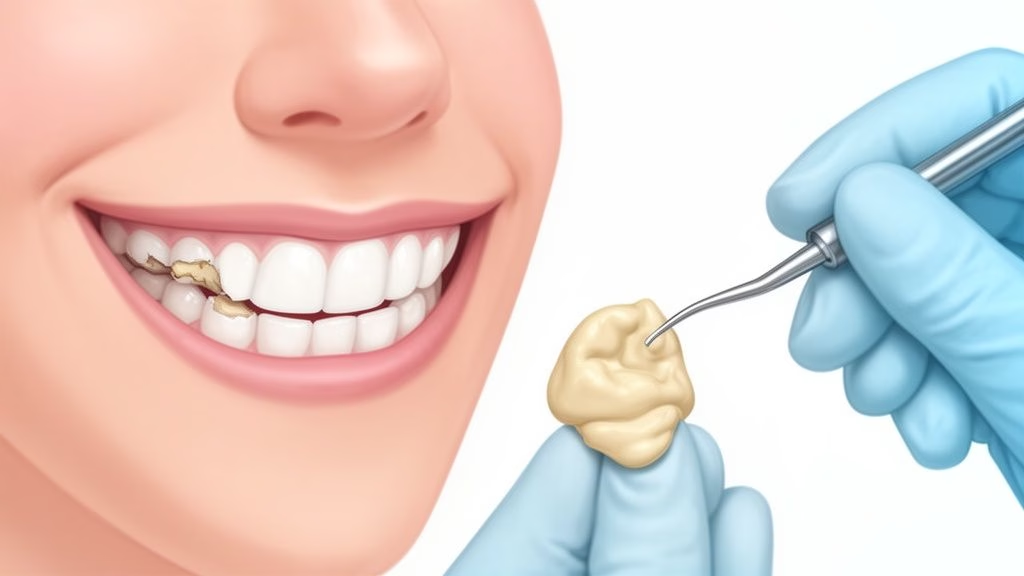
- Professional Cleaning: This is the classic "scale and polish," where they meticulously remove the hardened plaque (tartar) that your toothbrush just can't shift.
- Patient Education: They provide one-on-one coaching, showing you the most effective brushing and flossing techniques tailored to your teeth and gums.
- Dietary Guidance: You’ll get practical advice on how your food and drink choices are directly impacting your oral health, and what small changes can make a big difference.
This preventative approach is essential for everyone, but it’s particularly critical if you're considering treatments like teeth straightening. Healthy gums are an absolute must before starting with aligners, making hygienist care a vital first step for anyone looking to achieve great results with innovative, affordable solutions like those offered by Toothfairy.
In the UK, their role has never been more crucial. With recent data showing only 40% of adults accessing NHS dental care, the preventative services provided by the nation's 9,578 registered dental hygienists are a lifeline for public health. You can find more detail on their professional community by exploring the official GDC registration data.
The Difference Between a Hygienist and a Dentist
It’s a common question we hear: "Why do I need to see both a dentist and a hygienist?" Think of it like looking after a prized car.
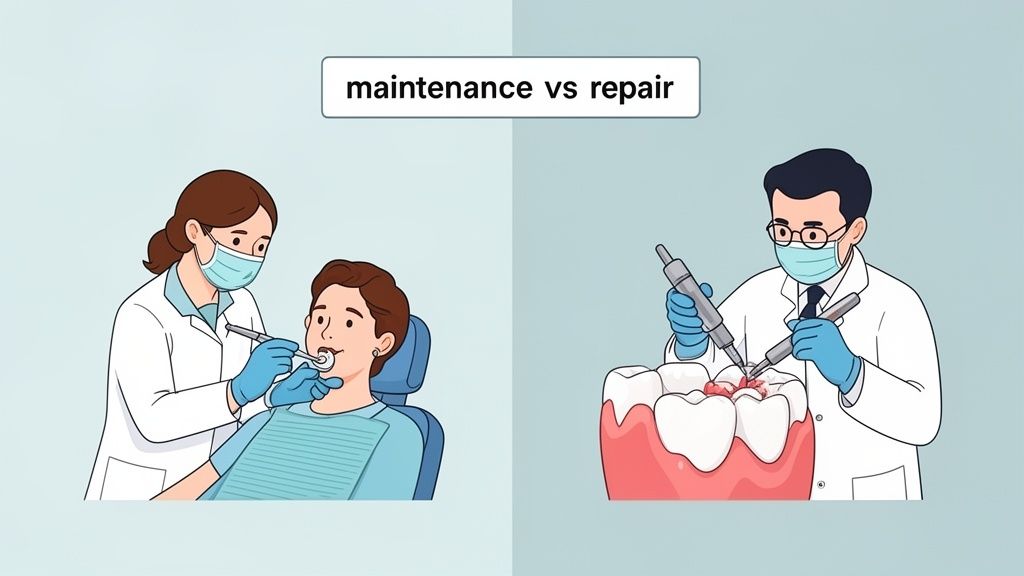
The dental hygienist is your trusted maintenance expert. They handle the essential servicing—the professional scale and polish, gum health MOT, and general upkeep that keeps everything running smoothly. Their focus is squarely on prevention and maintenance, stopping problems before they even start.
Your dentist, on the other hand, is the specialist mechanic. When a warning light flashes (that sudden toothache) or you notice some engine trouble (a cavity), they’re the ones who diagnose the fault and carry out the complex repairs, like fillings, crowns, or root canals.
Hygienist vs Dentist: A Clear Comparison
To make it even clearer, let's break down their distinct roles side-by-side.
| Aspect | Dental Hygienist | Dentist |
|---|---|---|
| Primary Focus | Prevention & oral health maintenance. | Diagnosis & treatment of dental diseases and damage. |
| Common Procedures | Scale and polish, stain removal, gum disease management, fluoride application, oral hygiene education. | Fillings, extractions, root canals, crowns, bridges, dentures, and prescribing medications. |
| UK Training | A Diploma or BSc in Dental Hygiene and Therapy. Takes 2-3 years. | A Bachelor of Dental Surgery (BDS) degree. Takes 5 years. |
While they have different jobs, they work together as a single team with one goal: protecting your oral health.
A Partnership for Your Health
This partnership is crucial for modern dental care. A hygienist lays the healthy groundwork needed for any successful dental work, whether it’s a simple filling or a full cosmetic makeover.
For instance, you can't start a teeth straightening journey with a specific aligner brand if your gums aren't healthy. A hygienist makes sure your mouth is in top condition first, which prevents complications and helps you get the best, safest results.
Their teamwork is the perfect blend of offence and defence for your mouth. The hygienist plays defence, protecting you from disease, while the dentist steps in to fix any problems that slip through.
Complementary Roles in UK Dentistry
This collaborative approach has never been more important. While the UK has 43,292 working dentists, the growing community of 9,578 hygienists provides the vital preventative care that keeps people out of the treatment chair in the first place.
This is especially critical when you consider that NHS dental services reached just 40% of adults in 2024/25, a steep fall from the pre-pandemic figure of 52%. These numbers, highlighted in the latest UK dental statistics from Smile London, show just how much we need both preventative and restorative professionals to keep the nation smiling.
Ultimately, seeing your hygienist regularly is one of the smartest investments you can make in your long-term oral health. It helps ensure you see your dentist for routine check-ups, not just for emergency repairs.
Your Hygienist Appointment: A Step-by-Step Guide
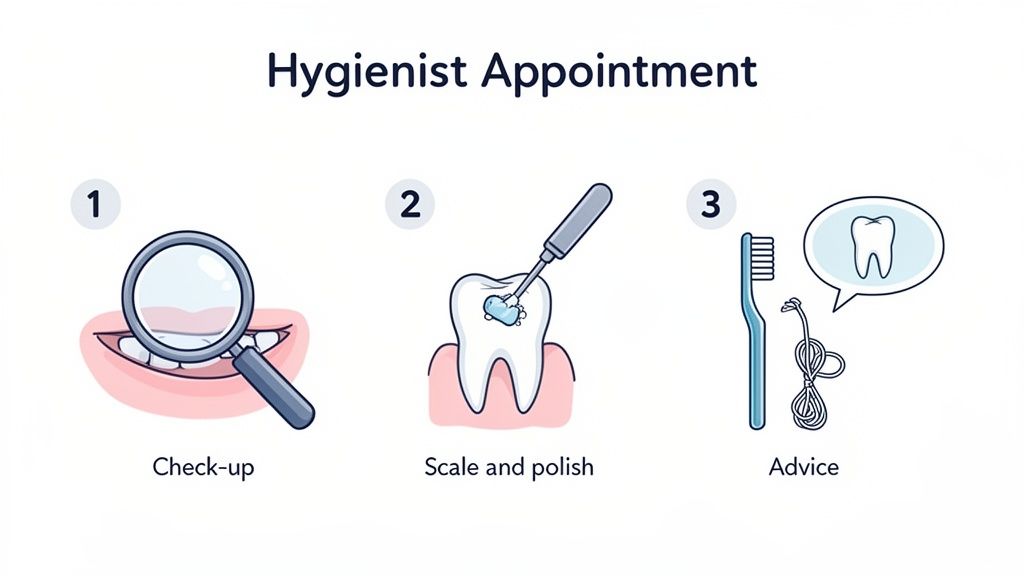
Feeling a bit nervous before a dental appointment is completely normal, but knowing exactly what to expect can really help ease any worries. A visit to the hygienist is much more than just a quick clean; think of it as a dedicated session to get your oral health into top shape.
The whole process is professional, carefully structured, and all about making you feel comfortable and in control. Let’s break down what happens during a typical appointment, so you can walk in feeling confident and prepared.
Stage 1: The Initial Assessment
Your appointment will kick off with a friendly chat and a gentle check-up. Your hygienist will want to know about your medical history and any specific concerns you've noticed, like sensitive teeth or bleeding gums.
Next, they’ll carry out a careful examination of your gums. This often involves measuring the small pockets between your teeth and gums to check for early signs of gum disease. This initial look gives them a clear picture of your oral health before they get started.
Stage 2: The Scale and Polish
This is the part of the appointment where the magic happens. Using specialised instruments, your hygienist will meticulously remove any plaque and tartar (which is just hardened plaque) from the surfaces of your teeth and just below the gumline.
- Scaling: This involves gently scraping away the stubborn deposits your toothbrush simply can't shift. It's the only effective way to remove tartar and is absolutely essential for keeping gum disease at bay.
- Polishing: Once the scaling is done, your teeth are polished with a special paste. This not only buffs away surface stains but leaves your teeth feeling incredibly smooth and looking noticeably brighter.
This two-step clean is the foundation of a healthy mouth. It creates the perfect canvas for any other dental work you might need, from a simple filling to teeth straightening.
Think of the scale and polish as a professional reset for your mouth. It clears away stubborn buildup, reduces inflammation, and creates the ideal clean slate for your daily home care routine to be more effective.
Stage 3: Personalised Oral Hygiene Advice
To wrap things up, the focus shifts to future-proofing your smile. Your hygienist will give you tailored advice based on everything they’ve seen during your check-up and clean.
This could mean showing you a better brushing technique, recommending specific interdental brushes to get into those tricky spots, or even suggesting small dietary tweaks. This personalised coaching is what empowers you to keep that professionally-clean feeling for longer and stop problems before they even start.
The Expert Training Behind Your Hygienist
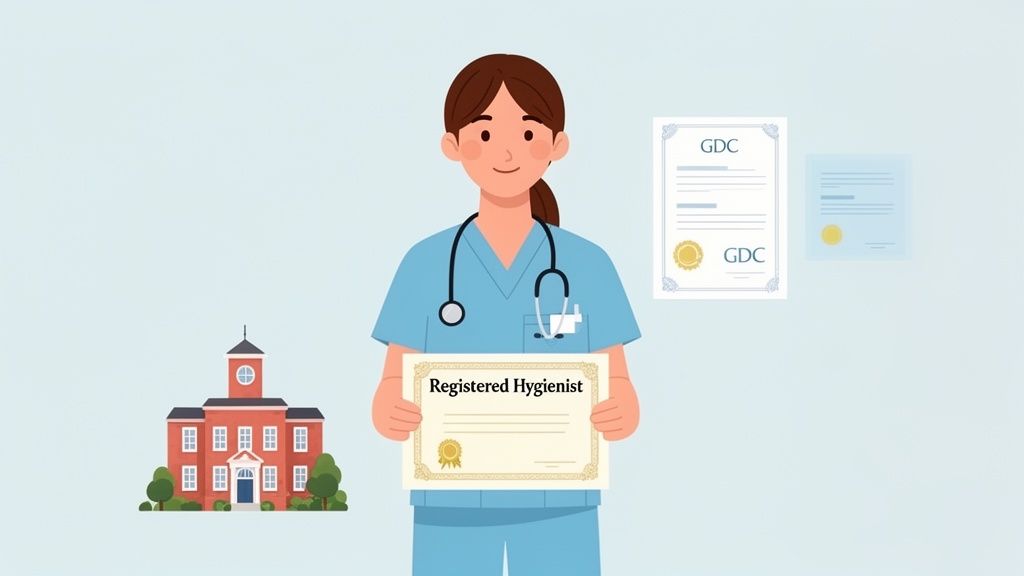
It’s easy to think a hygienist’s job is just about cleaning teeth, but the journey to becoming one is demanding. It’s a dedicated path that turns them into highly skilled healthcare professionals, not just technicians.
In the UK, this means completing a tough course of study—usually a Diploma or a full BSc degree in Dental Hygiene and Therapy. These programmes are far from just theoretical; they combine deep academic knowledge with countless hours of hands-on clinical training, making sure every graduate is ready for real-world patient care from day one.
Most importantly, a hygienist cannot legally practise without being registered with the General Dental Council (GDC). This is the exact same organisation that regulates dentists, meaning both professions are held to the same high standards of care and ethics.
Think of GDC registration as your assurance of quality. It proves your hygienist is properly qualified, follows a strict professional code, and is committed to lifelong learning to keep their skills sharp.
This level of training is what makes their role so crucial. Whether you're coming in for a routine clean or prepping for cosmetic work like the treatments available on the Toothfairy app, a registered hygienist lays the essential groundwork. Their expertise ensures your mouth is healthy and prepared for whatever comes next.
Pairing Hygienist Care with Modern Dental Solutions
Think of your hygienist's work as laying the perfect foundation for any cosmetic dental treatment you're considering. It's a bit like preparing the soil before planting a garden; without a healthy, clean base, nothing can truly flourish. This is especially critical for popular treatments like teeth straightening.
Clean, healthy gums are an absolute must-have before you start moving teeth. Trying to use aligners when your gums are inflamed or unhealthy isn't just a bad idea—it can lead to serious problems down the line. A hygienist makes sure your oral health is strong enough to handle the pressures of orthodontic treatment, setting you up for success right from the start.
This partnership between preventative care and cosmetic goals is the secret to a great, lasting smile. It’s not about choosing one or the other; it’s about making them work together.
Integrating Technology for a Seamless Journey
Today's dentistry is all about blending that essential hands-on care with smart technology for a smoother, more connected experience. The scale and polish you get from your hygienist provides the clinical groundwork. From that point, services like Toothfairy can step in to support your cosmetic journey with an extra layer of convenience and professional oversight.
So, instead of relying only on those periodic clinic visits, especially during teeth straightening, you can supplement them with:
- App-Based Monitoring: This lets your dentist keep an eye on your progress from afar, making sure your treatment is on track without you needing to book unnecessary appointments.
- Virtual Consultations: Got a question or a worry? You can get direct access to a professional, which offers real peace of mind throughout your treatment.
- Emergency Access: If a problem does pop up, you can connect with a dentist instantly. That's a safety net you just don't get with many direct-to-consumer aligner brands.
This approach creates a complete, holistic dental journey. Behind the scenes, modern dental practices also rely on efficient record-keeping systems, using tools like advanced patient charting software to keep track of patient progress and ensure seamless communication between professionals.
Toothfairy doesn’t replace the vital work of your hygienist. Instead, it acts as a smart, accessible partner that builds on their excellent care, offering a level of professional supervision that many other aligner brands simply can't match.
By combining your regular hygienist visits with the support of the Toothfairy app, you really do get the best of both worlds. You get the crucial, hands-on preventative care needed for long-term health, plus the accessible, dentist-led supervision required for a safe and brilliant cosmetic transformation. It’s a smarter, more affordable path to the smile you’ve always wanted.
Your Questions Answered
Got a few things you're still wondering about? Let's clear up some of the most common questions patients ask us about seeing a dental hygienist.
How Often Should I Book a Hygienist Appointment?
For most of us, a visit every six months is the gold standard for keeping your teeth and gums in top shape.
If you're dealing with issues like gum disease, or if you're a smoker, your hygienist might recommend coming in more often—perhaps every three months. It’s all about staying ahead of any potential problems.
Will the Cleaning Hurt?
Honestly, for most people, it's a perfectly comfortable experience. You'll feel some odd sensations, like gentle scraping, vibrations, and pressure, but it shouldn't be painful.
If your gums are a bit sore or you have sensitive teeth, you might feel some mild discomfort. The most important thing is to speak up! Your hygienist can adjust their technique or use numbing gels to make sure you're comfortable.
Do I Need to See a Dentist First?
Not anymore! Thanks to a change back in 2013, patients in the UK now have what’s called 'Direct Access' to hygienist services. This means you can book an appointment directly, without needing a referral from a dentist. It makes staying on top of your routine cleanings so much easier.
What’s the Difference Between a Clean and Whitening?
This is a great question, and one we hear all the time. They are two very different treatments with different goals.
- A Hygienist Clean: Think of this as essential maintenance for your oral health. The 'scale and polish' is all about removing the build-up of plaque and tartar to prevent gum disease and decay. A brilliant side effect is that it also removes surface stains, revealing the natural brightness of your teeth.
- Teeth Whitening: This is purely a cosmetic treatment. It uses a professional bleaching gel to change the actual, underlying shade of your teeth, making them several shades whiter.
Think of a hygienist clean as preparing a canvas. Before you create a masterpiece with whitening or straightening, you need a perfectly clean, healthy surface to work on.
A professional clean is the non-negotiable first step for any cosmetic treatment. It ensures whitening gels work effectively and that your gums are healthy enough to handle treatments like clear aligners. It’s this foundation of great health that makes all the exciting cosmetic stuff possible.
Ready to combine expert preventative care with modern cosmetic solutions? With Toothfairy, you can start your journey to a straighter, brighter smile with the confidence of dentist-led supervision. Discover our smarter, more affordable approach to dental care at https://www.toothfairyapp.co.uk.
Last updated on December 30, 2025

Dr. Deepak
ToothFairy Care Team.
Dr. Deepak
ToothFairy Care Team.