What Are Clear Aligners And How Do They Straighten Teeth?
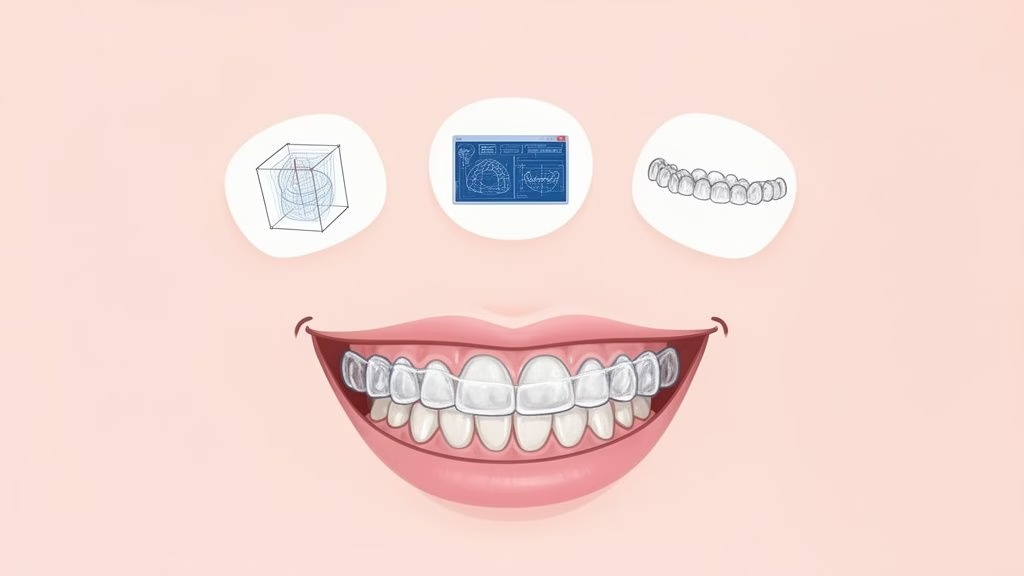
So, what exactly are clear aligners? Think of them as a modern, almost invisible way to straighten your teeth. Instead of the traditional metal brackets and wires, this treatment uses a series of custom-made, transparent plastic trays that gently guide your teeth into the right position. They’re removable, comfortable, and a seriously discreet way to get the smile you’ve always wanted.
The Modern Approach to Straightening Teeth
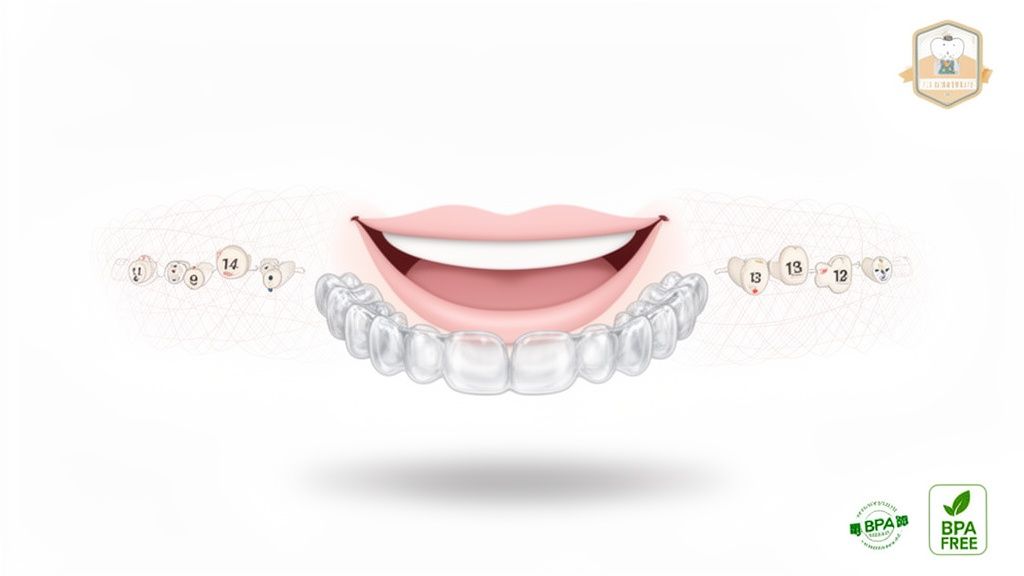
If you’ve ever considered straightening your teeth but couldn’t picture yourself with a mouth full of metal, you’re not alone. This is exactly where clear aligners come in. The system uses a sequence of snug-fitting, see-through trays, with each one doing a small part of the overall job. You’ll wear a tray for about one or two weeks before switching to the next one in your personalised series.
Each new aligner is like a single step on a carefully mapped-out journey for your smile. It puts just the right amount of gentle, consistent pressure on specific teeth, nudging them a tiny bit closer to where they’re supposed to be. This slow and steady process continues, tray by tray, until your teeth perfectly match the 3D treatment plan your dentist designed from the start.
Key Characteristics of Clear Aligners
This method of straightening teeth really stands apart from older orthodontic techniques, and it all comes down to a few key features.
To get a quick overview, here’s a simple breakdown of what makes clear aligners so popular.
Clear Aligners at a Glance
It’s this blend of discretion and convenience that has made them incredibly popular, especially with adults. In fact, the clear aligner market in the UK is now valued at over £250 million and is expected to grow even more by 2035. This boom is fuelledby huge advances in digital scanning and 3D printing, making treatments more accurate and accessible than ever before. You can explore more data on the UK clear aligners market to see just how fast it’s growing.
The Big Idea: Clear aligners aren’t just plastic trays. They are a sophisticated system that turns a digital blueprint into real, physical tooth movement, one stage at a time. The entire journey is planned out before you even put in your first tray.
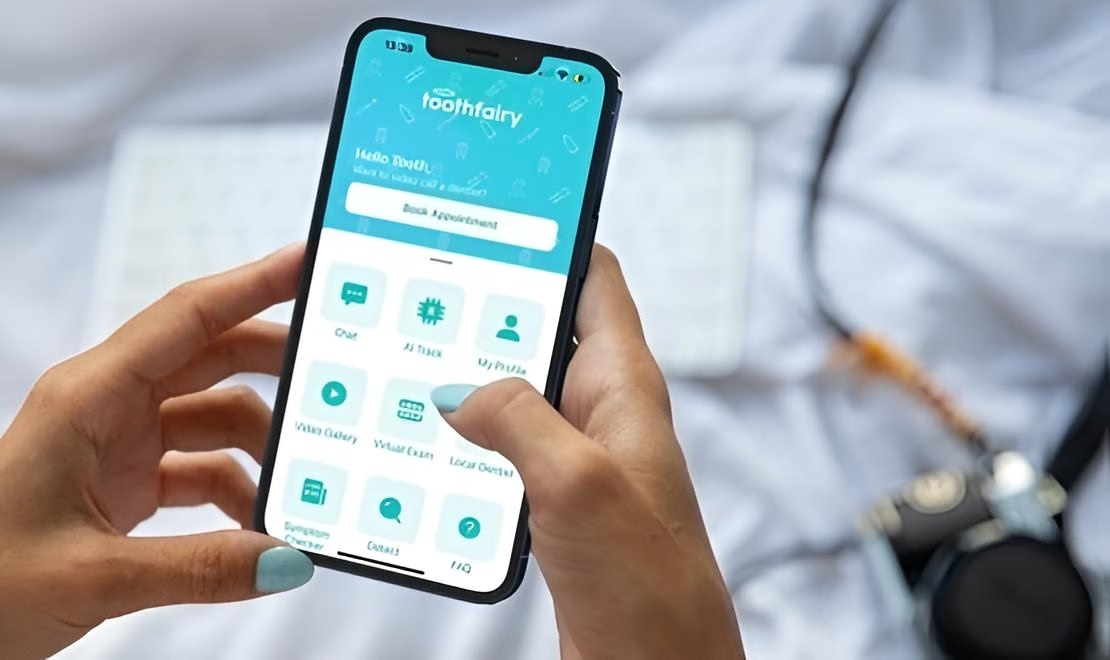
Newer providers like Toothfairy are pushing the boundaries of what’s possible, making this technology even easier to access. By bringing together professional dentist oversight with the ease of a simple app, getting a straighter smile is now smarter and more affordable. It’s a modern approach that brings dentist-monitored treatment right to your door, fitting high-quality dental care around your life, not the other way around.
The Science Behind Your Shifting Smile
Ever wondered how a simple piece of plastic can straighten teeth? It’s not magic. It’s a clever combination of gentle pressure and your body’s own natural ability to adapt. What you’re seeing is a carefully planned partnership between biology and some very smart technology.
Clear aligners don’t rely on force. Instead, they apply a constant, gentle push to specific teeth. This pressure is the cue for your body to kickstart a biological process called bone remodelling. It sounds complex, but the idea behind it is actually quite simple.
Imagine your tooth sitting in its socket, held in place by a tiny ligament. When an aligner puts pressure on one side of the tooth, the bone on that side strategically makes way. At the same time, new bone starts growing on the other side to fill in the space. This slow, controlled cycle of breaking down and rebuilding is what allows your teeth to move safely into their new, perfectly aligned positions. It’s your body doing the heavy lifting, guided precisely by each aligner.
Mapping Your Smile With Digital Precision
For this whole process to work, it needs a flawless plan. Your journey doesn’t begin with a plastic tray; it starts with an incredibly detailed 3D model of your teeth. This digital copy of your smile acts as the blueprint for your entire treatment.
A qualified dentist uses advanced software to map out every single movement, from where your teeth are now to where they need to be. This isn’t just about the final result. It’s about meticulously planning the sequence of shifts for each tooth, step by step. The entire treatment is broken down into a series of tiny, achievable stages.
This digital planning stage is precisely why professional oversight is so critical. A dentist’s expertise ensures the planned movements are safe for your long-term dental health, preventing problems that can pop up with poorly managed treatments.
How Each Aligner Brings the Plan to Life
Once your dentist finalises the digital roadmap, your custom set of aligners is created. Each tray is slightly different from the last, engineered to achieve one specific stage of the plan.
Here’s what that feels like day-to-day:
- The First Push: When you snap in a new aligner, it will feel tight. That’s because it’s shaped for where your teeth will be at the end of that stage, not where they are when you start.
- Consistent Pressure: You’ll wear it for the recommended 22 hours a day. Over the next week or two, this consistent pressure gives your body the time it needs for that bone remodelling to happen.
- The Next Step: Once your teeth have shifted into the aligner’s new position, you’re ready to move on to the next one in your set. This new tray introduces the next small movement, and the process continues.
This stage-by-stage approach is what makes the treatment so predictable and controlled. In the past, this often meant frequent, costly trips to the clinic for adjustments. But today, smart solutions have changed the game. Companies like Toothfairy use this same technology to deliver dentist-monitored treatment right to your door. This makes it more convenient and affordable, but crucially, a real dentist is still guiding every step of your journey to ensure a safe, successful result.
Your Clear Aligner Journey From Start To Finish
Starting a teeth-straightening journey should be exciting, not overwhelming. Knowing what to expect from start to finish helps take the mystery out of the process, revealing just how straightforward getting a new smile can be.
Modern dentistry has made this journey more accessible than ever before. Providers like Toothfairy have reimagined the traditional model, kicking things off with a convenient, app-based assessment that fits right into your schedule. This often means you can get started without an initial trip to a clinic, making that first step much simpler.
The Initial Steps: Creating Your 3D Smile Blueprint
Every clear aligner treatment is built on an exact 3D model of your mouth. Think of this digital replica as the foundational blueprint your dentist uses to design your entire smile transformation.
There are a couple of ways to create this model:
- At-Home Impression Kits: Many providers, Toothfairy included, can post a kit directly to your door. You’ll use a special dental putty to create moulds of your upper and lower teeth, which are then sent back to a lab to be scanned and digitised.
- In-Clinic 3D Scans: The other option is to visit a dentist who uses a handheld digital scanner. This device captures thousands of images of your teeth in minutes, creating an instant 3D model without any messy impressions.
Once the model exists, a qualified dentist gets to work. Using specialised software, they map out the precise movement of each individual tooth, creating a step-by-step plan that leads to your final, ideal smile. You even get to see a digital preview, showing you exactly what the outcome will be before you commit.
Living With Your Clear Aligners Day to Day
After you’ve given your treatment plan the thumbs-up, your custom-made series of aligners is produced and sent to you. This is where your active role begins, and honestly, it’s simpler than most people think. The real key to success is just being consistent.
You’ll need to wear your aligners for 20-22 hours per day. The only time they should come out is when you’re eating, drinking anything other than plain water, or brushing your teeth. This near-constant wear is what provides the gentle, continuous pressure needed to move your teeth effectively.
Each set of aligners is typically worn for one to two weeks before you progress to the next one in the series. Every time you switch trays, you’re taking another step along your treatment plan. That initial feeling of tightness with a new aligner is a good sign—it means the system is working and your teeth are gradually shifting as planned.
The infographic below shows what’s happening on a biological level each time you pop in a new tray.
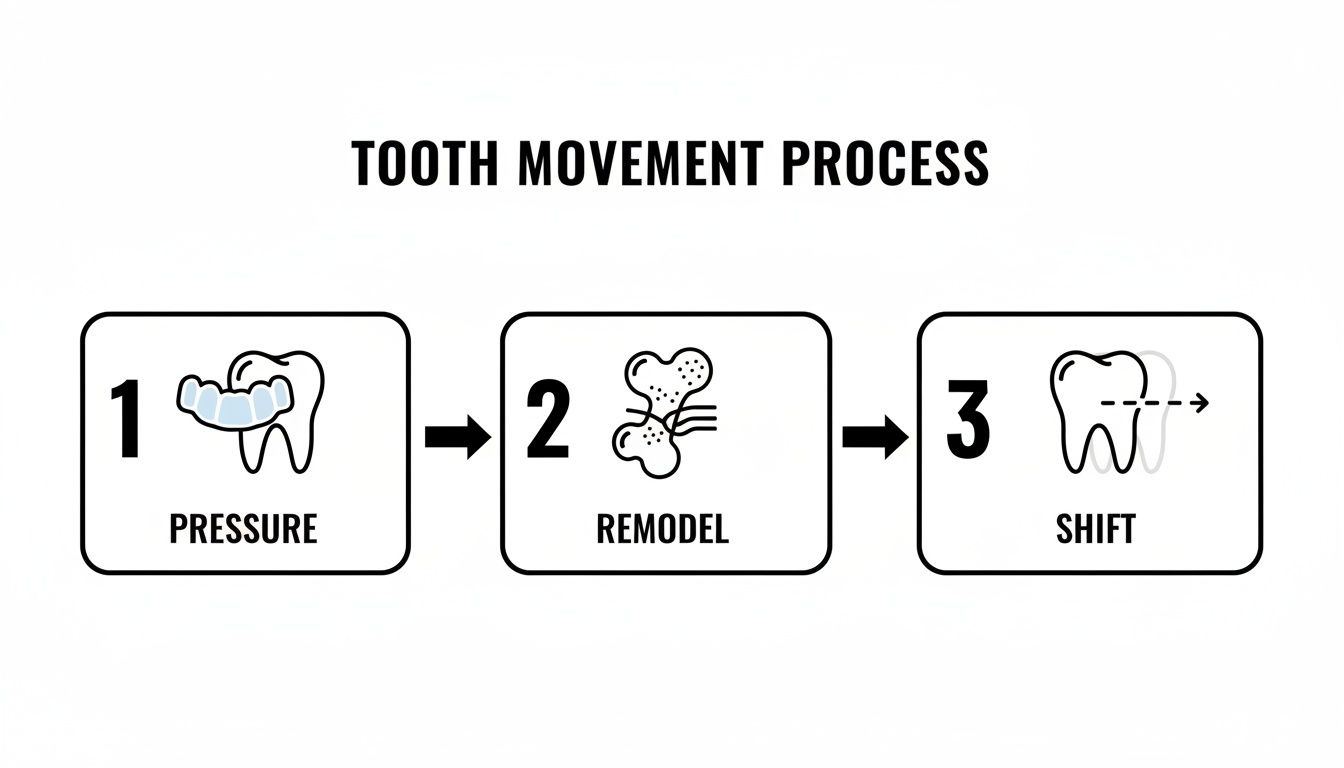
It’s a simple but effective process: the aligner applies pressure, the bone around the tooth remodels, and the tooth shifts into its new, straighter position.
Monitoring Your Progress Without the Clinic Visits
In the past, orthodontics meant regular, time-consuming trips to the dentist for check-ups. While some well-known aligner brands may require these in-person appointments, smarter approaches have made monitoring much more efficient.
The goal of monitoring is simple: to ensure your teeth are tracking correctly with the treatment plan. Regular oversight from a dentist is non-negotiable for a safe and successful outcome.
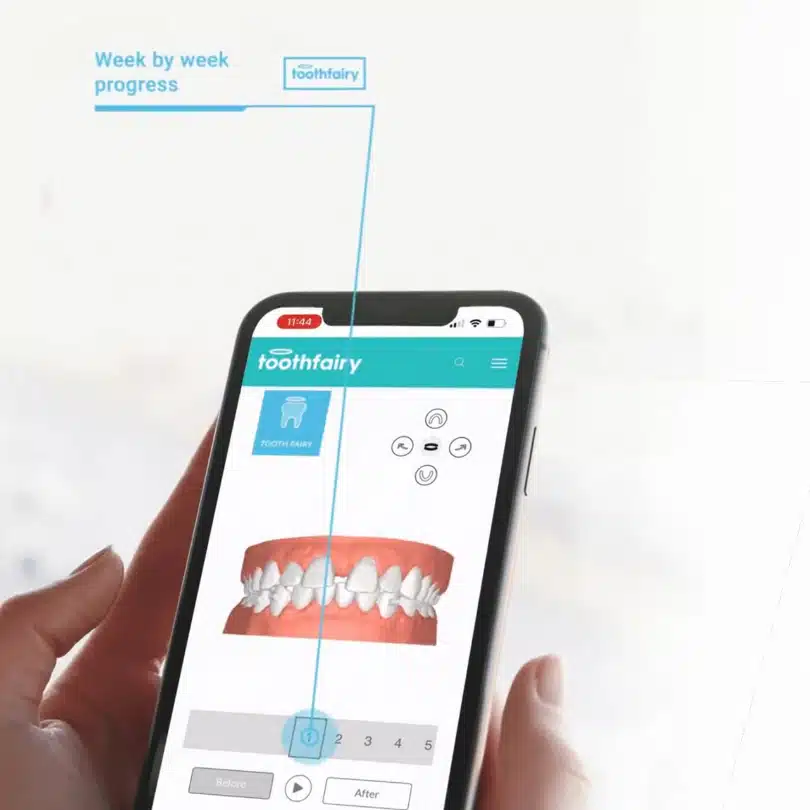
Services like Toothfairy have built this crucial step right into an app. You’ll get reminders to submit photos of your teeth at regular intervals, which are then reviewed by your assigned dentist. This allows them to track your progress remotely, confirm everything is moving as it should, and give you the go-ahead to move on to your next set of aligners.
This combination of clever tech and professional care ensures your journey stays on track without the hassle of constant clinic visits, making it a more convenient and affordable path to your dream smile.
Are Clear Aligners The Right Choice For You?
Clear aligners are a brilliant way to get a straighter smile, but they aren’t a one-size-fits-all fix for every orthodontic issue. The most important first step is figuring out if you’re a good candidate. This helps set the right expectations and ensures you’ll be happy with the final result.
It all comes down to whether your specific dental needs match what this technology does best. For a lot of people, it’s a perfect match.
The Ideal Candidate For Clear Aligners
Clear aligners really shine when it comes to correcting mild to moderate alignment issues. This makes them a fantastic option for the vast majority of adults and teens looking to enhance their smile without the fuss of traditional braces.
You’re likely an excellent candidate if you want to fix things like:
- Minor Crowding: Teeth that are just a little overlapped or bunched up.
- Small Gaps: Those annoying spaces between your teeth.
- Slight Overbite or Crossbite: Minor bite issues that don’t need complex jaw adjustments.
- General Straightening: Simply want to improve the overall look and alignment of your smile.
This is precisely why aligners have become so popular, especially with busy professionals. They offer a discreet and convenient way to finally get the smile you’ve always wanted without putting your life on hold. Many adults either missed out on braces when they were younger or have seen their teeth shift back over time, and aligners offer a modern, appealing solution.
Understanding The Limitations
As versatile as they are, clear aligners have their limits. It’s important to be honest about the kinds of cases where another treatment might be better. It’s all about using the right tool for the job.
More complex orthodontic problems often need a different kind of force and mechanical approach than aligners can deliver. For instance, severe bite problems like a significant underbite or a deep overbite might require more intensive treatment. Similarly, teeth that need to be rotated significantly or moved vertically (pulled up or down out of the gum line) are sometimes better managed with fixed braces.
This is exactly why a professional evaluation is non-negotiable. An expert assessment from a dentist is the only way to know for sure that clear aligners are the right—and safest—choice for you.
A professional dental assessment is the most important step in your journey. It confirms your suitability and ensures your treatment plan is designed for a safe, healthy, and predictable result.
This is where a service like Toothfairy offers a smarter path. A dentist-led assessment at the very beginning confirms if you’re a good candidate before you commit to anything. This responsible approach ensures you’re on the right track from day one. The convenience of at-home treatment should never come at the expense of professional oversight, and with the right provider, it doesn’t have to.
Clear Aligners Vs Traditional Braces: A Modern Comparison
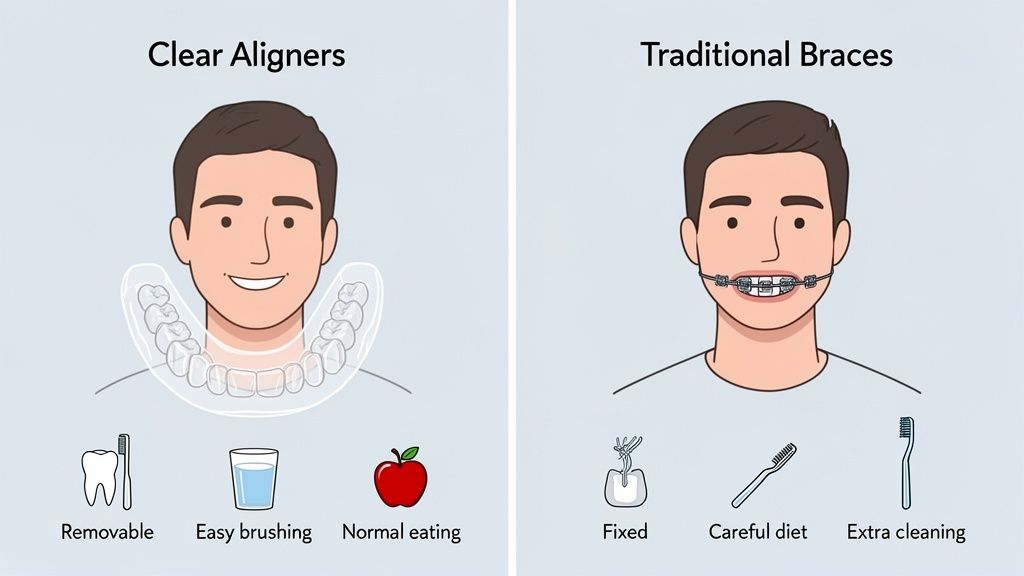
When you’re looking to straighten your smile, the big question often boils down to this: clear aligners or traditional metal braces? Both are designed to get you to the same destination—a beautifully aligned set of teeth—but they take very different journeys to get there.
Understanding these differences is crucial. It’s not just about how they look, but about how they fit into your actual life. Let’s go beyond a simple pros-and-cons list and really dig into the factors that matter day-to-day.
The Aesthetics and Comfort Factor
The most striking difference is, of course, the visual one. Clear aligners are crafted from a smooth, transparent medical-grade plastic, which makes them practically invisible when you’re wearing them. This is a huge win for adults who want to get orthodontic treatment without feeling self-conscious at work or out with friends.
Traditional braces are the complete opposite. With their metal brackets and wires, they’re impossible to miss.
But it’s not just about looks. Comfort plays a massive role. The smooth plastic of clear aligners is typically very gentle on the inside of your mouth. In contrast, the metal brackets and wires from braces can sometimes rub against your cheeks and gums, causing sore spots and ulcers that often need orthodontic wax for relief.
Convenience and Lifestyle Impact
This is where clear aligners really pull ahead. Their standout feature is that they are fully removable, and this one simple fact changes everything about your daily routine.
Because you pop them out to eat and drink, there are absolutely no food restrictions. Fancy a crunchy apple or some sticky toffee? Go right ahead. With fixed braces, there’s a whole list of foods you have to avoid to prevent breaking a bracket or wire.
Oral hygiene is another game-changer. You just take your aligners out to brush and floss exactly as you normally would, making it easy to keep your teeth and gums healthy. Cleaning around fixed braces is a far trickier business, often requiring special brushes and a lot more time to navigate the hardware, which can increase the risk of plaque building up.
Comparing The Key Differences
To help you see the differences at a glance, we’ve put together a simple, side-by-side comparison. This really helps to highlight how each option stacks up across the patient experience.
Comparing Clear Aligners and Traditional Braces
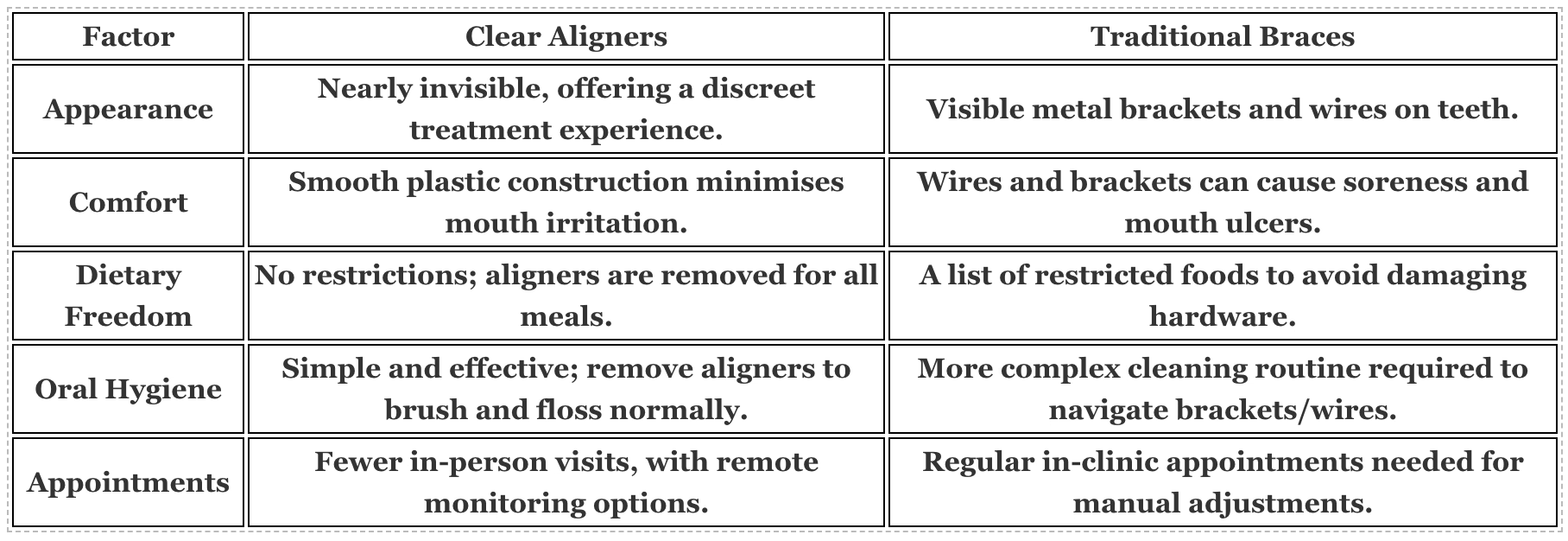 While clear aligners present a compelling case for the most common orthodontic problems, it’s only fair to say that traditional braces are still a powerhouse. For particularly complex issues like severe bite correction or major tooth rotations, fixed braces might still be the dentist’s top recommendation.
For most people, though, the choice comes down to finding a solution that is both effective and convenient. Modern, dentist-monitored options like Toothfairy really deliver on this, giving you the discreet, flexible benefits of aligners with the essential professional oversight of a qualified UK dentist. It’s simply a smarter, more affordable, and less disruptive way to achieve the smile you’ve always wanted.
The Price Tag and Long-Term Care for Your New Smile
So, you’re thinking about clear aligners. Once you get past the initial excitement, two very practical questions usually pop up: “How much is this actually going to cost me?” and “What do I have to do to keep my teeth straight afterwards?”
Let’s get straight into it, so you know exactly what to expect from start to finish.
The cost of clear aligner treatment in the UK isn’t a one-size-fits-all figure. It really hinges on how much work your teeth need. A simple case, like closing a small gap or fixing minor crowding, is going to be on the lower end of the scale. More complex adjustments that take longer will naturally cost more.
Breaking Down the Cost
If you go the traditional route with a specific aligner brand at a high-street orthodontist, you could be looking at a bill anywhere from £3,000 to £5,000, sometimes even higher. A big chunk of that cost covers frequent in-person appointments, the clinic’s running costs, and of course, the brand name itself.
But things have changed. Newer, smarter approaches have figured out how to deliver the same results without all the overheads. By using technology for remote consultations and monitoring, companies like Toothfairy can provide dentist-led treatment for a fraction of that price. It’s opened the door for so many people who thought a straighter smile was out of reach.
Protecting Your Investment: The Aftercare Plan
Getting your teeth perfectly straight is a brilliant achievement, but the job isn’t quite done when you pop out that final aligner. The next phase is all about making sure they stay that way for good. This is where retainers come in, and they are absolutely essential.
Your teeth have a kind of “memory” and will naturally try to shift back to their original spots. It’s a normal biological process. Retainers are your defence against this, ensuring all your hard work doesn’t slowly unravel.
Think of it like this: the aligners were the intensive personal training sessions for your teeth. Retainers are the ongoing membership to keep them in shape. They are non-negotiable if you want to protect your results.
What to Expect from Your Retainers
Your retainers will look and feel a lot like your aligners – custom-made, clear, and comfortable. The main difference is how often you’ll wear them.
Here’s what the long-term plan usually looks like:
- Full-Time Wear: For the first few months after your treatment ends, you’ll probably be asked to wear your retainers full-time (about 22 hours a day). This is a critical period where the bone and ligaments around your teeth are firming up in their new positions.
- Night-Time for Life: After that initial phase, you’ll switch to wearing them only at night.
Popping in your retainers before bed quickly becomes a simple, automatic part of your routine. It’s a tiny commitment that pays off for years, safeguarding the confident, straight smile you’ve invested in.
Your Questions About Clear Aligners, Answered
It’s completely normal to have questions when you’re thinking about straightening your teeth. To help you get a clearer picture, we’ve put together honest answers to the queries we hear most often from people just like you.
Do Clear Aligners Hurt?
This is probably the number one question we get, and the honest answer is: you’ll feel some pressure, but it shouldn’t be painful. For the first day or two after you pop in a new set of aligners, your teeth will feel a bit tight or tender.
That feeling is actually a good sign! It means the aligners are doing their job, applying the gentle force needed to shift your teeth into the right place. Think of it as a firm hug for your teeth, which is a world away from the potential nicks and irritation you can get from traditional metal braces.
How Do I Clean My Clear Aligners?
Keeping your aligners clean and crystal-clear is straightforward. The easiest way is to give them a gentle brush with a soft toothbrush and cool water whenever you brush your own teeth. A tiny bit of clear, unscented soap works too, but just be sure to rinse them well.
One thing to remember: always use cool water. Hot water can warp the specialised plastic, changing its shape and potentially setting your treatment back. So, stick to cool or lukewarm temperatures only.
Can I Drink Coffee With My Aligners In?
We recommend taking your aligners out for anything that isn’t plain water. Hot drinks like coffee and tea can warp the plastic, just like hot water can when cleaning them. Plus, drinks with colour—like coffee, red wine, or even fizzy drinks—can stain your aligners, making them far less invisible.
It’s a simple rule of thumb: if it’s not water, take them out. It’s a small habit that goes a long way in keeping your treatment on track and discreet.
What If I Lose an Aligner?
It happens! If you misplace an aligner, the first thing to do is not to worry. The second is to get in touch with your provider straight away. A dentist-led service like Toothfairy will have a clear plan for these situations. They’ll likely tell you to wear your previous set of aligners to stop your teeth from moving back.
Depending on where you are in your treatment, they might even suggest moving on to the next set a little early. The key is to follow their professional advice to make sure you don’t lose any of your hard-earned progress.
Ready to take the next step towards a straighter, more confident smile? With Toothfairy, you can get a professional assessment from a UK-registered dentist without leaving home. Discover how our smart, affordable, and convenient clear aligner treatment can work for you. Start your free online consultation today!
Last updated on February 14, 2026

Toothfairy Care Team
Toothfairy, is the world's smartest dental app, that connects patients to a dentist for a range of issues, from emergencies, cosmetics, prescriptions to virtual exams.
Toothfairy Care Team
Toothfairy, is the world's smartest dental app, that connects patients to a dentist for a range of issues, from emergencies, cosmetics, prescriptions to virtual exams.