Your UK Guide to Fast Tooth Pain Relief at Home
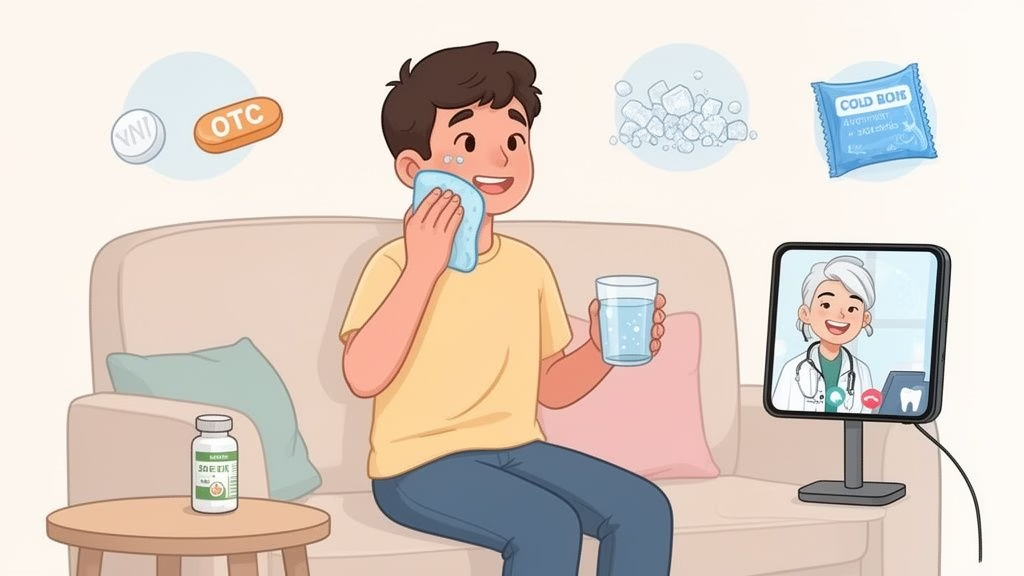
Dealing with a nagging toothache is more than just a bit of a nuisance. It can completely derail your day, making it impossible to focus at work or even get a decent night's sleep. This guide is all about giving you some immediate, safe, and dentist-approved ways to manage tooth pain at home. Think of these tips as first aid for your mouth—they’ll get you through the worst of it, but they're not a permanent fix.
Why You Need More Than Just a Quick Fix for Tooth Pain
When a tooth starts throbbing, your only thought is, "How do I make this stop, now?" While the home remedies we'll cover can offer some much-needed temporary relief, they don’t get to the heart of the problem. Simply masking the pain and hoping it goes away can let a small issue fester into something much more serious.
Think of at-home care as a bridge. It’s there to help you manage the discomfort until you can see a professional who can figure out what's really going on. The real solution is always found by treating the cause, not just the symptom.
The True Cost of a Toothache
Let's be clear: tooth pain is a major disruptor. A 2023 report revealed that nearly 3 in 10 UK adults (28%) have had to take time off work because of dental pain. On top of that, about 35% of us deal with sensitive teeth, a very common cause of that sudden, sharp twinge. You can read more about these findings and see just how widespread this problem is.
This isn’t just a minor inconvenience; it’s a national health issue. Knowing what might be causing the pain is the first step. It could be any number of things:
- A simple cavity (tooth decay)
- A cracked or chipped tooth
- Gum disease or a nasty infection
- An exposed tooth root
- An abscess (a painful pocket of pus)
A toothache is your body's alarm bell, warning you that something isn't right. Home remedies can hit the snooze button, but only a dentist can find the source of the fire and put it out for good.
A Smarter Way to Handle Dental Issues
Seeing the bigger picture is crucial. Temporary measures are great in a pinch, but they're no substitute for professional advice. And this is where modern dental care has really changed the game. Instead of anxiously waiting days for an appointment, you can get expert guidance almost instantly.
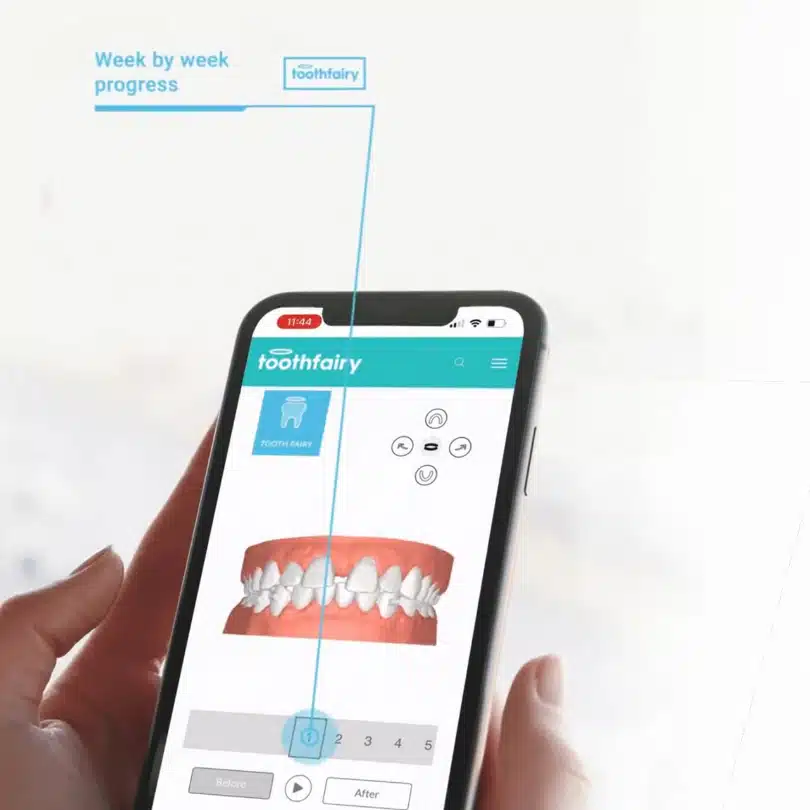
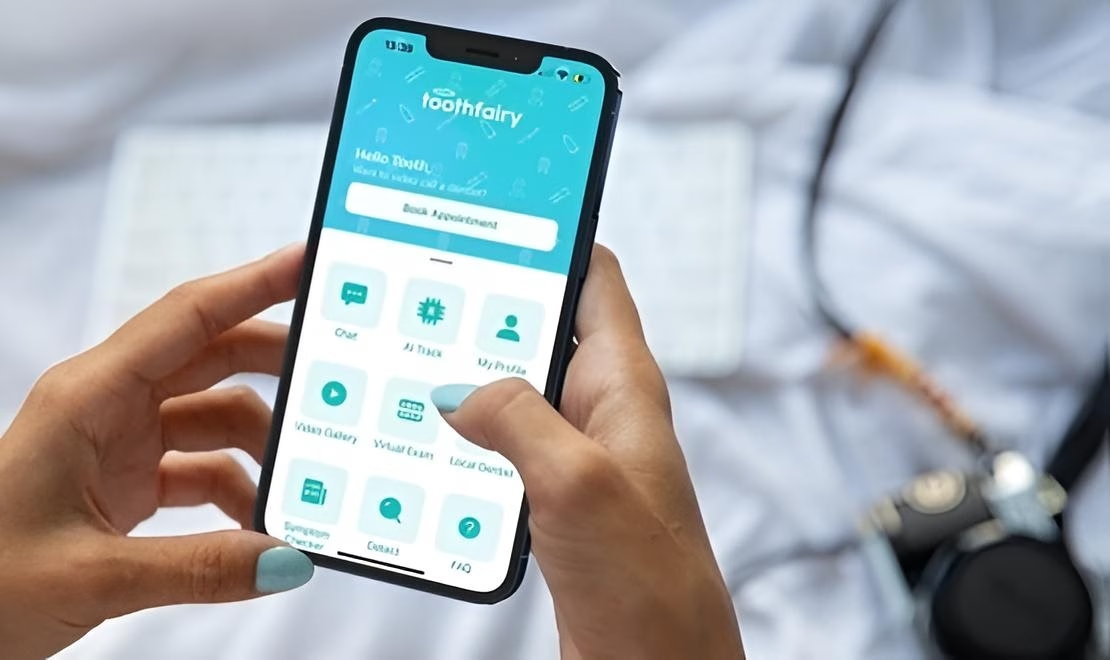
Services like Toothfairy, for example, offer a smarter and more affordable way to handle everything from dental emergencies and cosmetic work to straightening your teeth. You can have a video consultation with a UK-registered dentist right from your sofa, bringing the dentist's expertise to you when you need it most and ensuring you get the right advice without the painful wait.
When a toothache strikes, it's not just a minor inconvenience—it can derail your entire day. The throbbing, sharp pain can make it impossible to concentrate on anything else. While getting to a dentist is always the end goal, there are a few safe and effective things you can do right now, at home, to get some immediate relief and manage the discomfort.
These are tried-and-tested methods that we dentists often recommend to patients for temporary relief. They work by tackling the two main culprits behind tooth pain: inflammation and bacteria.
Go Back to Basics with a Saltwater Rinse
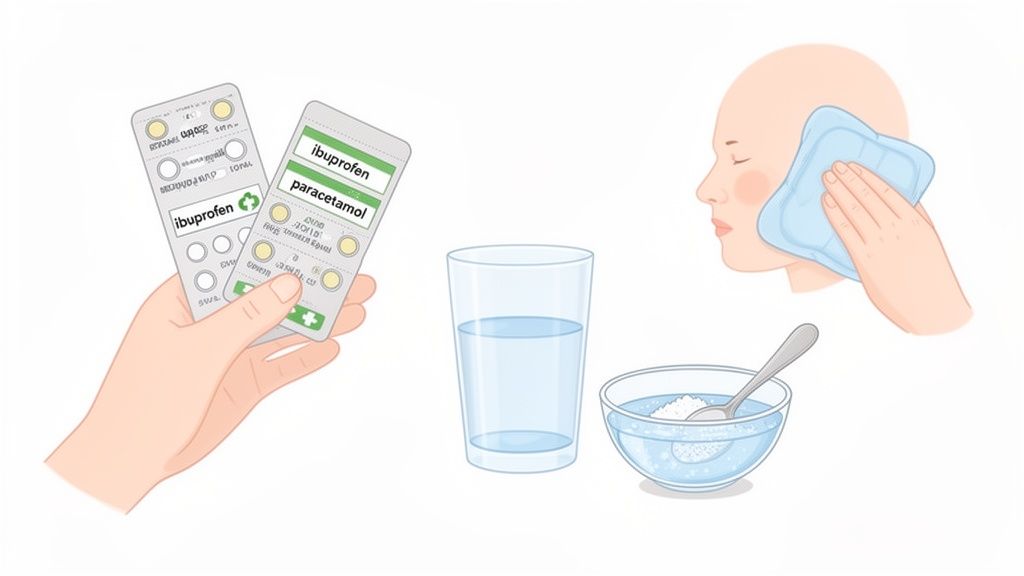
It might sound like an old wives' tale, but a simple saltwater rinse is one of the most effective first-aid measures for a sore tooth. Salt is a natural disinfectant, and a warm rinse does wonders for soothing inflamed gums and cleaning out any trapped food particles that could be irritating the area. It’s gentle, effective, and you already have everything you need.
Just stir half a teaspoon of regular table salt into a glass of warm water until it dissolves. Don't make the water too hot, as you could burn yourself or aggravate the tooth. Swish the solution around your mouth for about 30 seconds, really focusing on the painful spot, then spit it out. You can do this a few times a day, particularly after you've eaten, to keep things clean and calm the inflammation.
The Right Way to Use a Cold Compress
If you’ve got visible swelling in your cheek—a classic sign of a dental abscess or significant inflammation—a cold compress is your best friend. The cold helps shrink the blood vessels, which brings down swelling and provides a welcome numbing sensation to the area.
But there’s a right and a wrong way to do it.
- Never apply ice directly to your skin or the tooth itself. This can cause ice burns or, worse, send a jolt of excruciating pain through an exposed nerve.
- Instead, wrap some ice cubes or a bag of frozen peas in a thin tea towel.
- Hold this against the outside of your cheek for 15 to 20 minutes.
- Give the area a rest for at least 20 minutes before reapplying. You can repeat this cycle as often as you need to.
Remember, the compress always goes on your cheek, never inside your mouth. This simple rule prevents a lot of unnecessary, intense pain.
Choosing the Right Over-the-Counter Pain Relief
For more stubborn pain, reaching for an over-the-counter painkiller is a sensible step. In the UK, the most common choices are ibuprofen and paracetamol, and knowing which one to take can make a real difference.
Ibuprofen is a non-steroidal anti-inflammatory drug (NSAID), which means its primary job is to reduce inflammation. Since most dental pain is caused by swelling, ibuprofen is often the more effective option. Paracetamol works differently by blocking the pain signals sent to your brain.
For adults, a standard dose is 200-400mg of ibuprofen every 4 to 6 hours, or 500mg-1g of paracetamol every 4 to 6 hours. The golden rule is to never exceed the maximum daily dose written on the box.
If one isn't quite cutting it, some people find it helpful to alternate between the two. You could take a dose of paracetamol, then two hours later take a dose of ibuprofen, and so on. Just be sure to chat with a pharmacist or your GP first if you have other health conditions or are on any other medication.
Remember, these are all temporary fixes. If the pain doesn't go away, it's your body's way of telling you to get professional help, whether that’s seeing your local dentist or using a service like Toothfairy for an urgent consultation.
Below is a quick-reference table to help you manage your symptoms safely at home.
Dentist-Approved Methods for At-Home Pain Relief
A quick reference for safe, temporary methods to ease tooth pain, including key instructions and safety advice.
| Method | How It Works | Instructions & Safety Tips |
|---|---|---|
| Warm Saltwater Rinse | Acts as a natural disinfectant, reduces inflammation, and cleanses the area of debris. | Dissolve ½ tsp of salt in a glass of warm water. Swish for 30 seconds and spit out. Repeat several times a day. |
| Cold Compress | Constricts blood vessels to reduce swelling and numb the area, providing pain relief. | Wrap ice in a thin towel. Apply to the outside of your cheek for 15-20 minutes at a time. Never apply directly to skin or tooth. |
| Over-the-Counter Analgesics | Ibuprofen targets inflammation directly, while paracetamol blocks pain signals to the brain. | Follow package directions carefully. Never exceed the maximum dose. Check with a pharmacist before alternating medications. |
These at-home measures are your first line of defence against tooth pain, designed to keep you comfortable until you can get a proper diagnosis and treatment from a dental professional.
Home Remedies That Actually Work and Myths to Avoid
When you're dealing with a throbbing toothache in the middle of the night, it’s tempting to try anything for relief. A quick search online, however, can lead you down a confusing path of folk cures and bad advice. The trick is knowing which remedies can genuinely help and which ones are just plain dangerous.
What you're aiming for at home is simple: clean the area, calm the inflammation, and get some temporary numbness without making things worse. Think of it as first aid for your mouth—a way to manage the pain until a dentist can sort out the real problem.
Tried-and-Tested Home Remedies
Some home care tricks are more than just old wives' tales; they have some real science behind them. A 2022 evidence review actually confirmed that things like careful tooth brushing, using a chlorhexidine mouthwash, and applying a cold pack (cryotherapy) are backed by solid evidence. While many people swear by a good old-fashioned saltwater rinse, its benefits are seen as more anecdotal than scientifically proven. You can dig into the research on supportive home remedies yourself if you're curious.
Here are a couple of reliable methods you can try safely:
- A Touch of Clove Oil: Clove is a fantastic natural anaesthetic, thanks to a compound called eugenol. Just put a tiny drop on a cotton bud and dab it directly onto the tooth that's giving you grief. Be careful to avoid your gums and tongue, as it can be quite strong and cause a bit of a sting.
- A Cool Peppermint Tea Bag: Peppermint has mild numbing properties that can be surprisingly soothing. Brew a cup of peppermint tea, let the bag cool right down, and then place it against the sore area. For extra relief, you can even pop it in the freezer for a few minutes first. Understanding how to use ingredients properly is key, and you can learn more about the safe culinary uses of peppermint oil to see why quality matters.
Dangerous Myths You Must Avoid
Not all "remedies" you hear about are worth trying. Some popular suggestions can do serious damage, turning a simple toothache into a much bigger headache. It's crucial to know what to steer clear of.
The absolute worst advice out there is to crush an aspirin tablet and apply it directly to your tooth or gum. Aspirin is an acid. It won't work any faster, but it will give you a nasty chemical burn and a painful ulcer. Just don't do it.
Here are a few other bits of bad advice to ignore:
- Dabbing on Hard Alcohol: Using spirits like whisky or brandy might numb the area for a moment, but it's a terrible idea. The alcohol can badly irritate your gums, and it’s especially unsafe to use on children.
- Guessing with Hydrogen Peroxide: If you don't dilute hydrogen peroxide correctly, you can easily burn the delicate tissues in your mouth. Swallowing it can also cause serious stomach problems.
- Hoping It'll Just Go Away: Perhaps the most dangerous myth of all is thinking a toothache will disappear on its own. Pain is your body's alarm bell. Ignoring it just gives an underlying infection time to get much, much worse.
At the end of the day, these are just stopgap measures. They're a bridge to get you to proper professional care, whether that's seeing your dentist in person or getting an immediate virtual consultation with a service like Toothfairy for a diagnosis from a registered UK dentist.
Knowing When You Need to See a Dentist Immediately
While rinsing with salt water or using a cold pack can give you some welcome temporary relief, it’s crucial to remember that these are just stop-gap measures. They don't fix the underlying problem. At a certain point, trying to manage serious tooth pain at home stops being a sensible option and starts becoming a risk.
Think of a persistent toothache as your body’s alarm bell. It’s signalling that something is wrong and needs a professional eye. Ignoring it can turn a small, easily fixed issue like a minor cavity into a full-blown dental abscess. An abscess is a pocket of pus caused by a bacterial infection, and if it's left to its own devices, that infection can spread to your jaw, neck, or even other parts of your body. That's when a dental problem becomes a serious health problem.
Red Flags That Demand Urgent Attention
It's vital to know when to draw the line and call a professional. Some symptoms are too serious to ignore, and waiting for them to "just go away" is a bad idea.
You need to seek help straight away if you experience any of the following:
- Severe, throbbing pain that goes on for more than 48 hours and isn’t touched by over-the-counter painkillers.
- A fever, chills, or just feeling generally unwell. This is a classic sign your body is battling a nasty infection.
- Swelling in your face, cheek, or neck, which often signals that an abscess is spreading.
- Difficulty breathing or swallowing. This is a medical emergency; the infection might be blocking your airway.
- A foul taste in your mouth or visible pus coming from around the tooth—a sure sign of infection.
If you have trouble breathing or swallowing alongside tooth pain, don't wait. Go to A&E immediately. This is a critical warning sign that an infection has become dangerous.
The decision-making process for home care can feel tricky, but some basic safety checks are non-negotiable.
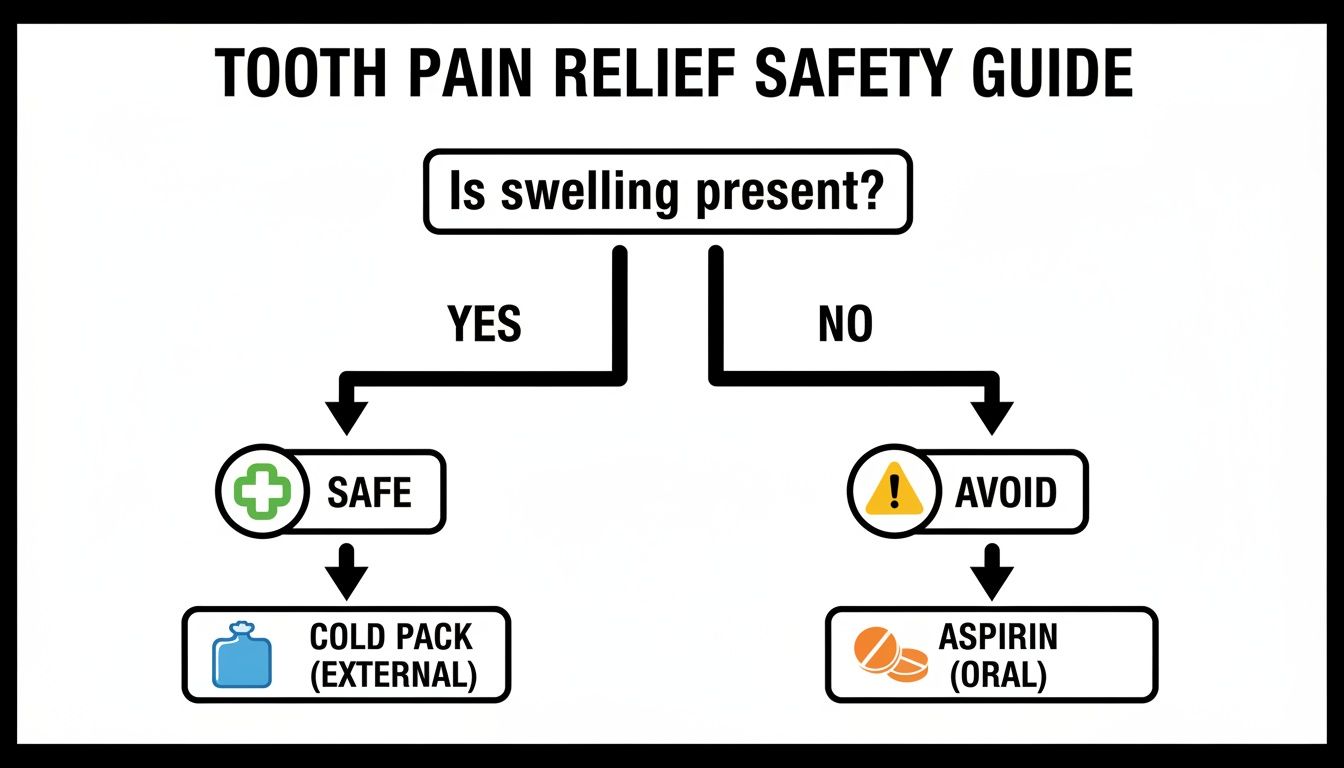
This just goes to show how important it is to use the right method for the right symptom—like applying a cold pack to the outside of your face for swelling, rather than the old (and very dangerous) myth of putting aspirin directly on a tooth.
Why Waiting Is a Dangerous Gamble
Putting off a dental visit when you have these symptoms is a gamble you don't want to take. A problem that could be sorted with a simple filling today can quickly spiral into something requiring a root canal or even an extraction tomorrow. The longer you wait, the more complex and expensive the treatment is likely to become.
Ultimately, the smartest and safest thing you can do is act quickly. When home remedies aren't cutting it, it's time to let a professional take the reins. Services like Toothfairy now make it much easier to get expert advice fast, offering video consultations with UK-registered dentists so you can get a proper diagnosis and treatment plan without delay.
Get Professional Dental Advice Without Leaving Home
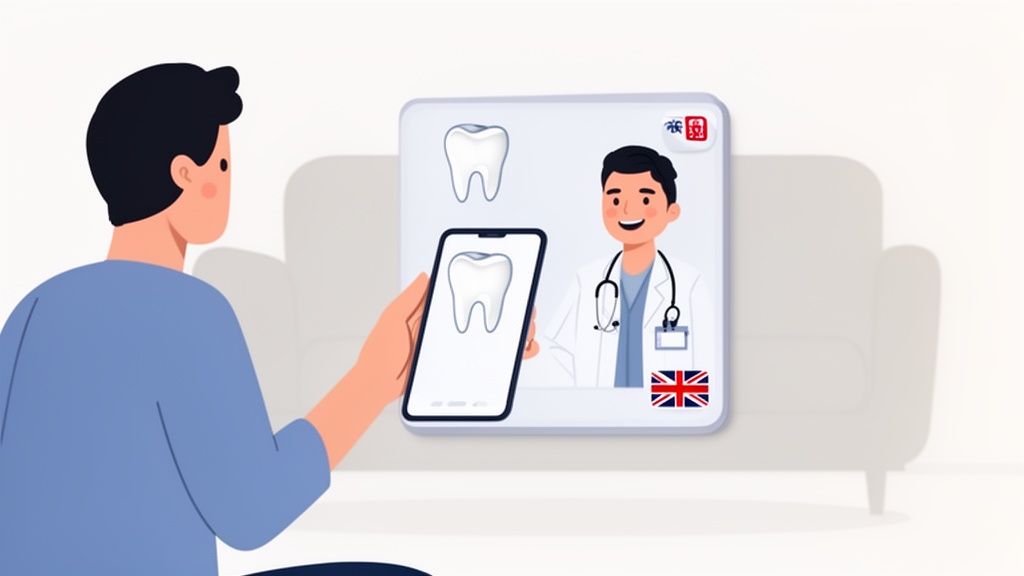
What if you could skip the frantic search for an emergency appointment and speak to a dentist right now, from your own sofa? That’s exactly what modern teledentistry offers. It’s a huge leap forward, giving you immediate access to professional care right when you need it most. For anyone grappling with tooth pain, this can be an absolute lifeline.
Trying to land a last-minute dental appointment is often a nightmare. You might be told the next available slot is weeks away, or you can’t get time off work. For many, dental anxiety makes even picking up the phone a daunting task. These hurdles mean people often put off getting help, which can turn a small, fixable problem into something far more serious.
What to Expect From a Virtual Consultation
A video call with a Toothfairy dentist is refreshingly simple and all about getting you answers, fast. You connect directly with a fully qualified, UK-registered dental professional in a secure video call. They'll listen, assess the situation, and give you a clear plan of action.
During the consultation, you'll have the chance to:
- Talk through your symptoms: Explain what you’re feeling, how long it’s been bothering you, and any other relevant details. No rushing.
- Show them the problem: Using your phone or computer camera, you can point out the exact tooth or gum area that’s causing pain. This visual information is incredibly helpful for the dentist.
- Get a professional diagnosis: Based on what you’ve told them and what they can see, the dentist can often pinpoint the likely cause—be it an abscess, a cracked filling, or gum inflammation.
A virtual dental appointment isn't just a quick chat; it’s a proper clinical assessment. A qualified dentist can often diagnose the issue and determine the best course of action just as they would in a clinic, but without the wait or travel.
Getting the Right Medication When You Need It
One of the most practical benefits of teledentistry is getting prescriptions sorted on the spot. If the dentist decides you need medication, like stronger painkillers or antibiotics to tackle an infection, they can send an electronic prescription directly to your chosen pharmacy.
This service is invaluable, especially when getting an in-person appointment is difficult. The recent pandemic really brought this into focus, as dental antibiotic prescribing in England shot up by around 25% when routine services were scaled back. It shows just how vital safe, professionally-guided remote support is. It ensures you get the right medication, prescribed by a professional who understands your situation, rather than just guessing. You can read the full research on dental prescribing trends for a deeper dive.
Ultimately, services like Toothfairy provide an immediate, accessible, and often more affordable way to get expert dental care. Whether it’s an urgent problem, a question about cosmetic treatment, or support during your teeth straightening journey, you get professional help on your terms.
Common Questions About Managing Tooth Pain
When you’re grappling with tooth pain at home, it’s completely normal to have a few questions. Trying to figure out the right and wrong things to do can feel overwhelming, especially when all you want is some relief. To clear things up, we've tackled some of the most common queries people have about managing a toothache safely and effectively.
How Long Can I Safely Manage Tooth Pain at Home?
Realistically, you should only be managing tooth pain at home for a day or two, tops. Think of home remedies as a temporary bridge to get you to a proper dental appointment, not a long-term solution for tooth pain relief at home.
If the pain is severe, seems to be getting worse, or you notice other symptoms like a fever or facial swelling, that's your cue to get professional advice immediately. These are often red flags for an underlying infection or decay that won't go away on its own. Waiting longer than 48 hours is a real gamble—a problem that might have been a simple filling can quickly spiral into something needing a more involved treatment, like a root canal.
What if I Have Tooth Pain While Using Clear Aligners?
A bit of tenderness when you first start with aligners is pretty standard; after all, your teeth are being gently guided into a new position. However, sharp, persistent, or severe pain is definitely not part of the plan. If you’re experiencing this with aligners from a specific brand, you need to speak with a dentist straight away.
It could be a sign that the aligner isn't fitting correctly, or it might be highlighting a separate dental issue that needs looking at. A quick and easy teledentistry service like Toothfairy is perfect for this, as you can get an expert opinion on whether you should pause your treatment until the problem is sorted.
Remember, the whole point of aligners is to move your teeth safely. Pain is your body's way of telling you something isn't right with the appliance or your overall oral health.
Which Over-the-Counter Painkiller Is Best for a Toothache?
For most adults, ibuprofen is a great first choice for tooth pain. Because it's an anti-inflammatory, it doesn't just mask the pain—it actively works to reduce the swelling that's often causing it. Paracetamol is another solid option, working differently by blocking pain signals in the brain. Some people find alternating between the two offers the best relief, but it’s always wise to check with a pharmacist before doing so.
The most important thing? Always read the instructions on the packet, never go over the stated dose, and double-check for any conflicts with other health conditions you have or medications you're taking. If these common painkillers aren't touching the sides, that’s another strong signal that a dental visit is in order.
Is It Safe to Get an Online Prescription for Tooth Pain?
Yes, it's perfectly safe to get an online prescription, but only when it's through a registered UK teledentistry platform like Toothfairy. The process involves a qualified dentist carrying out a proper video assessment of your symptoms and carefully reviewing your medical history before they even consider prescribing medication.
This professional oversight is what makes it safe. You’re getting the correct, regulated medication from a dental expert who has determined it's clinically necessary for you. It's a much safer and more responsible way to get help than trying to self-diagnose or simply hoping the pain will go away.
Don't let tooth pain take over your life. Toothfairy gives you immediate access to UK-registered dentists for consultations, diagnoses, and prescriptions, all from the comfort of your home. Get the expert care you need, right when you need it. Visit Toothfairy to book your virtual appointment now.
Last updated on January 11, 2026

Dr. Deepak
ToothFairy Care Team.
Dr. Deepak
ToothFairy Care Team.