Teeth Are Sensitive After Whitening A UK Dentist’s Guide
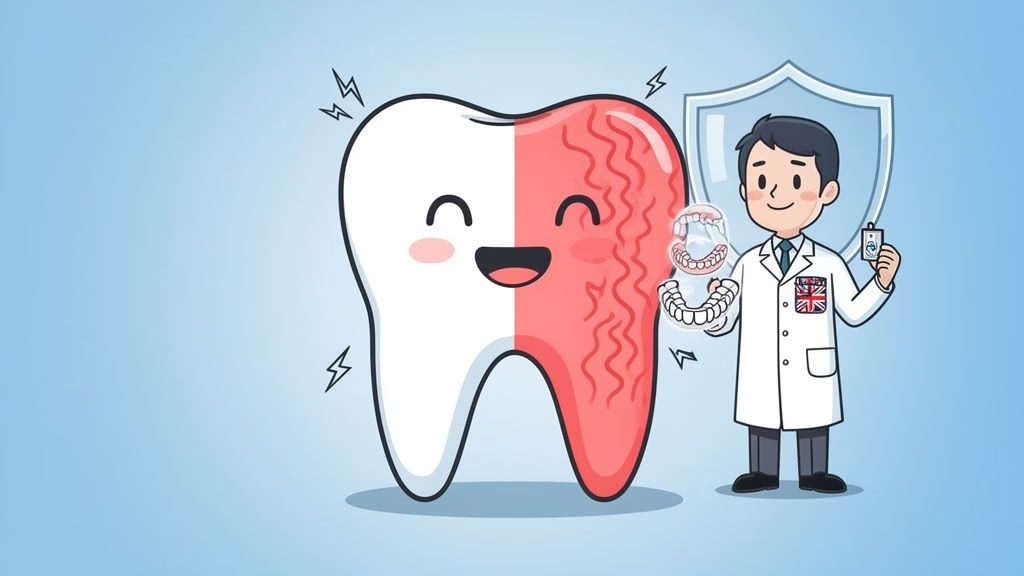
It's a familiar story: you've just finished a whitening treatment, excited for your new, brighter smile, and then—zing. A sip of cold water sends a sharp jolt through your teeth. The good news? If your teeth are sensitive after whitening, it’s almost always a normal and temporary side effect. Relief is usually just a few days away.
Why Your Teeth Hurt After Whitening And How Long It Lasts
That sharp, sudden feeling is your tooth's way of telling you it’s just had a very deep clean. It helps to think of your tooth enamel as a dense, protective sponge. Whitening gels work by seeping into this sponge to gently break down the stains that have settled deep inside.
This process briefly makes the enamel more porous, opening up thousands of microscopic channels called dentinal tubules. These tiny tubes lead directly to the tooth’s nerve centre (the pulp). When they're open, triggers like cold air or a hot coffee can travel down them much faster and stimulate the nerve, which is what causes that uncomfortable jolt.
How Long Does The Sensitivity Last?
For the vast majority of people, this heightened sensitivity is very short-lived. The worst of it usually hits within the first 24 to 48 hours right after your treatment.
After this initial window, your enamel naturally starts to remineralise and rehydrate. This process effectively plugs up those tiny channels again. Within about 72 hours, you should find the sensitivity has either vanished completely or faded into the background.
To give you a clearer picture, here’s a quick rundown of what to expect.
Post-Whitening Sensitivity At A Glance
| Symptom | Typical Duration | Primary Cause |
|---|---|---|
| Sharp, sudden pain ('zingers') with cold, hot, or sweet triggers | 24-48 hours (most intense phase) | Open dentinal tubules allowing stimuli to reach the tooth nerve. |
| General dull ache or sensitivity | Up to 72 hours | Temporary dehydration of the tooth during the whitening process. |
| Gradual return to normal comfort | Within 3-4 days | Natural remineralisation and rehydration of the tooth enamel. |
As you can see, the discomfort is typically a brief stop on the way to a brighter smile, not a permanent condition.
It's reassuring to know this is well-documented. Research across Europe confirms that while sensitivity is the most common side effect of at-home whitening, it's almost always fleeting and resolves itself soon after you stop the treatment. You can find more detail on why sensitivity is a common but temporary whitening effect.
Is This Experience Universal?
Not at all. Some people barely feel a thing, while others are more prone to sensitivity. Factors like pre-existing enamel wear, a history of sensitivity, or gum recession can all play a big part in how your teeth react. For a deeper dive, understanding why teeth whitening can hurt offers some great context on the different things that can influence your experience.
This is exactly why a one-size-fits-all, shop-bought kit can be such a gamble. A professionally supervised plan, like the dentist-led cosmetic treatments from Toothfairy, is designed to get ahead of this common side effect. By assessing your unique dental health first, a dentist can tailor the whitening strength and schedule to minimise discomfort, making your journey to a brighter smile safer and far more comfortable than going it alone.
What’s Actually Happening Inside Your Teeth During Whitening?
Ever wondered why your teeth might feel a bit zingy after a whitening treatment? To get to the bottom of it, we need to look a little deeper than the surface of your smile.
Your tooth's bright, white outer layer is the enamel. Think of it as a tough, protective shield. It’s what keeps the more sensitive parts of your tooth safe and sound.
Just beneath that enamel shield is a layer called dentine. It’s much softer and more porous, and it's full of thousands of microscopic tubes, or 'tubules', that lead directly to the tooth's nerve centre—the pulp. These tiny channels are like little motorways for sensations like heat and cold to travel straight to the nerve.
The Whitening Agent's Job
The active ingredient in most whitening gels is a type of peroxide. Its whole job is to get past the enamel armour and break down the stains lurking underneath. To do this, the gel has to make the enamel temporarily more porous, which lets the whitening agent seep in and work its magic.
But this process has a couple of side effects:
- Temporary Dehydration: The chemical reaction pulls some of the water out of your tooth. This slight dehydration can irritate the nerve, leading to that dull, achy feeling.
- Increased Porosity: By opening up the enamel, the whitening agent also briefly exposes those tiny tubules in the dentine.
This diagram breaks down how the process can trigger sensitivity.
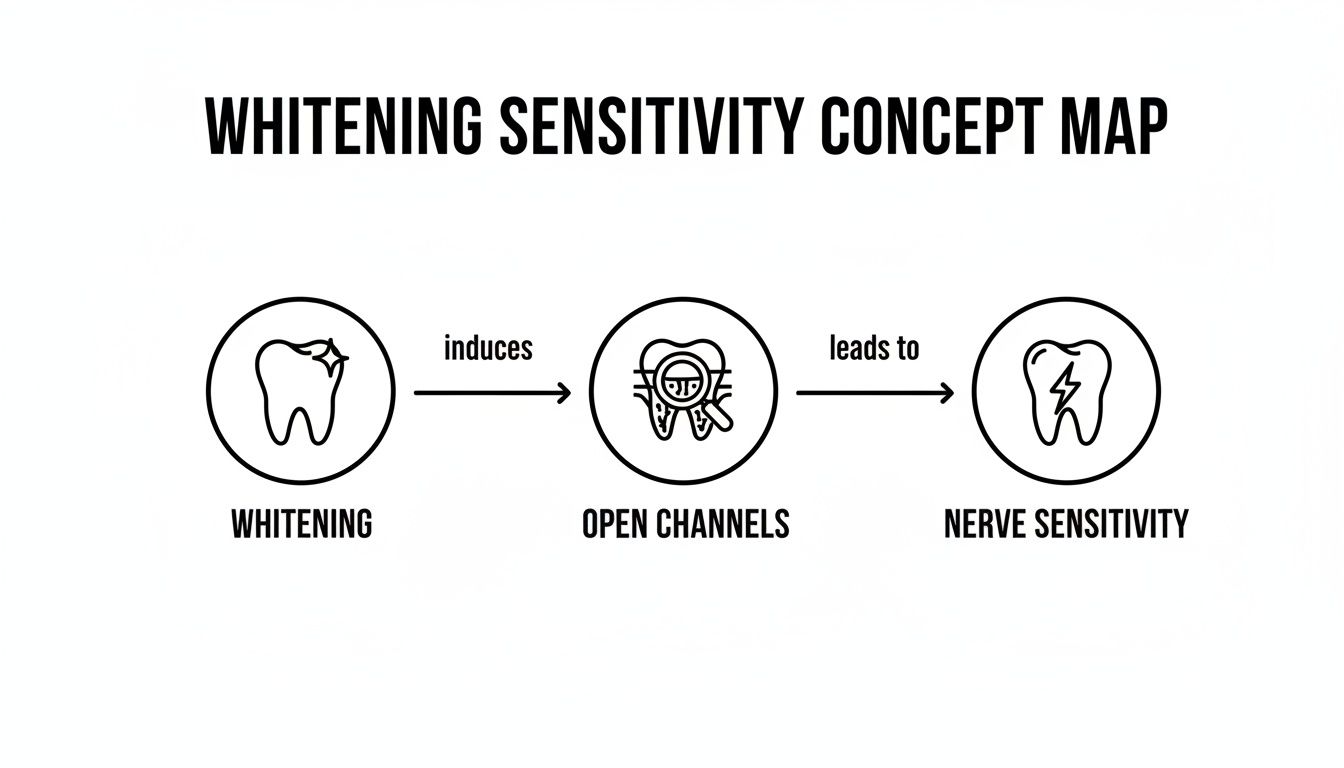
As you can see, the treatment opens up these tiny channels, giving things like cold air or a sip of a hot drink a direct line to your tooth’s nerve. That's what causes the sensitivity.
Why Professional Guidance is Key
When those dentine tubules are more exposed, anything from a cold drink to a gust of wind can send a sharp 'zing' right to the nerve. This is the simple biological reason your teeth are sensitive after whitening. It’s not a sign of damage, but a temporary side effect of the whitening process.
The sensitivity you feel isn't a sign of permanent damage. It's actually a sign that the whitening gel is doing its job. The trick is to manage this temporary phase safely and comfortably.
This is exactly why having a dentist involved makes all the difference. An off-the-shelf kit comes with a one-size-fits-all tray and a generic gel strength, which can easily lead to uneven application, gum irritation, and a lot more sensitivity.
With Toothfairy, on the other hand, a UK-registered dentist oversees the entire process. They start by assessing your teeth, then prescribe a whitening gel at just the right strength for you. You also get custom-fitted trays made from a mould of your teeth, ensuring the gel stays exactly where it needs to be. This dentist-led approach is all about getting you brilliant results while keeping sensitivity to an absolute minimum.
What Puts You at Higher Risk for Sensitivity?
Ever wondered why your friend can whiten their teeth without a second thought, but yours ache at the mere thought of a cold drink afterwards? It’s a common story, and the simple truth is that everyone's smile is unique. A few key factors can make some of us far more prone to that tell-tale sensitivity after a whitening session.
It's not just random luck. Your dental history, your daily habits, and the type of whitening product you use all play a massive part in how your teeth will react. Getting to know these risk factors is the first step towards getting a brighter smile without the wince-factor.
Pre-existing Dental Conditions
Think of your teeth as having their own natural defence system. If that system is already compromised, whitening agents can easily cause discomfort. When your teeth are sensitive after whitening, it's often because of an underlying issue that was already there.
Here are the main culprits:
- Worn-Down Enamel: Enamel is the tough, protective outer layer of your teeth. If it's been thinned out over time by acidic foods, brushing too hard, or acid reflux, the more sensitive layer underneath (the dentine) is left exposed.
- Receding Gums: When your gums pull back from the teeth, they expose the roots. These root surfaces don't have that hard enamel coating, making them naturally sensitive and prime targets for whitening-induced zings.
- Tiny Cracks or Leaky Fillings: You might not even know they're there, but hairline cracks or old fillings that aren't perfectly sealed can create tiny superhighways for the whitening gel to travel directly to the tooth's nerve. Ouch.
The Strength of the Whitening Product
The concentration of the whitening gel is probably the single biggest factor. It's a bit like choosing the right setting on a power washer – too weak and it does nothing, too strong and it can cause damage. Unregulated kits found online can contain shockingly high levels of hydrogen peroxide, sometimes well over the legal limit for at-home products in the UK.
A recent UK dental journal pointed out a crucial fact: around 31% of UK adults already experience tooth sensitivity. This makes choosing the right product even more important when you're aiming for a whiter smile. You can discover more about the prevalence of tooth sensitivity in the UK.
Using a gel that’s too potent for your teeth is a one-way ticket to significant discomfort. A dentist, on the other hand, can provide a professional-grade gel at a strength that’s just right for you, balancing brilliant results with your comfort.
This is exactly where the Toothfairy approach shines. We start with a digital check-in with a UK-registered dentist who assesses your oral health for these very risk factors, like enamel wear or gum recession, before you begin. This professional oversight means your whitening plan is genuinely personalised, which drastically lowers the chance of sensitivity. While whitening is the goal, don't forget that your diet plays a role in overall oral health; for instance, effectively managing sugar cravings helps strengthen enamel and can reduce sensitivity in the long run. It's simply a smarter, safer way to get the smile you're after.
7 Practical Ways to Soothe Sensitive Teeth at Home
So, you’ve whitened your teeth and now they’re feeling a bit tender. The good news is you don’t just have to grit your teeth and bear it. There are some simple, dentist-approved things you can do right now to calm everything down and start enjoying that brilliant new smile.
Think of this as your first-aid kit for whitening sensitivity.
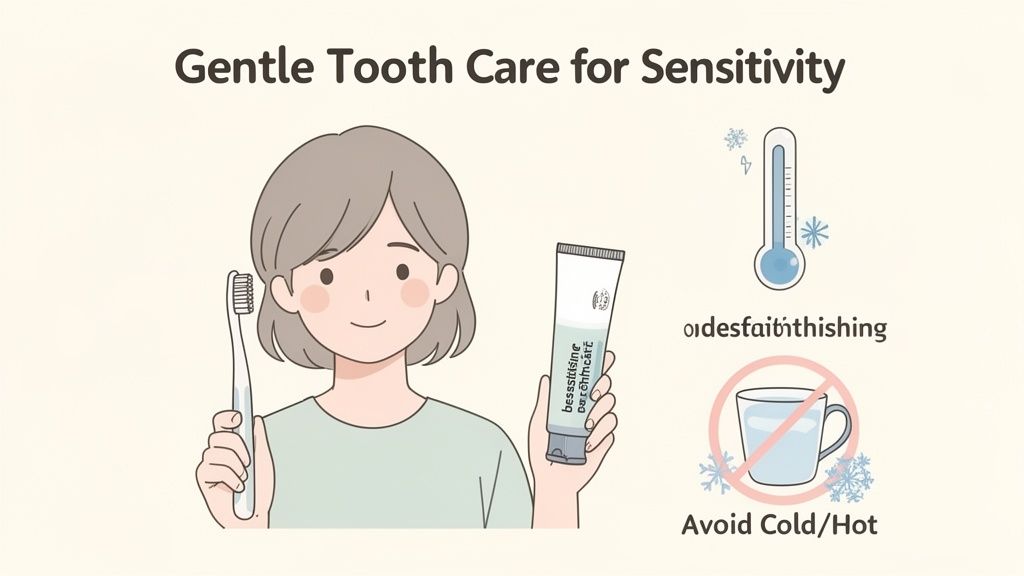
1. Switch to a Desensitising Toothpaste
Your first and most effective move is to switch to a desensitising toothpaste. These aren't just clever marketing; they're formulated with active ingredients that genuinely tackle the root cause of the discomfort.
The key ingredient to look for is potassium nitrate. It works by seeping through the enamel to reach the nerves inside your teeth, basically telling them to calm down. It essentially turns down the volume on those sharp 'zings' you might be feeling. With consistent use, it helps build up a protective shield for more lasting relief.
2. Make Small Tweaks for Big Comfort
Beyond your toothpaste, a few small changes to your routine over the next 48 to 72 hours can make a massive difference. The goal here is simple: reduce anything that might trigger a reaction while your teeth are temporarily more sensitive.
Here’s a quick checklist:
- Mind the Temperature: For the next couple of days, try to stick with lukewarm food and drinks. That piping hot coffee or ice-cold smoothie can send a nasty jolt through the freshly exposed tubules in your enamel.
- Go Soft on Your Brush: Keep up your twice-daily brushing, of course, but do it gently. A soft-bristled toothbrush cleans perfectly well without being harsh on your enamel or gums.
- Sidestep Acidic and Sugary Foods: Fizzy drinks, citrus fruits, and sweets are best avoided for a little while. They can easily aggravate sensitive spots and slow down your teeth's recovery.
These little steps create a much calmer environment for your teeth, allowing them to settle down and remineralise without being interrupted by painful shocks.
3. Try At-Home Remedies
When it comes to managing sensitivity after whitening, a few common at-home methods can offer real relief. Knowing how each one works helps you choose the right approach for your needs.
Here's a quick comparison of some popular options:
Comparing At-Home Sensitivity Relief Methods
| Method | How It Works | Best For | Toothfairy Dentist Tip |
|---|---|---|---|
| Desensitising Toothpaste | Contains potassium nitrate or stannous fluoride to block nerve signals or seal dentin tubules. | Daily, ongoing management and prevention of mild to moderate sensitivity. | Start using it a week before you whiten to build up protection in advance. |
| Fluoride Mouthwash | Strengthens tooth enamel and helps to block the tiny pores (tubules) leading to the nerve. | General sensitivity and strengthening enamel after a whitening session. | Look for an alcohol-free formula to avoid any stinging or drying effects. |
| Avoiding Triggers | Temporarily cutting out very hot, cold, sweet, or acidic foods and drinks. | Immediate, short-term relief in the first 24-48 hours post-whitening. | Room-temperature water is your best friend. Sip it throughout the day. |
| Pain Relievers | Over-the-counter anti-inflammatory medication like ibuprofen. | Tackling more noticeable discomfort or throbbing that doesn't subside quickly. | Always follow the dosage on the packet and take with food if possible. |
Choosing the right combination of these methods can make your post-whitening experience much more comfortable. Most people find that a desensitising toothpaste combined with avoiding triggers is all they need.
When You Need a Dentist's Advice—Fast
While these home remedies work wonders for most people, sometimes you just want the reassurance of a professional. And let's be honest, waiting weeks for a dental appointment isn't ideal when you're feeling discomfort now.
Getting quick access to a dental professional can make all the difference. Instead of second-guessing, you get clear, personalised advice for your specific symptoms, ensuring you handle the sensitivity safely and effectively.
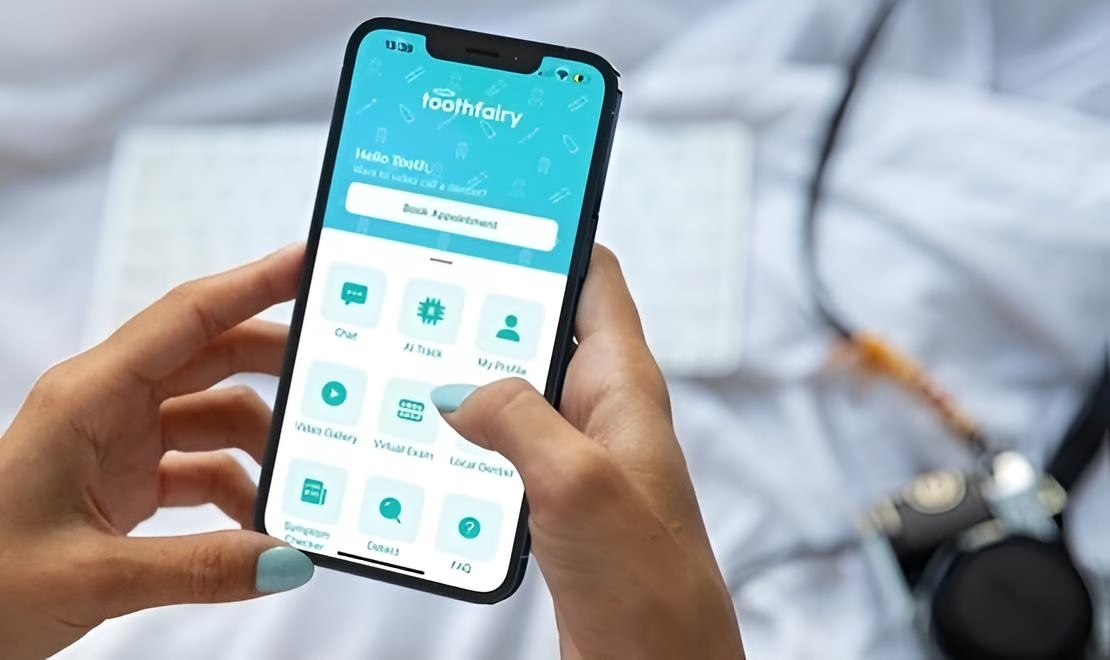
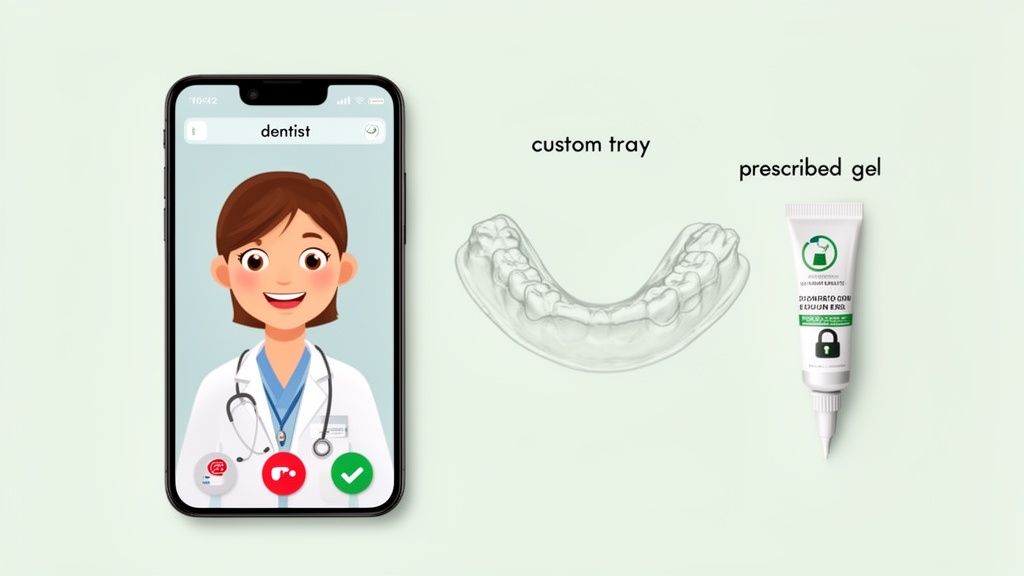
This is where Toothfairy offers a smarter path. Through the app, you have a direct line to your own assigned UK dentist. If your teeth are sensitive after whitening, you can just pop them a message or book a quick video chat. You get professional guidance that fits around your life, giving you peace of mind without the waiting room.
The Hidden Dangers Of Unregulated Online Whitening Kits
The promise of a dazzling smile for just a few quid is tempting, and it’s easy to see why so many of us click ‘buy now’ on whitening kits we find online. The problem is, what arrives in the post can be a far cry from what was advertised. The online marketplace for teeth whitening is a bit like the Wild West—unpoliced and unpredictable.
Behind the flashy ads and influencer endorsements often lies a serious risk to your health. The heart of the issue is the concentration of the whitening agent, which is usually hydrogen peroxide. Here in the UK, it is illegal for any over-the-counter product to contain more than 0.1% hydrogen peroxide. Unfortunately, many online sellers completely ignore this crucial safety law.
A Dangerous Gamble With Your Smile
These dangerously strong formulas aren't a shortcut to a brighter smile; they're a fast track to significant pain and lasting damage. If you find your teeth are sensitive after whitening with one of these unregulated products, it’s a major red flag that something is seriously wrong.
Excessively high peroxide levels can lead to some nasty consequences:
- Severe Chemical Burns: The potent gel can easily leak out of poorly fitting trays, causing painful burns to your delicate gum tissue and the inside of your cheeks.
- Intense and Lasting Sensitivity: This isn't the mild, temporary sensitivity you might get from a professional treatment. The pain from these kits can be severe and stick around for a long time.
- Irreversible Enamel Damage: Overly aggressive gels can literally strip away your protective enamel, leaving your teeth permanently weakened and vulnerable to decay.
A startling investigation by the consumer group Which? revealed just how widespread this problem is. They found that a shocking 21 out of 36 online kits contained illegal levels of peroxide, with some containing over 100 times the legal limit. Another study echoed these alarming findings, concluding that a staggering 85% of whitening products bought from various online retailers were dangerously potent. You can read more about these harmful tooth whitening trends in the UK.
This isn't just about managing a bit of sensitivity; it's about protecting your long-term health. Choosing an unregulated kit is a gamble where you're staking your dental well-being.
This is where you see the stark difference between a random online purchase and a professionally supervised treatment. With Toothfairy, a registered UK dentist oversees every step of your whitening journey. They prescribe a legally compliant, professional-strength gel that’s right for you, which you’ll use with custom-fitted trays. It’s simply the smarter, safer, and in the long run, more affordable way to achieve the bright smile you want without putting your health at risk.
How Professional Supervision Makes Whitening Safer And Smarter
Trying to figure out teeth whitening on your own can feel a bit like a lottery. You're never quite sure what you're going to get. But it absolutely doesn't have to be that way. Opting for a modern, dentist-led process is easily the smartest move you can make to dial down the risks and get the bright, even results you’re actually hoping for. It’s worlds away from just grabbing a generic kit off the shelf.
With a service like Toothfairy, the whole journey starts with a vital first step: an online assessment with a real, UK-registered dentist. They’ll go through your dental history and take a look at your current oral health to make sure whitening is genuinely a safe and suitable option for you. This catches any potential red flags before they can turn into painful problems.
A Plan Crafted Just for Your Smile
After that initial chat, your dentist creates a whitening plan that's made specifically for you. This isn't a one-size-fits-all approach. It includes two key elements that make a massive difference in preventing that dreaded moment when your teeth are sensitive after whitening:
- Custom-Fitted Trays: Forget those clumsy, ill-fitting trays from shop-bought kits. These are made from a precise 3D scan or mould of your own teeth. That perfect fit is crucial—it keeps the powerful whitening gel exactly where it needs to be (on your teeth) and, just as importantly, away from your sensitive gums.
- Prescription-Strength Gel: Your dentist prescribes a professional-grade whitening gel. They choose a concentration that’s strong enough to get the job done but gentle enough to keep sensitivity to a minimum.
This level of professional oversight takes all the dangerous guesswork out of the equation.
The real magic of a dentist-led system is the blend of accountability and personalisation. You're not just buying a product; you're getting a prescribed treatment plan designed for your unique smile, supervised from start to finish.
Ongoing Support Whenever You Need It
Perhaps the biggest difference, though, is the ongoing support. With Toothfairy, you're never left to fend for yourself. If you do start to feel a bit of sensitivity, you can simply connect with your dentist through a virtual check-in. They can give you immediate advice or even tweak your treatment plan on the spot.
It’s this combination of professional expertise, custom-made tools, and direct support that makes the whole process safer and so much more effective. It's the intelligent, affordable way to get dentist-quality care right to your doorstep, giving you real confidence on your journey to a brighter smile.
Your Top Questions About Teeth Whitening Sensitivity, Answered
We’ve dug into the science and the solutions, but you probably still have a few questions rattling around. Let's tackle some of the most common ones I hear from patients.
Can I Whiten My Teeth If They Are Already Sensitive?
Yes, you can—but this is absolutely not a DIY situation. Grabbing a random kit from the chemist is a recipe for discomfort if your teeth are already prone to sensitivity.
A dentist will first figure out why your teeth are sensitive and can then prepare your teeth for the whitening process. A common and effective strategy is to have you use a special desensitising toothpaste for a couple of weeks beforehand. This helps build up a layer of protection, making the whole experience much more comfortable. This kind of pre-treatment is a standard part of the Toothfairy process.
Is Sensitivity After Whitening Permanent?
I can put your mind at ease on this one: in nearly every case, the sensitivity is completely temporary. Think of it as a short-term side effect while your teeth recover.
That zingy feeling usually fades away within 48 to 72 hours as your enamel naturally rehydrates and remineralises. Permanent sensitivity is incredibly rare and almost always signals a different, underlying dental problem that needs attention.
You should only be concerned if the pain is severe, lasts longer than a week, or you notice other problems like gum blistering. These are clear red flags that mean you need to get in touch with a dental professional straight away.
What Makes A Dentist-Led System Safer?
When a dentist is in charge, the entire process is built around your safety and specific needs. It's a world away from the one-size-fits-all approach of over-the-counter kits.
Here’s what makes the difference:
- A Professional Prescription: You get a regulated, safe whitening gel at a strength that’s right for you.
- Custom-Fit Trays: These are made from moulds of your teeth, ensuring the gel stays on your tooth surfaces and away from your delicate gums.
- Expert Support: A qualified UK dentist is on hand to guide you, which is central to the Toothfairy experience. This removes all the dangerous guesswork that comes with using unregulated kits you might find online.
Ready for a brighter smile without the guesswork? Toothfairy offers a dentist-led, at-home whitening experience that is both safe and effective. Get your personalised plan today by visiting the Toothfairy website.
Last updated on January 8, 2026

Dr. Deepak
ToothFairy Care Team.
Dr. Deepak
ToothFairy Care Team.