A Practical Guide to Your Retainer for Teeth Straightening
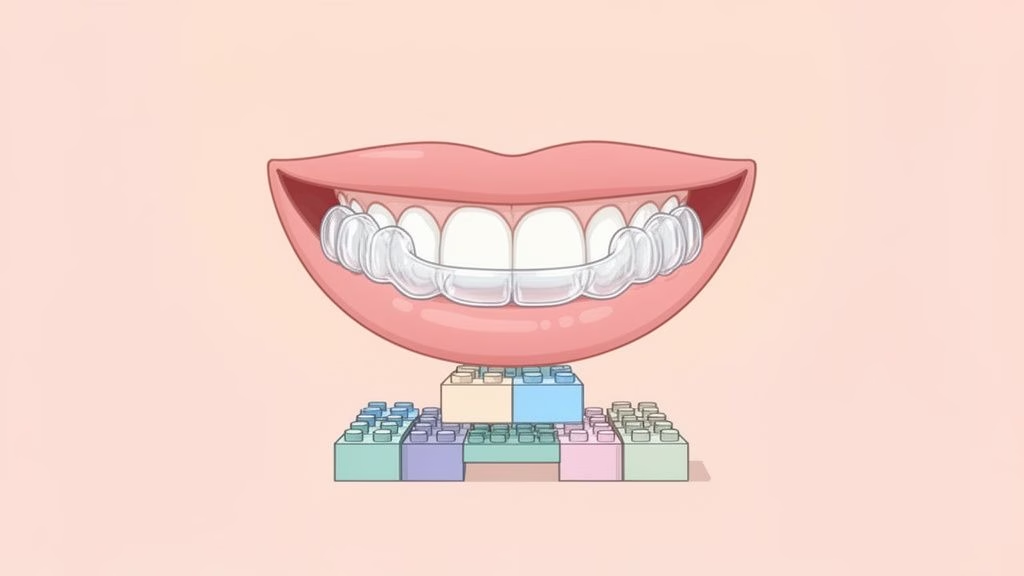
A retainer is a custom-made orthodontic device that holds your teeth in their new, straight position after you’ve finished treatment with braces or aligners. It’s the final, crucial step that ensures all your hard work pays off, preventing your teeth from drifting back to where they started. Think of it this way: if you don’t wear your retainer, your teeth will move.
Why Your Retainer Is the Most Important Part of Teeth Straightening
It’s easy to think the hard work is over once your aligners are finished or braces come off, but the retention phase is actually where the magic happens for the long term.
Imagine you’ve just built a beautiful new structure. The aligners or braces were the construction crew, putting everything perfectly in place. The retainer? That’s the foundation, holding everything steady for years to come. Without that solid base, things will inevitably start to shift.
Your teeth aren’t rigidly fixed in your jawbone like posts in concrete. They’re held in place by fibres called periodontal ligaments. During teeth straightening, these ligaments stretch and the surrounding bone softens to allow the teeth to move. After your treatment ends, this supportive tissue needs time to firm up and solidify in the new arrangement. That’s precisely what your retainer helps it do.
The Science of a Shifting Smile
This natural tendency for teeth to want to return to their old positions is known as orthodontic relapse. It happens because those elastic ligaments have a kind of ‘memory’ and will try to pull your teeth back into their original, familiar alignment. Your retainer acts as a physical guard, holding your teeth in place while the bone and ligaments remodel themselves.
A great analogy is setting concrete. You use a mould to hold the wet concrete in the exact shape you want. Your retainer is that mould, and your jawbone is the concrete. Take the mould away too soon, and the whole thing will lose its shape.
This stabilisation period is especially critical for adults. In fact, a recent British Orthodontic Society survey revealed that 76% of UK orthodontists have seen a rise in adult patients, many spurred on by the ‘Zoom boom’. Since adult bone is less pliable than in teenagers, a retainer is absolutely non-negotiable for preventing relapse.
Securing Your Investment for a Lifetime
At the end of the day, wearing your retainer is the only way to protect the time, effort, and money you’ve put into your smile. Before starting any treatment, it’s always wise to explore all your options, like understanding the key differences between Clear Aligners Vs Braces. But no matter which path you take, the retainer will always be the hero that ensures your results last a lifetime.
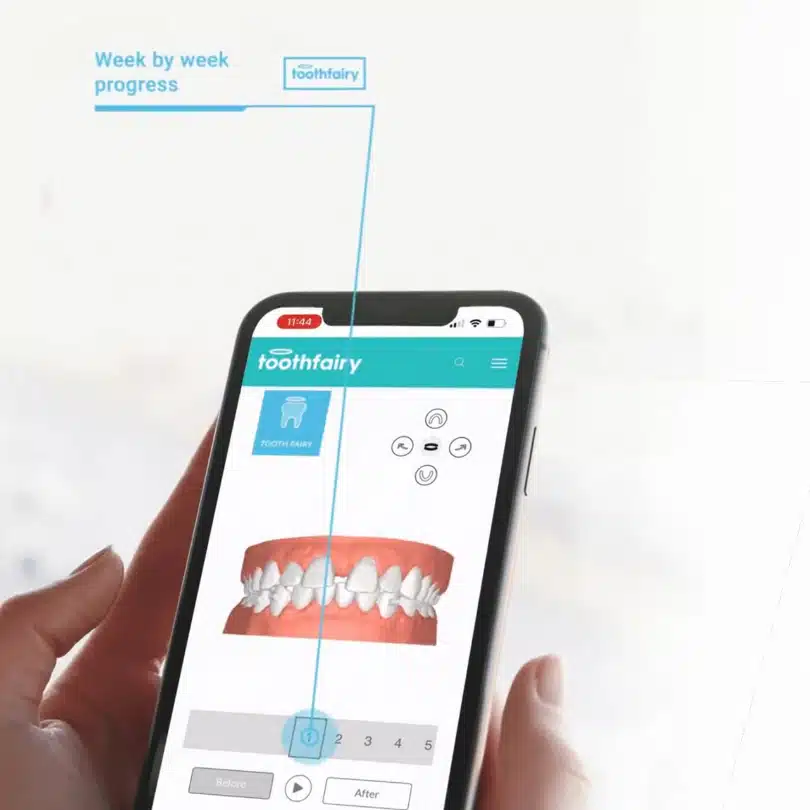
Luckily, managing this final stage is simpler than ever. With the Toothfairy app, you can get virtual check-ins and professional supervision from a qualified dentist, giving you peace of mind that your new smile is staying exactly where it should be. It represents a smarter, more affordable way to manage your cosmetic dental work.
Choosing the Right Type of Dental Retainer
So, your teeth are finally straight. Fantastic! But the journey isn’t quite over yet. The next, and arguably most important, step is choosing the right retainer to keep them that way. This isn’t a one-size-fits-all decision; the best choice for you hinges on your lifestyle, what you find comfortable, and your dentist’s professional opinion.
Essentially, you’re deciding between a retainer that’s permanently fixed to your teeth and one you can take out. Each has its own pros and cons when it comes to convenience, appearance, and daily care. Getting to grips with these differences is the key to protecting your new smile for good.
As the flowchart below shows, the decision-making process is pretty straightforward.
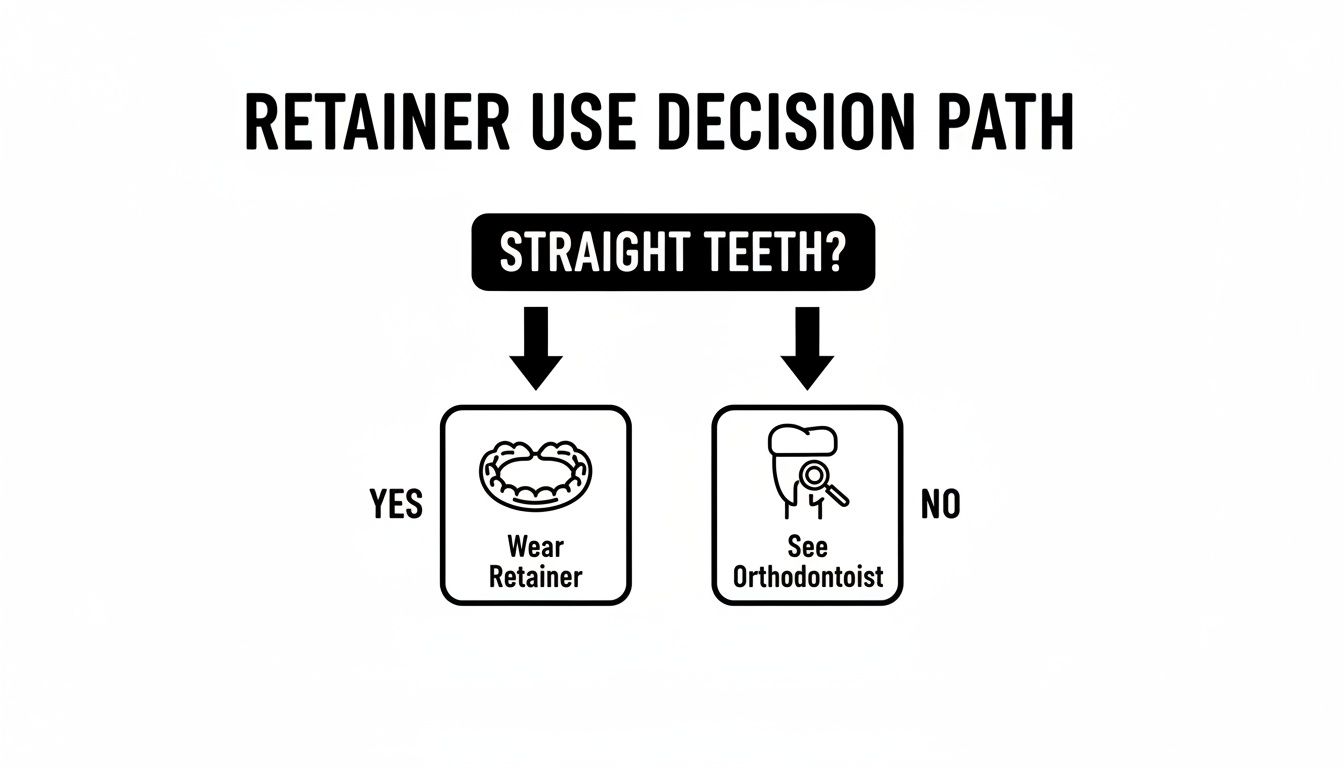
If you’ve invested time and money into getting straight teeth, the path forward is clear: consistent retainer use is non-negotiable.
Fixed Retainers: The Invisible Workhorse
A fixed retainer, which you might also hear called a bonded or permanent retainer, is a very thin wire bonded to the back of your front teeth. It’s most common on the lower teeth but can be used on the upper set too. Its job is to work 24/7, silently holding your teeth in their perfect new positions.
The biggest plus? You can’t forget to wear it or lose it. Because it’s permanently attached, compliance is 100% guaranteed, making it a brilliant “set it and forget it” option.
The trade-off, however, is that cleaning becomes a bit more challenging. You’ll need to be extra diligent with your oral hygiene, using tools like floss threaders or a water flosser to clean around the wire and prevent plaque from building up.
Removable Retainers: Flexibility and Choice
If you’d rather not have something permanently attached, removable retainers are the go-to. The routine is usually the same: you wear them full-time for the first few months, then switch to wearing them only at night. There are two main players in this category:
- Essix Retainers: These are the clear plastic ones that look a lot like the aligners you might have used for your treatment. They fit snugly over your teeth and are practically invisible, which is a huge draw for anyone who wants a discreet way to maintain their smile.
- Hawley Retainers: This is the classic design—an acrylic plate that sits against the roof of your mouth, connected to a metal wire that wraps around the front of your teeth. They’re more noticeable than Essix retainers, but they are incredibly durable and can even be adjusted slightly if minor tooth movement occurs.
No matter which removable retainer you go for, the responsibility is on you. Wearing it as directed is your insurance policy, protecting the investment you’ve made in your smile.
Comparing Your Retainer Options at a Glance
To help you weigh the pros and cons, here’s a quick breakdown of the three most common retainer types. This should give you a clearer idea of which one might fit best with your lifestyle and priorities.
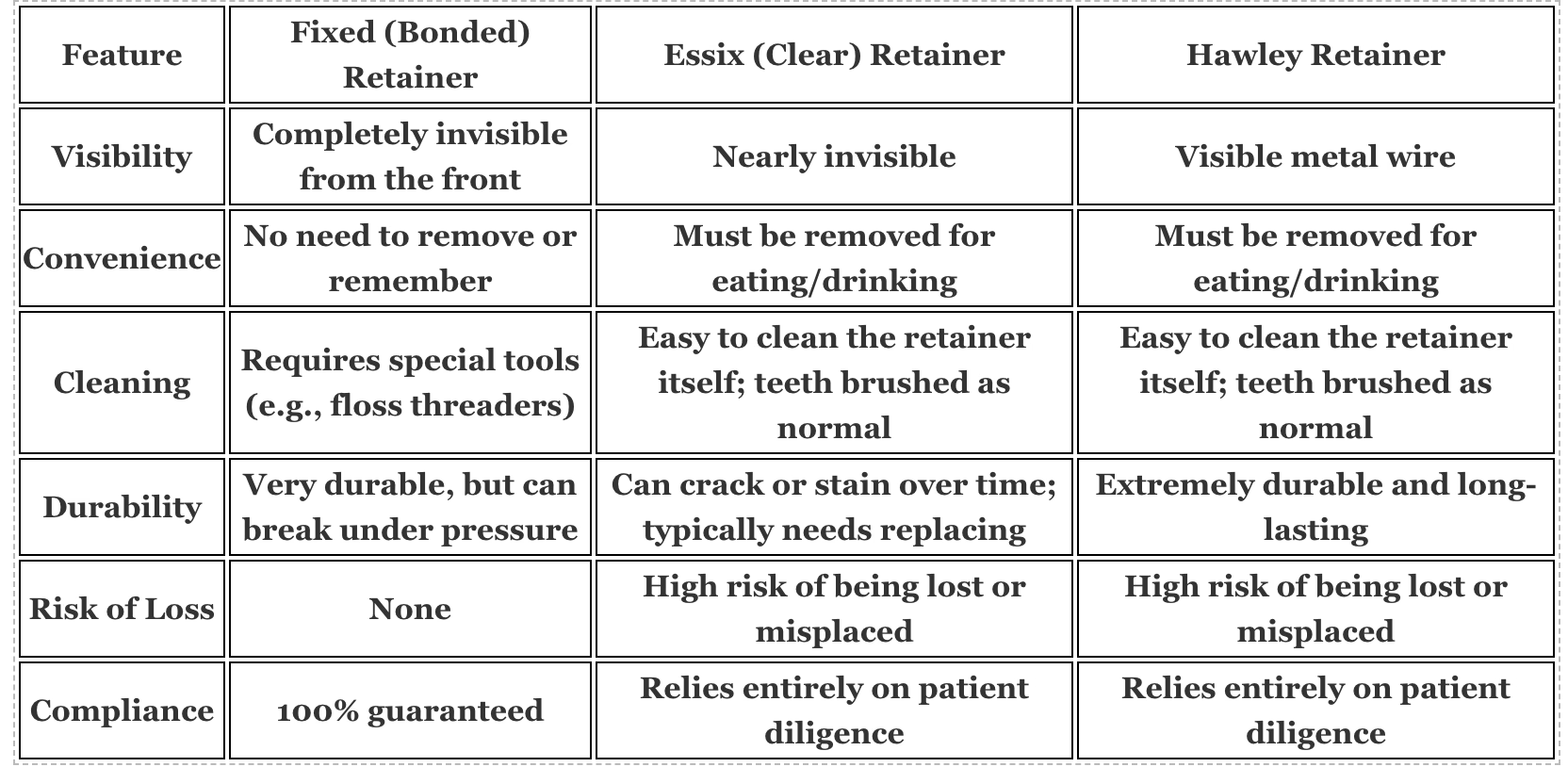
Ultimately, the “best” retainer is the one you will use correctly and consistently. Your orthodontist will guide you, but this table gives you a head start on understanding what to expect.
Making Retainer Care More Convenient
In the past, getting a new or replacement retainer meant booking an appointment, travelling to a clinic, and then waiting for it to be made. This can be a real pain, especially if you’ve lost yours and are worried about your teeth shifting back.
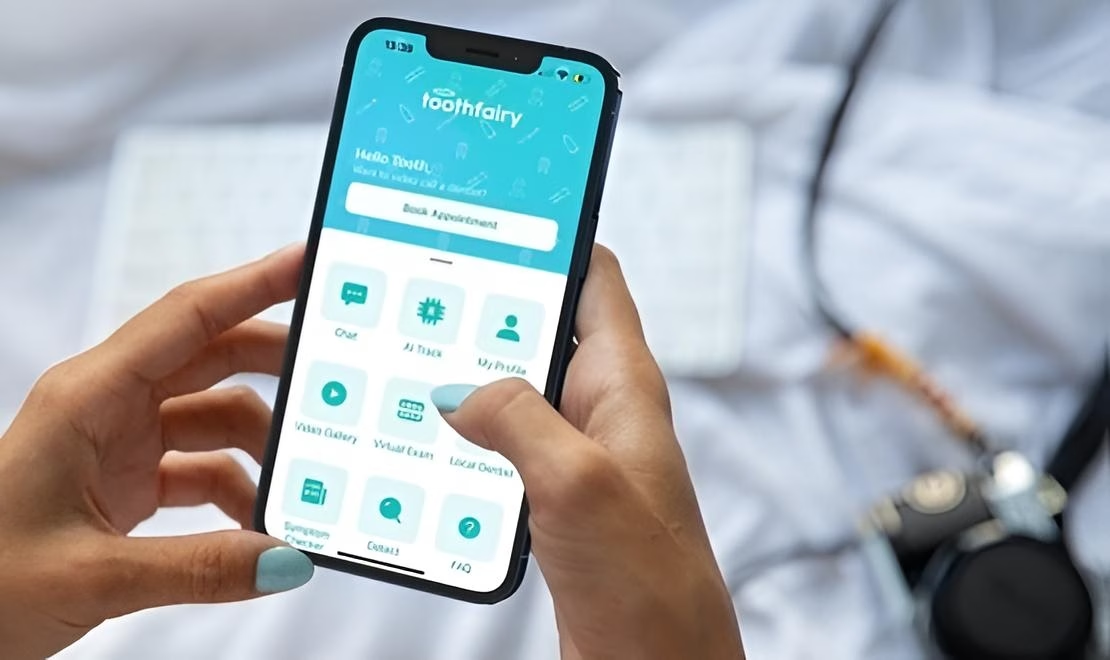
Thankfully, modern solutions are changing the game. With the Toothfairy app, you can handle this whole process from home. If you need a new retainer, you just order an at-home impression kit. A qualified UK dentist reviews your impressions virtually, and a custom-fit retainer is sent straight to your door.
This approach isn’t just more convenient; it’s a smarter, more affordable way to get a replacement quickly to prevent any relapse. Plus, virtual check-ins allow a dentist to monitor your teeth remotely, giving you professional guidance and peace of mind without the clinic visit. It’s an intelligent way to protect your smile for the long haul.
Mastering Your Retainer Wear Schedule to Prevent Relapse
So, you’ve done it. You’ve put in the time and effort, and now you have the straight smile you’ve always wanted. But the journey isn’t quite over. Your orthodontist will now give you a retainer, and with it, a very specific wear schedule. This isn’t a vague recommendation—it’s the single most important part of keeping your teeth from shifting back.
Think of it like this: you wouldn’t spend months renovating your house only to leave the front door unlocked. Your retainer is the key that locks in all that hard work, protecting your investment for good.
Why Do Teeth Try to Move Back? Understanding Relapse
The frustrating tendency for teeth to drift back towards their original, crooked positions is known as orthodontic relapse. It all comes down to the biology of your mouth. The tiny elastic fibres, called periodontal ligaments, that anchor your teeth have a sort of “muscle memory.” Without a retainer holding your teeth in their new home, these ligaments will slowly but surely start pulling them back to where they used to be.
This isn’t a slow-motion process that takes years. The first subtle shifts can happen within just a few days of not wearing your retainer. Over time, these tiny movements add up, and before you know it, you could lose a significant amount of the progress you made. That’s why your wear schedule is absolutely non-negotiable.
The Typical Retainer Wear Routine
While every smile is unique and your dentist will give you a personalised plan, the wear schedule for a retainer for teeth straightening almost always follows two distinct phases. Getting your head around these stages will help you see why each one is so vital.
Phase 1: The Full-Time Lockdown
- How long? This intensive phase typically lasts for the first 3 to 6 months after your treatment ends.
- The schedule: You’ll need to wear your retainer for 20 to 22 hours every day. The only time it should come out is when you’re eating, drinking anything other than plain water, or brushing your teeth.
- Why so strict? Right after treatment, the bone and ligaments around your teeth are still soft and remodelling. Think of it like cement that’s still setting. The constant, gentle pressure from the retainer is crucial during this time to ensure everything hardens up and stabilises in the correct new position.
Phase 2: Nightly For Life
- How long? This is the long-term plan—for the rest of your life.
- The schedule: Once your dentist gives you the green light, you’ll switch to wearing your retainer only at night while you sleep. Every single night.
- Why forever? This is your smile’s insurance policy. It works against the natural, everyday forces—from chewing and talking to subtle changes that happen as we age—that can gradually push teeth out of alignment over the years.
“Forgetting your retainer for a couple of nights might not feel like a big deal, but it’s like leaving a freshly painted wall out in the rain. Each time, a little bit of damage is done, and those small, cumulative changes can eventually ruin the final result.”
What Makes Relapse More Likely?
Not everyone faces the same risk of their teeth shifting. A few factors can influence just how determined your teeth are to move back, making diligent retainer use even more important.
- Age: As we get older, our bone is denser, which can sometimes make adult teeth more stubborn and prone to relapse compared to teenage teeth.
- The Original Problem: If you started with severely crowded teeth, big gaps, or a complex bite issue, your teeth will have a much stronger “memory” of their old positions.
- Your Biology: Simple genetics, growth patterns, and even habits like pushing your tongue against your teeth can play a significant role.
Because of all these variables, there’s simply no “safe” point where you can stop. The only proven way to prevent orthodontic relapse and keep your smile looking perfect is consistent, lifelong nightly wear.
Staying on Track with Toothfairy
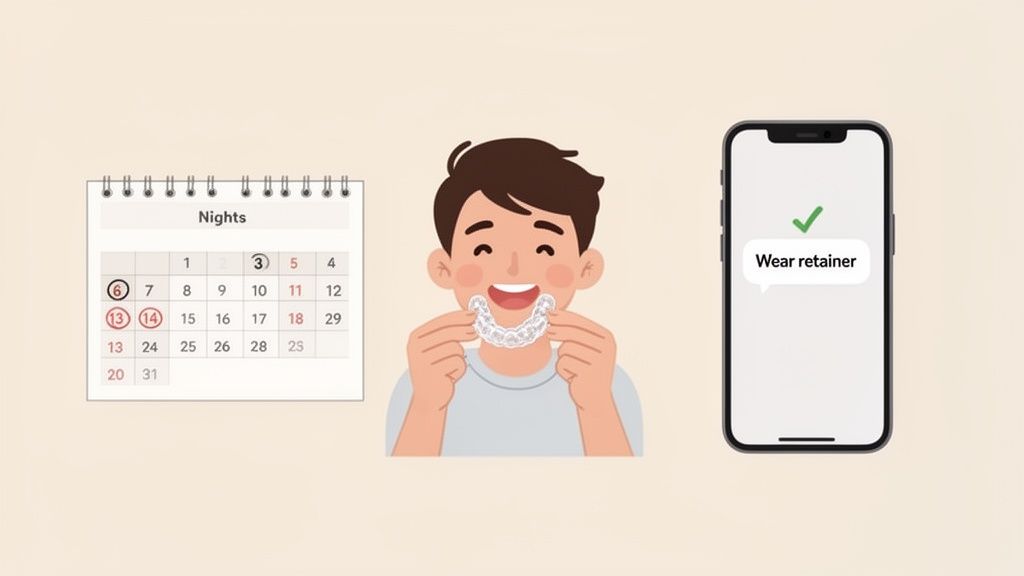
We get it—life is busy, and building a new habit can be tough. This is where a little help from technology can make all the difference. The Toothfairy app is designed to support you during this crucial period. You can set up daily reminders to pop your retainer in and track how well you’re sticking to the routine. It’s a simple tool that provides that extra bit of accountability to help you protect your investment and ensure your fantastic results truly last a lifetime.
Keeping Your Retainer Fresh: A No-Nonsense Cleaning Guide
Let’s be honest, looking after your retainer is just as crucial as wearing it. If you don’t keep it clean, it quickly becomes a haven for bacteria. We’re talking plaque build-up, bad breath, and potential gum issues. The good news? Proper maintenance isn’t a huge chore, but it does need to be part of your daily routine.
Think of it like this: you wouldn’t wear the same shirt for a week straight without washing it. Your retainer is no different. It spends hours in your mouth, so giving it a quick clean is essential for your oral health and for making sure the appliance itself lasts as long as it should.
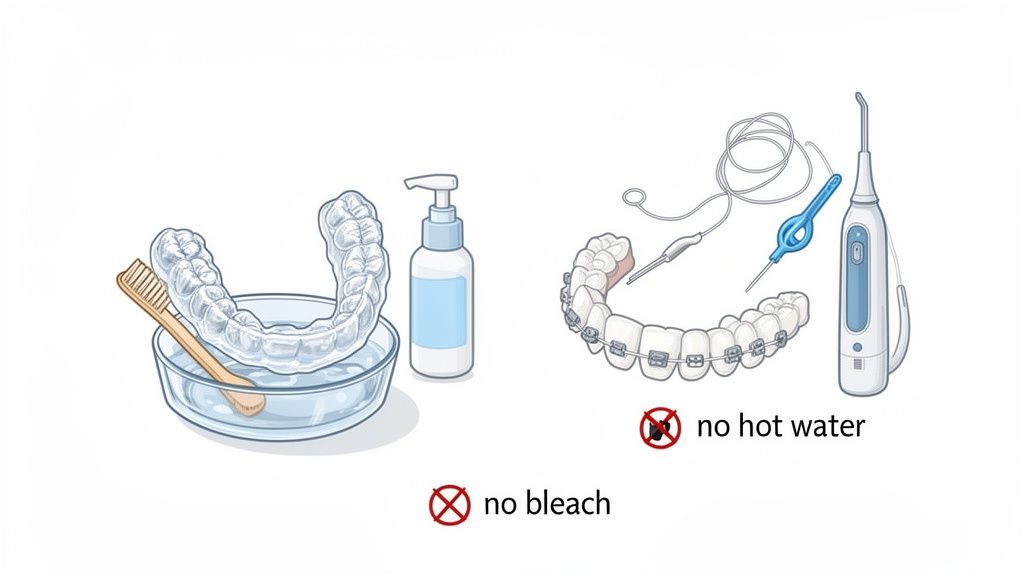
Daily Care For Removable Retainers
If you have a clear Essix retainer or a classic Hawley (the kind with the wire and acrylic plate), a simple daily clean is your best defence. It barely takes a couple of minutes but makes all the difference.
Here’s the daily drill:
- Rinse It Right Away: The second you take your retainer out, give it a rinse under lukewarm tap water. This gets rid of saliva and any bits of food before they have a chance to dry on and get stubborn.
- Give It a Gentle Scrub: Grab a soft-bristled toothbrush (keep one just for your retainer) and a tiny bit of mild soap or washing-up liquid. Gently brush every surface, inside and out.
- Rinse Again: Once you’re done, rinse it thoroughly to wash off all the soap. You don’t want a bubbly taste when you pop it back in!
For an extra deep clean, you can give your retainer a weekly soak using special cleaning tablets. These fizzy tablets are brilliant at killing off bacteria and getting rid of any lingering plaque without harming the material.
How to Clean Around a Fixed Retainer
Cleaning a fixed (or bonded) retainer takes a little more skill, simply because you can’t take it out. That little wire glued behind your teeth is a prime spot for plaque and food to get stuck, so you need to be extra vigilant to prevent cavities and gum problems.
Your best friends for this job are:
- Floss Threaders: These are clever little plastic loops that help you thread dental floss under the retainer wire. This is the only way to properly clean between those bonded teeth.
- Water Flossers: A water flosser, or oral irrigator, is fantastic for blasting out food particles from around the wire. It’s a great sidekick to traditional flossing, but it doesn’t replace it.
Staying on top of your oral health is a lifelong job, especially after you’ve had your teeth straightened. For many people, wearing a retainer is a lifetime commitment. A recent study found that Oxford has the UK’s highest demand for teeth straightening, with the average patient being 28 years old. With 49% of these cases being complex, retainers are absolutely vital to stop teeth from moving back. In the midst of the UK’s dental crisis, apps like Toothfairy offer a lifeline, helping you track retainer wear and get virtual check-ins with a dentist to ensure everything stays on track. You can read more about the UK cosmetic dentistry boom on Psychreg.org.
Common Mistakes That Can Wreck Your Retainer
Knowing what not to do is just as important. A few common missteps can easily damage or even destroy your retainer, landing you with a bill for a replacement.
Definitely Avoid These:
- Hot Water: Never, ever use hot water to clean your retainer. The heat can warp the plastic, completely ruining its custom fit. Stick to cool or lukewarm water, always.
- Harsh Cleaners: Steer clear of toothpaste, mouthwash that contains alcohol, and household cleaners like bleach. Toothpaste is abrasive and can scratch the surface, creating places for bacteria to hide, while harsh chemicals can break down the retainer’s material.
- Leaving it Out: If it’s not in your mouth, it should be in its case. The classic “wrapped in a napkin” move is the number one reason retainers end up in the bin. Keeping it in its case also protects it from being chewed by the dog or knocked off a counter.
The Real Cost of Retainers and a Smarter Way to Replace Them
You’ve invested time, money, and effort into getting your teeth straight. The last thing you need now is another surprise bill. But let’s be honest, the ongoing cost of keeping that smile perfect with a retainer for teeth straightening is something you need to plan for. A new or replacement retainer can seem pricey at first glance, but when you break down the costs and look at newer solutions, it becomes much easier to manage.
Here in the UK, a single removable retainer (like the clear Essix type) will typically set you back anywhere from £100 to £250. If you need a set for both your top and bottom teeth, you can expect to pay double that. Fixed retainers are usually in the same ballpark, though the price might also include the dentist’s time to bond it into place. Of course, these prices aren’t set in stone—they can vary depending on where you live, the clinic you go to, and how complex your specific retainer is.
What Goes Into the Price Tag?
So, why the high cost? A few key things drive the final price of a replacement retainer, and understanding them helps clarify what you’re paying for.
- Clinic Overheads: A traditional dental practice has a lot of running costs. Think rent for the building, staff salaries, and expensive equipment. All of these overheads are built into the price of their services, including making retainers.
- Multiple Appointments: The old-school way of getting a replacement usually meant at least two trips to the dentist: one to take a mould of your teeth and a second to come back and have the new retainer fitted. Each of those appointments costs money.
- Lab Fees and Materials: Your retainer is a custom-made medical device. It’s crafted in a professional dental lab using high-quality, durable materials, and that skilled work comes with its own fee.
When you add it all up, replacing a retainer that you’ve lost or broken can become a real headache, both in terms of cost and hassle—especially if you need it sorted out quickly.
There’s a Better Way to Get Your Replacement
Thankfully, we’re moving past the days where multiple, expensive trips to the clinic were your only choice. Smarter, more direct options are now available that cut out the middlemen and make this essential part of your dental care far more affordable and convenient.
Think about it: you may have already invested a significant amount on your clear aligners. Your retainer is the insurance policy that protects that investment. With demand for adult orthodontics soaring by 76% since 2020, finding easy and accessible follow-up care is more important than ever. You can read more about the latest insights in the UK dental market on rare.consulting.
This is exactly where services like Toothfairy come in. Instead of booking appointments, you use an at-home impression kit to take a perfect mould of your teeth on your own schedule. You just order a kit through the app, follow the simple instructions, and post your impressions back.
From there, a qualified UK dentist checks your moulds virtually to make sure they’re spot on. Once approved, your custom retainer is made and mailed straight to your home. This whole process bypasses the need for clinic visits, saving you a huge amount of time and money. It’s a perfect solution if you’ve moved and can’t see your original orthodontist, or if you simply have a packed schedule. It puts the control back in your hands, giving you a quick, affordable way to get a high-quality retainer and keep your smile exactly where it should be.
Your Top Retainer Questions, Answered
Once you’ve finished your teeth straightening, you’ll probably have a few questions about life with retainers. That’s completely normal. Things come up, and knowing how to handle them is key to keeping your new smile exactly where it should be. Let’s walk through some of the most common queries I hear from patients.
My Retainer Feels Tight – What Should I Do?
First off, don’t panic. A snug retainer is a very common feeling, especially if you’ve forgotten to wear it for a night or two. It’s actually a good sign—it means the retainer is doing its job and gently nudging your teeth back into their correct position after they’ve started to drift.
The best thing to do is try wearing it full-time for the next 24-48 hours. That consistent, gentle pressure is usually all it takes to get things back on track, and the tightness should quickly fade.
However, you should never, ever force a retainer that’s causing sharp pain or just won’t fit over your teeth properly. This is a red flag that your teeth may have moved too far for the retainer to handle. If that’s the case, you need to get professional advice straight away. With the Toothfairy app, you can quickly book a virtual chat with a UK-registered dentist to check the fit and figure out if you need a new scan for a replacement.
How Long Do I Really Have to Wear My Retainer?
I get this question all the time, and the honest answer from any orthodontist is the same: lifelong nightly wear. I know that sounds like a massive commitment, but it’s genuinely the only way to guarantee you protect the smile you’ve worked so hard for.
Your teeth aren’t fixed in place like fence posts in concrete. They sit in living bone that is always subtly remodelling and changing. Everyday forces from chewing, talking, and just the natural ageing process are constantly trying to push them back to where they used to be.
Think of your retainer as the ultimate insurance policy for your smile. It’s a small, effortless nightly habit that permanently safeguards the time, effort, and money you spent achieving perfectly straight teeth.
I’ve Lost My Retainer! What Happens Now?
Losing a retainer happens to the best of us, but the most important thing is to act fast. Your teeth can start to shift back in just a couple of days, so getting a replacement sorted is a real priority.
The old-school way involved a frantic call to the clinic to book an urgent (and often pricey) appointment, which could take days or even weeks to arrange. All the while, your smile is at risk of relapsing.
Luckily, there’s a much better, smarter way now. Modern solutions like Toothfairy let you order an at-home impression kit straight from the app the second you realise your retainer is gone. You can take new moulds of your teeth right away, have them checked by a dentist, and get a new retainer made, minimising any tooth movement and saving you the stress of a last-minute dental visit.
Can I Eat or Drink with My Removable Retainer In?
That’s a definite no to eating, and a very limited yes to drinking. The only thing you should ever have with your removable retainers in is cool, plain water.
Here’s a simple breakdown of why everything else is a problem:
- Eating: Chewing with your retainer in will almost certainly damage it. They’re just not built to withstand those forces.
- Hot Drinks: Tea, coffee, or hot chocolate can warp the plastic material, completely ruining its precise, custom fit.
- Sugary or Acidic Drinks: Things like juice, fizzy pop, or wine can seep under the retainer and get trapped against your teeth. This creates the perfect breeding ground for bacteria, seriously increasing your risk of decay.
Get into the habit of always taking your retainer out for meals and drinks. Just be sure to brush your teeth before you pop it back in to keep both your smile and your appliance in top shape.
Ready to take control of your long-term smile care? With the Toothfairy app, getting a replacement retainer or professional advice is easier and more affordable than ever. Protect your investment with smart, on-demand dental care today by visiting https://www.toothfairyapp.co.uk.
Last updated on February 14, 2026

Toothfairy Care Team
Toothfairy, is the world's smartest dental app, that connects patients to a dentist for a range of issues, from emergencies, cosmetics, prescriptions to virtual exams.
Toothfairy Care Team
Toothfairy, is the world's smartest dental app, that connects patients to a dentist for a range of issues, from emergencies, cosmetics, prescriptions to virtual exams.