Build a Powerful Oral Health Education Program for Your Workplace
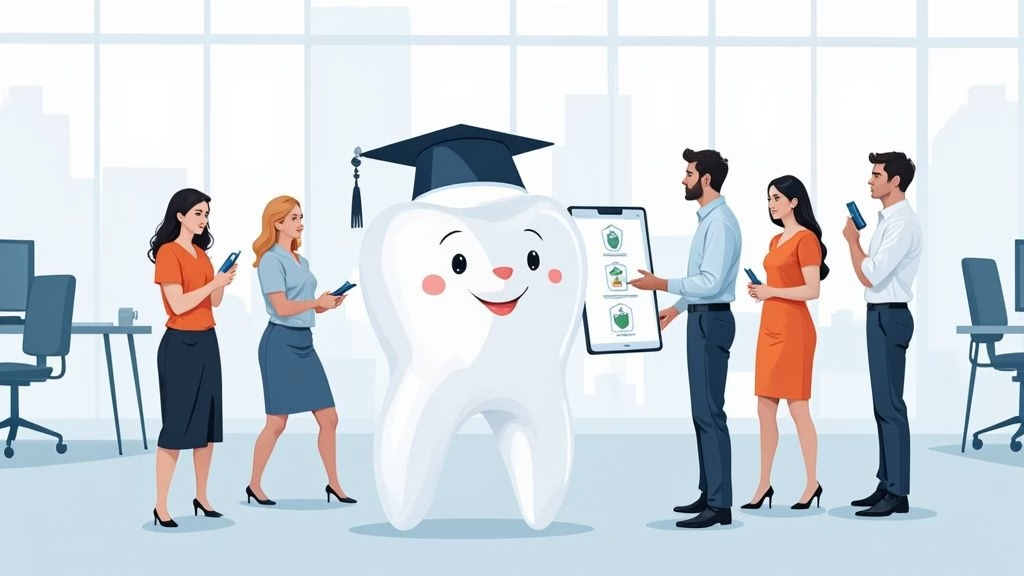
At its core, an oral health education program is a structured plan to give people the real-world knowledge and skills they need to look after their teeth and gums. It’s not about just handing out leaflets; it’s about providing practical tools to prevent dental disease, maintain good hygiene, and make smart decisions about their health for the long run.
Understanding the Purpose of an Oral Health Education Program
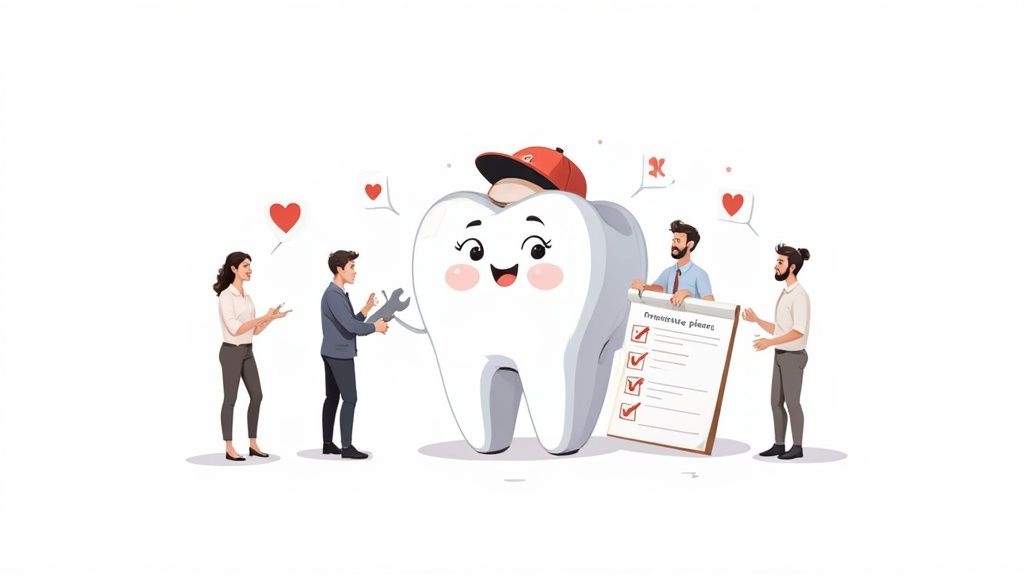
The best way to think about an oral health education program is as a preventive maintenance plan for your smile. You service your car to avoid a breakdown, right? This is the same idea. The goal is to equip people with the right knowledge to sidestep painful and expensive dental problems before they even start.
It’s about shifting the mindset from reactive treatment to proactive care. The program’s aim is to empower your team with practical know-how, connecting the dots between a healthy mouth and a healthy body. Ultimately, this approach dramatically cuts down on the need for emergency dental work.
More Than Just Brushing and Flossing
A truly effective oral health program dives much deeper than the basics we all learned as children. Of course, proper brushing and flossing techniques are a cornerstone, but a comprehensive curriculum covers topics that genuinely impact daily life.
These modules often include:
- Nutritional Guidance: Making the connection between food and drink choices and their direct effect on tooth enamel and gum health.
- Disease Prevention: Teaching people how to spot the early warning signs of common problems like cavities or gum disease.
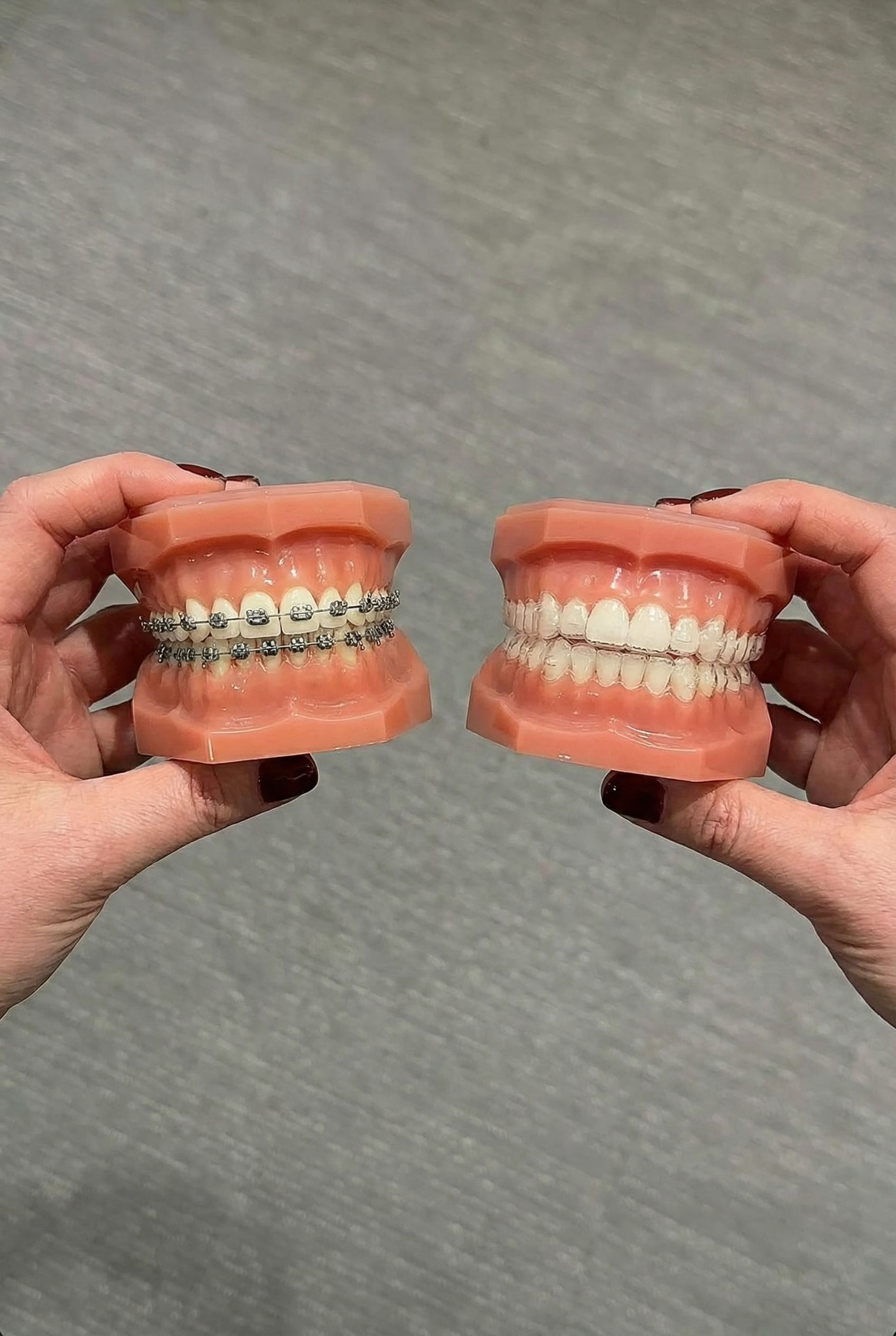
- Modern Treatment Options: Demystifying modern dentistry, from cosmetic treatments to teeth straightening, including smarter and more affordable solutions like the dentist-prescribed aligners offered by Toothfairy.
This wider scope makes the education immediately relevant and useful, giving people the confidence to take charge of their own dental health. For a sense of how different learning models work, it can be helpful to look at how Access to Higher Education programs are designed to engage adult learners.
Bridging a Critical Gap in UK Healthcare
In the UK, the need for these programs is more pressing than ever. Getting an appointment with an NHS dentist has become a real struggle for millions. In fact, NHS Dental Statistics from mid-2023 showed that only 40% of adults had managed to see an NHS dentist in the preceding two years.
This isn’t just an inconvenience; it’s a massive gap in national healthcare where preventive education can make a tangible impact.
An oral health education program isn’t just a “nice-to-have” benefit; it’s a strategic tool for enhancing employee wellbeing, boosting productivity, and mitigating the high costs associated with poor dental health.
By giving teams access to this knowledge, businesses can empower their staff to manage their oral health proactively, which is absolutely vital when professional care is so hard to come by. This is where smart, modern solutions really shine. Services like Toothfairy’s on-demand virtual consultations perfectly complement these educational programs, offering immediate access to expert advice and ensuring that newfound knowledge is backed by professional support exactly when it’s needed.
Why Investing in Oral Health Is a Win-Win
Think of an oral health education program as more than just another perk on your employee benefits list. It’s a smart investment in your people that pays real dividends for your organisation. The positive effects create a ripple effect, leading to a healthier, more confident workforce and a more resilient, productive business.
For your employees, the gains go far beyond a brighter smile. It’s really about giving them the know-how to sidestep the painful and disruptive dental problems that can derail their work and home life. This shift from reacting to problems to preventing them brings tangible, everyday benefits.
The Personal Payoff for Your Team
When people are armed with practical knowledge about their oral health, their overall quality of life gets a serious boost. This isn’t just some abstract wellness idea; it’s something they feel every single day.
It’s easy to underestimate just how much poor oral health can affect someone. A recent Adult Oral Health Survey in 2023 found that a staggering 43% of adults felt their oral health had a negative impact on their daily life. That statistic covers everything from the misery of a toothache to feeling too self-conscious to speak up in a meeting. You can read more about these oral health findings to get the full picture.
A good educational program tackles these issues head-on. The results?
- Less Pain and Discomfort: By learning how to prevent decay and gum disease, your team can avoid the stress and pain that comes with dental emergencies.
- A Real Confidence Boost: A healthy smile can completely change how a person feels. It shows up in their professional interactions and personal wellbeing.
- Serious Financial Savings: Preventing just one major dental issue—like a root canal or crown—can save an employee thousands of pounds out of their own pocket.
These programs also open people’s eyes to modern, more accessible ways to look after their teeth. They discover that a straighter smile doesn’t always require lengthy or costly treatments with a specific aligner brand. With virtual-first providers like Toothfairy, professional cosmetic work and teeth straightening have become far more affordable and convenient.
The Business Case for Proactive Oral Health
For the company, the return on this kind of investment is just as clear. Healthy employees are productive employees, plain and simple. Proactive dental care has a direct link to key business metrics, while the cost of ignoring it adds up quickly through lost time and dampened morale.
When you invest in education, you’re building a stronger, more focused team.
A well-implemented oral health program isn’t an expense; it’s a powerful tool for risk management that reduces absenteeism, boosts productivity, and enhances your reputation as a caring employer.
It’s about connecting the dots between preventive care and a healthier bottom line. Just think about the immediate financial hit when an employee has a dental emergency—it means lost hours, a total lack of focus, and potential delays on critical projects.
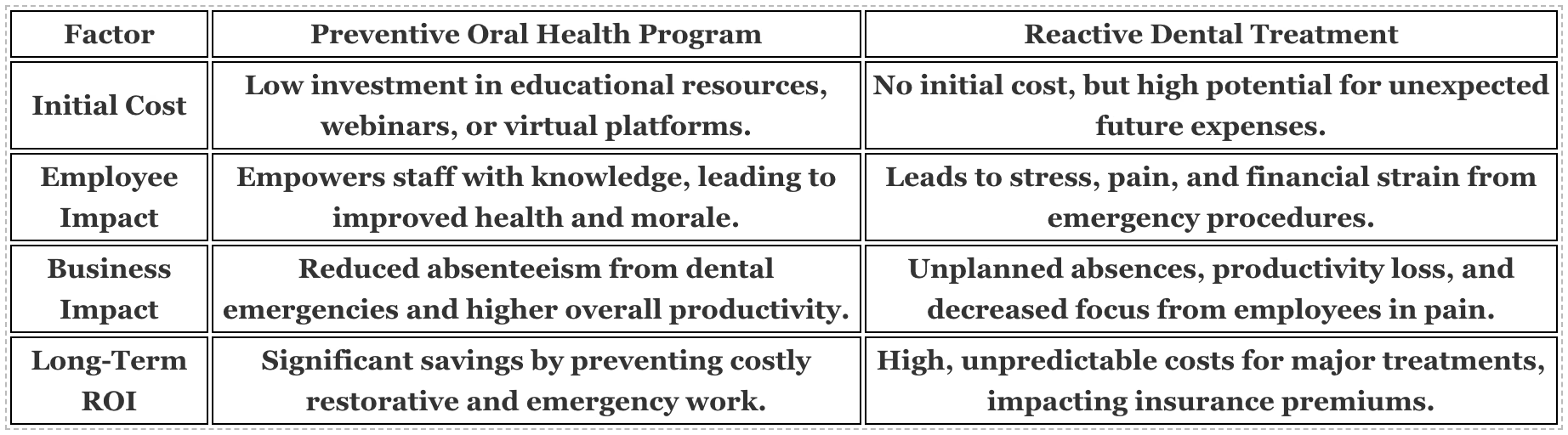
An effective oral health program helps you get ahead of these disruptions by shifting the focus from reaction to prevention. The table below really lays out the simple maths behind this approach.
Preventive Education vs Reactive Treatment: A Cost-Benefit Analysis
This table contrasts the typical investment and outcomes of a proactive oral health education program against the common costs and consequences of reactive dental treatment.
Ultimately, bringing in an oral health education program, especially one enhanced with modern virtual care from providers like Toothfairy, is an obvious win-win. It fosters a supportive environment where your employees can thrive, and the business reaps the rewards of having a healthier, more engaged team.
Building Your Programme with Essential Learning Modules
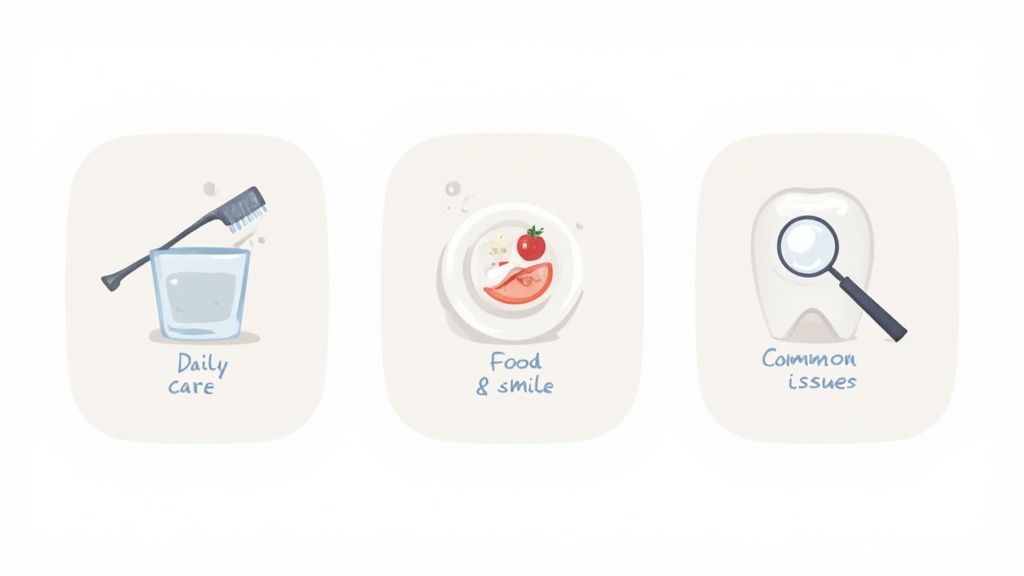
A truly great oral health education programme is built around practical, engaging learning modules. This isn’t about dryly reciting facts from a textbook. It’s about arming your people with knowledge they can put into practice the very same day.
Think of the curriculum as a toolkit. You’re giving your team the right instruments to maintain their health, spot potential risks, and make smarter choices. The best approach is to build their understanding layer by layer, starting with the basics and moving on to more specific topics. Every module should have a clear goal and leave participants with something tangible.
Mastering Daily Oral Hygiene
This is your foundation. We all know we should brush and floss, but this module goes deeper, exploring the why and the how behind these daily rituals. The real goal here is to turn mindless habits into powerful, preventive actions.
Participants will learn the most effective brushing techniques, why fluoride is so important, and the right way to floss to actually break up harmful plaque. This module gives everyone a solid base to build on, providing the confidence that their daily efforts are making a real difference.
The Food and Smile Connection
What we eat and drink has a massive and immediate impact on our dental health. This module makes that connection crystal clear, showing how our dietary choices can either strengthen or weaken our teeth and gums.
It’s often an eye-opener, revealing the hidden sugars in everyday foods or the acid in certain drinks that can wear away enamel. The takeaways are incredibly practical: learning about tooth-friendly foods, understanding how water boosts saliva production, and getting simple strategies to minimise the damage from sugary snacks. This puts your team back in control, reframing their meals as a chance to actively protect their smile.
Decoding Common Dental Problems
When it comes to dental issues, knowledge is your first and best line of defence. This module demystifies common problems like cavities, gingivitis, and gum disease, teaching people how to spot the early warning signs. Understanding the cause of these conditions removes the fear factor and replaces it with proactive awareness.
By explaining how plaque buildup can lead to serious infection, you highlight just how critical preventive care is. This understanding motivates people to stay on top of their health before a small issue becomes a painful—and expensive—emergency.
A well-structured programme doesn’t just list problems; it provides a clear roadmap for prevention. It empowers individuals to spot risks early and seek guidance before a simple concern escalates into a major health event.
For a deeper look into the fundamentals of structuring any educational initiative, check out this excellent resource on Creating a Training Programme That Actually Works. It offers a solid framework for organising your content for maximum impact.
Exploring Modern Dental Innovations
Dentistry has come a long way, and this module gets everyone up to speed on the latest advancements. It can cover everything from cosmetic procedures to teeth straightening, showing how technology has made a confident smile more accessible and affordable than ever. This is the perfect space to talk about common goals, like having whiter or straighter teeth.
A key part of this is highlighting smarter, more convenient alternatives to traditional treatments. For instance, many people still associate teeth straightening with expensive, time-consuming visits to a clinic. Here, you can introduce them to providers like Toothfairy, which offers a far more affordable and convenient route to dentist-prescribed clear aligners.
By showing how virtual consultations and direct-to-consumer models are making high-quality cosmetic and emergency care more achievable, you connect your team with solutions that actually fit their lives and budgets. This module bridges the gap between knowing and doing, pointing employees toward real, next-generation care.
Choosing the Right Way to Deliver Your Programme
So, you’ve figured out what you want to teach in your oral health education programme. The next big question is how you’re going to deliver it. This step is just as critical as the content itself, because the right method can mean the difference between information that sticks and a session that’s quickly forgotten.
There’s no magic bullet here. The best approach really boils down to your team’s setup. Are they all in one office? Scattered across the country working from home? Or a bit of both? A lively, in-person workshop might be a hit for a close-knit team but a logistical nightmare for a remote workforce. The trick is to align the format with how your people actually work.
Traditional vs. Digital: Finding the Right Fit
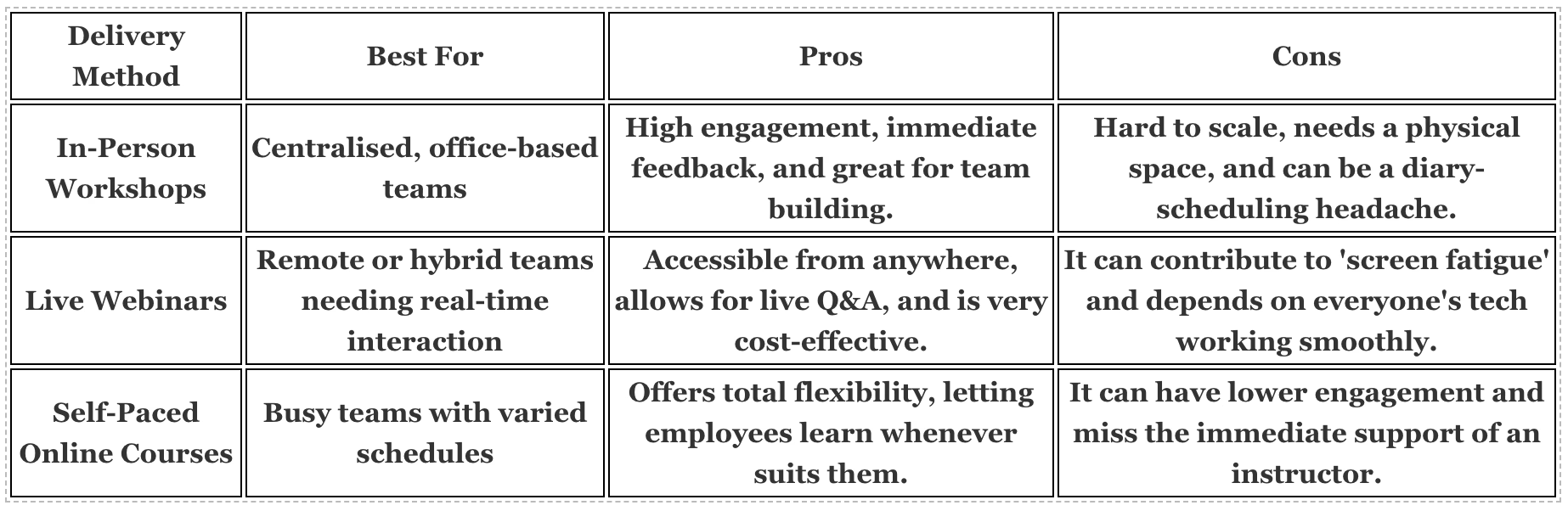
Let’s look at the main options on the table. The classic, in-person workshop is fantastic for hands-on learning and creates a real buzz. It’s a chance for people to ask questions on the spot and interact with each other. But, let’s be honest, they can be tricky and expensive to pull off, especially if you have teams in different locations.
This is where digital formats have really come into their own. They offer incredible flexibility and can reach everyone, no matter where they are. Live webinars can bring that in-person energy to a remote audience, while on-demand online courses let people learn at a time that genuinely works for them, slotting it in between meetings or after hours.
Comparison of Program Delivery Methods
To help you decide, here’s a quick breakdown of the most common delivery methods, weighing up where each one shines and where it might fall short for your specific needs.
 Supercharging Your Programme with Integrated Telehealth
While the methods above build a strong educational foundation, themost forward-thinking programmes go one step further by weaving in telehealth. This is where the theory you’ve taught meets real-world, practical support. It’s the vital link between an employee learning about a problem and actually getting it solved.
Put yourself in their shoes. Someone might learn about the early signs of gum disease in your webinar, but what happens when they spot a symptom on a Sunday evening? This is where having on-demand virtual support becomes a true game-changer.
By integrating telehealth, you turn your educational initiative from a passive learning experience into an active, on-demand support system. It gives your team a direct line to professional help, empowering them to act on their newfound knowledge straight away.
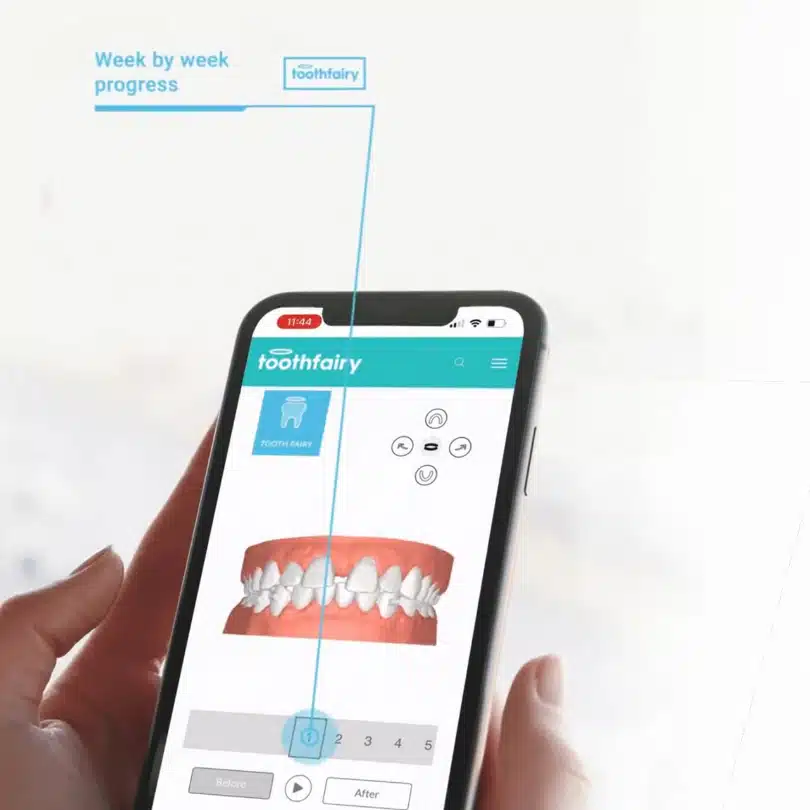
This is precisely the gap that a platform like Toothfairy is designed to fill. By adding our virtual services into your programme, you’re not just giving people information; you’re giving them instant, 24/7 access to qualified dentists. They can get a nagging concern checked out, ask about cosmetic treatments, or even get a prescription for a dental emergency without ever leaving home.
This immediate support makes the educational content far more impactful, because employees can apply what they’ve learned right when it matters most. It also opens the door to advanced care, like getting straighter teeth, making it more accessible and affordable than treatments from specific aligner brands that demand lots of in-person appointments. This blended approach ensures your programme doesn’t just inform—it delivers real, lasting value.
Your Step-by-Step Implementation Playbook
Turning a great idea into a successful programme requires a clear plan. Launching an effective oral health education programme isn’t complicated, but it does need a structured approach to make sure it delivers real value from day one. This practical playbook will guide you through the key stages, from securing initial support to creating a continuous cycle of improvement.
Think of it like building a house. You need a solid foundation (getting leadership on board), a clear blueprint (your implementation plan), and the right tools (KPIs and feedback) to ensure the final structure is strong and fit for purpose.
This flow diagram breaks down the different ways you can deliver your programme, blending traditional and modern methods to reach everyone.
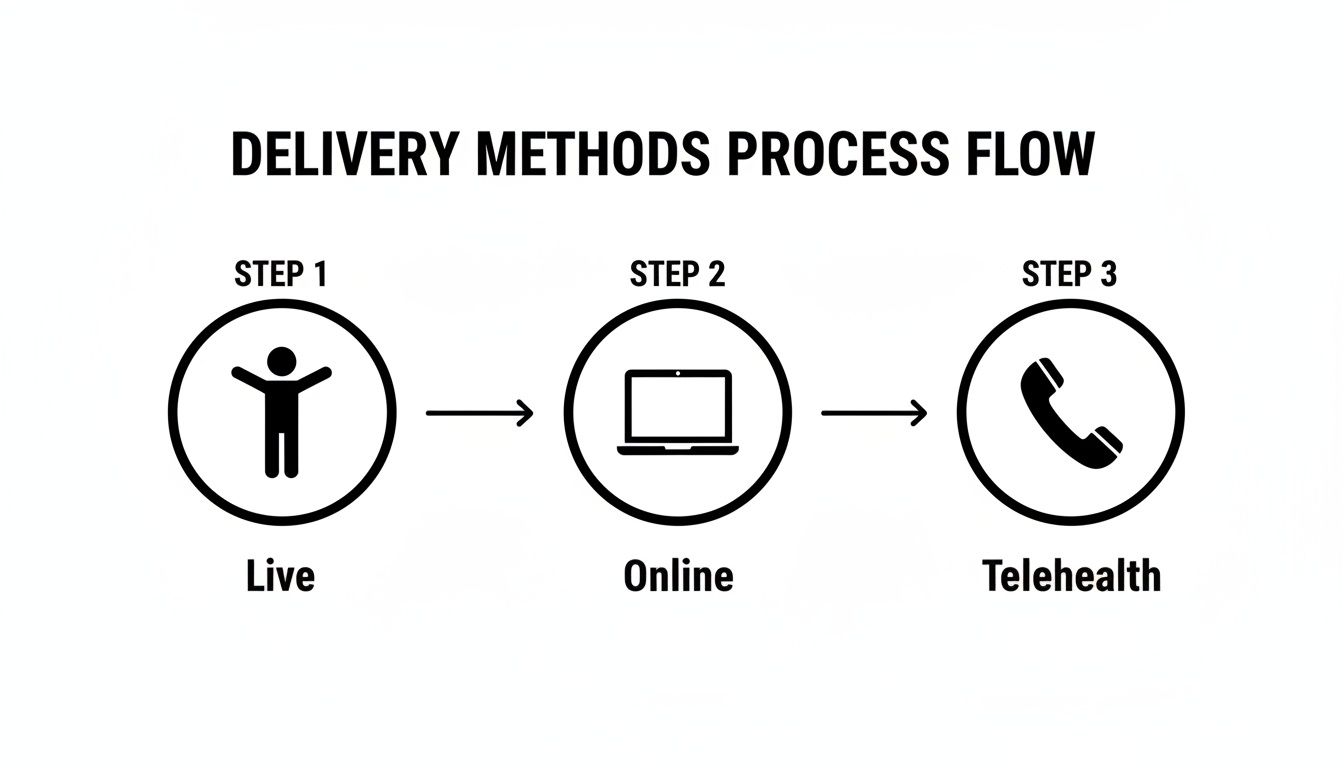
From experience, we find a hybrid approach—combining live sessions with the convenience of telehealth—often drives the highest engagement and makes the biggest impact.
Phase 1: Secure Leadership Buy-In
Before a single email goes out, you need enthusiastic support from your organisation’s leadership. This isn’t about just getting a rubber stamp; it’s about presenting a compelling business case that frames the programme as a strategic investment in productivity and wellbeing, not just another cost.
Focus on the numbers they care about. Poor oral health isn’t just a personal issue; it has a direct financial impact on the business. Tooth decay is still a major public health problem, and its consequences ripple straight into the workplace through lost productivity and absenteeism. You can discover more insights about the national impact of dental issues to help build a watertight case for preventive education.
Your pitch to leadership should be short, sharp, and include:
- A Clear Problem Statement: Use your company’s own data on absenteeism linked to dental emergencies, if you have it.
- The Proposed Solution: Briefly outline the programme’s goals and how it will be delivered. Keep it simple.
- A Solid ROI Projection: Contrast the low cost of prevention against the high cost of reactive treatment and lost work hours.
Phase 2: Define and Set Your KPIs
What does success actually look like? To prove your programme’s value, you need to define clear Key Performance Indicators (KPIs) from the very start. These metrics are your proof points, helping you track progress and demonstrate the return on investment to stakeholders.
A good set of KPIs will be a mix of participation metrics and real-world impact measurements.
Don’t just measure attendance; measure change. The most powerful KPIs will show a clear shift in employee knowledge, behaviour, and overall health outcomes over time.
Here are a few fundamental KPIs to get you started:
- Participation Rate: What percentage of employees engaged with the programme? Aim for a specific target, like 40% engagement within the first six months.
- Knowledge Improvement: Use simple pre- and post-programme surveys to measure the increase in understanding of key oral health topics.
- Reported Behavioural Change: Ask employees if they have actually started doing things differently, like flossing regularly or making healthier dietary choices.
- Reduction in Dental-Related Absences: This is the big one. Track sick days attributed to dental emergencies to show a tangible business impact.
Phase 3: Create and Communicate Your Timeline
A well-defined timeline keeps everyone on the same page and builds momentum. Your plan should be broken down into clear, manageable stages, from the initial buzz-building to the first feedback review. It shows you’ve thought it through.
Here is a sample 12-week implementation timeline to give you an idea:
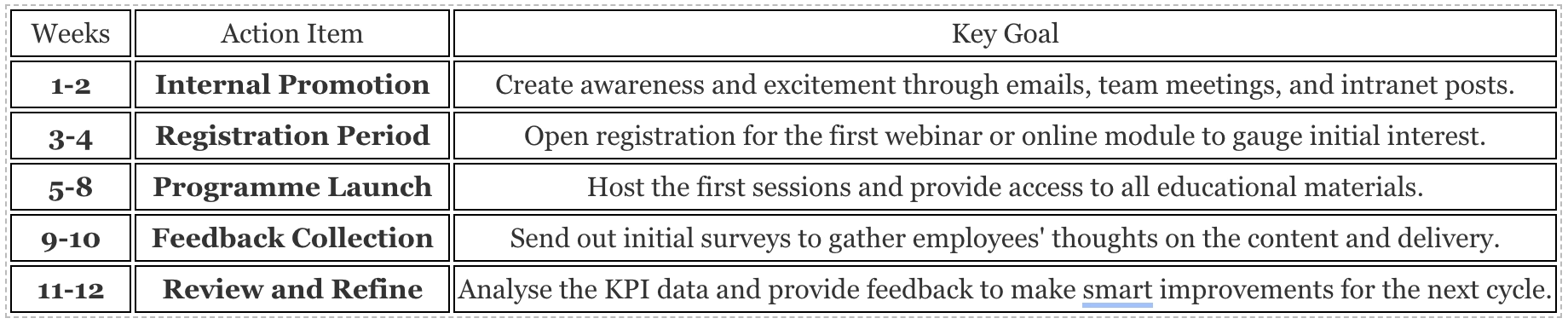
Throughout all of this, remember that continuous improvement is key. Use the feedback and data you collect to tweak and refine your oral health education programme, ensuring it remains relevant and genuinely valuable to your team. This iterative approach is what turns an exemplary implementation into a repeatable success.
How to Measure Success and Prove Your ROI
An oral health education programme can feel like a great initiative, but to keep it going, you need to prove it’s working. It’s not enough to say people enjoyed it; you need to show leadership that the investment is paying off in real, measurable ways.
This means looking beyond simple attendance figures and digging into data that tells a clear story. We’re talking about connecting the dots between the education you provide and tangible benefits for both your people and the business. Think of it as building a case, backed by a mix of hard numbers and human feedback. The numbers show what changed, while the feedback explains why.
Key Metrics to Track
To make your case compelling, you need to track a few key data points that paint a clear before-and-after picture. This information becomes the bedrock of your return on investment (ROI) calculation.
Start with these core indicators:
- Participation Rates: It’s the most basic metric, but still important. What percentage of the team showed up for webinars, finished online modules, or downloaded materials? This gives you a baseline for engagement.
- Reduced Sick Days: This is a big one. Keep an eye on absenteeism specifically tied to dental emergencies. If you can show a noticeable drop after the programme launches, you’ve got one of your strongest arguments for ROI.
- Employee Feedback Surveys: Don’t underestimate the power of asking your team directly. Well-crafted surveys can capture shifts in their knowledge, attitudes, and daily habits, bringing the numbers to life.
Tracking these metrics lets you draw a straight line from your programme to positive business outcomes, proving that preventive education is a savvy financial move.
Gathering Actionable Feedback
Employee surveys are your secret weapon for understanding the real-world impact. They tell you if the information is actually sinking in and leading to healthier habits. Don’t just ask if they liked the session; ask what they’re doing differently because of it.
The ultimate measure of a successful oral health education programme is not how many people attend, but how many people act. Proving behavioural change is the key to demonstrating lasting value.
To get meaningful insights, try including questions like these in your feedback forms:
- On a scale of 1-5, how much has your understanding of oral health improved?
- Have you changed your daily oral hygiene routine since the programme? (e.g., flossing more often, using a fluoride mouthwash)
- Do you feel more confident in spotting the early signs of dental problems?
- Are you more likely to book a preventive check-up now than you were before?
This kind of feedback is gold. It helps you tweak the programme for even better results and provides powerful testimonials for its effectiveness.
The Toothfairy Advantage in Measuring Success
Working with a partner like Toothfairy can add a whole new dimension to your data. Our platform gives you access to valuable, aggregated data on how your employees are engaging with our virtual dental services. You can start to see trends in the kinds of concerns people have, whether it’s urgent issues or cosmetic questions about teeth straightening.
This anonymised data gives you a direct window into your team’s specific oral health needs, allowing you to tailor your educational content for maximum relevance and impact. It also gives you another powerful metric for demonstrating ongoing value, showing that your team isn’t just learning—they’re actively using the resources to take control of their oral health.
Your Questions Answered: Oral Health Programmes
It’s only natural to have a few questions when you’re thinking about bringing a new wellness initiative into your business. Let’s tackle some of the most common ones we hear from organisations looking to launch an oral health education programme.
What’s the Real Cost of an Oral Health Education Programme?
This is often the first question, and the answer is: it varies. The cost can range from a simple series of webinars to a fully integrated digital platform. But honestly, focusing on the upfront expense misses the bigger picture. The real number to watch is the return on investment.
Think about it this way: preventing just a few complex dental problems or cutting down on employee sick days by even a small amount can mean the programme pays for itself several times over. The true value is in stopping problems before they start. By bringing in a cost-effective virtual partner like Toothfairy, you get all the benefits of expert dental advice without the hefty price tag of traditional, in-person clinics. It makes top-tier care genuinely affordable.
How Do We Get Employees on Board Who Aren’t Interested?
Engagement is all about making it relevant. If you want to grab your team’s attention, you need to talk about more than just ‘healthy teeth’. Frame the benefits in ways that connect with what they truly value: boosting their confidence, saving a significant amount of money on future dental work, and improving their overall health.
Here are a few practical ways to get people involved:
- Make it interactive: Ditch the boring slideshows. Think live Q&A sessions, quick polls, and hands-on workshops.
- Offer small perks: A simple prize draw for participants or a coffee voucher can be surprisingly effective.
- Talk about modern dentistry: Focus on popular topics that people are curious about, like teeth straightening, which can pull in a wider crowd.
- Keep it simple and convenient: All content should be short, easy to understand, and available for them to watch whenever they have a spare moment.
What’s the Single Most Important Factor for Success?
If I had to boil it down to one thing, it would be consistency and accessibility. A one-off seminar might create a bit of a buzz for a day or two, but it won’t lead to any real, lasting change in habits. A truly effective programme needs to offer ongoing support that’s always easy to reach.
A successful oral health programme isn’t a single event; it’s an ongoing support system. It turns education from a one-time lesson into a living resource that employees can tap into whenever they need it.
This is precisely where weaving in a telehealth service like Toothfairy makes a huge difference. It takes the whole initiative from being an isolated training day to a constant support network. If an employee has a question or a concern, they can get personalised, professional advice from a qualified dentist right away. This ensures the lessons from your programme are actually put into practice long after the launch event is over.
Ready to build a smarter, more effective wellness strategy for your team? With Toothfairy, you can provide instant access to professional dental care, from emergency support to cosmetic treatments like clear aligners.
Discover how our virtual solutions can enhance your oral health education programme by visiting https://www.toothfairyapp.co.uk today.
Last updated on December 15, 2025

Toothfairy Care Team
Toothfairy, is the world's smartest dental app, that connects patients to a dentist for a range of issues, from emergencies, cosmetics, prescriptions to virtual exams.
Toothfairy Care Team
Toothfairy, is the world's smartest dental app, that connects patients to a dentist for a range of issues, from emergencies, cosmetics, prescriptions to virtual exams.