Finding Clear Aligners Near Me: Your Guide to a Straighter Smile
When you type “clear aligners near me” into a search bar, you’re not just looking for a pin on a map. You’re searching for a straightforward, trustworthy way to get a smile you feel great about. That means looking past the closest clinic to find an option that actually works for your life, your budget, and the results you want. The real secret is knowing all your options – from the old-school, in-clinic treatments to modern, app-based alternatives that bring the dentist right to your phone.
Decoding Your Local Aligner Options
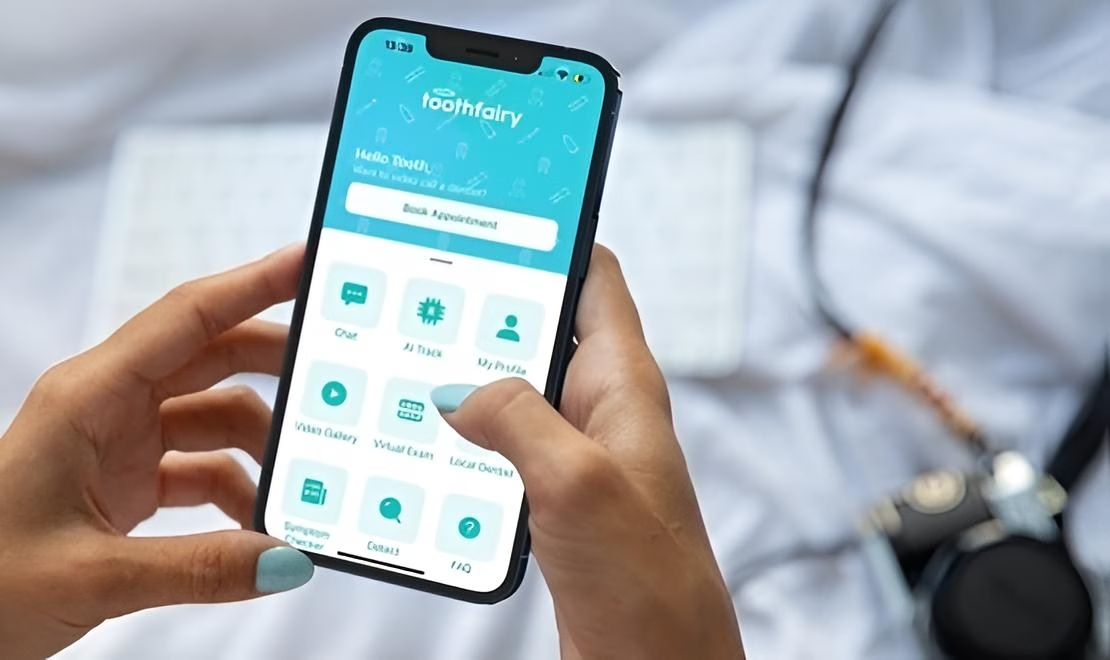
Starting your teeth straightening journey really comes down to two main paths. You can go the traditional route, which often ties you to a specific aligner brand and requires regular visits to a physical dental clinic. Or, you can choose a more flexible, tech-savvy approach, like the dentist-led care you get through the Toothfairy app, a smarter way to straighten teeth where everything is managed remotely.
Figuring out the core differences is your first step to making a smart decision that will save you time and hassle. Both paths can get you a brilliant smile, but the experience, cost, and convenience are worlds apart.
Traditional In-Clinic Visits
This is the model most of us picture when we think of orthodontics. It’s a hands-on process that includes:
- An initial face-to-face consultation with a dentist or orthodontist.
- Getting physical impressions or 3D scans done at the clinic.
- Regular follow-up appointments every few weeks to track your progress and pick up your next set of aligners.
This tried-and-tested method has been the standard for years, but it often comes with a higher price tag thanks to clinic overheads. It also isn’t the most flexible choice if you have a packed schedule. Still, its popularity is huge. In the UK, the clear aligner market is now worth an impressive £180 million, with one famous aligner brand holding a massive 65% market share. This demand is clear from the 45% year-over-year jump in searches for aligner-related terms, especially in cities like Greater London, Manchester, and Birmingham. You can discover more about these market trends and patient demographics here.
Modern App-Based Solutions
There’s now a smarter, more affordable alternative that cuts out the need for constant clinic visits. Services like Toothfairy deliver professional dental care through an app, offering a much more convenient way to get your teeth straightened.
It’s important to realise this isn’t some DIY kit. It’s proper orthodontic treatment, prescribed and supervised by qualified UK dentists, just delivered remotely. It combines professional oversight with patented technology to monitor your progress safely and effectively from home.
This approach is a perfect fit for the typical clear aligner patient: a professional between 28-45 years old who is balancing a busy career and needs a solution that doesn’t disrupt their life. By removing the travel time and endless hours in waiting rooms, app-based care makes achieving that perfect smile more realistic than ever before.
To help you see the differences clearly, here’s a quick breakdown of what each option offers.
Treatment Options at a Glance
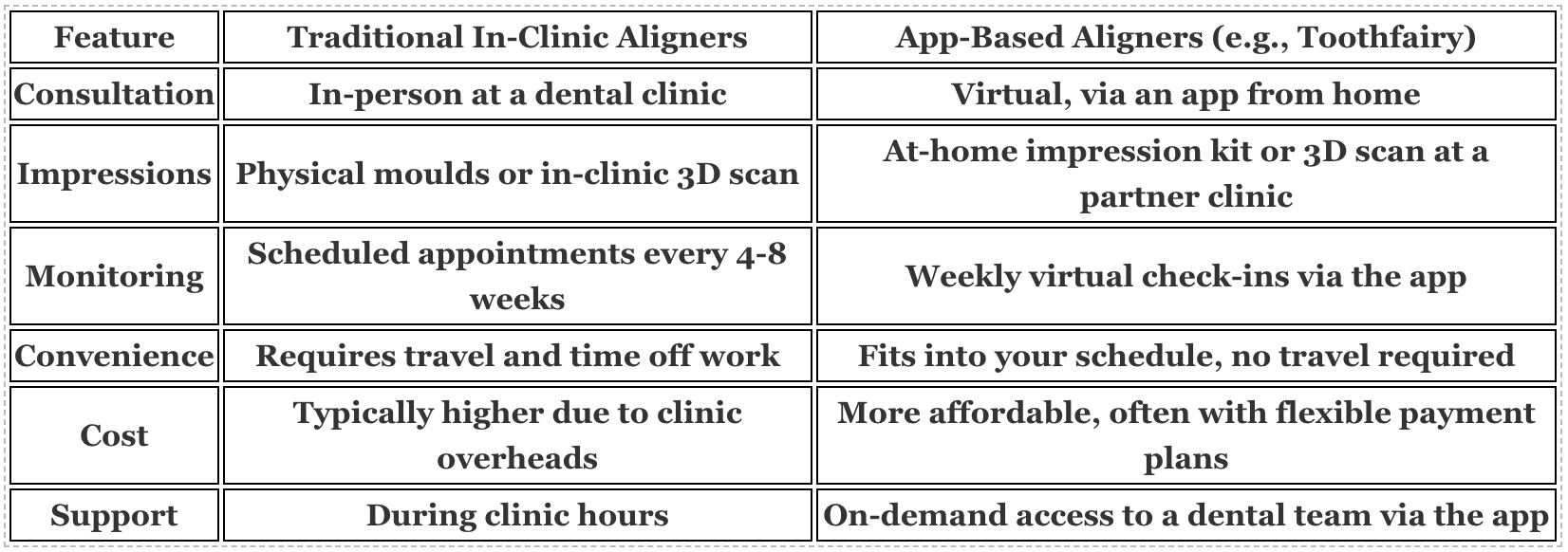 Ultimately, the best choice depends on what you value most. If you prefer the traditional face-to-face model and don’t mind the higher cost and time commitment, in-clinic treatment is a solid option. But if convenience, affordability, and flexibility are your top priorities, an app-based solution like Toothfairy could be the ideal fit.
How to Vet Local Aligner Providers Like a Pro
You’ve got a shortlist of local clinics. Good start. But now the real work begins—separating the genuine experts from those with a slick sales pitch. It’s time to dig a bit deeper than the glossy websites and five-star reviews to figure out who will actually give you the best care.
First Impressions: Sizing Up Their Website
A provider’s website is your first port of call. Head straight for the “About Us” or “Meet the Team” page. What you’re looking for is their qualifications. Are they a specialist orthodontist, someone who has spent years training specifically in how to move teeth safely, or a general dentist who offers aligners as one of many services?
While plenty of dentists do a fantastic job with straightforward cases, an orthodontist’s specialised background is often crucial for more complex alignment issues. It’s also worth remembering that the clinics at the top of Google aren’t always the best; they’re just the best at local SEO for medical practices.
Next, have a good look at their before-and-after gallery. Don’t just be wowed by the perfect smiles; look for cases that look a bit like your own teeth. A truly experienced provider will have a portfolio showing a range of successful treatments, from simple gap-closing to tricky crowding. If all you see are simple cases or, worse, stock photos, that’s a bit of a red flag.
This decision tree gives a good visual breakdown of whether you’re better suited to a traditional clinic or a modern, at-home system.
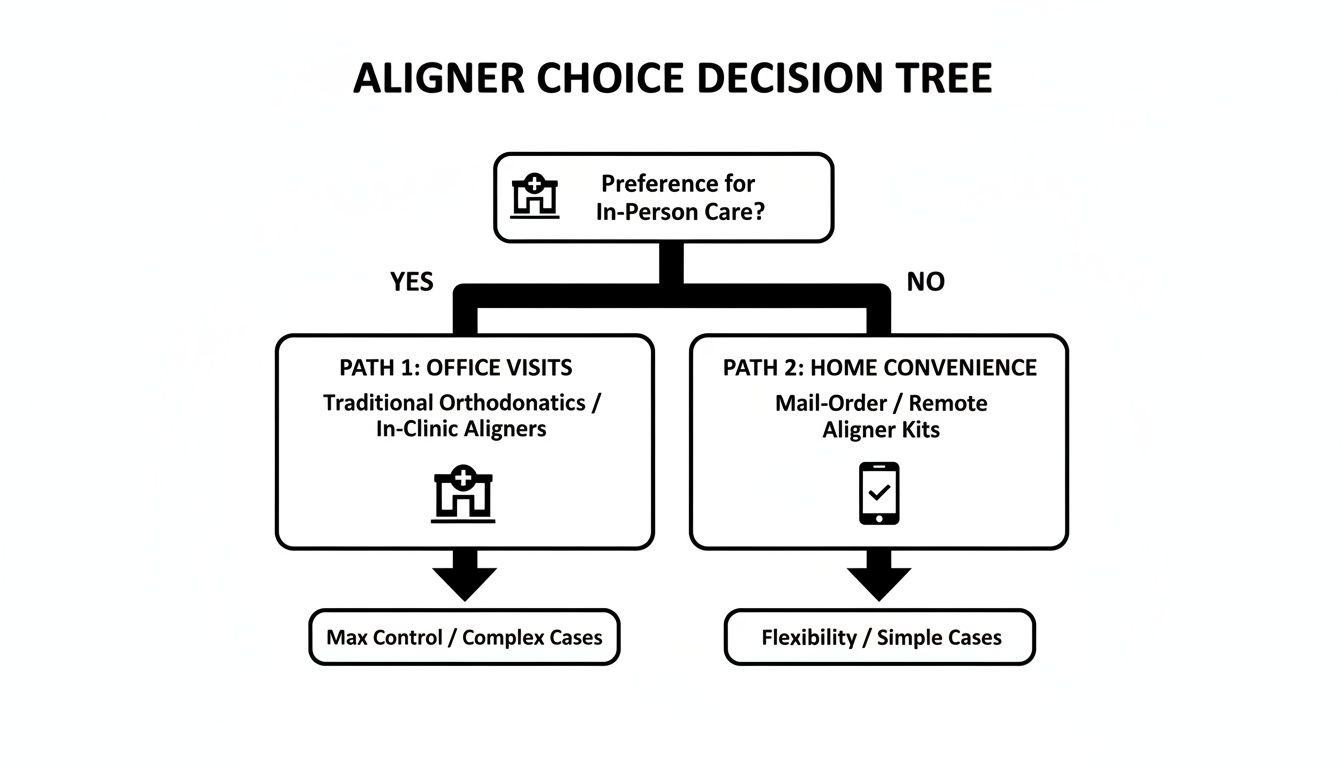
Ultimately, it comes down to a trade-off. Complex cases often need the hands-on oversight you get in a clinic. But for simpler adjustments, the convenience and affordability of virtual monitoring is hard to beat.
Key Questions for Your Consultation
The initial consultation is your opportunity to interview them, not the other way around. Don’t feel shy about turning up with a list of questions. It shows you’ve done your homework and helps you get the facts you need to make a confident choice.
Here are a few essential things to pin them down on:
- What tech are you using? Ask if they use a modern 3D intraoral scanner for your impressions. The alternative is the old-school method with trays full of messy, gag-inducing putty. Digital scans aren’t just more comfortable; they’re far more precise.
- Who is actually designing my treatment plan? Is it the dentist sitting in front of you, or is your scan sent off for a technician at the aligner company to handle? You really want a qualified clinician you’ve met to be in the driver’s seat from start to finish.
- What happens if my teeth don’t cooperate? Sometimes, teeth have a mind of their own and don’t move exactly as the plan predicts. Ask what their process is for “refinements.” Are these mid-course corrections included in the price you were quoted, or will that be an extra charge?
Getting straight answers here is non-negotiable. If they’re vague about the technology, who’s in charge of your plan, or how refinements are handled, it might suggest a one-size-fits-all approach. This is where modern alternatives like Toothfairy really shine, with clear, upfront processes managed entirely by UK-registered dentists.
Getting to Grips with the Real Cost of Your New Smile
One of the first questions on anyone’s mind when they think about straightening their teeth is, “How much is this actually going to cost me?” It’s a fair question, but the answer isn’t always straightforward. The final price tag for clear aligners can swing wildly depending on your individual dental needs, the dentist you choose, and the type of treatment plan you’re on. Getting a clear picture of what you’re paying for is the only way to budget properly and avoid any unwelcome surprises later on.
If you walk into a typical UK high-street dental clinic for a well-known aligner brand, you can usually expect the total cost to land somewhere between £2,000 and £5,500. It’s a huge range, right? This often comes down to how complex your case is, but it also bakes in all the overheads of running a physical practice – we’re talking rent, staff wages, and pricey equipment. All of that gets factored into your bill.
This is exactly where more modern, digital-first approaches are changing the game. By stripping away the need for repeated, expensive trips to the clinic, services like Toothfairy can offer the same top-notch, dentist-led treatment at a price that’s much easier on your wallet.
What’s Actually Included in the Quoted Price?
When a clinic gives you a quote, you need to be crystal clear on what it covers. A proper, all-in price should really include:
- The initial chat and 3D scan or at-home impression kit.
- Every single custom aligner you’ll need to complete your treatment.
- Any little extras like attachments (the small buttons fixed to your teeth) or IPR (a bit of minor enamel reshaping).
- Your first set of retainers to make sure that perfect new smile stays put.
What you’ve got to watch out for are the dreaded “hidden fees.” I always tell people to ask upfront about the cost of refinement aligners (what happens if your teeth are a bit stubborn and don’t move as expected?) and how much it costs to replace a lost or broken aligner. A good, transparent provider will have no problem laying all this out from the get-go.
Why Is There Such a Big Difference in Price?
The price gap isn’t just about paying for a fancy brand name. Sometimes, a higher fee is totally justified, especially if you have complicated bite problems that need an orthodontist’s specialist eye. But for many people who just have mild-to-moderate gaps or crowding, a huge chunk of that cost is simply paying for the convenience of a high-street location and the brand’s hefty marketing spend.
Think about it from the clinic’s perspective. Dental practices are pouring money into advertising to attract people looking for aligners. In fact, UK practices running specific aligner campaigns are seeing a 70% average jump in monthly consultations. I saw a case study about a Birmingham practice that went from 8 to 24 new treatments a month, with each case averaging £3,850, just by using online ads and email campaigns. You can actually read the full research on UK aligner market trends if you’re interested.
This really drives home a crucial point: a higher price doesn’t automatically mean you’re getting a better clinical outcome. A lot of the time, you’re just covering the clinic’s business costs.
At the end of the day, when you understand where the money is going, you can properly weigh up the value you’re getting. It puts you in the driver’s seat, allowing you to decide whether you want to pay a premium for the traditional clinic experience or go for a smarter, more affordable model like Toothfairy that delivers the same professional care straight to your door.
The Modern Choice: In-Clinic vs. Virtual Care
Orthodontic treatment isn’t what it used to be. For a long time, searching for a provider “near me” meant signing up for a series of in-person appointments for check-ups and adjustments. But technology has opened up a far more flexible alternative, giving you a real choice in how you manage your teeth straightening journey.
Ultimately, the decision comes down to what fits your lifestyle. The conventional in-clinic model offers a classic, hands-on experience, but it often comes with a bigger price tag and a heavier time commitment. On the other hand, the new wave of virtual monitoring, like the system pioneered by the Toothfairy app, brings professional care right to you, offering a level of convenience we could only have dreamed of a decade ago.
The In-Clinic Aligner Journey
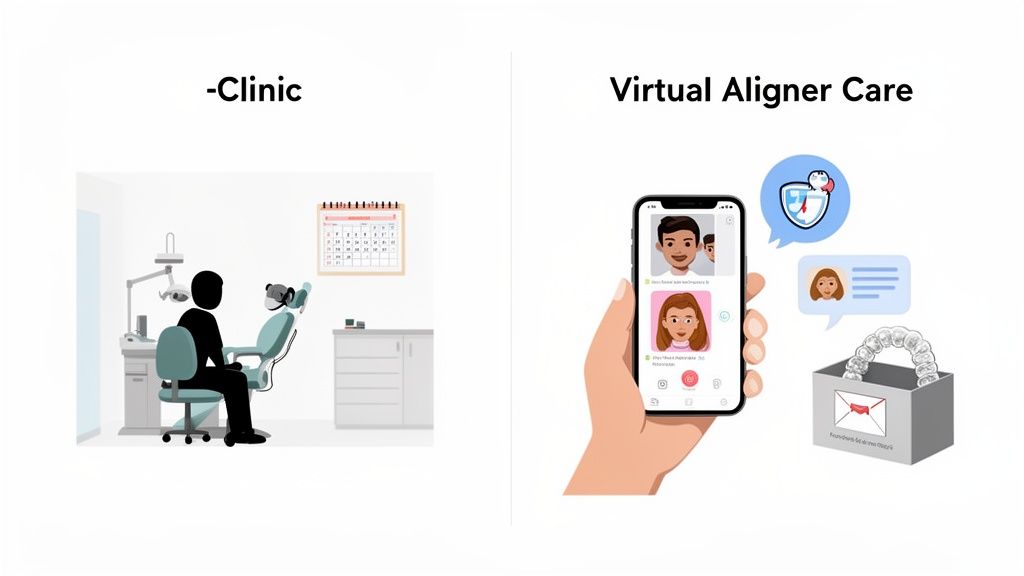
When you think of orthodontics, the in-clinic path is probably what comes to mind. It’s a process built around multiple trips to a physical dental practice, from the initial 3D scan to the regular check-ins where your dentist monitors your progress and hands over your next sets of aligners.
There’s a certain comfort in that face-to-face interaction, no doubt. But it also has its practical downsides. Taking time off work, travelling to the clinic, and spending time in waiting rooms can really add up. It’s a significant commitment that doesn’t always mesh well with a busy, modern schedule.
The Rise of Virtual Monitoring
Virtual care flips the script completely. Instead of you constantly travelling to the dentist, professional, dentist-led care comes directly to you through a purpose-built app. This is the smarter, often more affordable, way to straighten teeth that services like Toothfairy are championing.
This model uses clever technology to keep a close eye on your treatment. So, how does it all work?
- Initial Video Consultation: Your journey kicks off with a video call with a qualified UK dentist who assesses whether you’re a good candidate.
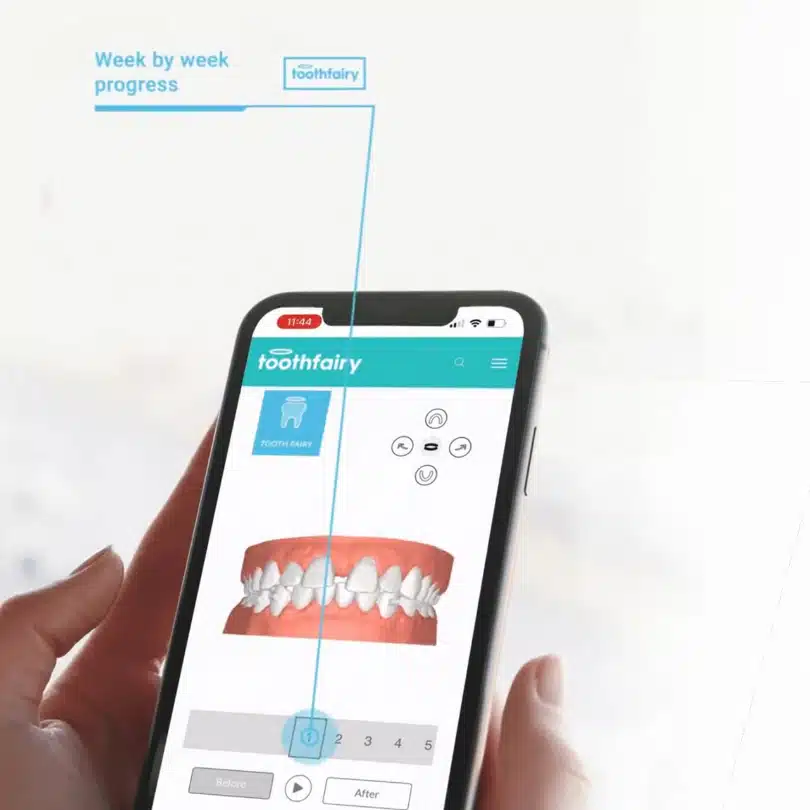
- Remote Scans: You’ll submit regular photo check-ins through the app. Patented AI helps the dental team analyse these scans to precisely track your teeth’s movement.
- Expert Oversight: A real dentist reviews your progress every step of the way, making sure everything is moving as planned and giving you feedback or adjustments when needed.
It’s important to realise this isn’t a DIY, hands-off system. It’s professional orthodontic care delivered through a much more efficient channel, making it a powerful alternative for anyone who values their time and money.
To give you a clearer picture, let’s break down how these two approaches stack up against each other.
Comparing In-Clinic and Virtual Aligner Journeys
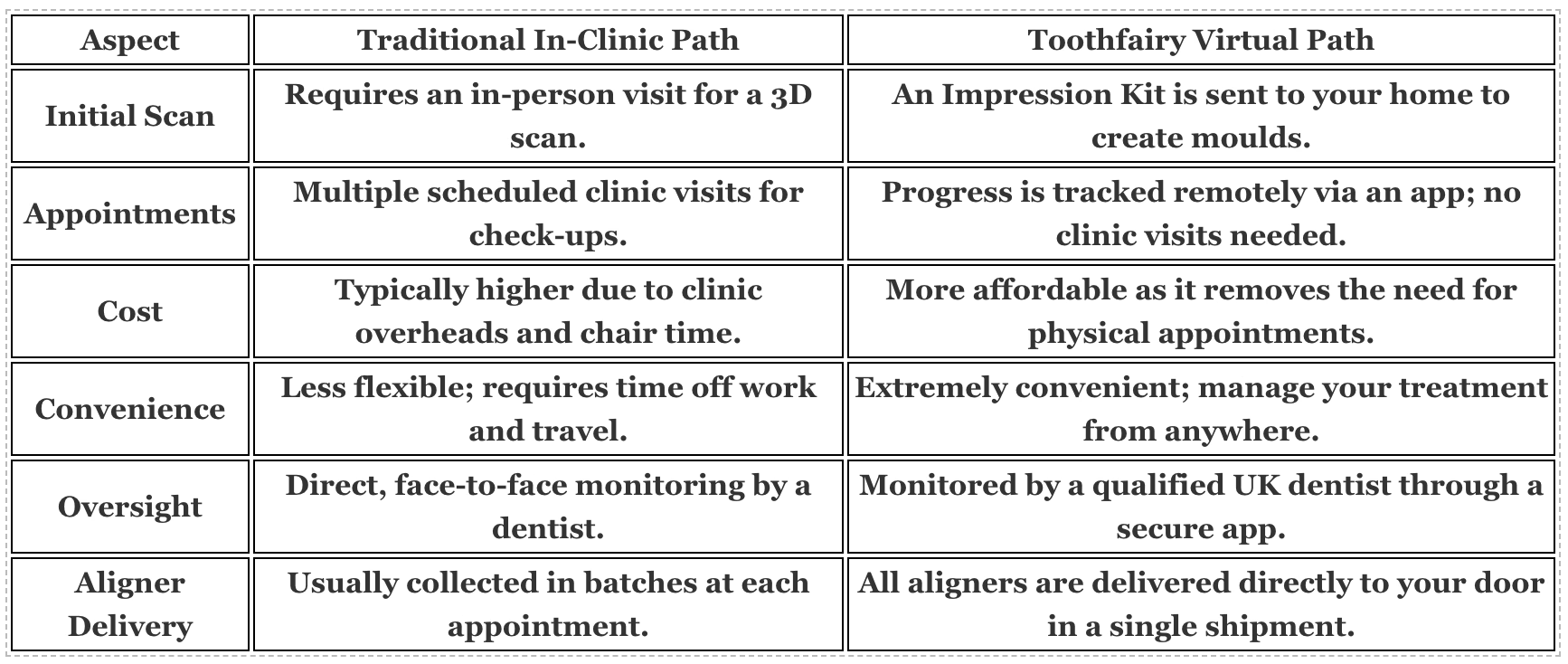 This modern, app-based approach is quickly becoming the new standard. In fact, the clear aligners market in the UK is projected to hit £250 million by 2026, with tech-savvy adults making up the largest patient segment at 74.42%. Asorthodontists manage more cases, efficient virtual models are proving essential. You can learn more about the growing UK aligner market and its drivers.
By weighing these two options, you can make an informed choice about which treatment style truly works for you. Do you prefer the traditional, hands-on feel of clinic visits, or does the flexibility and value of professionally monitored virtual care make more sense for your goals and your life?
What If the Best Option Isn’t ‘Near Me’ at All?
We often start our search for any service with a quick “near me” on Google. It’s instinctive. We assume that convenience means finding a clinic just down the road. But what if the most convenient—and smartest—choice isn’t a physical location, but something you can access right from your pocket? The whole concept of “local” gets turned on its head when expert dental care comes directly to you, wherever you happen to be.
This is exactly the gap that Toothfairy was designed to fill. It offers a more intelligent way to handle all your dental needs, from teeth straightening to cosmetic work and even emergencies. Founded and run by experienced UK dentists, Toothfairy uses its award-winning app to deliver professionally prescribed and monitored orthodontic treatment, all done remotely. This isn’t some DIY kit; it’s genuine, dentist-led care that’s built for a modern, busy lifestyle.
A Dentist in Your Pocket
The whole Toothfairy process is engineered for ultimate efficiency without ever compromising on professional standards. It’s a complete rethink of how orthodontic treatment should work, giving you control over your schedule while making sure your treatment is both safe and effective.
So, how does this dentist-led journey actually work?
- Your First Video Consultation: It all kicks off with a secure video call with a UK-registered dentist. They’ll take a look at your teeth, chat about what you’re hoping to achieve, and make sure you’re a good fit for remote aligner treatment.
- The At-Home Impression Kit: Once you get the green light, a simple impression kit is sent right to your home. You’ll make moulds of your teeth, which our dental team then uses to map out your personalised treatment plan.
- Aligners Arrive at Your Door: Your full set of custom-made clear aligners is produced and posted directly to you. No more trekking to a clinic every few weeks to pick up the next batch.
- Monitoring Through the App: You’ll use the app for regular virtual check-ins. Our patented technology allows your assigned dentist to track your progress with precision, ensuring every tooth is moving as it should.
This blend of professional oversight and smart technology makes achieving a straighter smile far more affordable and accessible. By cutting out the overheads of a physical clinic and the constant need for in-person appointments, we can pass those savings—and that convenience—directly on to you.
This is about more than just convenience. It’s about making professionally guided teeth straightening fit seamlessly into your life, not forcing your life to revolve around dental appointments. It completely removes the hurdles of travel, scheduling headaches, and time spent in waiting rooms.
Redefining What Accessible Dental Care Means
For a lot of people, the biggest barrier to starting treatment isn’t the desire for a confident smile—it’s the sheer logistics. Trying to juggle work, family, and social commitments can make fitting in regular dental visits feel almost impossible. This is precisely the problem Toothfairy set out to solve.
The entire system is designed to be as effortless as possible. You get the reassurance of having a dedicated dental professional guiding your journey from start to finish, but with the freedom to manage your treatment whenever and wherever works for you. It’s the practical, affordable, and intelligent solution for getting the smile you’ve always wanted without having to put your life on pause.
Your Questions About Clear Aligners Answered
Deciding to straighten your teeth is a big step, and it’s totally normal to have a long list of questions. You’re probably wondering if you’re a good fit, what happens after the aligners come off, and everything in between. Let’s clear up some of the most common queries we hear from people looking beyond their local clinic.
How Do I Know If I’m a Good Candidate for Clear Aligners?
Clear aligners are brilliant for sorting out most mild to moderate crowding and spacing issues, which actually covers a huge number of people. That said, more severe bite problems or really complex orthodontic cases might need a different game plan.
The only way to know for sure is to get a professional opinion from a qualified dentist. This is where a modern service like Toothfairy really simplifies things. You can have a proper consultation via a secure video call, all from your own home. A UK-registered dentist will take a look and tell you if an app-based aligner system is the right—and safest—choice for you.
Are Virtually Monitored Aligners as Safe as In-Clinic Ones?
Yes, absolutely—as long as they are prescribed and continuously overseen by qualified dental professionals. There’s a common myth that remote treatment is some kind of ‘DIY’ shortcut. With a properly managed system like Toothfairy, it’s still dentist-led care, just delivered using smarter technology.
Our app uses patented tech that lets your assigned dentist track your progress meticulously with weekly check-ins. This blend of professional expertise and digital convenience ensures your treatment is both safe and effective, with an expert guiding you every step of the way.
This model isn’t about cutting corners. It’s about making professional oversight more accessible and consistent than you’d get with occasional clinic visits, giving you peace of mind without all the travel and waiting rooms.
What Happens After I Finish My Aligner Treatment?
Keeping your newly straightened teeth in place is just as important as the treatment itself. After you finish your last set of aligners, you’ll need to wear a retainer. This is non-negotiable if you want to stop your teeth from slowly drifting back to their old spots and protect your investment.
Your dentist will likely advise you to wear your retainer full-time for a short while right after treatment, and then you’ll switch to just wearing it at night. Both traditional clinics and remote services like Toothfairy will sort you out with custom-made retainers and clear instructions to make sure your results last a lifetime.
How Much Faster Are Aligners Than Traditional Braces?
While everyone’s treatment is different, clear aligners are often a much quicker route to a straighter smile than old-school metal braces, especially for common cosmetic fixes. On average, aligner treatment usually takes somewhere between 6 to 18 months.
Fixed braces, on the other hand, can often take 18 months or even longer to get the job done. Because aligner treatments are planned digitally and can focus on specific goals, some people see a completely new smile in as little as four to six months. It’s a much faster and more discreet way to get the confidence you’re after.
Ready for a smarter, more convenient way to straighten your teeth? With Toothfairy, you get dentist-prescribed and monitored clear aligners from the comfort of your home. Skip the waiting rooms and start your journey to a confident smile today. Find out if you’re a candidate here.
Last updated on February 13, 2026

Toothfairy Care Team
Toothfairy, is the world's smartest dental app, that connects patients to a dentist for a range of issues, from emergencies, cosmetics, prescriptions to virtual exams.
Toothfairy Care Team
Toothfairy, is the world's smartest dental app, that connects patients to a dentist for a range of issues, from emergencies, cosmetics, prescriptions to virtual exams.