A Guide To Safer Teeth Straightening At Home In The UK
When you search for "teeth straightening at home," you're really looking for a way to get a straighter smile without the hassle. You want the amazing results, but not the endless appointments or the hefty price tag that often comes with traditional orthodontics. While you can't get certain specific aligner brands without in-person appointments, there’s a much smarter, modern way to get there: dentist-supervised remote treatment with companies like Toothfairy. It gives you the convenience you’re after, but with the crucial safety net of professional care.
The Dream Of At-Home Teeth Straightening
Let's be honest, the idea of straightening your teeth from your sofa is incredibly appealing. We manage our banking, order our shopping, and even see a GP from our phones, so why should orthodontics be any different? This demand for convenience has opened the door to new ways of straightening teeth, but it’s created a bit of a minefield for patients.
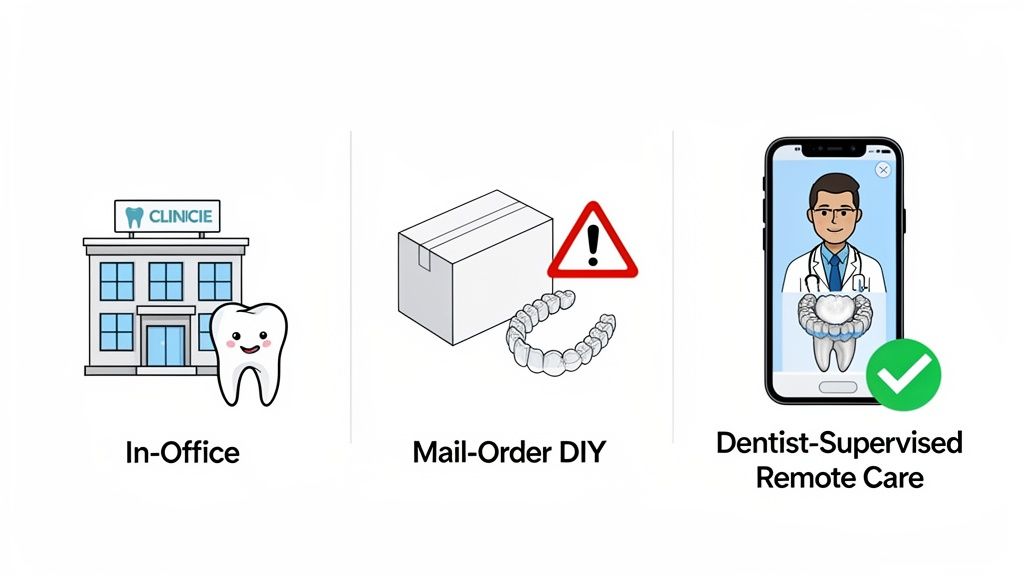
It’s so important to know the difference between a risky, unsupervised mail-order kit and a professionally managed remote care system. They might both happen "at home," but they are worlds apart in terms of safety and results.
The Critical Difference in Approach
Think about it like getting fit. You could find a random workout video online and follow along. You might see some results, but you could just as easily injure yourself by using the wrong technique. That's the mail-order aligner model—there’s no expert checking your unique needs or making sure you're not doing more harm than good.
Now, consider the alternative. A platform like Toothfairy is more like having a top-tier personal trainer through an app. You get the flexibility of working out at home, but your plan is completely customised by a professional who checks your progress and ensures you're doing everything safely and effectively.
A Safer Path to a Straighter Smile
This is where the real difference lies. Dentist-supervised remote care is the only way to get the convenience you want without gambling with your dental health. It’s the best of both worlds.
This approach means a registered UK dentist is legally and ethically responsible for you. Before a single aligner is made, they perform a full assessment to see if you're even a suitable candidate. Then, they track your progress every step of the way. It gives you complete peace of mind, knowing your journey to a straighter smile is both safe and designed for success. It’s the smart, affordable way to get the smile you want, on your own terms.
Understanding Your Clear Aligner Options
When you start looking into clear aligners, you'll quickly discover there are three very different paths you can take. To make a smart, safe choice, you need to understand what each one really involves.
It’s a bit like managing your health. You could visit a doctor in person for every single issue, try to self-diagnose using the internet, or connect with a qualified doctor through a trusted telehealth service for professional advice from home. Each approach comes with its own benefits and risks, and the same is true for straightening your teeth.
Your decision will impact not just the cost and convenience, but most importantly, the safety and success of your treatment. Let’s break down the main options you'll come across.
To help you see the differences at a glance, here’s a quick head-to-head comparison of the three main models for clear aligner treatment.
Clear Aligner Treatment Models: A Head-To-Head Comparison
| Feature | Traditional In-Office Aligners | Direct-to-Consumer Kits | Dentist-Supervised Remote Care (Toothfairy) |
|---|---|---|---|
| Clinical Supervision | Full, in-person oversight by a dentist or orthodontist at every stage. | None. No registered dentist is legally responsible for your care. | Full clinical oversight by a registered UK dentist via a secure app. |
| Candidacy Assessment | Comprehensive in-person examination, including X-rays and scans. | Relies on self-reported information and at-home impressions, which can miss underlying issues. | Professional assessment by a dentist via video consultation and review of scans/impressions. |
| Convenience | Low. Requires multiple trips to the clinic for check-ups, often during work hours. | High. Everything is done from home, but this comes at the cost of safety. | Very High. Combines the ease of at-home treatment with professional remote monitoring. |
| Cost | Highest. Clinic overheads and frequent appointments increase the price significantly. | Lowest. The lack of professional care and accountability keeps costs down. | Mid-range. More affordable than in-office care but includes the cost of expert supervision. |
| Safety | High. Constant professional monitoring ensures issues are caught and managed. | Very Low. High risk of permanent damage from moving teeth without expert guidance. | High. A dedicated dentist monitors progress, ensuring treatment is safe and effective. |
As you can see, the biggest trade-off is often between convenience, cost, and clinical safety. The goal is to find a solution that balances these factors without putting your dental health at risk.
Path 1: Traditional In-Office Aligner Brands
This is the classic route. You’ll have an initial consultation, followed by regular, in-person appointments at a dental clinic every few weeks. A specific aligner brand is prescribed and managed from start to finish by your dentist or orthodontist.
While this method offers direct, face-to-face supervision, it certainly comes at a premium. The overheads of running a physical clinic, along with the time needed for frequent appointments, make it the most expensive option. For many people, taking time off work for all those check-ups just isn't practical.
Path 2: Risky Mail-Order Kits
At the complete opposite end of the spectrum are the direct-to-consumer, mail-order aligner kits. These companies often lure you in with the promise of a straighter smile for a rock-bottom price, sending an impression kit to your home and then mailing you a box of aligners.
Here’s the catch: there is a complete lack of professional dental supervision. No registered dentist is legally responsible for your care. This means serious underlying issues like gum disease, cavities, or problematic tooth roots can be missed, potentially causing permanent damage. Moving teeth is a complex medical procedure, and attempting it without an expert in charge is a huge gamble with your health.
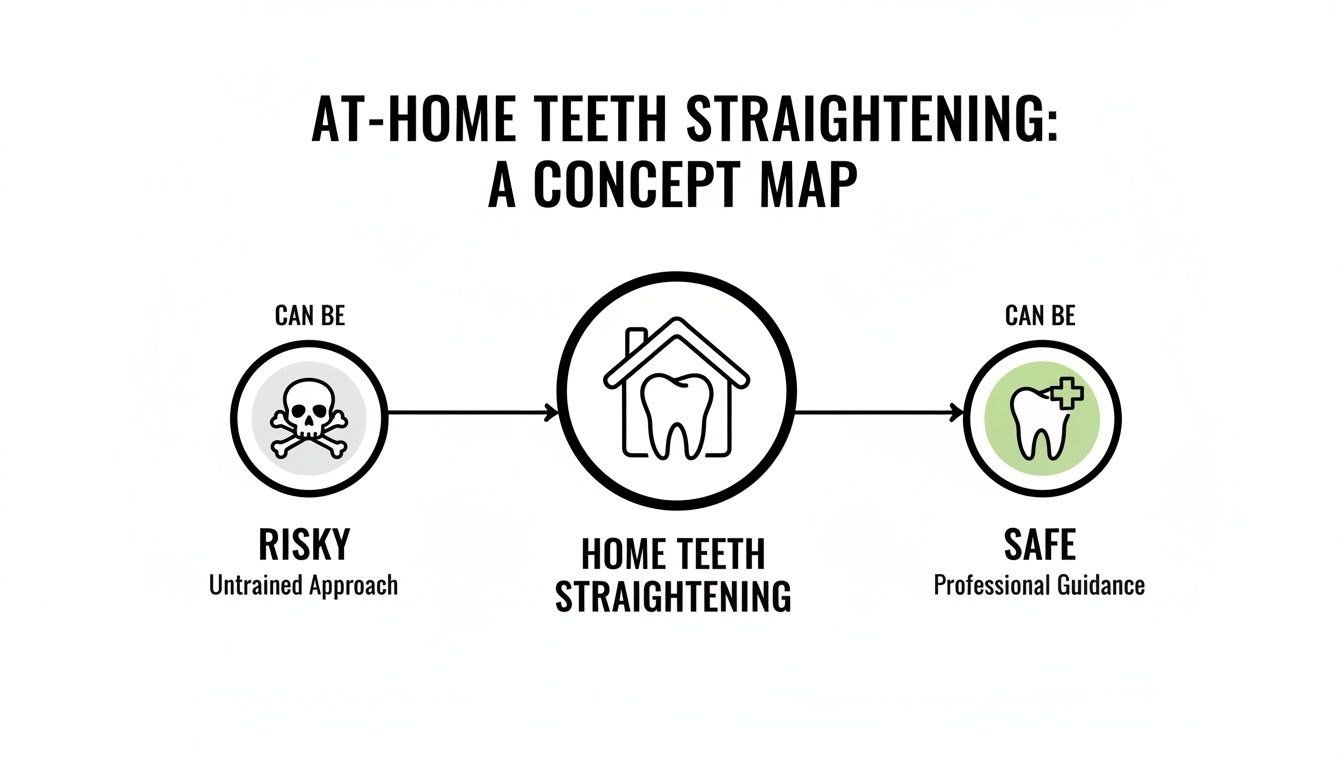
The key takeaway is that real safety in remote treatment comes from having a qualified dentist guiding the process from start to finish, not from simply doing it all yourself.
Path 3: Dentist-Supervised Remote Care
This modern, hybrid approach truly offers the best of both worlds. It combines the convenience of at-home treatment with the non-negotiable safety of professional dental oversight. This is the model perfected by providers like Toothfairy.
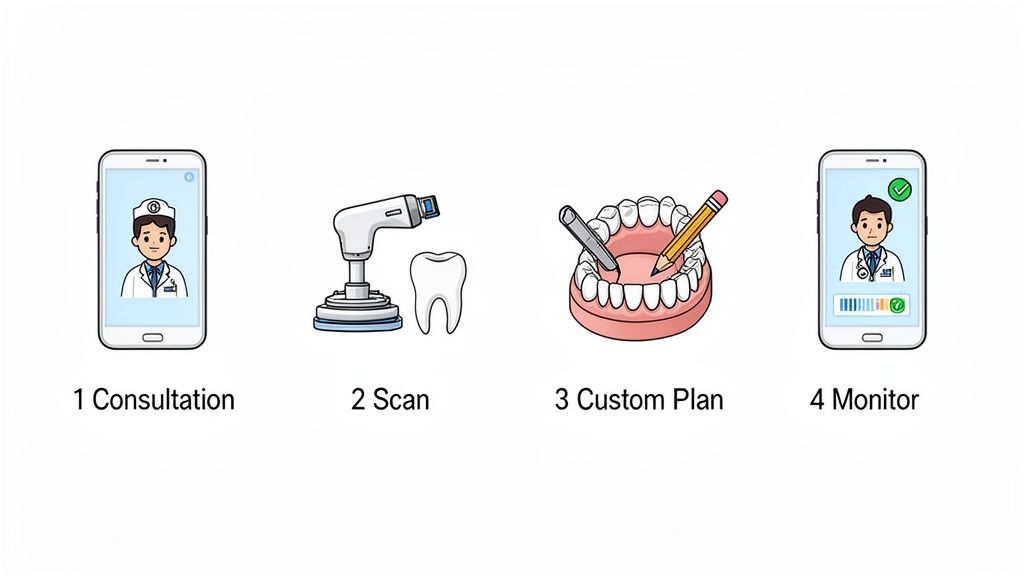
With this option, your entire treatment is designed and carefully monitored by a registered UK dentist, all through a dedicated app. Here’s a quick look at how it works:
- Initial Digital Consultation: You start by connecting with a real dentist to discuss your goals and check if you're a good candidate.
- Professional Assessment: You either complete a guided impression kit at home or visit a partner clinic for a quick 3D scan, all of which is reviewed by your assigned dentist.
- Bespoke Treatment Plan: Your dentist creates a personalised plan to move your teeth safely and predictably.
- Continuous Remote Monitoring: You'll have regular check-ins via the app, allowing your dentist to ensure everything is progressing exactly as it should.
This model ensures a dental professional is always in control, ready to make adjustments and guide you through a journey that is both safe and effective. It delivers the affordability and convenience people want, without ever compromising on clinical excellence.
The huge growth in these more accessible options is clear. The UK clear aligners market, valued at USD 290.6 million, is projected to soar to USD 1,368.1 million by 2030. This boom is overwhelmingly driven by adults, who make up 73.92% of the market, all looking for effective and convenient solutions. You can explore more data on the UK's adult orthodontics boom to understand this shift. This massive demand just underscores the need for safe, dentist-led alternatives to purely in-office treatments.
The Hidden Dangers Of Unsupervised Aligners
The promise of a cheap, fast smile from a mail-order aligner kit can be incredibly tempting. The ads paint a picture of a simple, risk-free journey to perfectly straight teeth. But what they don't show you are the serious hidden dangers that come with moving your teeth without a dentist or orthodontist calling the shots.
Trying to straighten your teeth with a completely unsupervised, "DIY" approach isn't just a shortcut; it's a massive gamble with your dental health. The consequences can range from a disappointing result to irreversible damage that costs far more to fix than getting proper treatment in the first place.
When At-Home Impressions Go Wrong
The success of any unsupervised aligner treatment rests entirely on how well you take your own dental impressions with a putty kit. Frankly, this is a notoriously tricky process to get right, even for professionals. A tiny mistake—an air bubble, a slight wobble, or not applying even pressure—can create a distorted mould of your teeth.
When that happens, the aligners made from it simply won't fit properly. Ill-fitting aligners aren't just uncomfortable; they can actively push your teeth in the wrong direction. Instead of fixing your smile, they could create brand new alignment problems, shift teeth into unstable positions, or just not work at all. It's a frustrating waste of time and money.
The Problem of Pre-Existing Conditions
Perhaps the single biggest risk of unsupervised aligners is the total lack of a proper dental health check. Before any reputable dentist starts orthodontic work, they carry out a thorough exam, usually with X-rays, to check the health of your teeth, gums, and the bone that holds everything in place.
A registered dentist is trained to spot underlying issues that you can't see. Unsupervised kits completely bypass this critical safety step, which means they can't detect problems like gum disease, tooth decay, or insufficient bone support that could make aligner treatment dangerous for you.
Think about it: moving a tooth that has an undiagnosed cavity or a weakened root can lead to severe pain, infection, or even losing the tooth altogether. Professional supervision isn't an optional extra; it's a fundamental safety measure to make sure your mouth is healthy enough to handle the forces of orthodontics.
Irreversible Damage to Your Smile
Without a dental professional guiding the treatment, a lot can go wrong, leading to permanent harm. These aren't minor side effects, but serious medical complications that can affect your health for the rest of your life.
Here are a few of the most common issues we see:
- Worsening Your Bite: Aligners don't just straighten teeth; they change how your top and bottom teeth meet. Without an expert plan, this can lead to a misaligned bite (malocclusion). The result? Jaw pain, chronic headaches, and problems chewing.
- Gum Recession and Damage: Poorly designed aligners can put too much pressure on your gums, causing them to pull back and recede. This exposes the sensitive roots of your teeth, leading to long-term sensitivity and a higher risk of decay.
- Root Resorption: This is a scary one. Applying the wrong amount or direction of force can cause the roots of your teeth to literally shorten and dissolve. This permanently weakens the tooth's foundation, making it wobbly and, in the worst cases, causing it to fall out.
At the end of the day, even with professional care, it’s worth knowing that clear aligners can have a general 10-20% failure rate. This statistic really drives home how vital patient compliance and—most importantly—professional monitoring are for getting safe, successful results. You can learn more about aligner success rates and see for yourself why expert oversight is non-negotiable. This is exactly why a smarter, hybrid approach like the dentist-led remote care from Toothfairy is so essential for a great outcome.
How Dentist-Led Remote Care Delivers Safe Results
The thought of straightening your teeth from the comfort of your own home has gone from a futuristic idea to a genuine, safe, and effective reality. It's all thanks to dentist-led remote care. This modern approach, pioneered by platforms like Toothfairy, gives you all the convenience you want, but without the serious risks that come with unsupervised, mail-order aligner kits. It's a system built on real professional expertise, not just a clever algorithm.
What this model does is blend the ease of an at-home journey with the non-negotiable oversight of a qualified dental professional. From the moment you start, you’re not just a number in a system; you’re a patient. A registered UK dentist is legally and ethically responsible for your care and your results.
A Dentist Guides You At Every Step
While the process feels simple on your end, it’s underpinned by rigorous clinical protocols behind the scenes. This ensures every single decision is made with your long-term dental health as the absolute priority.
Let's walk through the four key stages of a professionally supervised remote treatment plan:
-
1. Your Initial Digital Consultation
It all kicks off with a secure video call with a registered UK dentist. This isn't a sales pitch. It’s a genuine clinical assessment where the dentist looks at your dental health, listens to what you want to achieve, and professionally determines if remote aligner therapy is the right and safe option for you. -
2. The Professional Assessment
Following your consultation, the next job is to get a perfect model of your teeth. You’ll either use a professional-grade impression kit at home (with guidance from the dental team) or pop into a nearby partner clinic for a quick 3D scan. Crucially, a dentist personally reviews these records to confirm they are clinically accurate before any treatment planning even begins.
This dentist-led model is the crucial difference between a calculated medical procedure and a risky cosmetic gamble. With Toothfairy, a qualified professional is always in control, ensuring your treatment is not only effective but fundamentally safe from start to finish.
A Treatment Plan Designed For You, By A Dentist
Once your dentist has all the clinical information they need, they get to work designing your unique treatment plan. This is where their expertise really shines—it's not an automated process. Your dentist meticulously maps out every tiny tooth movement, creating a predictable and safe road map to your new smile.
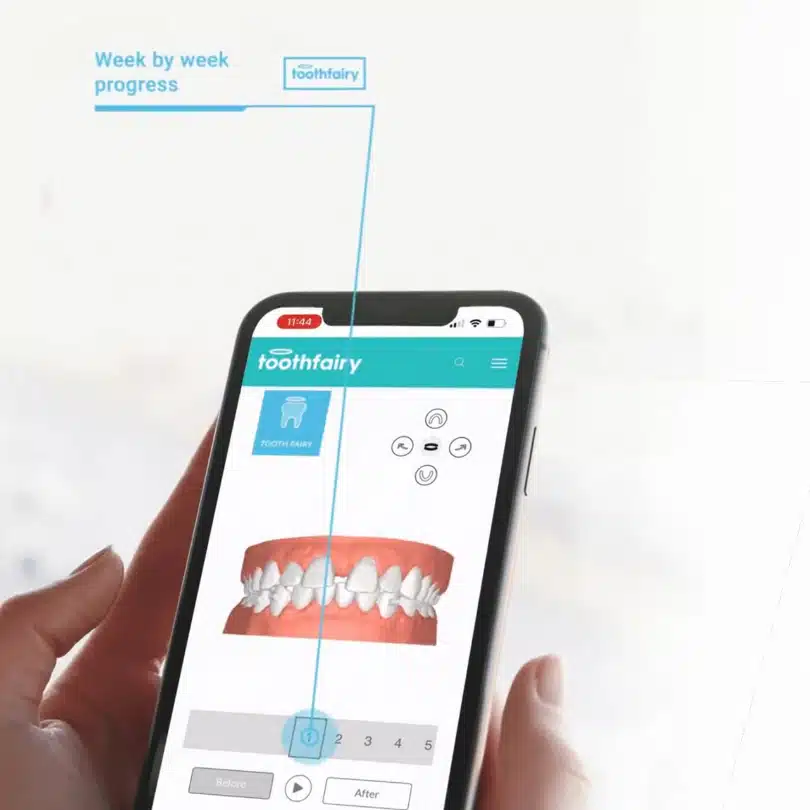
You'll get to see a 3D preview of this plan, showing you exactly how your teeth will shift over time and what the final result will look like. Only when both you and your dentist are happy and have approved the plan do your custom-made clear aligners get produced and shipped to your door.
Continuous Monitoring For Complete Peace Of Mind
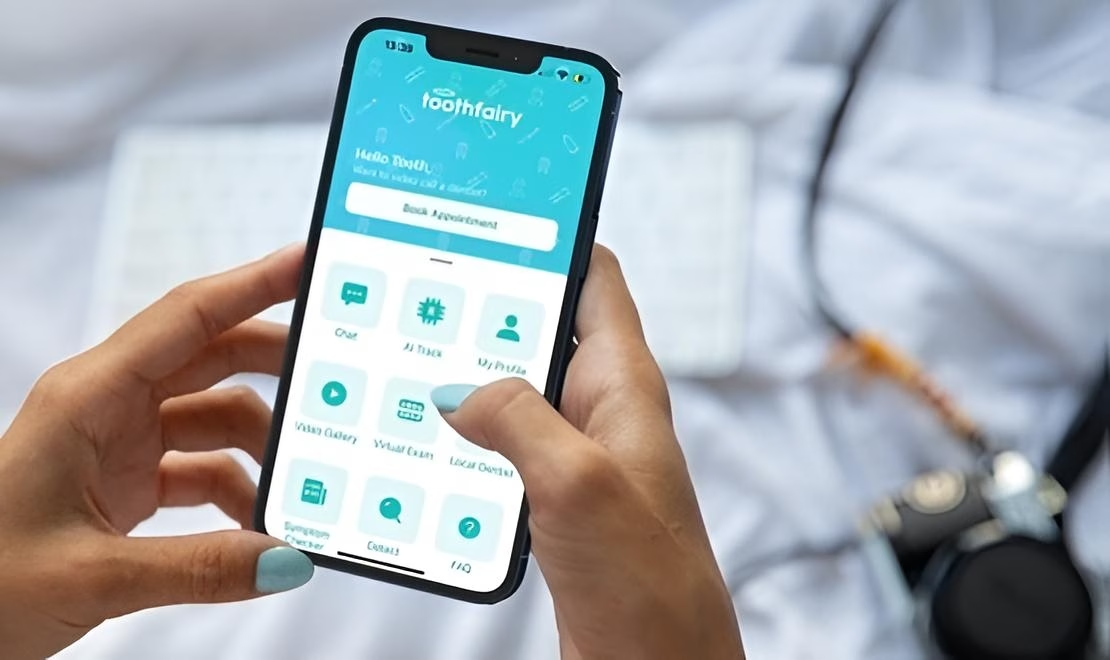
Getting your aligners is just the start of the journey, not the end. Throughout your treatment, you'll have regular digital check-ins using the secure Toothfairy app. At each stage, you’ll send progress photos which your dedicated dentist personally reviews.
This constant remote monitoring means your dentist can make sure your teeth are moving exactly as planned and spot any potential issues long before they become problems. If a small adjustment is needed, they can step in immediately. It’s this active, ongoing professional supervision that provides the safety and assurance that unsupervised kits completely miss. This isn't just about convenience; it's about responsible healthcare.
Of course, providing safe and ethical remote care also means working within a clear regulatory framework, which includes navigating healthcare advertising compliance to properly protect patients.
Professionally supervised treatments have also become much more efficient. In the UK, most clear aligner treatments now take somewhere between 6 and 18 months, with many straightforward cases finishing up in around 9 to 14 months. This is a huge time-saver compared to the long-term commitment often required for traditional braces. It's this smart blend of expert oversight, convenience, and value that makes dentist-led remote care the most sensible choice for straightening your teeth today.
Are You A Good Candidate For Remote Treatment?
Remote clear aligner treatment is a fantastic way to get a straighter smile on your own terms, but let's be realistic: it isn't the right tool for every job. The key to a successful and safe journey is figuring out right from the start if it’s the right fit for you.
An honest assessment of your smile is the first, most crucial step. This isn't about upselling you; it's about helping you make a genuinely informed decision about your health. We want you to get the results you're dreaming of without cutting any corners on safety.
So, let's break down who’s likely a great fit and who might need a different approach.
The Ideal Profile For Remote Care
In my experience, dentist-supervised remote treatment really shines for adults with mild-to-moderate orthodontic issues. If your smile concerns are in this camp, you're probably an excellent candidate for a smarter, more affordable treatment model like the one we've pioneered at Toothfairy.
Ideal candidates often come to us with:
- Mild to Moderate Crowding: That classic situation where there just isn’t quite enough room for all your teeth to line up neatly.
- Minor to Moderate Spacing: You might have small, noticeable gaps between a few of your teeth.
- Slight Bite Misalignments: Nothing major, just minor issues with how your top and bottom teeth meet, like a slight overbite.
- Orthodontic Relapse: A very common one! You had braces years ago, but your teeth have decided to shift back a bit over time.
For these kinds of cases, remote monitoring allows a dentist to guide your teeth into their ideal positions safely and predictably. You get incredible results without needing to constantly pop into a clinic.
Who Is Not A Good Candidate
While remote treatment is incredibly effective, it does have its limits. Some complex dental situations absolutely need the hands-on approach and specialised tools you can only find in a physical clinic. Trying to force a remote solution in these cases isn't just ineffective—it can be downright risky.
You are likely not a suitable candidate for remote aligner therapy if you have:
- Severe Bite Problems: Think significant overbites, underbites, or crossbites. These often require more complex orthodontic mechanics than aligners can handle on their own.
- Active or Untreated Gum Disease: Moving teeth when your gums aren't healthy is a huge no-no. It can lead to serious problems like gum recession or even tooth loss. Your gums must be healthy before any orthodontic work can even begin.
- Significant Dental Health Issues: This includes untreated cavities, weak teeth, or problems with your jaw joint (TMJ/TMD). A dentist needs to address these underlying issues first.
- Complex Dental Work: Existing work like bridges, dental implants, or some crowns can complicate how teeth move and might rule out aligner treatment.
- The Need for Tooth Extractions: If your crowding is so severe that teeth need to be pulled to create space, this has to be managed in a clinical setting.
The only way to know for sure is to get a professional opinion. A qualified dentist can look at your specific situation and give you a definitive yes or no on whether you can safely move forward with an at-home plan.
The safest path is always one guided by an expert. You can use this guide as a starting point, but the final verdict has to come from a professional. The great news? Finding out is quick, easy, and comes with no strings attached.
Booking a free video consultation with a Toothfairy dentist will give you that clear, professional answer, so you can move forward with total confidence.
Your Pre-Treatment Safety Checklist
Before you say yes to any teeth straightening plan—whether it's done remotely or in a clinic—it’s time to become your own best advocate. Asking the right questions right from the start is the single best way to protect your dental health and make sure you’re choosing a safe, reliable provider.
Think of it like vetting a builder before they start work on your house. You’d want to see their credentials and understand exactly what you're signing up for, right? It’s the same with your teeth. This checklist will help you cut through the marketing noise and get straight to the facts, so you can spot the difference between a risky gamble and a smart investment in your smile.
Key Questions for Any Aligner Provider
Don't be shy about asking direct questions. Any truly reputable provider will welcome your diligence and have clear, transparent answers at the ready. If they hesitate or can't answer these confidently, that’s a major red flag.
Here are the absolute must-ask questions:
-
Who is legally responsible for my treatment? You need a straight answer here. Is a specific, named UK-registered dentist or orthodontist designing your plan and overseeing your entire treatment from beginning to end? If not, there's a serious lack of clinical accountability.
-
What happens if a problem comes up? Ask for their exact protocol. What do you do if you experience pain, an aligner doesn't fit properly, or your teeth just aren't moving as they should? A safe provider will have a clear, simple way for you to contact your assigned dentist directly for help.
-
What is included in the total cost? The price you see should be the price you pay. Ask them point-blank if the cost covers your final retainers (which are non-negotiable for keeping your teeth straight) and any mid-course tweaks or refinements needed to nail the final result. Hidden fees can quickly turn a good deal into a bad one.
The answers you get reveal everything about a provider's philosophy. A transparent, dentist-led service like Toothfairy is built on clinical responsibility, meaning a qualified professional is genuinely guiding your treatment and is on hand to keep it safe and effective.
Technology and Monitoring
How your progress is tracked is another massive indicator of quality. The tech should be there to support professional oversight, not replace it.
- How will you monitor my progress between check-ins? Find out what technology they use for remote monitoring. Is it a dedicated, secure app? Will a dentist personally review the photos you send at regular intervals? This continuous supervision is what makes modern remote orthodontics a safe and effective alternative to constant in-person appointments.
Armed with this checklist, you can move forward with real confidence. You'll be able to tell the difference between a slick marketing campaign and a genuinely safe, comprehensive treatment plan—allowing you to make the smartest choice for your long-term health and your smile.
Got Questions? Let's Get Them Answered
It’s completely normal to have questions when you’re thinking about straightening your teeth, especially with all the new remote options out there. You want to be sure you're making the right choice for your smile. So, let’s clear up some of the most common things people ask about dentist-supervised remote care.
Is Remote Care Really As Safe As Going To A Clinic?
Absolutely, as long as a registered UK dentist is in charge. The real safety factor isn't where you are, but who is responsible for your treatment. With a service like Toothfairy, a qualified dentist is legally and ethically overseeing your entire journey, from the very first look to your final smile reveal.
This is worlds away from those unsupervised, direct-to-consumer kits you see online. Those are risky because there’s no professional oversight. Dentist-led remote care, on the other hand, uses technology to keep a close eye on your progress, making it a safe and effective choice for the right person.
How Much Money Could I Actually Save?
The savings can be pretty substantial. Think about it: without the costs of running a physical clinic and all the overheads that go with it, dentist-supervised remote treatment is much more affordable than the big-name aligner brands you get in a traditional practice.
You’re getting the same high-level expertise from a registered UK dentist, just without the premium price tag. For many, this translates to saving hundreds, or even thousands, of pounds while still getting a fantastic, safe result.
What If I Mess Up The Impression Kit?
That’s a great question, and it's one of the biggest things that separates a professional service from a risky DIY kit. When you’re with a dentist-led service like Toothfairy, your impressions are sent directly to a clinical professional for review. If they're not quite right, you won't be left to guess why.
Our team will walk you through exactly how to take a better one to make sure your aligners are a perfect fit. And if needed, we can even arrange an in-person 3D scan at a partner clinic to get a flawless digital model of your teeth. Your result is our priority.
How Long Will This All Take, Including The Retainer Part?
You might be surprised at how quick the process can be with professionally supervised clear aligners. For most mild to moderate alignment issues, treatment is usually wrapped up within 6 to 18 months. Your dentist will give you a specific timeline that’s tailored just for you.
Once the straightening is done, wearing a retainer is non-negotiable to protect your investment. You’ll typically wear it full-time for a little while, then just at night—for life. It's the key to making sure that beautiful new smile stays put permanently.
Ready to find out if a smarter, safer, and more affordable way to a straighter smile is right for you? With Toothfairy, a UK-registered dentist is with you every step of the way, delivering professional results right from your home.
Start your free video consultation today!
Last updated on December 31, 2025

Dr. Deepak
ToothFairy Care Team.
Dr. Deepak
ToothFairy Care Team.