How to Wash Clear Aligners: Easy Tips for a Cleaner Smile
So, you’ve started your journey to a straighter smile. That’s fantastic! But the real secret to success isn’t just wearing your aligners; it’s keeping them spotlessly clean.
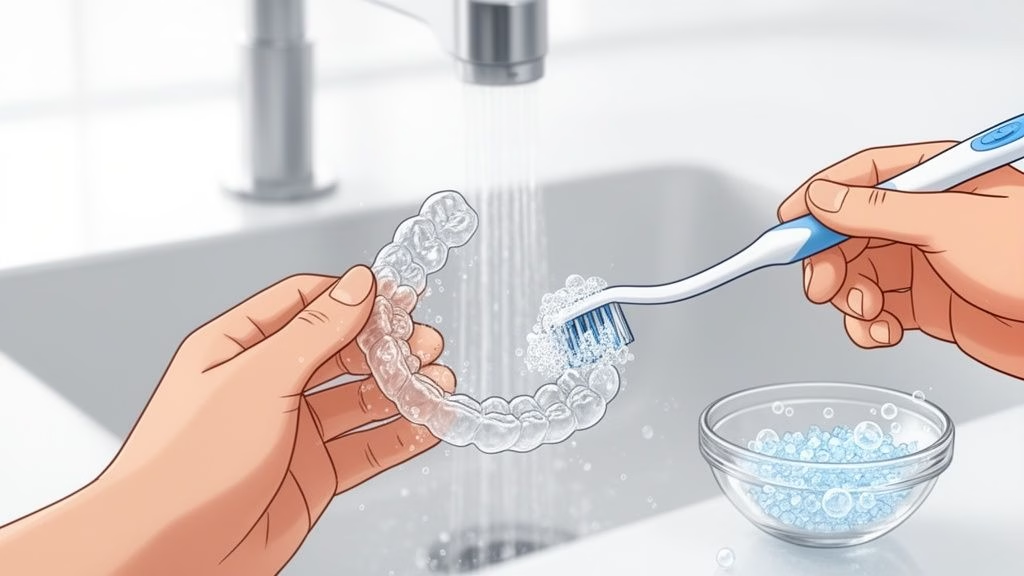
The best way to clean clear aligner brands is surprisingly simple. Get into the habit of gently brushing them twice a day with a soft toothbrush and clear, unscented liquid soap. A quick rinse under lukewarm water afterwards, and you’re done. This daily habit is absolutely essential for keeping stains and bad smells at bay, not to mention protecting your oral health.
Your Essential Guide to Aligner Hygiene
Embarking on a teeth-straightening journey is a big investment in both your confidence and your health. But the effectiveness of your clear aligners depends on more than just wearing them for the recommended 22 hours a day. The true key to getting the results you want lies in keeping those aligners pristine.
If you let cleaning slide, you can quickly undermine all your progress. Dirty aligners don’t just look cloudy and grim; they become a breeding ground for bacteria. This can kick off a whole host of problems that can derail your treatment and impact your overall health.
The Consequences of Poor Aligner Care
When aligners aren’t cleaned properly, the fallout is more than just cosmetic. Knowing the risks makes it pretty clear why a consistent cleaning routine is so important.
- Discolouration and Staining: Your nearly invisible aligners can quickly turn yellow or cloudy, making them far more noticeable and defeating their discreet appeal.
- Persistent Bad Breath: Tiny food particles and bacterial buildup create unpleasant odours, which can be a real knock to your confidence.
- Increased Health Risks: A dirty aligner essentially holds bacteria right up against your teeth and gums for hours on end. This significantly increases your risk of cavities and gum inflammation.
- Compromised Treatment: Plaque buildup can actually prevent the aligner from fitting snugly over your teeth. This can get in the way of tooth movement and potentially delay your treatment timeline.
Understanding Why Proper Cleaning Matters
The special material used in your aligners is designed for clarity and a precise fit, but it’s also delicate and can be damaged by the wrong cleaning methods. To get a better handle on why hygiene is so crucial, it’s worth looking into the different Invisalign treatment options and understanding how they work. Each aligner is a highly sophisticated medical device, and looking after it properly is a fundamental part of the process.
Information from UK orthodontic practices shows a direct link between a patient’s cleaning habits and their treatment success. We see much higher rates of staining in patients who don’t have a solid daily routine, with aligners turning yellow and becoming very visible. Even more concerning is the clear increase in cavities and gum disease among those who neglect cleaning.
The goal isn’t just to straighten your teeth, but to do so without sacrificing your oral health. Clean aligners are the foundation of a healthy, successful treatment.
Ultimately, keeping your aligners clean is a small commitment that delivers huge rewards. It ensures your treatment stays on track, protects your teeth and gums, and keeps your new smile looking its absolute best from day one to the final reveal.
Building a Simple Daily Cleaning Routine
When it comes to keeping your aligners fresh and genuinely invisible, consistency is everything. The best approach is to stop thinking of it as a chore and instead weave it into the habits you already have. A solid daily plan doesn’t need to be complicated; it’s really just a few key moments that make a huge difference in the long run.
The absolute cornerstone of good aligner hygiene is rinsing them every single time they come out of your mouth. Saliva and plaque dry onto the plastic incredibly fast, creating a stubborn film that’s a real pain to scrub off later. Just a quick rinse under lukewarm water stops that buildup in its tracks.
Your Morning Aligner Care Checklist
Starting your day with a clean mouth and fresh aligners just feels better. The perfect time to tackle this is while you’re having your breakfast or morning cuppa.
It’s not a big production. Grab a dedicated soft-bristled toothbrush—one you only use for your aligners—and a small drop of clear, unscented antibacterial soap. Gently brush every surface, inside and out. Pay a little extra attention to the ridges and crevices where bacteria love to collect.
- Rinse Immediately: The moment they’re out, get them under lukewarm tap water.
- Brush Gently: Use that separate, soft toothbrush with a bit of clear liquid soap.
- Rinse Thoroughly: Make sure every last bubble of soap is gone before they go back in.
A quick word of warning: Never, ever use hot water. The thermoplastic material your aligners are made from can warp with heat. A distorted aligner won’t fit properly, which could seriously disrupt your treatment plan.
This quick scrub takes less than a minute but it’s the single best way to prevent that cloudy, dull look that makes aligners stand out.
Ignoring this simple daily routine is what leads to problems. It starts with a bit of discolouration, which can then lead to bad odours and even impact your oral health.
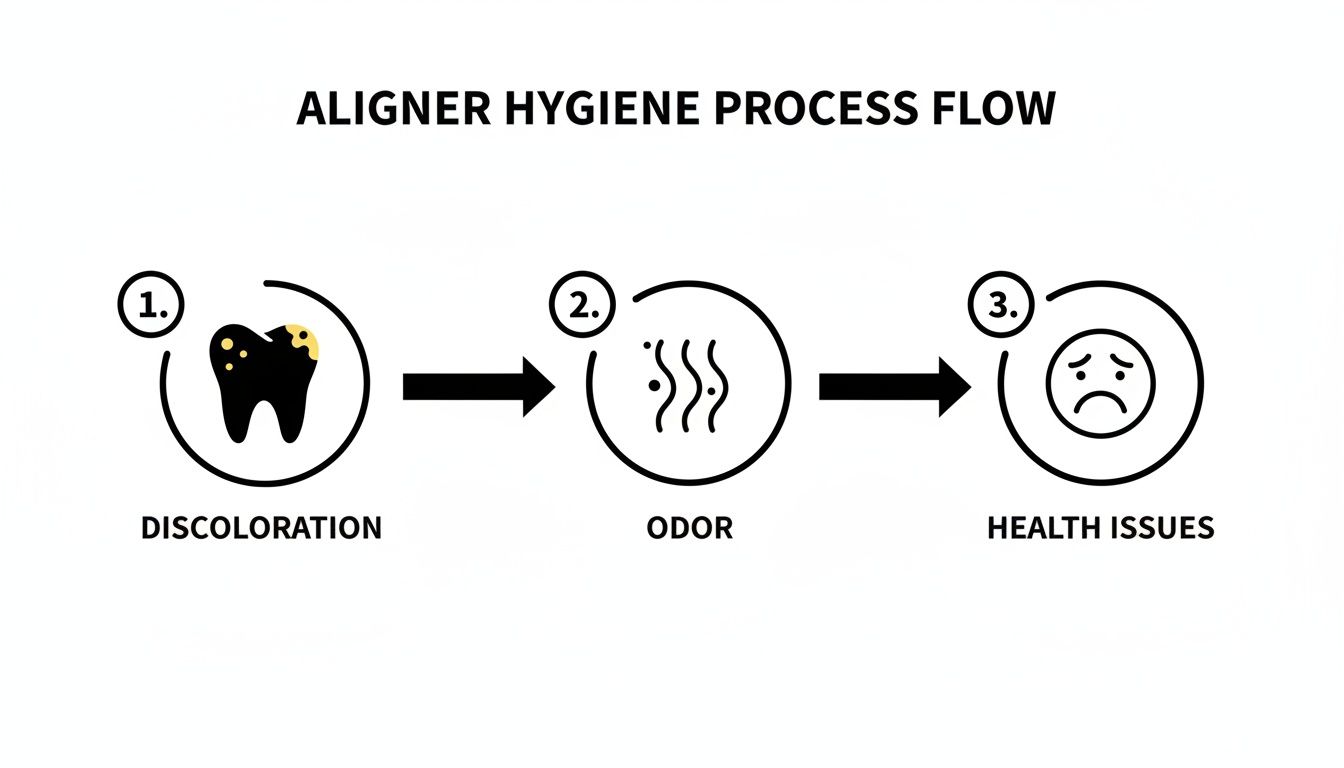
The takeaway here is that these issues snowball. What seems like a minor cloudy patch one day can quickly become a much bigger hygiene headache if you don’t stay on top of it.
The Evening Wind-Down Routine
Just like you brush your teeth before bed, your aligners need one last clean to wash away everything that’s built up during the day. Think of it as a bookend to your morning routine—a powerful combo that keeps plaque and stains at bay.
Before popping your aligners back in for the night, make sure your own teeth are spotless. Brushing and flossing are non-negotiable here. Trapping food debris under your aligner all night is a fast track to developing cavities. While you’re brushing your teeth, give your aligners their own gentle scrub with soap and water.
This simple, twice-a-day schedule is the most reliable way to keep your aligners in top shape. It keeps them working effectively and looking great, helping you on your journey to a straighter smile without the hassle of stubborn stains or nasty smells. If you do run into any trouble or have questions, remember that services like Toothfairy offer a smarter, more affordable way to get advice from a dental professional right from your phone.
Common Cleaning Mistakes That Ruin Aligners
It’s one thing to know how to look after your clear aligners, but it’s just as crucial to know what not to do. So many people, with the best of intentions, end up damaging their aligners by using everyday products they think are safe. Before you know it, that discreet orthodontic tool is a cloudy, warped mess.
These simple mistakes can weaken the aligner material, create a breeding ground for bacteria, and even throw your whole treatment plan off course. Steering clear of these common pitfalls is the best way to protect your investment and make sure your journey to a straighter smile is a smooth one.
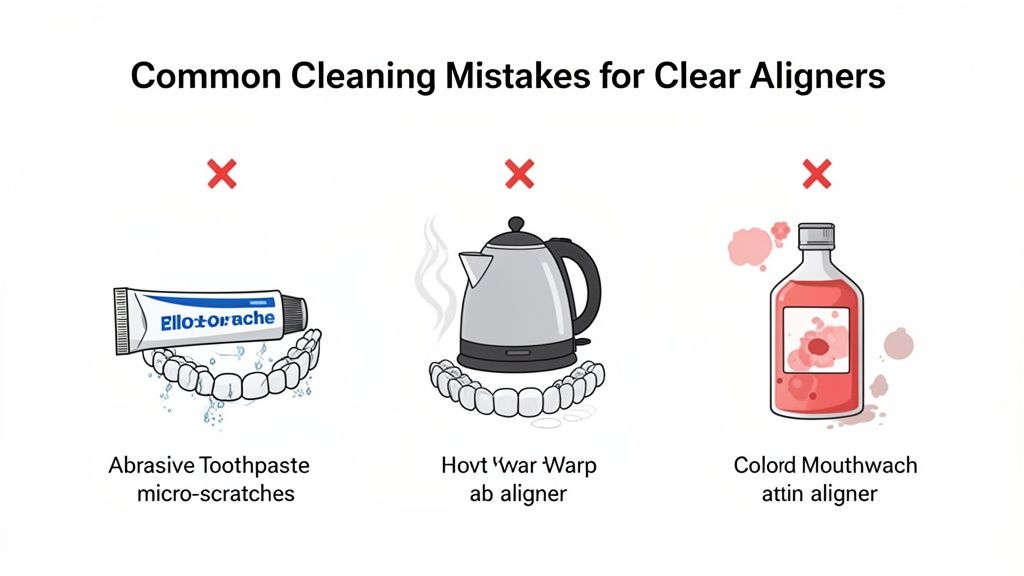
The Problem with Abrasive Cleaners
It feels like a no-brainer to just grab your usual toothpaste for a quick scrub, right? Unfortunately, this is one of the most common ways people accidentally ruin their aligners. Toothpaste is designed for tooth enamel, which happens to be the hardest substance in the human body. Your aligners, on the other hand, are made from a much more delicate medical-grade plastic.
The tiny abrasive particles in toothpaste will cover the surface of your aligners with thousands of microscopic scratches. These not only make your aligners look dull and cloudy but also create perfect little hiding spots for bacteria and plaque to build up. This can lead to bad breath and other oral hygiene problems you’d rather avoid.
This isn’t just a theory, either. UK dental practices are seeing this issue pop up more and more. Some studies have even shown that using toothpaste causes micro-scratches in roughly 60% of aligners in just six weeks. If you’re using a specific aligner brand here in the UK, that means the odds are you could be damaging your expensive treatment without even realising it. You can learn more about these common aligner cleaning mistakes from dental professionals.
Why Hot Water Is a Major Risk
A blast of hot water might seem like a good way to kill germs and get your aligners truly clean, but it can cause permanent damage. Clear aligners are made using a process called thermoforming, where plastic is heated and precision-moulded. Giving them a hot-water bath can actually cause that plastic to warp and lose its unique shape.
An aligner that has lost its shape won’t fit snugly over your teeth anymore. When that happens, it can no longer apply the gentle, consistent pressure needed to move your teeth correctly. Your treatment effectively grinds to a halt. Always, always use lukewarm or cool water for rinsing and cleaning.
The Dangers of Coloured and Scented Products
Just like you avoid certain foods and drinks to prevent staining, you need to be just as picky with your cleaning products. Many things you have around the house can completely ruin the clear, discreet look of your aligners.
Here are a few culprits to watch out for:
- Coloured Mouthwash: While it’s great for your mouth, that colourful liquid can quickly dye the clear plastic of your aligners, leaving them with an unpleasant blue or green tinge. Research actually suggests that due to the pigments and alcohol, mouthwash discolours aligners in about 75% of cases.
- Scented or Coloured Soaps: These can leave behind a soapy residue, giving your aligners an odd taste. The dyes in them can also lead to staining over time. It’s best to stick with a clear, unscented liquid soap.
- Harsh Soaps and Detergents: Things like dish soap or aggressive hand soaps are simply too harsh for the delicate plastic. They can make the material brittle and much more likely to crack or break.
To help you remember what’s safe and what isn’t, here’s a quick reference table.
Safe vs Unsafe Aligner Cleaning Agents
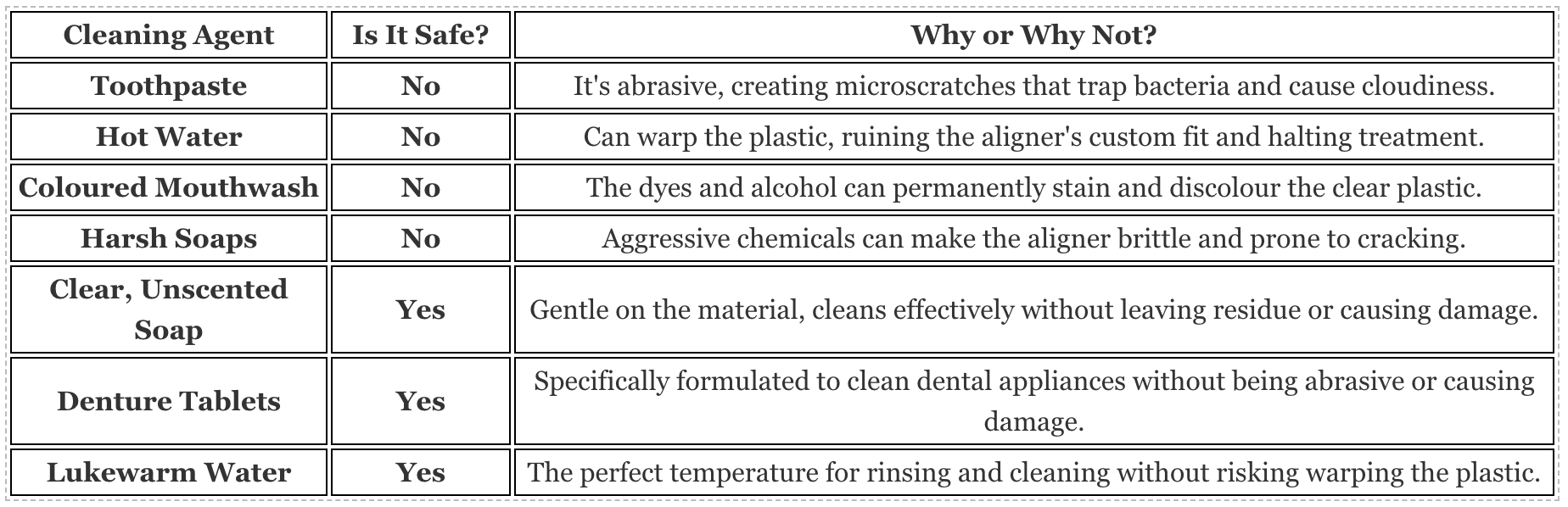
By keeping your cleaning routine simple and sticking to products you know are safe, you’ll ensure your journey to a straighter smile is smooth, effective, and free from any preventable damage.
Mastering The Deep Clean for Ultimate Freshness
Your daily rinse-and-brush is essential, but it’s the deep clean that truly keeps your aligners in top form. Think of it like this: daily cleaning is the quick wipe-down, while a deep clean is the proper spring clean. It gets into all the nooks and crannies to tackle the stubborn, invisible gunk that brushing alone can’t shift, keeping your aligners genuinely transparent and fresh.
This extra step is your best defence against the plaque and bacteria that cause odours and that dreaded cloudy look. By setting aside a little time for a regular soak, you’ll maintain that crystal-clear appearance you chose clear aligners for in the first place.
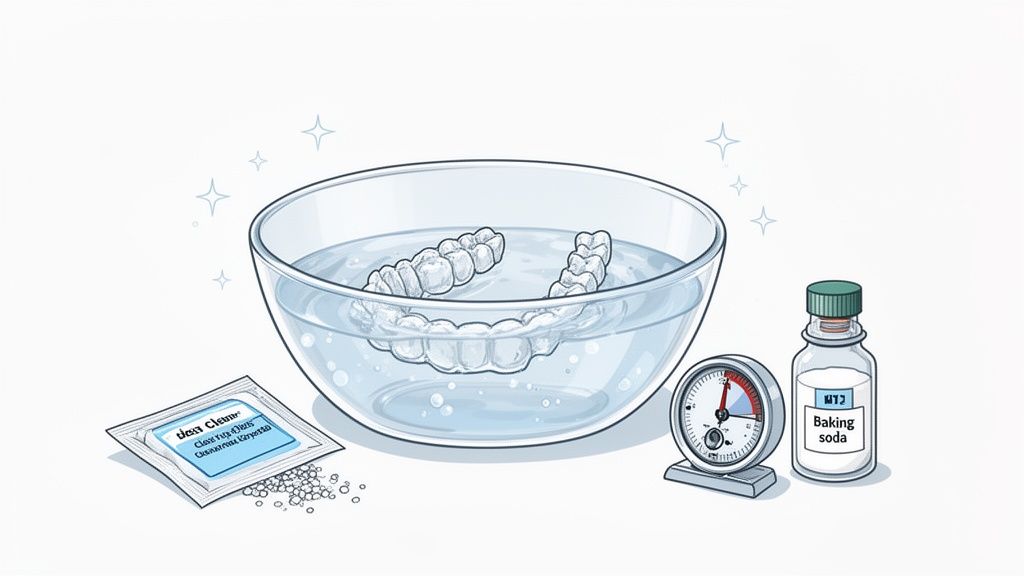
The Power of Specialised Cleaning Crystals
When you want a guaranteed, no-fuss clean, nothing beats products made specifically for the job. Specialised cleaning crystals, the kind often handed out by orthodontists, are formulated to be tough on bacteria but gentle on your aligners. They create a fizzing solution that lifts away grime without you having to do any harsh scrubbing.
In fact, research points to these purpose-made crystals as the gold standard. For dental patients in the UK, it’s now common practice to recommend soaking aligners for at least three minutes every day with these crystals. It’s a simple, effective way to sanitise your aligners and neutralise any odour-causing bacteria before they get a foothold.
Getting it done is easy:
- Just dissolve a packet of crystals in a glass of lukewarm water.
- Pop your aligners in, making sure they’re fully submerged.
- Let them soak for about 15 minutes for a thorough deep clean.
- Once the time is up, give them a good rinse under cool water, and they’re ready to go.
This little ritual breaks down any cloudy film and keeps things hygienic. If you’re curious about the science behind getting things properly clean, you can find a solid guide on what kills viruses on surfaces.
Effective DIY Deep-Cleaning Solutions
Don’t have any special crystals on hand? No problem. A few common household items can work wonders. These DIY options are budget-friendly and use ingredients you likely already have in your kitchen.
White vinegar is a fantastic choice. Its natural acidity is great for disinfecting and breaking down the mineral deposits from your saliva that can make aligners look murky over time.
Baking soda is another hero from the pantry. It’s a gentle abrasive and natural deodoriser, perfect for scrubbing away stubborn plaque and eliminating lingering smells without scratching the plastic.
No matter which DIY method you choose, the most important step is the final one: a thorough rinse with plain water. This gets rid of any leftover taste from the cleaning agent, leaving your aligners completely fresh and ready to wear.
How to Perform a DIY Aligner Soak
Putting together a homemade deep-cleaning solution couldn’t be simpler. Here are two of the most reliable methods you can easily work into your routine.
The White Vinegar Soak
- Mix your solution: Grab a small glass and create a mix of one part white vinegar to three parts lukewarm water.
- Soak your aligners: Drop your aligners in and let them soak for 15-20 minutes.
- Brush and rinse: Afterwards, use your soft-bristled toothbrush to gently buff away any loosened plaque, then give them a final, thorough rinse under cool water.
The Baking Soda Paste
- Make the paste: In a small dish, mix one tablespoon of baking soda with about half a tablespoon of water until you have a thick paste.
- Apply and scrub: Using your dedicated aligner toothbrush, gently scrub all surfaces of your aligners with the paste.
- Rinse completely: Make sure you rinse every last bit of the paste off under cool, running water before popping them back in.
Whether you go for specialised crystals or a DIY solution, these deep-cleaning habits are your ticket to avoiding cloudy, smelly aligners. And if you ever hit a snag or just have a question, remember that expert advice is closer than you think. A modern service like Toothfairy can connect you with a qualified dentist for an affordable consultation right from an app—a much smarter way to manage your oral health journey.
Troubleshooting Common Aligner Care Issues
Even with the best cleaning routine, you might still run into a few issues. It happens. The trick is knowing how to handle them without panicking or accidentally making things worse. Let’s walk through some of the most common snags, from annoying stains to those “oops” moments.
Most problems are easy enough to solve at home. But it’s just as important to know when it’s time to call in a professional. Your treatment is a big investment in your smile, and keeping everything on track is priority number one.
Tackling Stubborn Stains and Yellowing
One of the biggest frustrations I hear about is when clear aligners start looking… well, not so clear. They can get a yellowish tint or look a bit cloudy, which kind of defeats the purpose of them being “invisible.” This is almost always down to two culprits: not cleaning them often enough, or stains from things like coffee, tea, or red wine.
If you’re starting to see some discolouration, it’s time to level up your deep-clean.
- Make Soaking a Daily Habit: Don’t just save it for a weekly deep clean. Soaking your aligners for 15 minutes every day in a proper cleaning solution can work wonders.
- Bring in the Vinegar: For really tough stains, a soak in a mix of one part white vinegar to three parts lukewarm water for 20 minutes can help dissolve the mineral buildup that causes that cloudy appearance.
- Stay Ahead of the Game: Honestly, prevention is your best friend here. Get into the habit of rinsing your aligners the moment they come out of your mouth. It stops stain-causing bits from drying on the surface.
The goal is to lift stains gently, not scrub them away aggressively. Harsh scrubbing creates tiny scratches on the plastic, which ironically just gives more places for new stains and bacteria to hide.
Banishing Persistent Bad Odours
If your aligners have a lingering smell, that’s a sure sign that bacteria are having a party. This happens when your daily brushing isn’t quite getting rid of all the plaque, and the bacteria start feasting on tiny trapped food particles.
To fix this, you need to sanitise, not just clean. Soaking them in a 50/50 mix of hydrogen peroxide and water for about 15 minutes is a fantastic way to kill off the bacteria causing the smell. Another great trick is to make a paste with a tablespoon of baking soda and a bit of water; it’s a natural deodoriser and you can use it to give the aligners a gentle scrub.
No matter which method you use, always—and I mean always—rinse your aligners thoroughly under cool running water afterwards. You definitely don’t want any of that cleaning solution or funky taste going back into your mouth.
Dealing with Cracks or Damage
Seeing a crack in your aligner is definitely a moment of panic. The first thing to do is take a deep breath and have a good look. A tiny hairline crack might not be a big deal, but a significant split can stop the aligner from doing its job properly, which could throw your whole treatment off schedule.
Whatever you do, don’t try to fix it yourself with superglue. Those chemicals are toxic and absolutely not safe to have in your mouth.
This is exactly the kind of situation where you need professional advice, and fast. Rather than waiting days for an in-person appointment, this is where modern teledentistry is a game-changer. A service like Toothfairy lets you have a virtual consultation with a qualified dentist. You can show them the damage right on your phone and get immediate, affordable advice on whether you can keep wearing the aligner or if you should switch to your next one. This smarter, more affordable way of getting instant support can save a lot of worry and prevent any costly delays to your treatment.
Your Top Aligner Care Questions, Answered
When you’re new to clear aligners, you’re bound to have questions. It’s completely normal. To help you out, I’ve put together answers to some of the most common queries we hear from patients, so you can keep your aligners spotless and your treatment running smoothly.
Can I Just Use Toothpaste to Clean My Aligners?
It seems logical, doesn’t it? But this is one of the biggest mistakes you can make. You should absolutely avoid using toothpaste on your aligners.
Here’s why: toothpaste is designed to be abrasive enough to scrub plaque off tough tooth enamel. That same abrasive quality will create thousands of microscopic scratches on the soft plastic of your aligners. These scratches don’t just make your “invisible” aligners look cloudy and dull; they also become a perfect breeding ground for bacteria. This can lead to bad breath and put you at a higher risk for cavities.
A much better approach is to use a clear, unscented liquid soap or a cleaner made specifically for aligners. Gently scrub them with a separate, soft-bristled toothbrush that you keep just for this purpose. Getting this right is the key to properly washing your aligners, no matter the brand.
How Often Do I Really Need to Deep Clean My Aligners?
For the best results, you should be doing a deep clean once a day. Think of it as part of your daily routine. This is the secret to keeping your aligners truly invisible and hygienic.
A great time to do this is in the morning while you’re having breakfast and brushing your teeth. A quick 15 to 20-minute soak in a specialised cleaning solution—like effervescent tablets or cleaning crystals—will break down any stubborn plaque that simple brushing might miss.
This daily soak is non-negotiable if you enjoy coffee, tea, or red wine. It’s your best line of defence against stains and is the single most effective way to stop your aligners from yellowing over time.
Help! My Aligners Are Starting to Smell. What Should I Do?
If you notice a bad smell coming from your aligners, that’s a tell-tale sign of bacterial buildup. Don’t panic, but do take it as a cue to step up your cleaning game right away.
First, take a closer look at your daily brushing. Are you being thorough enough? Make sure you’re cleaning every single surface, inside and out, with liquid soap and lukewarm water every time you take them out. After that, start a daily deep-soaking routine immediately.
You’ve got a couple of solid options here:
- Specialised Cleaning Tablets: These are designed to kill odour-causing bacteria safely. Just follow the instructions and use them daily.
- White Vinegar Solution: For a DIY fix, you can soak your aligners in a mix of one part white vinegar to three parts water. Let them sit for 20-30 minutes, and the vinegar will help neutralise the odours and disinfect them.
If the smell still lingers after a few days of this stricter routine, it’s a good idea to get a professional opinion. Sometimes, a persistent odour can point to an underlying oral health issue that needs attention. You can use a smarter, more affordable virtual service like the Toothfairy app to get a quick consultation with a dentist and figure out what to do next without any fuss.
Is it Okay to Use Denture Cleaner on My Aligners?
We get asked this all the time, and our advice is generally to avoid it. While it might seem like a cheap and easy option, denture cleaners are formulated for the much harder, more porous acrylic material used in dentures, not the specific plastic of your aligners.
The chemicals in some denture tablets can be too harsh. With repeated use, they can make your aligners cloudy, brittle, or discoloured. This not only ruins their appearance but can also weaken their structure. The safest bet is always to use products that have been specifically designed and tested for clear aligners.
Aligner-specific cleaning crystals or tablets are strong enough to tackle plaque but gentle enough not to damage the material. Sticking with the right products ensures you’re not accidentally compromising your expensive orthodontic treatment.
Ready for a smarter, more affordable way to manage your dental health? With the Toothfairy app, you can connect with qualified UK dentists for emergencies, cosmetic work, or even get started on your own teeth straightening journey, all from your phone. Visit https://www.toothfairyapp.co.uk to learn how easy and accessible expert dental care can be.
Last updated on January 23, 2026

Toothfairy Care Team
Toothfairy, is the world's smartest dental app, that connects patients to a dentist for a range of issues, from emergencies, cosmetics, prescriptions to virtual exams.
Toothfairy Care Team
Toothfairy, is the world's smartest dental app, that connects patients to a dentist for a range of issues, from emergencies, cosmetics, prescriptions to virtual exams.