Best Guide: how to remove plaque from teeth with at-home tips
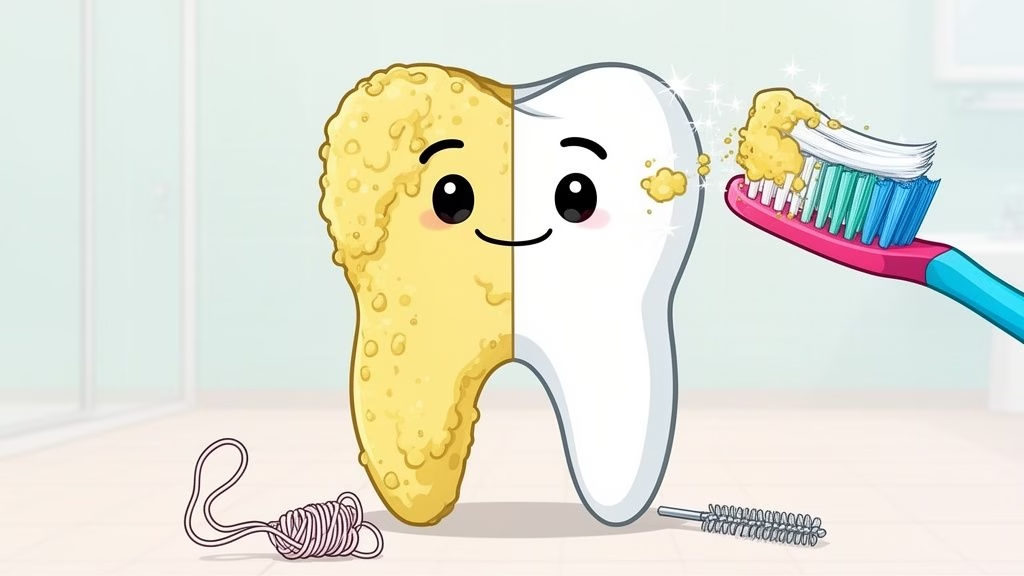
Ever run your tongue over your teeth and feel a sort of fuzzy coating? That’s dental plaque. It’s a sticky, almost invisible film of bacteria that’s constantly forming in your mouth, and it’s the root cause of nearly all oral health issues.
The best defence is a good offence: a solid daily routine of brushing for two minutes, twice a day, and flossing at least once a day to get into those tight spots your toothbrush just can’t reach.
What is Plaque, and Why Does it Matter?
That fuzzy feeling on your teeth, especially after you’ve skipped a brushing, is the classic sign of plaque building up. Think of it as a soft, sticky biofilm made up of millions of bacteria. These bacteria thrive on the sugars and starches left over from the food and drinks you consume.
This bacterial film is public enemy number one for your dental health. As the bacteria feast on sugars, they produce acids that launch a direct assault on your tooth enamel—the hard, protective outer layer. With enough of these acid attacks, the enamel starts to break down, creating tiny holes we call cavities. Left to its own devices, this process can lead to serious decay and a whole lot of pain.
From Soft Plaque to Hard Tartar
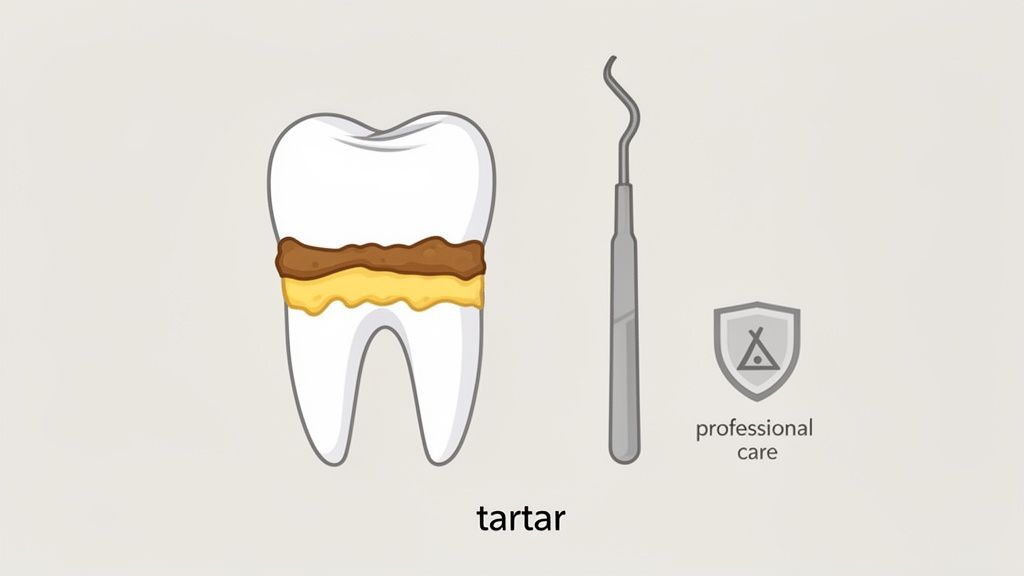
The transformation from a soft film to a hard, stubborn deposit happens faster than most people realise. If plaque isn’t brushed and flossed away, it starts to mineralise by mixing with the saliva in your mouth. In as little as 48 hours, this soft plaque can harden into a substance called tartar, also known as calculus.
Unlike plaque, tartar is a rough, crusty deposit that often looks yellow or brown. It latches onto the tooth surface, especially along the gumline and on the backs of the lower front teeth. Once tartar has formed, you’re out of luck trying to remove it at home with a toothbrush. It takes a professional scale and polish from a dentist or hygienist to get rid of it.
This isn’t a rare problem. In fact, recent data shows that a staggering 66% of UK adults have visible tooth plaque. To put that into perspective, in England during 2023/24, dentists delivered 34 million courses of dental treatment. A huge chunk of these—31% of adult courses—included a scale and polish specifically to remove plaque and tartar, which really highlights how widespread this issue is.
Tackling plaque isn’t just about dodging cavities; it’s fundamental to your overall health. The bacteria in plaque can lead to inflamed gums (gingivitis), and if that’s ignored, it can develop into severe gum disease (periodontitis), which is a major cause of tooth loss. Keeping your mouth healthy is a key part of your total well-being. For a broader perspective on maintaining health as the years go by, you might find this senior health and wellness guide helpful.
Mastering Your At-Home Plaque Removal Routine
Getting rid of plaque effectively isn’t just about giving your teeth a quick scrub each day. It’s about being deliberate with your technique, using the right tools to break up that sticky film of bacteria before it has a chance to harden. Think of it less as a chore and more as a targeted defence for your mouth.
So, where do we start? With the absolute cornerstone of oral health: brushing. It’s a common misconception that you need to scrub hard to get your teeth clean. In reality, it’s all about smart, gentle technique.
Most dentists, myself included, will point you towards the Modified Bass technique. It sounds complicated, but it’s simple. Just angle your toothbrush at 45 degrees right where your teeth meet your gums—this is prime real estate for plaque.
Use small, gentle circular motions to work the bristles just under the gum line. After a few circles on each spot, sweep the brush away from the gums towards the chewing surface of the tooth. This simple move is brilliant for dislodging plaque and preventing the gum inflammation it causes. Don’t forget to keep this up for a full two minutes, twice a day, making sure you reach every nook and cranny.
Choosing Your Plaque-Fighting Tools
The toothbrush you pick can genuinely make a difference. A manual brush works perfectly well if you’ve got your technique down, but I often see patients get better results with an electric toothbrush.
Many studies back this up, showing that oscillating-rotating electric brushes are generally better at shifting plaque and reducing gingivitis. A huge bonus is the built-in two-minute timer, which takes all the guesswork out of how long you should be brushing.
Of course, your toothpaste matters too. The non-negotiable ingredient here is fluoride. This mineral is your enamel’s best friend, helping to strengthen it against acid attacks from plaque and even repair the very earliest signs of decay.
Cleaning Between Your Teeth: The Step You Can’t Afford to Skip
If you only brush, you’re only cleaning about 60% of your tooth surfaces. That leaves a massive 40%—the space between your teeth—where plaque can build up completely undisturbed. This is precisely why cleaning between your teeth every single day isn’t optional; it’s essential.
Traditional floss is still the gold standard for a reason. Grab a piece about 18 inches long, wind most of it around your middle fingers, and use your thumbs and index fingers to guide a small section. Carefully slide it between your teeth, then pull it into a ‘C’ shape against the side of one tooth. Move it gently up and down, making sure to dip just below the gum line. Do the same for the other tooth in that gap before moving on.
A quick tip from experience: you’re trying to scrape the side of the tooth clean, not snap the floss down onto your gums. If you see a little bleeding when you first start, don’t panic. It’s usually a sign of existing inflammation that will clear up after a week or two of consistent, gentle flossing.
Let’s be honest, though—flossing can be a bit fiddly, especially if you have crowded teeth or find it hard to get your hands in the right position. The good news is there are some brilliant alternatives out there:
- Interdental Brushes: These little heroes are perfect for cleaning larger gaps. They come in different sizes, so you can find one that fits snugly between your teeth to scrub plaque away effectively.
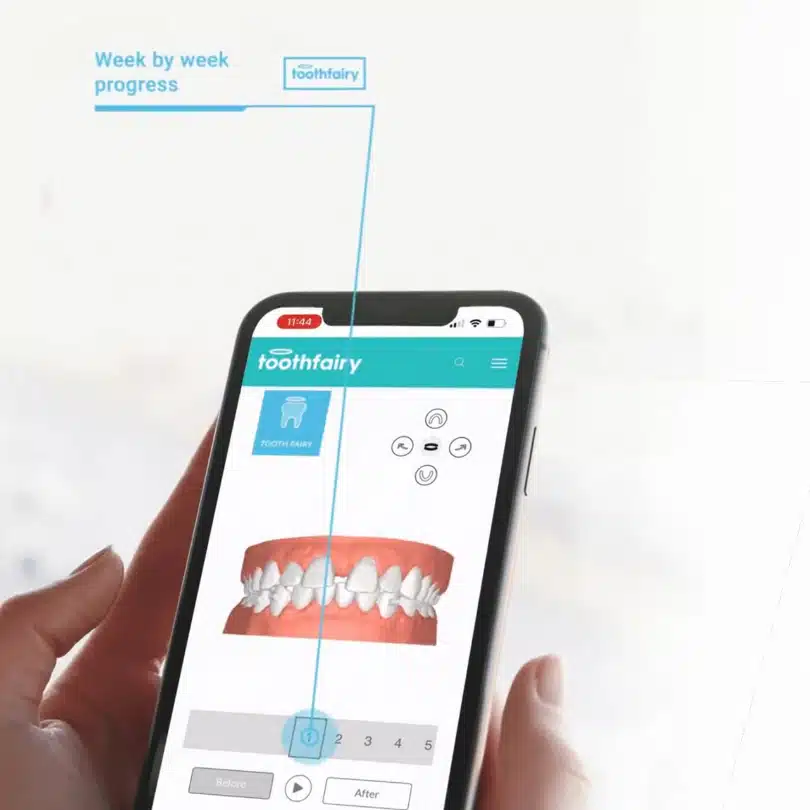
- Water Flossers: These devices shoot a pressurised jet of water to blast away food and plaque from between teeth and under the gum line. They’re a game-changer for people with braces, which create countless plaque traps. Modern orthodontics like Toothfairy’s clear aligners are designed to be removed, which makes daily cleaning far simpler than with old-school fixed braces.
Diet and Habits That Fuel or Fight Plaque
While your daily cleaning routine is your front line of defence, what you eat and drink plays a huge role in how much plaque you’re battling in the first place. Think of it like this: your mouth is an ecosystem, and certain foods feed the bad bacteria, while others help your teeth fight back.
The main offenders are, perhaps unsurprisingly, sugary and starchy foods. The bacteria in your mouth love to feast on the sugars from sweets, biscuits, and fizzy drinks. They also thrive on the simple carbohydrates in things like crisps and white bread. When they break these down, they produce acids that attack your tooth enamel and create the perfect environment for more plaque to form.
Building a Plaque-Fighting Diet
To give your teeth a real fighting chance, you need to make smarter choices—it’s not about banning treats altogether, but about tilting the balance in your favour. Simply swapping out a few key items can make a massive difference in your daily war on plaque by cutting off the bacteria’s primary fuel supply.
A great place to start is by adding more “detergent foods” into your meals and snacks. These are just firm, crunchy foods that physically help scrub your teeth as you chew.
- Crunchy Fruits and Veggies: Think apples, carrots, and celery. Their fibrous texture is brilliant for stimulating saliva (your natural mouthwash) and can help wipe away bits of plaque.
- Dairy Products: Cheese, milk, and plain yoghurt are packed with calcium and phosphates. These are the very building blocks your teeth need to remineralise and stay strong.
- Leafy Greens: Foods like spinach and kale are full of vitamins and minerals that contribute to overall oral health, supporting your gums and teeth from the inside out.
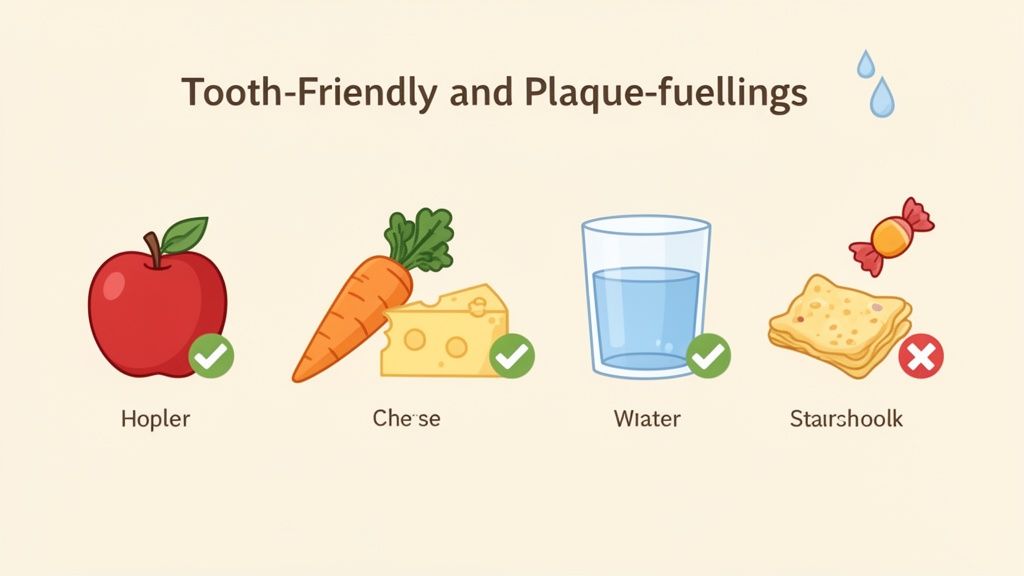
To make it even simpler, here’s a quick-reference guide to help you choose wisely when you’re at the supermarket or planning meals.
Plaque-Fighting Foods vs. Plaque-Promoting Foods
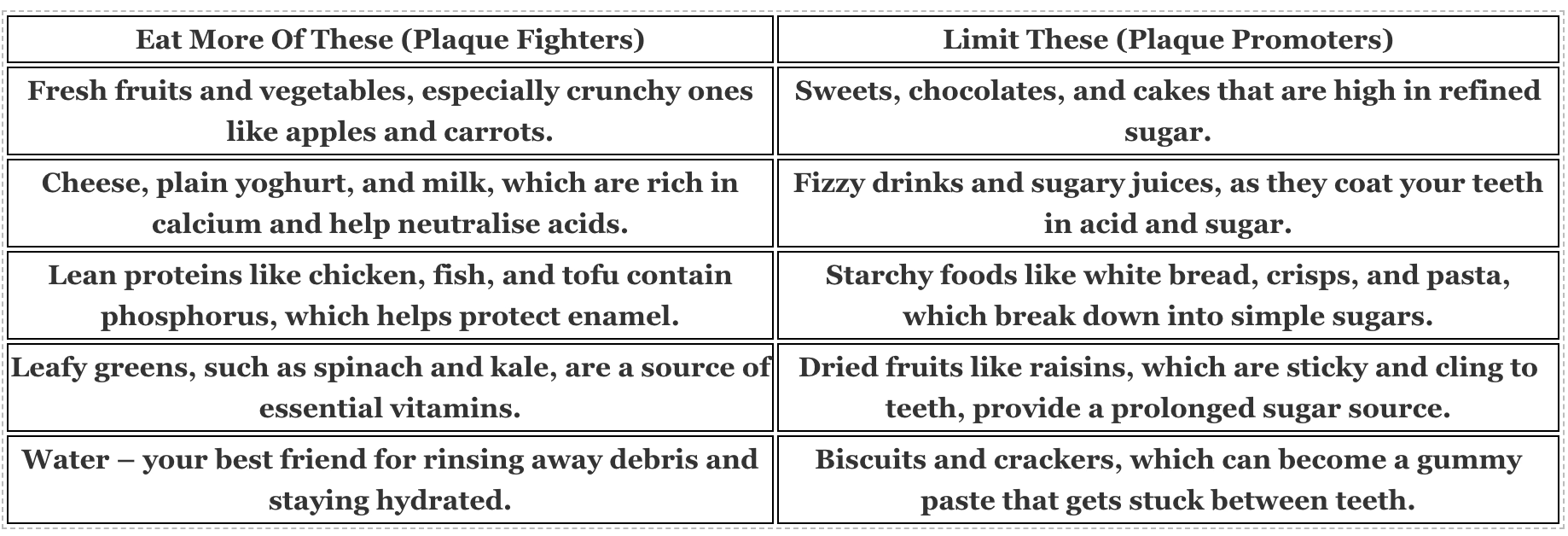
Choosing more from the left column and less from the right can dramatically reduce the amount of plaque you have to deal with every day.
Beyond Food: The Power of Hydration and Habits
It sounds simple, but staying well-hydrated is one of the most effective ways to control plaque. Drinking plenty of water doesn’t just rinse away food particles; it keeps your saliva flowing. Saliva is your body’s own defence mechanism—a natural mouthwash full of proteins and minerals that neutralise acids and protect your enamel.
Using an antiseptic mouthwash can also be a helpful addition to your routine by cutting down the overall number of bacteria in your mouth. Just remember, it’s a supplement to your cleaning, not a substitute for proper brushing and flossing.
Here’s something to think about: your daily habits all connect. For instance, if you’re straightening your teeth, how easily you can clean them becomes critical. Traditional fixed braces create a minefield of tiny ledges and wires where plaque loves to hide, making cleaning a real chore. This is where modern orthodontic solutions have a clear edge. Clear aligners from providers like Toothfairy are designed to be removed, so you can brush and floss completely normally without any obstacles. It makes managing plaque during your treatment journey so much easier.
When Plaque Hardens Into Tartar
So, you’ve been brushing and flossing like a champion, but you’ve spotted a stubborn, hard substance clinging to your teeth that just won’t budge. That, my friend, is likely tartar.
Tartar, also known as calculus, forms when plaque sits on teeth for too long. It mineralises, hardening into a tough, crusty deposit that bonds to your tooth enamel like cement. You’ll often see it as a yellow or brownish buildup along the gum line, especially behind your lower front teeth.
Why You Can’t Scrape Off Tartar at Home
I can’t stress this enough: there is absolutely no safe way to remove tartar yourself. You might see those DIY dental tool kits online, promising a professional clean for a fraction of the price. Please, stay away from them. Using sharp, metal instruments in your own mouth is a one-way ticket to causing some serious damage.
Trying to play dentist in your bathroom mirror can lead to a host of problems:
- Scratching Your Enamel: It’s incredibly easy to slip and permanently scratch or chip your tooth enamel. This creates rough patches that ironically attract even more plaque.
- Damaging Your Gums: A slip of the hand can cut your delicate gum tissue, leading to pain, bleeding, and the risk of infection.
- Causing Tooth Sensitivity: If you accidentally scrape away enamel, you can expose the sensitive dentine layer underneath, making your teeth painful.
The honest truth is that tartar removal is a job strictly for dental professionals. They have the training, the right tools, and the skill to get rid of it safely without wrecking your teeth and gums.
The Professional Fix: A Scale and Polish
When you see a dentist or hygienist, they’ll perform what’s known as a ‘scale and polish’. It’s the gold standard for getting rid of tartar. They use specialised instruments, like ultrasonic scalers that use high-frequency vibrations to break up the calculus, followed by fine hand tools to carefully remove any last little bits.
They’ll finish by polishing your teeth, which smooths the surface and makes it much harder for new plaque to get a foothold. This procedure is fundamental to UK dental care; in fact, NHS data for England in 2023/24 showed that a scale and polish was the specific treatment for 31% of all adult courses of treatment. Considering the 2023 Adult Oral Health Survey found that decay affects an average of 1.6 teeth per adult, it’s clear that professional cleanings are essential. You can dig deeper into these oral health findings from the government survey.
Getting Professional Advice When You Need It Most
We know that booking a dental appointment can sometimes be a hassle. If you’re worried about tartar or seeing the first signs of gum inflammation, you don’t have to just wait and hope for the best.
With Toothfairy, you can have an on-demand virtual chat with a UK-qualified dentist. They can take a look at your teeth over a video call, spot any tartar buildup, and give you clear, professional advice on what to do next. It’s a smarter, more affordable way to get expert guidance without even leaving your house.
Using Modern Tech for Better Plaque Management
Let’s be honest, getting professional dental care in the UK isn’t always straightforward. When you’ve got a niggle about plaque or your gums, facing a long wait for an appointment can turn a small issue into a much bigger headache. It’s a frustrating reality for millions.
Thankfully, technology is stepping in to fill that gap, putting expert advice right in your pocket. This move towards on-demand care is a game-changer for managing plaque because it means you can get the help you need, right when you need it.
Immediate Access to Professional Advice
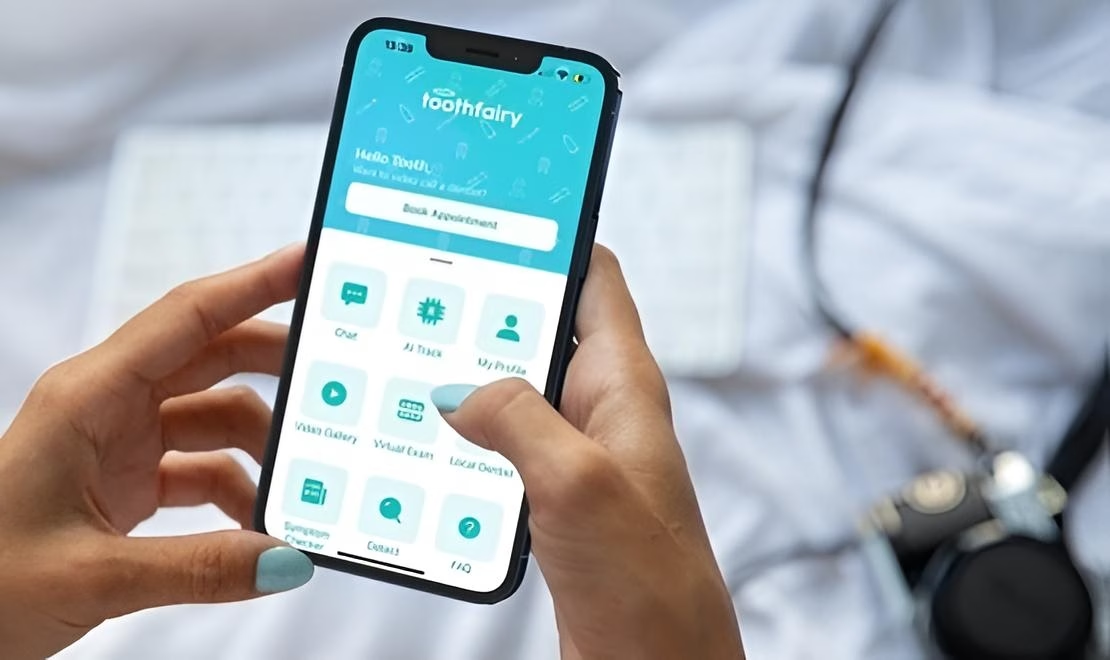
Picture this: you’ve noticed your gums are bleeding every time you floss, or you’ve spotted a stubborn patch of what you think might be tartar. Instead of spending weeks worrying and waiting, what if you could get a professional opinion almost instantly? That’s exactly where services like the Toothfairy app come into play, connecting you with UK-qualified dentists for video consultations, 24/7.
This isn’t just about making life easier; it’s about being proactive. Getting personalised guidance on how to tackle plaque from the comfort of your own home helps you stop problems in their tracks. It’s a smarter, more efficient way to look after your oral health, cutting through the usual barriers.
The scale of the dental access problem in the UK really highlights why this matters. In 2023/24, NHS England delivered 34 million courses of dental treatment, and 31% of those included a scale and polish for plaque. Yet, a staggering 14 million people couldn’t even book an appointment. With 66% of UK adults dealing with visible plaque, immediate virtual access is more than a convenience—it’s a lifeline. You can read more about the latest NHS dental statistics for the full picture.
A quick, professional opinion can be the difference between needing simple advice and facing complex treatment later on. A virtual assessment can spot plaque buildup, identify the first signs of tartar, and give you a clear, personalised plan to protect your smile.
How Cosmetic Treatments Can Help
Even your choice of cosmetic treatment can play a huge role in the daily battle against plaque. Traditional train-track braces, with all their brackets and wires, are famous for creating plaque traps that are incredibly difficult to clean, potentially impacting your oral health for years.
In contrast, modern teeth straightening solutions are designed with hygiene front and centre. Take Toothfairy’s clear aligners as an example. They are completely removable, and this one simple feature makes a massive difference:
- No Obstacles: You just pop them out to brush and floss as you normally would, without trying to navigate around fiddly hardware.
- Easier Cleaning: The aligners themselves are a breeze to clean, unlike certain aligner brands that can be more high-maintenance.
- Better Health: Because your routine stays simple, it’s far easier to keep your teeth and gums in great shape while you straighten your smile.
This approach cleverly blends your cosmetic goals with practical, long-term plaque control, ensuring your journey to a straighter smile is a healthy one, too.
Your Plaque & Tartar Questions Answered
When it comes to plaque and tartar, there’s a lot of information floating around. Let’s tackle some of the most common questions I hear, so you can feel confident you’re doing the right thing for your teeth.
Can I Just Scrape Tartar Off Myself With a Kit from the Chemist?
In a word: no. I can’t stress this enough – please don’t try to remove tartar at home with scraping tools. Tartar isn’t just surface gunk; it’s plaque that has mineralised and bonded like concrete to your tooth enamel.
Trying to chip it away yourself is a surefire way to scratch your enamel, damage your teeth permanently, and cause some really painful injuries to your gums. Professional cleaning uses very specific instruments that are designed to remove this buildup without harming the tooth underneath. If you see tartar, your best and safest move is to get a professional opinion. A virtual consultation with a Toothfairy dentist is a great first step to figure out what’s going on.
How Often Should I See the Hygienist?
For most people, a professional scale and polish every six months is the sweet spot. This is usually enough to keep on top of any tartar that has formed and give your gums a healthy reset.
But everyone is different. If you tend to build up plaque quickly or have a history of gum problems, your dentist might recommend you come in more often, maybe every three or four months. Unsure what schedule suits you? A quick virtual check-up can give you personalised advice based on your own oral health.
Is an Electric Toothbrush Actually Better?
The research is pretty clear on this one. Electric toothbrushes, especially the ones with a small, round, oscillating head, generally do a better job of removing plaque than manual brushes. One of their biggest, and often overlooked, benefits is the built-in timer. It keeps you honest and makes sure you’re brushing for the full two minutes.
That said, a manual toothbrush used with the right technique is still a brilliant tool. The most important thing isn’t what you use, but how you use it. The best brush is always the one you use properly, twice a day, every single day.
It’s quite common for gums to bleed a little when you first reintroduce flossing into your routine. This is often a sign of mild gum inflammation (gingivitis) caused by plaque. Don’t let it stop you! The bleeding should cease within a week or two of consistent, gentle flossing as your gums become healthier. If it continues, it’s wise to consult a dentist.
Ready to take control of your oral health with expert advice at your fingertips? Toothfairy offers 24/7 access to UK-qualified dentists for emergencies, cosmetic work, and smarter, more affordable teeth straightening. Visit the Toothfairy website to see how we can help you achieve a healthier, more confident smile.
Last updated on January 23, 2026

Toothfairy Care Team
Toothfairy, is the world's smartest dental app, that connects patients to a dentist for a range of issues, from emergencies, cosmetics, prescriptions to virtual exams.
Toothfairy Care Team
Toothfairy, is the world's smartest dental app, that connects patients to a dentist for a range of issues, from emergencies, cosmetics, prescriptions to virtual exams.