How to Prevent Gingivitis A Practical UK Guide
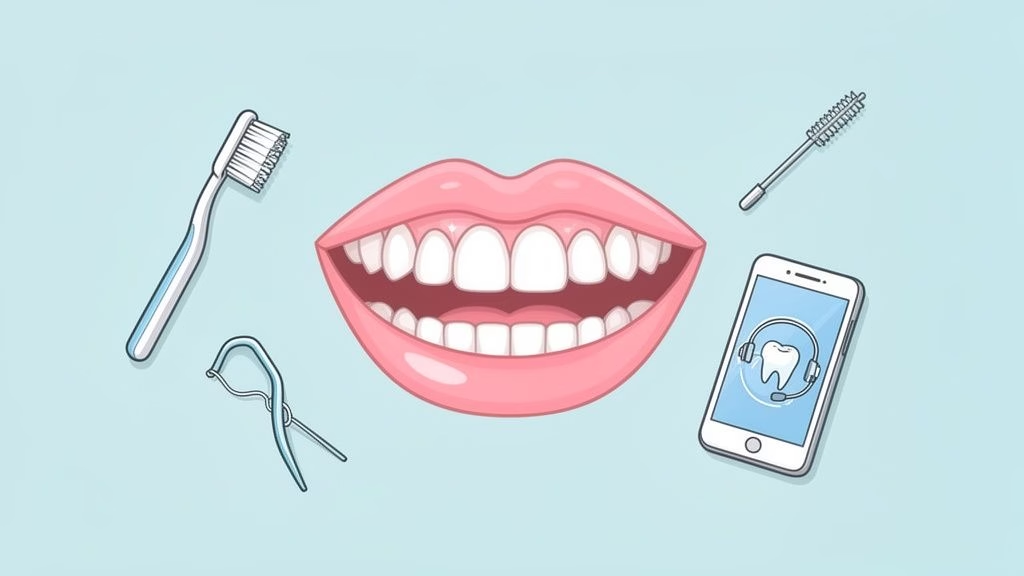
When it comes to preventing gingivitis, consistency is everything. It’s not about grand, one-off gestures; it’s about the small, daily habits of brushing and flossing correctly. Think of it as your first line of defence. Combine that with regular professional cleanings to tackle the stubborn bits your daily routine can’t reach, and you’re well on your way. The key is spotting the signs early, which gives you the power to stop gingivitis in its tracks before it becomes a bigger problem.
Understanding Gingivitis and How to Stop It Early
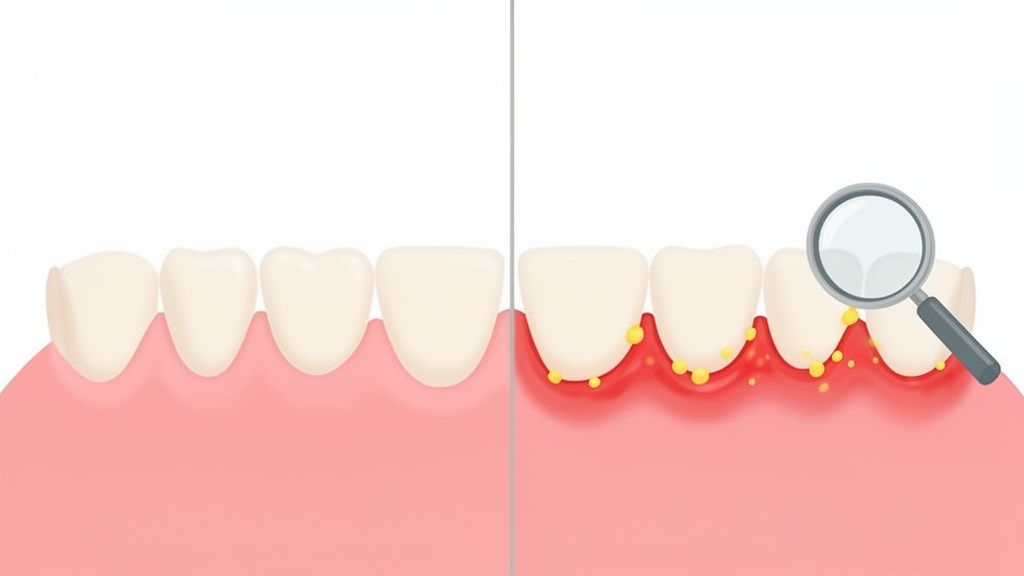
Most of us have seen that little bit of pink in the sink after brushing and brushed it off as nothing. But more often than not, that’s the very first whisper of gingivitis.
At its core, gingivitis is simply an inflammation of your gums, which is the earliest and mildest form of gum disease. It’s a direct response from your body to a build-up of a sticky, bacteria-laden film called plaque.
If plaque isn’t cleared away with daily brushing and flossing, it hardens into tartar (or calculus) along the gumline. This rough substance acts as a constant irritant, causing the gums to become red, swollen, and likely to bleed. The good news? Because the bone and tissue holding your teeth in place aren’t yet affected, this damage is entirely reversible.
The Warning Signs You Shouldn’t Ignore
To stop gingivitis, you first have to know what you’re looking for. Your gums are pretty good at sending out distress signals when something’s wrong. Learning to read these signs means you can step in quickly and get things back on track.
To help you spot the early signs, we’ve put together a quick reference table. It connects the common symptoms with their likely causes and gives you a simple, actionable step to take.
Gingivitis At a Glance: Key Signs and Causes
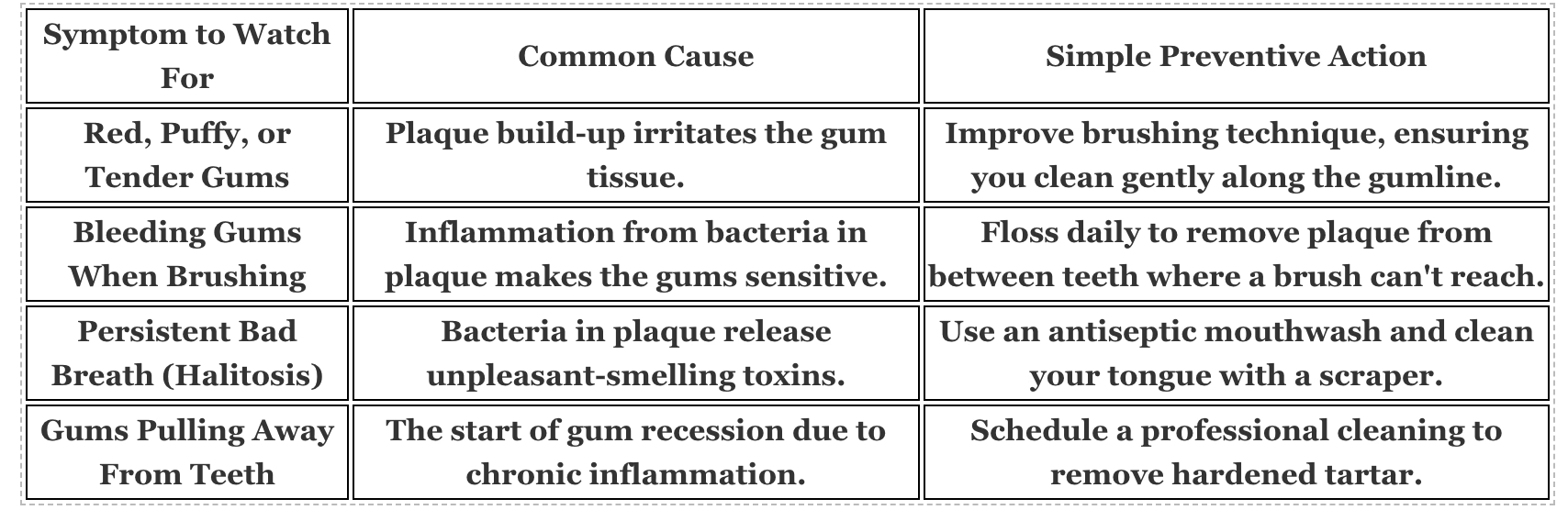
Recognising even one of these signs is your cue to step up your oral hygiene routine. It’s your body’s way of asking for a little more attention.
Key takeaway: Gingivitis isn’t just a minor inconvenience; it’s a major public health issue in the UK. Understanding the scale of the problem makes it clear why prevention is so much better than cure.
The UK’s Growing Gum Health Challenge
The statistics on gum health in the UK are quite sobering. Research using data from the Adult Dental Health Survey paints a concerning picture for the future. Projections suggest that the prevalence of gum disease—which all starts with gingivitis—could climb from 42% to a staggering 54% among UK adults by 2050.
That’s potentially more than half the adult population dealing with inflamed, bleeding gums and the risk of it progressing to severe periodontitis. This advanced stage is not only the leading cause of tooth loss but is also increasingly linked to systemic health issues like heart disease and diabetes. You can read more about these projections in the official Health Suffolk report.
This trend underscores why being proactive is so crucial. The simple, consistent habits you build today are your most powerful defence against becoming another statistic. Even making your teeth easier to clean, for instance by straightening them with an affordable solution, can play a huge part in reducing the plaque traps where gingivitis loves to start.
Your Daily Defence: Building a Plaque-Fighting Oral Hygiene Routine
Preventing gingivitis all comes down to one core mission: consistently winning the daily battle against plaque. There’s no magic bullet here. It’s about mastering a few simple, powerful techniques that turn your routine from a passive habit into an active defence for your gums.
Think of your daily oral hygiene as the very foundation of a healthy smile. Without a solid routine, everything else is just a temporary fix. These are the small, deliberate actions you take every day that make the biggest difference in keeping your gums firm, pink, and healthy.
Mastering Your Brushing Technique
Simply moving a brush around your mouth for a couple of minutes just won’t cut it. To really prevent gingivitis, you have to be methodical and deliberate, making sure you disrupt the plaque that loves to build up right along the gumline—the exact place where inflammation starts.
The single most effective change you can make? Perfecting the angle of your brush.
Instead of holding it flat against your teeth, tilt it to a 45-degree angle, pointing the bristles directly towards your gumline. From there, use gentle, short, circular strokes to clean the outer and inner surfaces of every single tooth. This specific technique allows the bristles to sweep just below the gumline, clearing away the harmful bacteria that cause all that irritation.
Choosing the Right Tools for the Job
Your toothbrush is your primary weapon against plaque, so choosing the right one is a big deal. While personal preference definitely plays a part, the evidence points towards certain features that just deliver better results.
-
Electric vs. Manual: Look, a manual brush can work if you use it with perfect technique every time. But study after study shows that oscillating-rotating electric toothbrushes are simply superior. They can remove up to 21% more plaque and are far more effective at reducing gingivitis. Many even come with built-in two-minute timers and pressure sensors to stop you from brushing too hard—a common habit that can seriously damage your gums.
-
Soft vs. Medium Bristles: Always, always opt for a soft-bristled brush. I see so many patients who think medium or hard bristles clean better, but they’re often too abrasive. Over time, they can wear down your precious enamel and cause your gums to recede, which ironically creates more hiding spots for plaque. A soft brush is more than capable of removing plaque without causing any collateral damage.
Brushing is fundamental, but its real power is unlocked when it’s part of a complete prevention strategy. The UK’s periodontal disease market, with gingivitis as its biggest segment, is projected to hit USD 328.24 million by 2035. That number highlights the massive health and economic burden of poor oral hygiene. Even more worrying, a staggering 41% of UK adults have untreated tooth decay, which is a perfect breeding ground for plaque. Brushing twice a day for two minutes—especially with an electric brush angled at 45 degrees—can slash plaque by up to 70%. It truly is the cornerstone of preventing gum disease. You can discover more insights about UK dental disease risks on dentalartimplantclinic.co.uk to understand the full picture of UK oral health trends.
“Think of flossing as cleaning the walls between two houses. You can wash the front and back of each house (your teeth), but if you ignore the space between them, problems will eventually start.”
The Art of Effective Flossing
Brushing cleans the front and back of your teeth beautifully, but it can’t reach the tight spaces in between. This is where up to 40% of plaque hides out, making flossing an absolute non-negotiable for anyone serious about keeping gingivitis at bay.
But to floss effectively, you need to do more than just snap the floss between your teeth. The ‘C-shape’ method is the gold standard for a reason.
-
Use Enough Floss: Start with a generous piece of floss, about 18 inches long. Wrap most of it around one middle finger and just a small amount on the other.
-
Guide the Floss Gently: Use your index fingers and thumbs to carefully guide the floss between two teeth. Never snap it down onto your gums—that’s a quick way to cause cuts and irritation.
-
Form the ‘C-Shape’: Once the floss is between your teeth, wrap it into a tight C-shape against one tooth. Gently slide it up and down, making sure you go slightly below the gumline until you feel some light resistance.
-
Repeat for the Other Tooth: Now, lift the floss over the little pointed bit of gum (the papilla) and repeat that same C-shape motion on the tooth next to it.
-
Use a Clean Section: As you move from tooth to tooth, unwind a fresh section of floss from one finger and wind the used section onto the other.
This specific technique ensures you’re actually scraping plaque off the tooth surface, not just pushing it around. It’s a small detail that makes a world of difference in your fight against gingivitis.
Beyond Brushing: The Importance of Interdental Cleaning and Professional Care
If you’ve mastered your brushing technique, that’s fantastic—you’re halfway there. But a toothbrush alone simply can’t win the war against plaque. Think about it: brushing only cleans about 60% of your tooth surfaces. What about the other 40%? That’s all the hidden space between your teeth, and it’s prime real estate for plaque to build up and cause trouble.
This is precisely why cleaning between your teeth, or ‘interdental cleaning’, is non-negotiable. It’s just as crucial as brushing. If you skip this step, you’re leaving a huge amount of plaque behind every single day, which will almost certainly lead to inflamed, sore gums.
A truly effective oral hygiene routine is a simple, three-part process.
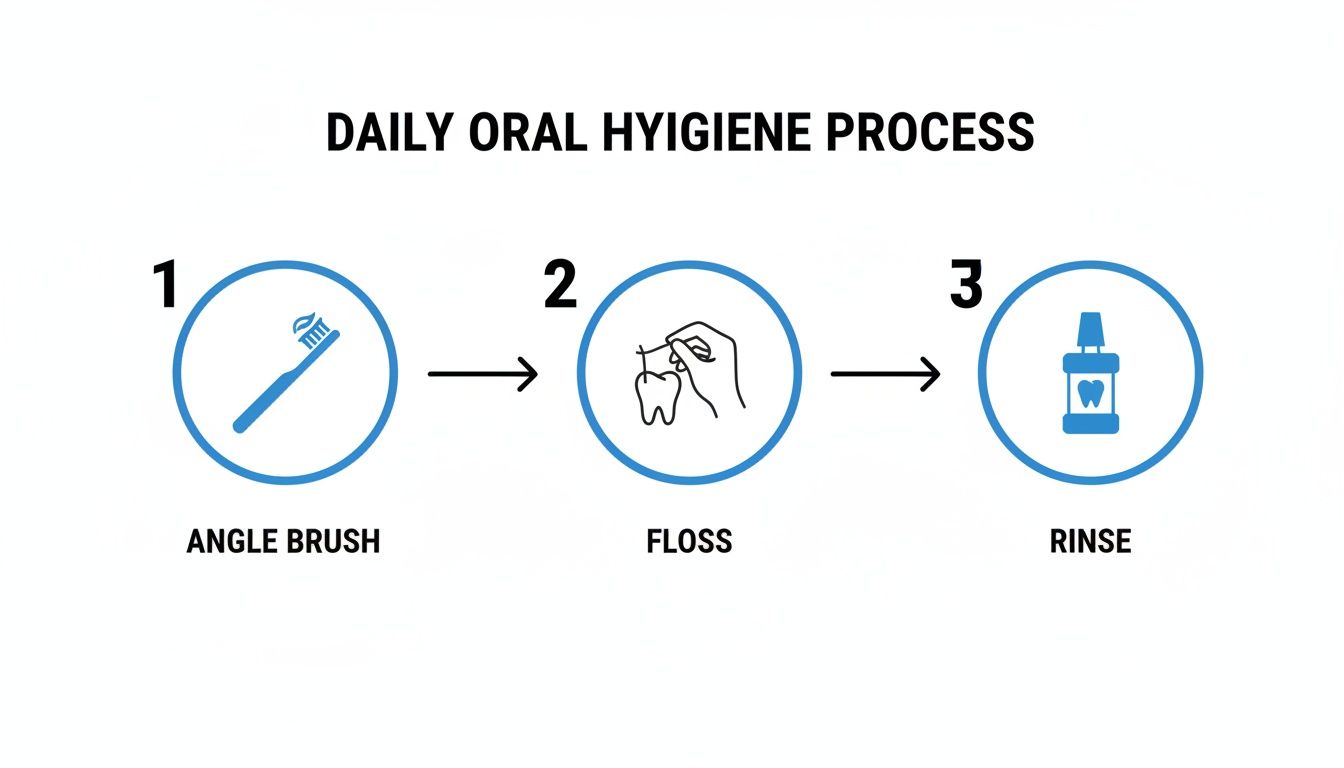
As you can see, a complete routine involves more than just brushing; it’s a multi-pronged attack to disrupt plaque wherever it’s hiding.
Finding the Right Tool for the Gaps
There’s no single ‘best’ tool for cleaning between your teeth. The right choice really comes down to your unique smile—the spacing of your teeth, your personal dexterity, and, most importantly, what you’ll actually use every day.
-
Traditional Floss: The classic for a reason. It’s perfect for getting into really tight spaces where other tools just can’t fit. The secret is to use a ‘C-shape’ technique, wrapping it around each tooth and gently scraping up and down, not just popping it in and out.
-
Interdental Brushes: These little bottle-brush-like tools are a game-changer for larger gaps, especially around your back teeth. They come in different sizes, so you can find a snug fit that cleans efficiently without being forced. Many people find them much easier and faster than floss.
-
Water Flossers: Also known as an oral irrigator, this device shoots a pulsating stream of water to flush out plaque and bits of food from between teeth and under the gumline. They’re especially handy if you have braces, bridges, or find manual flossing tricky.
Honestly, the best approach is often a mix-and-match. You might find that interdental brushes work wonders for your molars, while good old-fashioned floss is what you need for your tighter front teeth.
“Think of your daily at-home care as your frontline defence. Professional cleanings are the special forces you call in to handle the hardened tartar that your toothbrush and floss can’t touch. They effectively reset the battlefield in your favour.”
The Vital Role of Professional Dental Care
No matter how meticulous you are at home, some plaque will inevitably harden into tartar (also called calculus), particularly in those hard-to-reach spots. Once it hardens, you can’t remove it yourself with a brush or floss. That’s why professional cleanings are an absolutely essential pillar of preventing gingivitis.
A dental hygienist performs a ‘scale and polish’, using specialised instruments to carefully remove all the built-up tartar from above and just below your gumline. This process gets rid of the very thing that’s irritating your gums and gives you a completely clean slate.
The trouble is, getting this care isn’t always straightforward. A 2023 study found that 9% of UK adults already have signs of severe gum disease, a condition that is largely preventable. With NHS dental access falling to around 40%, many people are struggling to get the support they need. This is the gap where modern solutions like Toothfairy come in, offering a smarter way to handle dental emergencies and access cosmetic work, all from home. You can read more UK gum health and market trends on researchandmarkets.com.
How Straighter Teeth Can Help Prevent Gingivitis
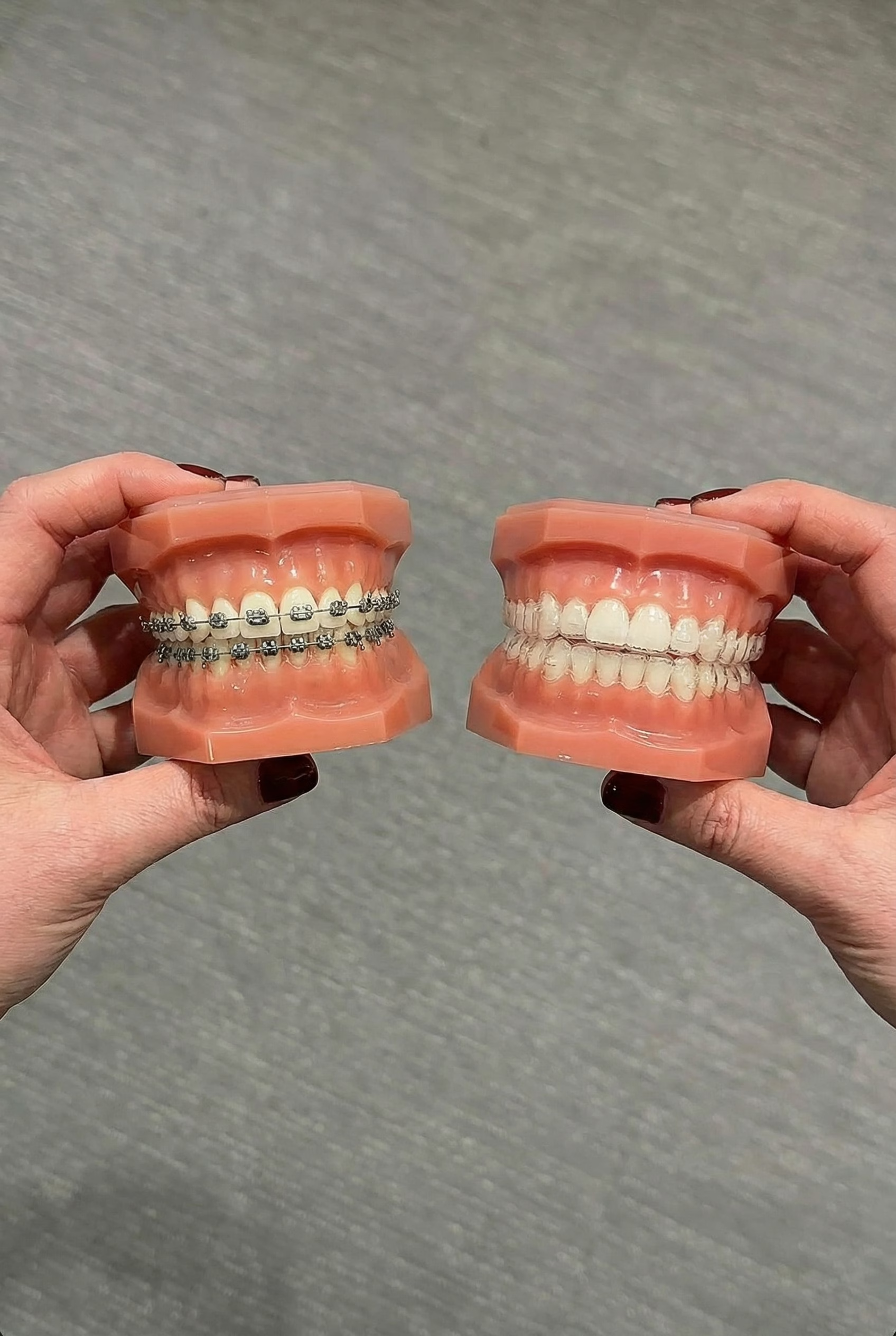
It might surprise you, but the alignment of your teeth plays a massive part in your gum health. When teeth are crooked, crowded, or overlapping, they create countless awkward nooks and crannies. These spots are incredibly difficult to clean properly and become perfect traps for plaque to hide and multiply, dramatically increasing your risk for gingivitis.
Straightening your teeth makes your daily cleaning routine far more effective. By eliminating those hard-to-reach angles and overlaps, you get rid of the bacteria’s hiding places. This is where treatments like Toothfairy’s clear aligners can make a real difference. They provide a smarter, more affordable way to straighten your smile compared to a specific aligner brand, directly boosting your long-term gum health by simply making your teeth easier to keep clean.
How Your Diet and Lifestyle Affect Your Gums
You can have the most diligent brushing and flossing routine in the world, but what happens outside the bathroom can either supercharge your efforts or completely undo them. The food you eat and your daily habits have a direct, powerful impact on your gum health, either building up your defences or giving plaque the exact fuel it needs to thrive.
Think of your mouth as a complex ecosystem. Everything you put into it can either help the good bacteria flourish or feed the harmful ones that cause that dreaded inflammation. Making smart, conscious choices about what you eat and how you live is one of the best ways to tip the scales in favour of healthy gums.
Feeding Your Gums From the Inside Out
Some foods are absolute powerhouses for your gums, packed with the very nutrients they need to stay strong and resilient. When you build your diet around these ingredients, you’re giving your body the raw materials it needs to fight inflammation and maintain healthy gum tissue.
Try to get more of these into your daily meals:
-
Vitamin C Superstars: Vitamin C is non-negotiable for producing collagen, the protein that keeps your gums firm and healthy. If you’re running low, your gums can weaken and become an easy target for bacteria. So, load up on citrus fruits, bell peppers, broccoli, and strawberries.
-
Calcium Champions: We all know calcium is great for bones, but it’s just as crucial for your tooth enamel. Stronger enamel is much harder for plaque to damage. You can find it in dairy like milk and cheese, but also in leafy greens like kale and fortified plant-based milks.
-
Nature’s Toothbrushes: Crunchy fruits and veg like apples, carrots, and celery do more than just provide vitamins. Their fibrous texture literally helps scrub plaque off your teeth as you chew. They also get your saliva flowing, which is your mouth’s own natural cleaning agent.
Even small additions like these can make a huge difference over time, fortifying your gums against the daily assault from plaque.
The Worst Offenders for Gum Health
Just as some foods protect your gums, others are actively working against them. The biggest culprits are almost always high in sugar and simple carbs—the favourite food of the bacteria that cause gingivitis.
It pays to be mindful of how often you consume these:
-
Sugary Drinks: Fizzy pop, sweetened juices, and sports drinks might as well be a spa day for bad bacteria. They coat your teeth in sugar, creating the perfect acidic environment for them to multiply and churn out plaque.
-
Sticky Sweets and Snacks: Things like chewy sweets, biscuits, and even starchy snacks like crisps love to hang around. They cling to your teeth long after you’ve finished eating, giving bacteria a non-stop buffet to fuel the cycle of plaque build-up. A great starting point is to find some easy swaps; this guide to the best low sugar snacks can give you some brilliant ideas.
To help you get started, here’s a quick cheat sheet for making smarter food swaps.
Dietary Swaps for Healthier Gums
Making healthier choices doesn’t have to feel like a complete diet overhaul. Often, the biggest wins come from small, simple substitutions that you can easily stick with. This table shows a few common culprits that feed plaque and some fantastic, gum-friendly alternatives.
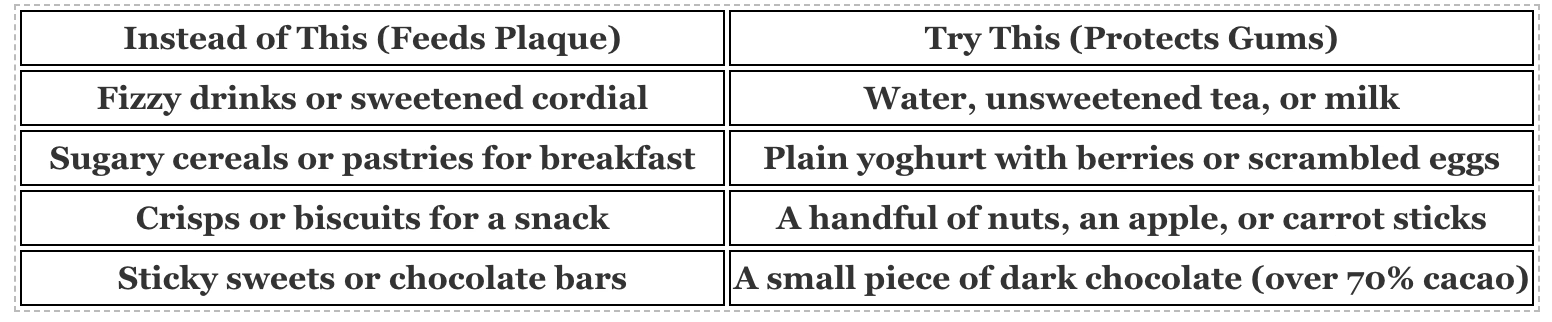
See? It’s not about being perfect. Just start with one or two of these swaps, and you’ll already be cutting down the fuel supply for those plaque-causing bacteria.
How Lifestyle Habits Can Wreak Havoc
Beyond what you eat, certain lifestyle choices can dramatically crank up your risk of gingivitis and more serious gum disease.
Smoking is one of the single biggest risk factors for developing gum disease. It cripples your body’s immune system, making it much harder to fight off gum infections. It also restricts blood flow to the gums, which seriously slows down any chance of healing.
Smoking and tobacco use is especially destructive. The numbers don’t lie: smokers are far more likely to develop gum disease than non-smokers. The toxic chemicals in tobacco mess with the normal function of your gum tissue cells, leaving them vulnerable to infection and unable to repair themselves properly.
In a similar vein, excessive alcohol consumption can be just as harmful. Alcohol dehydrates you, which can lead to a dry mouth. Without enough protective saliva to wash away food particles and neutralise acids, plaque bacteria can build up much more easily, paving the way for gingivitis.
Making positive changes here is one of the most impactful things you can do for your oral health. Quitting smoking and moderating your alcohol intake won’t just save your gums—it’s a massive win for your overall well-being, too.
Making Gum Health Accessible with Modern Dental Tech

Knowing what to do to prevent gingivitis is one thing; actually getting the care you need is another battle entirely. Here in the UK, many people feel stuck when faced with high costs and long NHS waiting lists. These hurdles often mean a minor gum issue gets ignored until it becomes a much bigger, more painful problem.
But this is where a fresh approach to dentistry is changing the game. Technology has opened up smarter, more direct routes to professional dental care, finally knocking down those old barriers that kept so many people from looking after their oral health properly.
Overcoming Barriers to Dental Care
Let’s be honest, the thought of booking a dental appointment can be stressful. You worry about finding a local practice with openings, and the fear of an unexpectedly large bill makes it all too easy to put off getting help for those early warning signs, like a bit of blood on your toothbrush.
This is precisely the gap that Toothfairy was created to fill. It’s a UK-based platform, founded by dentists, that offers a more straightforward and affordable way to manage your oral health.
-
Immediate Emergency Advice: Noticed your gums are looking a bit swollen or bleeding when you brush? Instead of waiting weeks for a clinic appointment, the Toothfairy app lets you have a secure video call with a qualified dentist, often on the same day. Getting that immediate advice can stop a minor gum issue from escalating.
-
Affordable and Transparent: This service takes the financial guesswork out of the equation. It provides a clear, accessible path to expert guidance without the hefty private price tag, making proactive gum care a genuine possibility for more people.
The Link Between a Straight Smile and Healthy Gums
A confident smile and healthy gums go hand in hand. Think about it: when your teeth are crowded or crooked, they create all sorts of tight spaces and awkward angles that are a nightmare to clean. These spots become perfect hiding places for plaque, dramatically increasing your risk of gingivitis, no matter how diligently you brush and floss.
Straightening your teeth is actually one of the best long-term moves you can make for your gums because it makes your daily cleaning routine so much simpler. When your teeth are properly aligned, you get rid of those plaque traps, allowing your brush and floss to finally reach every surface.
A straighter smile isn’t just about how it looks; it’s a foundational part of preventative oral health. By making your teeth easier to clean, you directly attack the plaque build-up that leads to gum inflammation and decay.
A Smarter Path to a Healthier Smile
For a long time, getting your teeth straightened felt like a massive financial undertaking, usually linked to one well-known aligner brand with a premium price to match. Thankfully, modern solutions have made achieving a straighter, easier-to-clean smile far more attainable.
Toothfairy provides a much smarter and more affordable route to straightening your teeth with high-quality, dentist-prescribed clear aligners. This isn’t just about improving your smile’s appearance; it’s a direct investment in your future gum health.
By opting for a more accessible aligner solution, you’re actively redesigning your mouth to be less susceptible to gingivitis. The whole journey is monitored virtually by UK-based dentists, giving you professional oversight with the convenience of doing it from home. It’s a practical, modern step towards a future with healthier gums and a smile you can truly feel good about.
Got Questions About Gingivitis? We’ve Got Answers
Even with the best intentions, it’s natural to have a few questions when you’re working hard to keep your gums healthy. Let’s clear up some of the common things people wonder about.
I’ve Heard Gingivitis Can Go Away By Itself. Is That True?
That’s a myth I hear all the time. The short answer is no. While gingivitis is 100% reversible, it needs your active help to disappear. Think of it this way: your body is sending you a clear signal that something’s wrong – specifically, a build-up of plaque bacteria.
If you ignore the signs, like a bit of blood on your toothbrush, you’re essentially letting that bacteria stick around and cause more irritation. To turn things around, you have to get in there and physically remove the plaque through better daily brushing and flossing. A professional clean is also crucial to get rid of any hardened plaque, known as tartar.
How Quickly Can I Get Rid of Gingivitis?
The good news is, you can see real results surprisingly fast. With a solid and consistent oral hygiene routine, you should notice the redness, swelling, and bleeding start to calm down in just one to two weeks.
The key word here is consistent. You can’t have an off day. Letting your routine slide for even a day or two gives plaque the chance to creep back in and halt your progress. Stick with it, and you’ll see those healthy, pink gums return before you know it.
Never forget that you are in the driver’s seat when it comes to early-stage gum disease. Your daily habits have an enormous impact – far more than you probably realise.
Is a Little Bit of Bleeding When I Brush Normal?
Absolutely not, though it is incredibly common. Healthy gums simply don’t bleed. I often tell my patients to think of bleeding gums like the check-engine light in your car; it’s an early warning sign that something isn’t right and needs looking at.
That bleeding is a direct result of inflammation. The bacteria nesting in plaque have made your gum tissue so irritated and sensitive that even the gentle pressure from brushing is enough to make them bleed.
Can Crooked Teeth Make Gum Problems Worse?
Yes, they definitely can. When your teeth are crowded or misaligned, they create all sorts of tight spaces and awkward overlaps. These spots are a nightmare to clean properly, no matter how good you are with a toothbrush and floss.
These hard-to-reach areas quickly become plaque hotspots, which dramatically increases your risk for gingivitis. Straightening your teeth isn’t just about aesthetics; it makes your daily cleaning far more effective. Modern options like the clear aligners available through Toothfairy offer a more affordable route than some big-name brands. By sorting out your alignment, you’re not just improving your smile—you’re making it fundamentally easier to keep your gums healthy for the long run.
Ready to get expert support for your gum health? Toothfairy connects you with UK dentists for on-demand virtual consultations and offers affordable, dentist-prescribed clear aligners to make prevention simpler than ever. Find out more at https://www.toothfairyapp.co.uk.
Last updated on February 3, 2026

Toothfairy Care Team
Toothfairy, is the world's smartest dental app, that connects patients to a dentist for a range of issues, from emergencies, cosmetics, prescriptions to virtual exams.
Toothfairy Care Team
Toothfairy, is the world's smartest dental app, that connects patients to a dentist for a range of issues, from emergencies, cosmetics, prescriptions to virtual exams.