How to Brush Teeth Effectively: Simple Tips for a Healthier Smile
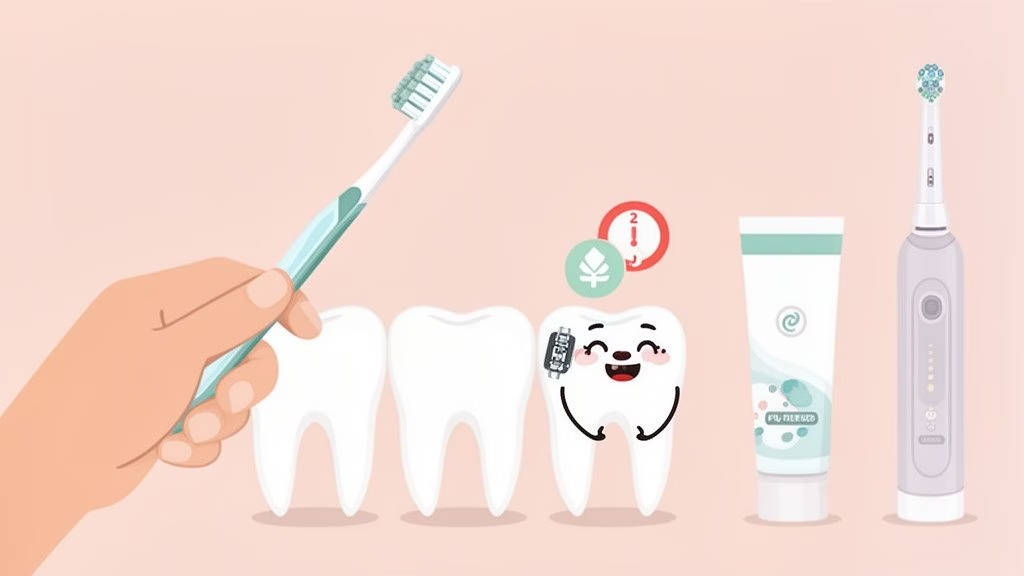
It’s not enough to just give your teeth a quick scrub; effective brushing really comes down to using the correct technique for a full two minutes, twice a day, with a good fluoride toothpaste. When you get this simple habit right, it becomes the foundation for preventing cavities and gum disease, keeping your smile healthy for years to come.
The Real Reason Your Brushing Routine Isn’t Working
Most of us learned to brush our teeth as kids, and it’s been on autopilot ever since. But just because you do it every day doesn’t mean you’re doing it well. The reality is, many common brushing routines leave huge gaps, leaving your teeth at risk of decay and staining. Think of it like driving a car—you might get from A to B, but poor technique can cause serious long-term damage.
One of the biggest reasons a brushing routine fails is a simple misunderstanding of what you’re up against. There’s a fundamental difference between plaque vs. tartar, and knowing this changes everything. Brushing is fantastic at removing soft, sticky plaque, but it can’t touch tartar once it hardens. That’s a job for the professionals. This makes mastering your daily technique your first and best line of defence.
The UK’s Brushing Blind Spot
Many of us in the UK think we have our oral hygiene sorted, but the numbers paint a very different picture. Brushing effectively means two sessions a day, for at least two minutes each, with fluoride toothpaste. Yet, a revealing Denplan survey found that almost a third of adults (30%) brush less often than this, and a worrying 6% admit to skipping it entirely some days. You can see more on these national habits in the original survey findings.
This gap between what we think we’re doing and what we’re actually doing is a major cause of preventable dental problems.
Your daily brushing routine isn’t just a chore; it’s a powerful health ritual. Transforming it from a mindless task into a mindful practice is the key to preventing costly and uncomfortable dental problems down the line.
This guide is designed to help you bridge that gap. We’ll get past just going through the motions and dive into the small details that make a huge difference, especially when getting a dental appointment can be tough.
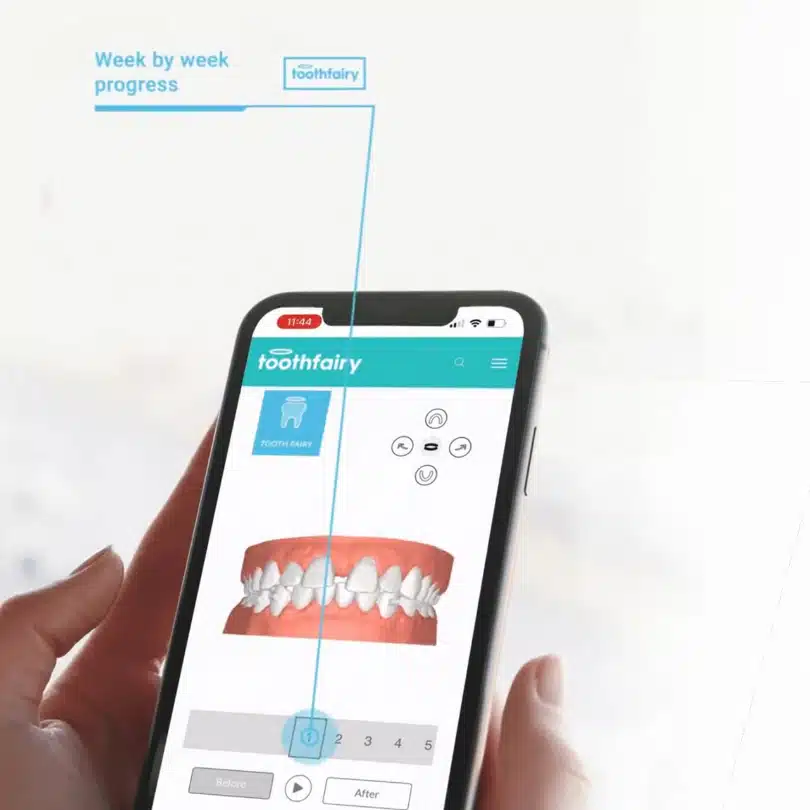
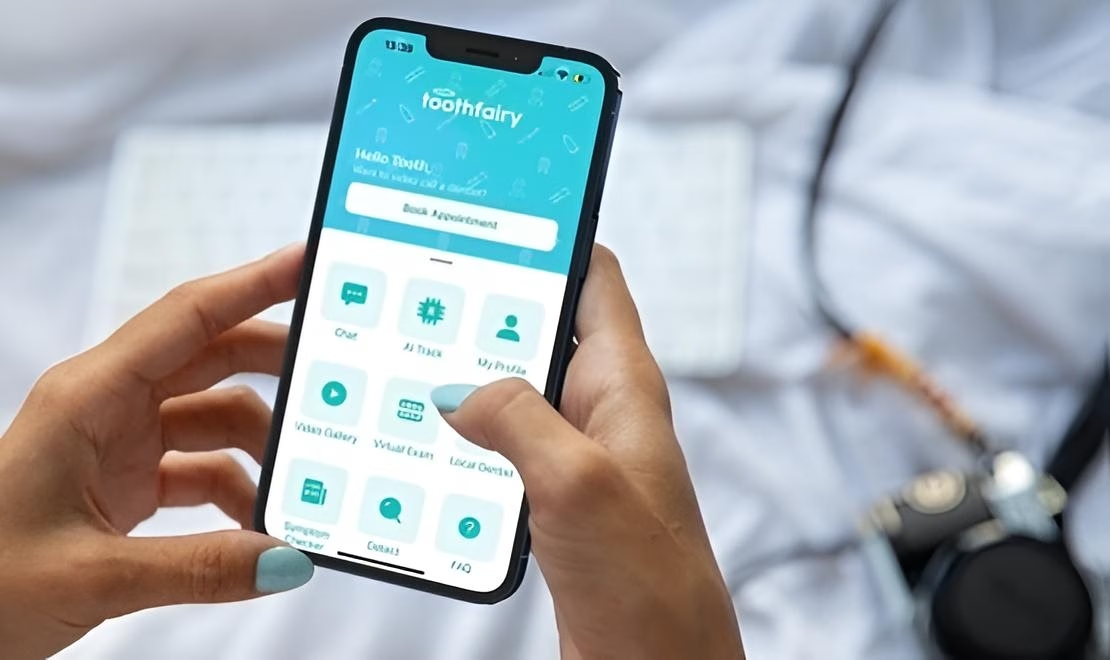
And for those times when you need advice right away or want to explore options for a straighter, healthier smile—without the hefty price tag of certain aligner brands—there are modern solutions. The Toothfairy app links your daily efforts with professional guidance, offering a smarter, more affordable way to handle everything from dental emergencies to cosmetic treatments, all from your phone.
The Brushing Technique Dentists Actually Use
Let’s be honest, most of us just give our teeth a quick back-and-forth scrub and call it a day. But if you want to make a real difference to your oral health, it’s time to upgrade your technique. It’s not about scrubbing harder; it’s about brushing smarter. First things first, it’s worth asking yourself if you are truly brushing your teeth properly.
It all starts with your grip. Instead of a clenched fist, try holding your toothbrush lightly, almost like a pen. A death grip is a classic mistake that often leads to brushing way too hard, which can damage your gums and wear away your enamel over the years. Remember, you’re aiming for control, not brute force.
This is where many people’s brushing habits break down. They think they’re doing a great job, but the reality is often quite different.
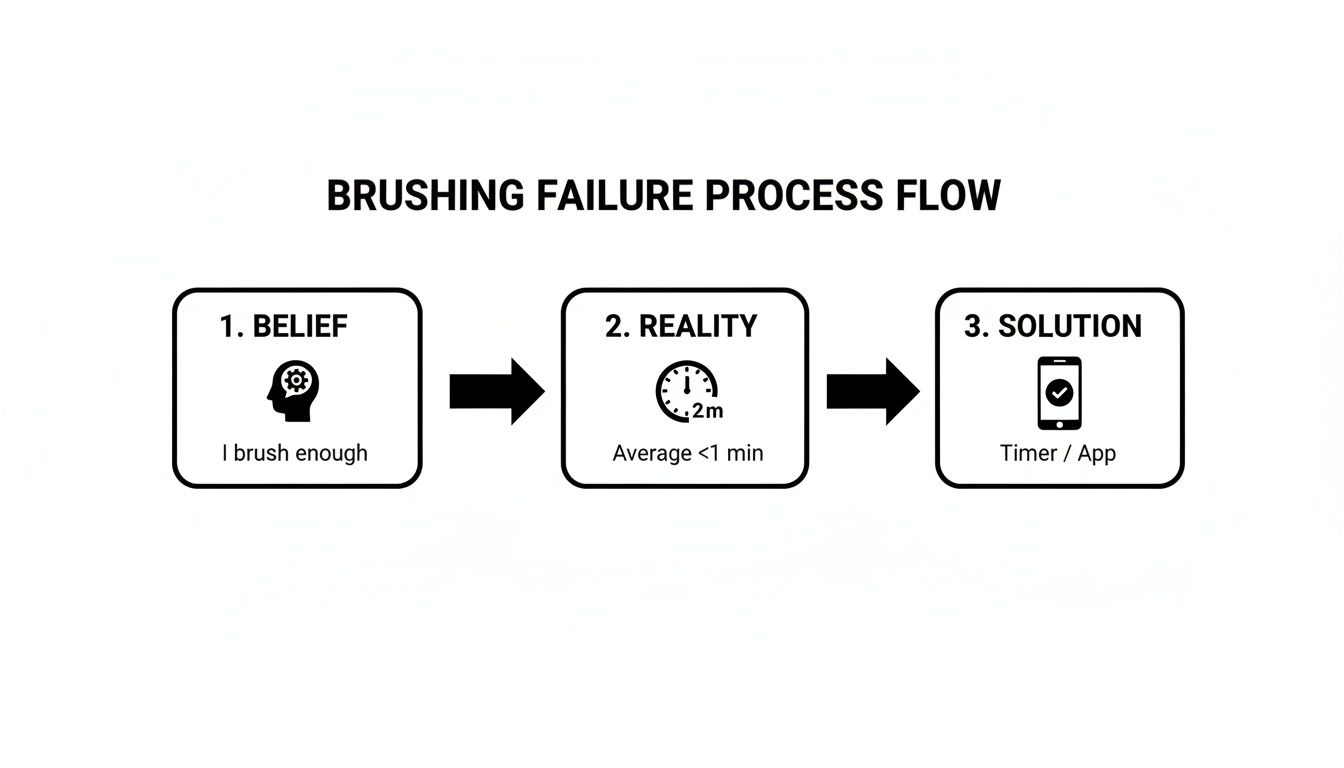
The takeaway here is that what feels right isn’t always what’s most effective. A bit of structure, maybe from a simple timer or an app like Toothfairy, can bridge the gap between perception and reality, ensuring you get the job done right every single time.
It’s All in the Angles and Strokes
The angle of your brush is a non-negotiable part of a proper clean. You need to position the bristles at a 45-degree angle towards your gumline. This is the magic angle that lets the bristles get right under the edge of the gums—exactly where plaque loves to accumulate and cause trouble.
Once you have the angle right, switch to short, gentle strokes. Think small circles or a light, vibrating back-and-forth motion. The idea is to dislodge plaque and food debris, not to scrub the enamel off your teeth. Treat them like you’re polishing fine china, not a grimy floor.
Follow a System for a Whole-Mouth Clean
Brushing at random is a surefire way to miss spots. I see it all the time. To avoid this, get into the habit of following a consistent pattern every time you brush.
- The Outsides: Start with the outer surfaces of your top teeth, then move down to the outer surfaces of your bottom teeth.
- The Insides: Now, do the same for the inner surfaces—top, then bottom. For the tricky inside surfaces of your front teeth, turn the brush vertically and use gentle up-and-down strokes.
- The Biting Surfaces: Finish up by cleaning the chewing surfaces of your teeth with a simple back-and-forth motion.
Sticking to a routine like this builds muscle memory, so you’ll eventually do it without thinking. It guarantees you won’t neglect those hard-to-reach molars at the back. This is particularly crucial if you have aligners, as the little attachments on your teeth can be plaque magnets.
Key takeaway: The goal is total coverage. It’s far better to brush every single tooth surface gently and methodically than to scrub a few spots aggressively and miss others completely.
Don’t Forget to Brush Your Tongue
Your tongue can be a major source of the bacteria that cause bad breath. After you’ve finished with your teeth, give your tongue a gentle brush from back to front.
This simple last step whisks away bacteria and leftover food particles, making a huge difference in how fresh your mouth feels. Think of it as the finishing touch for a truly deep clean.
Choosing Your Oral Health Toolkit
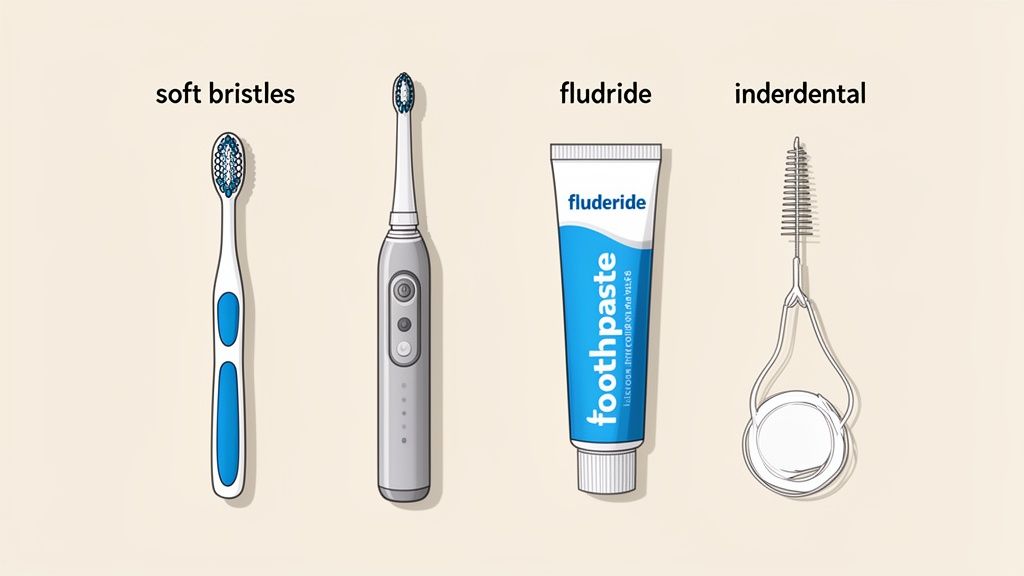
Perfecting your brushing technique is a huge part of the puzzle, but what you brush with is just as important. Standing in the dental aisle can feel a bit overwhelming, but choosing the right tools is about building a personalised kit that works for your unique mouth. Think of it as assembling the right gear for a very important mission: keeping your teeth healthy for life.
Manual vs Electric Toothbrushes Which Is Right for You
The biggest debate in dental care often comes down to one question: manual or electric? The honest answer is that a manual brush, used with the correct technique, can do a fantastic job. However, an electric brush often takes the guesswork out of the equation.
Electric models usually come with built-in two-minute timers and pressure sensors—brilliant features that stop you from rushing or pressing too hard. This makes them a great option if you know you have a tendency to scrub aggressively. On the other hand, a manual brush gives you complete control, is much cheaper, and is a doddle to travel with.
Here’s a quick breakdown to help you decide.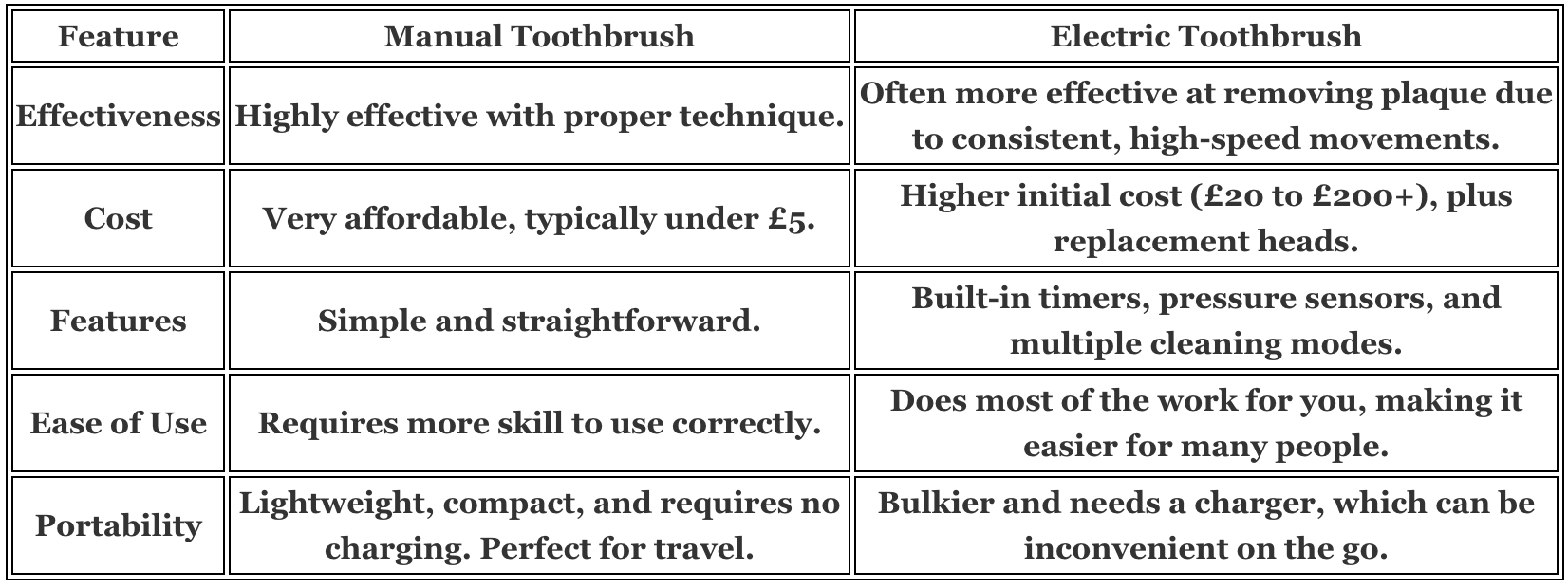
Ultimately, the “best” brush is the one you’ll use consistently and correctly. Whether you love the simplicity of a manual or the tech-driven power of an electric, either can be a great choice for your toolkit.
The One Rule for Bristles
No matter which type of brush you land on, there’s one non-negotiable rule: always choose soft bristles. It’s a common misconception that hard bristles mean a better clean. In reality, they can be incredibly damaging over time, wearing away your enamel and causing your gums to recede.
Soft bristles have the flexibility to get right under the gumline where plaque loves to hide. They’ll sweep away bacteria and debris without being abrasive, protecting both your teeth and gums for the long run.
How to Pick the Perfect Toothpaste
With so many options lining the shelves, choosing a toothpaste can feel like a major decision. The single most important ingredient to look for is fluoride. This mineral is your teeth’s best defence, actively strengthening your enamel to make it more resistant to acid attacks from the foods and drinks you consume.
Once you’ve got fluoride covered, you can narrow down your choice based on your specific needs.
- Sensitive Teeth? If hot or cold drinks make you wince, a desensitising toothpaste contains ingredients that help block the tiny pathways to the tooth’s nerve.
- Want a Brighter Smile? Whitening toothpastes use mild abrasives or chemical agents to lift surface stains, giving your teeth a brighter look.
- Worried About Gums? If you’re concerned about gingivitis, look for formulas with antibacterial agents designed to reduce plaque and soothe inflammation along the gumline.
Picking the right toothpaste is the final piece of your brushing routine. When you combine the right tools with the right technique, you’re giving yourself the best shot at excellent oral health. It’s like using the Toothfairy app for advice on affordable teeth straightening—it’s about putting professional-level insights and care into your own hands.
Common Brushing Mistakes That Harm Your Teeth
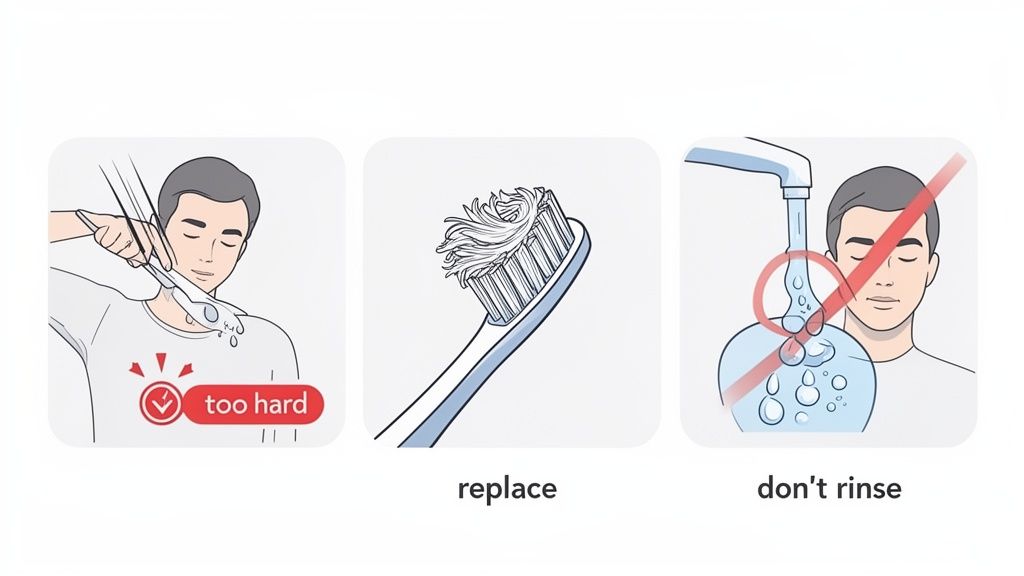
You can have the best toothbrush and toothpaste money can buy, but if your technique is off, you might be doing more harm than good. It’s easy to fall into habits that seem harmless but slowly damage our teeth and gums over time. Learning how to brush your teeth properly often means unlearning a few of these common mistakes first.
The good news? These errors are surprisingly simple to fix once you know what to look for. From scrubbing too aggressively to using the same old brush for far too long, a few small adjustments can make a huge difference to your oral health.
Applying Too Much Pressure
One of the most widespread and damaging mistakes is simply brushing too hard. There’s a common belief that a vigorous scrub gets your teeth cleaner, but that’s a myth that can lead to serious problems like gum recession and enamel abrasion. Think of it as polishing, not scouring. Your gums are delicate tissues and need a gentle touch.
A tell-tale sign you’re being too rough is if your toothbrush bristles splay outwards and look flattened after just a short time. An electric toothbrush with a built-in pressure sensor can be a fantastic training tool, but even just consciously easing your grip can solve the problem.
Key Insight: The goal is to remove soft plaque, not scrub away your tooth’s protective enamel. Effective brushing is all about precision and consistency, not brute force. This gentle approach is especially important when cleaning around things like aligner attachments, which can be damaged by aggressive scrubbing.
Rinsing Immediately After Brushing
This one catches a lot of people by surprise. What’s the very first thing you do after you finish brushing? If it’s rinsing your mouth with water, you’re washing away the most beneficial ingredient in your toothpaste: fluoride.
Fluoride needs time to sit on your teeth to do its job properly—strengthening the enamel and making it more resistant to decay. Instead of rinsing, just spit out the excess foam and let that thin layer of toothpaste residue work its magic for a while longer. If you absolutely feel you must rinse, try to wait at least 30 minutes.
Neglecting Key Areas and Timings
Rushing your routine is another classic pitfall. If you aren’t brushing for a full two minutes, you are almost certainly missing entire tooth surfaces. The usual suspects are the hard-to-reach back molars and the inside surfaces of your lower front teeth.
These neglected spots quickly become prime real estate for plaque to build up. Oral hygiene habits across the UK are surprisingly varied; for instance, while many millennials brush often, an alarming 39% of 25-34 year olds brush less than once a week. You can read more about these surprising oral hygiene statistics. Committing to a full, timed two minutes is one of the easiest and most effective ways to ensure a thorough clean, every single time.
Adapting Your Brushing for Special Dental Needs
A one-size-fits-all brushing routine is a solid foundation, but real life often calls for a more tailored approach. Whether you’re navigating the world of braces, dealing with the sharp pang of sensitive teeth, or trying to teach a little one the ropes, adapting your technique is key. It’s these small adjustments that ensure everyone gets a truly effective clean, whatever their situation.
Tweaking your brushing style isn’t complicated, but it does demand a bit more mindfulness. The goal is always the same: be gentle but thorough, cleaning every nook and cranny without causing any irritation.
Brushing with Braces and Aligners
Orthodontic treatment is a brilliant investment in your smile, but it also introduces a whole new landscape for plaque to hide. Food loves to get stuck around brackets, wires, and even the attachments for clear aligners, so a meticulous cleaning routine is non-negotiable.
If you have traditional fixed braces, an interdental brush will quickly become your most valued tool. These tiny brushes are designed to get right under the wires and around the brackets—all the spots your regular toothbrush just can’t reach. For those with clear aligners, whether from a specific aligner brand or a smarter provider like Toothfairy, you need to clean both your teeth and the aligners. Always brush your teeth after eating before popping your aligners back in. This stops food and sugar from being trapped against your teeth, which is a recipe for decay.
Your orthodontic treatment is a big commitment. Don’t let subpar hygiene undermine the final result. A few extra minutes of careful cleaning each day will protect your teeth from stains and decay, ensuring that when the braces come off, your smile is as healthy as it is straight.
Gentle Techniques for Sensitive Teeth
If you’ve ever winced after a sip of a cold drink or a bite of ice cream, you know all about tooth sensitivity. This calls for a much gentler brushing technique to avoid triggering that familiar pain or wearing down your enamel even further.
Thankfully, the fix is straightforward. Switch to a soft-bristled brush and find a good desensitising toothpaste. When you brush, concentrate on using light, circular motions rather than an aggressive back-and-forth scrub. Think of it more as polishing your teeth, not scouring them. This approach is just as effective at removing plaque but without putting unnecessary pressure on sensitive teeth and gums.
Making Brushing Fun and Effective for Children
Getting kids to brush properly is one of the best things you can do for their long-term health. The real trick is to make it a fun, normal part of their day, not a battle of wills.
Most children have the dexterity to brush by themselves by about age six or seven, but you’ll want to keep an eye on their technique until they’re a bit older.
Here are a few simple ideas to get them on board:
- Let them choose: A toothbrush with their favourite character and a tasty, child-friendly fluoride toothpaste can make all the difference.
- Use a timer: A simple two-minute sand timer or a favourite song can help the time pass quickly.
- Make it a family affair: Brushing your teeth alongside them is a powerful way to model good habits.
The impact of early intervention is huge. Supervised toothbrushing programmes are making a real difference, with a recent report showing 60% of English councils now run them. These schemes reached over 143,000 children, which is a 33% increase in participation. It’s a testament to how vital these early habits are, as initiatives like these are actively combating childhood tooth decay.
Building a Complete Oral Health Routine
Mastering your brushing technique is a huge win for your oral health, but it’s really just the first step. To truly protect your smile, you need a routine that gets into all the places your brush can’t reach.
Think of it this way: brushing is like washing the main surfaces of your teeth. But what about the gaps in between?
That’s where things like floss and interdental brushes come in. Your toothbrush bristles, no matter how advanced, just can’t squeeze into those tight spaces between your teeth or just below the gumline. This is a problem because up to 40% of plaque loves to hide out in these exact spots, eventually leading to cavities and gum disease. That’s why daily flossing isn’t just a nice-to-have extra; it’s absolutely essential.
Your Daily Essentials Beyond the Brush
Once you’ve got the hang of cleaning between your teeth, a few other habits can round out your routine and keep your mouth protected all day long.
-
Make Mouthwash Work for You: A good therapeutic mouthwash can be a fantastic addition, but timing is key. If you rinse right after brushing, you’re just washing away all the beneficial, concentrated fluoride from your toothpaste. A better approach? Use it at a different time, like after lunch, for a quick refresh that adds another layer of protection without undoing your good work.
-
Keep Your Aligners Clean: If you’re straightening your teeth—whether with a well-known aligner brand or a smarter, more affordable solution like Toothfairy—keeping your aligners clean is just as crucial as brushing. Make sure you clean them every single time you take them out. This stops bacteria from getting trapped against your enamel and causing problems.
-
Don’t Forget Your Tongue: Brushing your tongue is a good start, but a dedicated tongue scraper can take it to the next level. It’s far more effective at removing the bacteria responsible for bad breath, leaving your mouth feeling remarkably fresh.
A complete oral care routine is your daily commitment to your health. It’s the consistent, small habits—brushing, flossing, and rinsing correctly—that work together to prevent major problems down the line.
The final piece of the puzzle is connecting these daily habits with professional oversight. It’s one thing to do the work at home, but it’s another to know for sure that your efforts are paying off.
This is where having expert advice on hand makes a real difference. With the Toothfairy app, you can manage your teeth straightening, deal with a dental emergency, or just get some professional guidance without having to schedule a traditional appointment. It bridges the gap between your diligent home care and on-demand expert support, creating a truly seamless way to look after your smile.
Got Questions About Brushing? We’ve Got Answers
Even when you think you’ve got your brushing technique down to a fine art, little questions can pop up. Am I doing this right? Should I be doing that? It’s completely normal. Let’s clear up a few of the most common queries I hear from patients so you can feel confident in your routine.
Should I Brush My Teeth Before or After Breakfast?
This is the big one, and the answer might surprise you. Most dentists, myself included, will tell you to brush before breakfast. The reason is simple: you want to clear away all the plaque that’s built up overnight before you introduce sugars and carbs from your food. This stops bacteria from having a feast and producing damaging acids right against your teeth.
If the thought of not brushing after your morning meal is just too much, make sure you wait. Give it at least 30 minutes, especially if you’ve had something acidic like orange juice, fruit, or coffee. Your enamel softens temporarily after acid exposure, and brushing too soon can scrub it away. That little bit of waiting time allows your saliva to do its job and reharden the surface.
How Often Should I Replace My Toothbrush?
A good rule of thumb is to swap out your toothbrush or electric brush head every three to four months. A tell-tale sign it’s past its prime is when the bristles start to look frayed, bent, or splayed out. Don’t wait for it to look like a worn-out bottle brush!
Think of it this way: a worn-out toothbrush isn’t just bad at cleaning; it can become a breeding ground for bacteria and might even be abrasive to your gums. It’s also wise to get a new one after you’ve been ill to avoid re-introducing those same germs.
Is It Necessary to Use Mouthwash Every Day?
Mouthwash isn’t a must-have for everyone, but a good therapeutic one can be a fantastic tool in your oral health arsenal. It’s especially useful if you’re prone to cavities or want to give your gums some extra support. The real trick, though, is when you use it.
Whatever you do, don’t rinse with it right after brushing. That just washes away all the beneficial, concentrated fluoride your toothpaste leaves behind. Instead, use mouthwash at a different time of day altogether—maybe after lunch. It’s a great way to freshen up and add another layer of plaque protection without undoing the good work of your morning brush.
For any other dental questions you have, from cosmetic treatments to urgent concerns, Toothfairy provides a smarter, more accessible way to get professional advice. You can find out how to connect with a qualified UK dentist right from your own home by visiting the Toothfairy website.
Last updated on February 13, 2026

Toothfairy Care Team
Toothfairy, is the world's smartest dental app, that connects patients to a dentist for a range of issues, from emergencies, cosmetics, prescriptions to virtual exams.
Toothfairy Care Team
Toothfairy, is the world's smartest dental app, that connects patients to a dentist for a range of issues, from emergencies, cosmetics, prescriptions to virtual exams.