What Is a Healthy Gum Colour and What Do Your Gums Reveal?
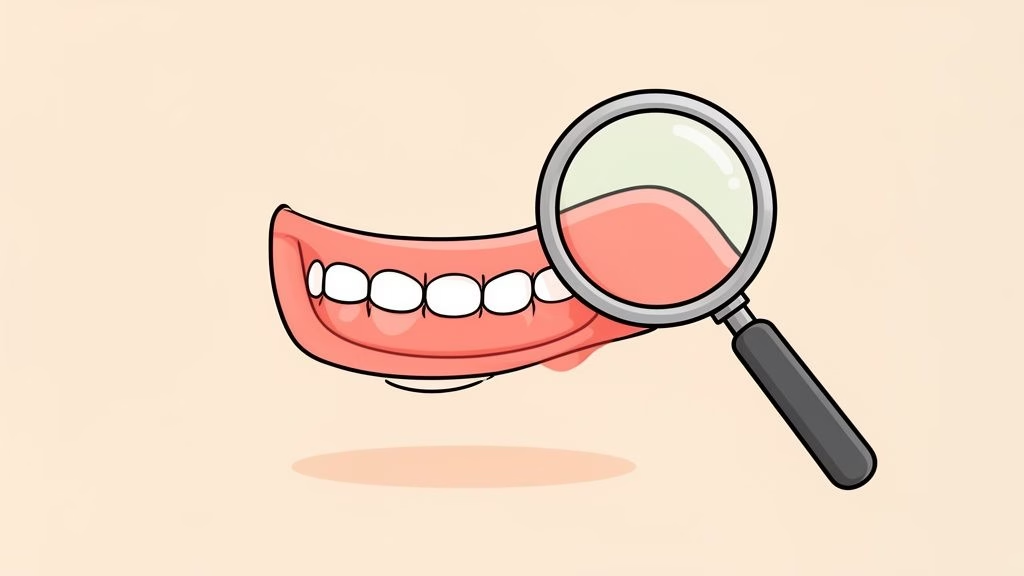
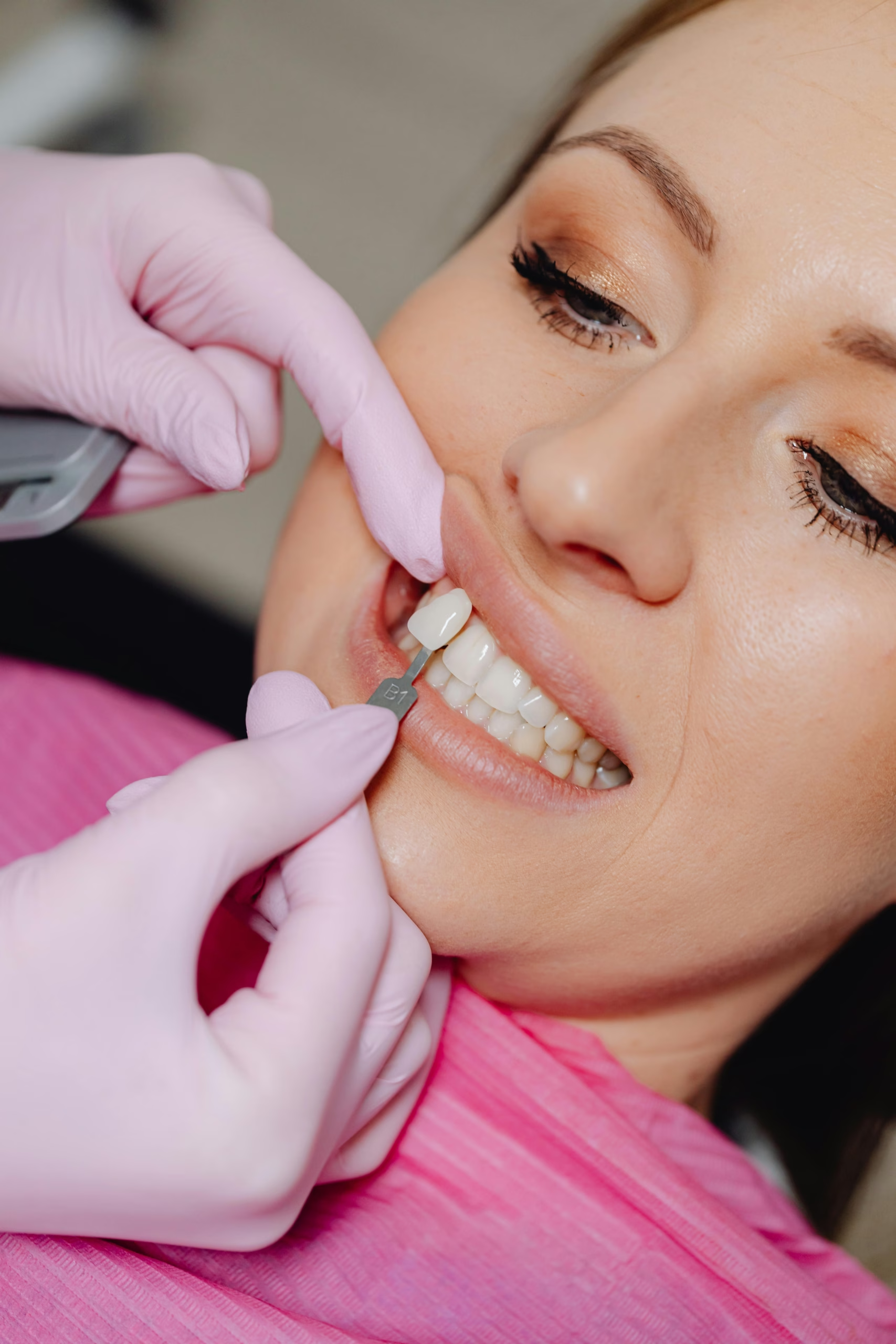
When you picture a healthy smile, you probably think of bright, white teeth. But what about your gums? They’re just as important. The standard for healthy gums is often described as a firm, coral pink appearance, but that’s not the whole story. What’s “normal” can vary from person to person, so getting to know your own gums is the first step in protecting your oral health.
Your Gums Are a Barometer for Your Health
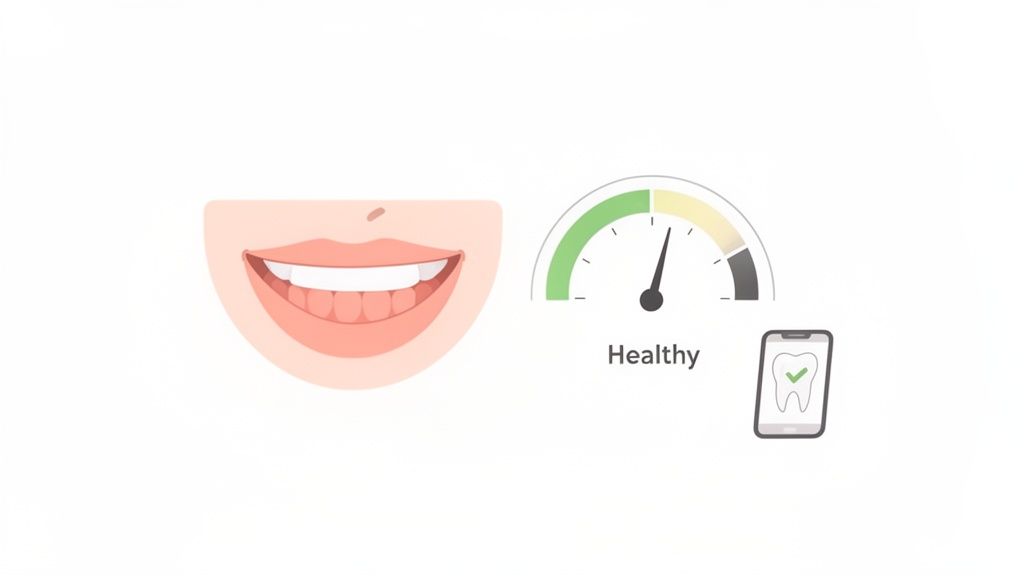
Think of your gums as a window into your body’s overall wellbeing. Much like a weather barometer signals a coming storm, the colour and condition of your gums can give you early clues about your health. When your gums look consistent and healthy, it’s a good sign that things are in balance.
But when that colour starts to shift, it’s often your body sending out a signal. These changes might point to something as simple as needing to brush more carefully, or they could hint at a deeper health issue that needs a closer look. Learning to spot these signs is key to taking control of your health.
What’s Your Normal? Establishing a Baseline
While “coral pink” is the textbook description of healthy gums, it’s really just a general guide. Natural variations in melanin mean that healthy gum colour can range anywhere from a pale pink to a rich brown, particularly for people with darker skin tones.
The real trick isn’t to match your gums to a picture in a brochure, but to figure out what’s normal for you. Once you know your personal baseline, you’ll be able to spot any changes right away. A sudden shift in your own gum colour is a much more reliable indicator than comparing your smile to someone else’s.
Why You Should Keep an Eye on Your Gums
Making a habit of checking your gum colour is a simple, effective way to stay on top of your health. A change from your usual shade to something like bright red, pale white, or even dark, patchy areas can signal a range of issues.
- Inflammation: If your gums are red and swollen, it’s often a sign of gingivitis, the first stage of gum disease.
- Underlying Health Conditions: Very pale gums can sometimes be linked to conditions like anaemia.
- Lifestyle Choices: Smoking or certain medications can cause dark spots or a general darkening of the gums.
In the UK, healthy gums are typically described as pink, firm, and shouldn’t bleed or feel swollen. However, this ideal doesn’t match the reality for most people. The Adult Oral Health Survey 2023 revealed that an astonishing 93% of dentate adults in England had at least one sign of periodontal trouble, from bleeding gums to tartar buildup. You can read more about the nation’s oral health statistics to see the full picture.
This is where accessible dental care can make a huge difference. Instead of waiting months for an appointment, services like Toothfairy let you get a professional opinion on your gum health directly from your phone. A quick virtual chat with a registered dentist can help you figure out what your gums are trying to tell you, giving you peace of mind or a clear action plan. It’s a smarter, more affordable way to put expert care in your hands before a small concern turns into a major problem.
What Colour Should My Gums Be? It’s Not Just Pink
We’ve all heard that healthy gums are a “coral pink” colour. While that’s a decent starting point, it’s far from the whole story. The truth is, there’s no single, universal shade for healthy gums. Just like our skin, our gums come in a whole spectrum of colours, and what’s normal for you is shaped by your own unique genetic blueprint.
For many people, especially those with more melanin in their skin, it’s completely normal to have brown or even black patches on their gums. This is the same melanin that gives colour to your skin, hair, and eyes. Think of them as freckles for your gums.
This natural variation is called physiologic pigmentation, and it’s nothing to worry about. It’s simply a reflection of your heritage. Expecting everyone’s gums to be a perfect shade of pink is like expecting everyone to have blue eyes – it ignores the beautiful and normal diversity that makes us all different.
It All Comes Down to Melanin
So, how does this work? Melanin is produced by special cells, and in some of us, these cells are more active in the gums. This isn’t a sign of bad habits or lurking dental problems; it’s just your biology doing its thing.
- What it looks like: This pigmentation can appear as a consistent, all-over browning or as distinct, flat spots called macules.
- What to expect: The key is that these patches are stable. They don’t suddenly change shape or size, and they certainly don’t come with any pain, bleeding, or swelling.
- Who gets it: While it’s particularly common for people of African, Asian, and Mediterranean descent, melanin pigmentation can show up in anyone.
Getting familiar with your gums’ natural colouring is the first step in being your own best health advocate. It helps you establish a clear mental picture of what’s normal for your mouth.
Think of your gums as your own personal health map. The natural colours and patterns are your unique terrain. Once you know that terrain like the back of your hand, you’ll instantly spot any new landmark that pops up – a clear sign that something’s changed and needs a closer look.
This personal baseline is your most valuable tool. When you know exactly what your gums look like day-to-day, any subtle shift becomes glaringly obvious. A new dark spot that appears out of nowhere, for instance, or a change in the feel of a patch you’ve had for years, should be your cue to get a professional opinion.
Telling Natural Colour Apart from Red Flags
Okay, so how do you know if a dark spot is just your normal colour or a sign of trouble? It’s all about the context. Natural pigmentation is flat, painless, and consistent. It shouldn’t feel any different to the touch than the gum tissue around it.
On the other hand, discolouration that signals a health issue rarely shows up alone. It often brings friends – like swelling, soreness, or bleeding. A problematic dark patch might feel raised or lumpy. This is precisely why knowing your baseline is so critical. You won’t waste time worrying about a harmless brown spot, but you’ll know to act fast if something genuinely new or different appears.
If you’re ever unsure, getting a professional to confirm your baseline can be incredibly reassuring. A quick virtual consultation with a Toothfairy dentist can help you make sense of your unique gum colour. They can give you the peace of mind that your pigmentation is perfectly normal or, if needed, advise you on the next steps, all without the hassle of a long wait for an in-person appointment.
Reading The Signs: What Your Gums Are Trying To Tell You
Once you know what your own healthy gums look like, you’re in a much better position to spot trouble when it starts. Think of your gums as a live feedback system for your body’s health. When something isn’t right, a change in their appearance is often one of the first and most obvious clues.
Your normal gum colour is your personal baseline. Any sudden shift away from that is a signal to pay attention. Learning to read these visual cues means you can act before a small issue snowballs into a serious problem.
What Different Gum Colours Mean
When your gums change from their usual shade, each new colour tells a different story. These shifts aren’t random; they’re direct indicators of what’s happening just beneath the surface.
Let’s break down some common colour changes and what they might signify:
-
Bright Red: This is the classic warning sign. If your gums are bright red, swollen, and bleed when you brush, you’re likely looking at gingivitis. This is the earliest stage of gum disease, caused by plaque buildup that irritates and inflames the gums.
-
Pale or White: Have your normally pink or brown gums turned noticeably pale? This can sometimes point to anaemia, a condition where your body doesn’t have enough healthy red blood cells to carry oxygen efficiently. It could also indicate a fungal infection like oral thrush, which often shows up as white patches.
-
Dark Red or Purple: As gingivitis advances into more serious periodontitis, the gums can take on a darker, almost bruised, purplish-red look. This suggests deeper inflammation and potential damage to the tissues holding your teeth in place.
-
Yellow: A yellowish tint or a specific sore can be a sign that an infection is brewing. If you also notice a small, painful bump, it could be the start of a dental abscess.
Getting familiar with these 7 key signs of gum disease can make all the difference in catching problems early.
Gum Discolouration And Potential Causes
To make it even clearer, this table breaks down what different gum colours might mean and how seriously you should take them.
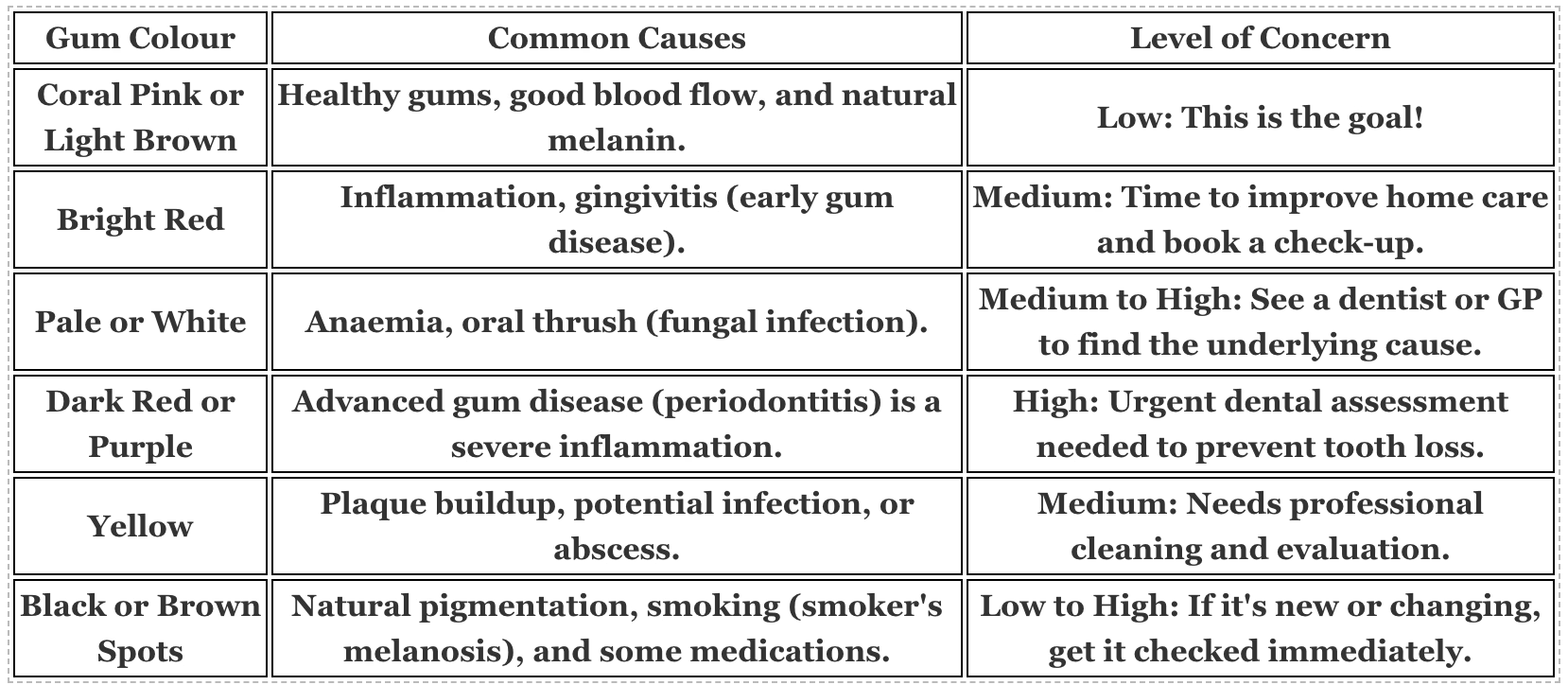
This isn’t an exhaustive list, but it gives you a solid framework for understanding what you’re seeing in the mirror.
Black or Brown Patches: What’s Normal and What’s Not
While many people naturally have darker pigmentation in their gums, any new or changing dark spots need a closer look. If you’ve always had brown patches due to melanin, that’s just your normal. The concern is when a dark spot appears suddenly or an existing one changes shape or size.
Smoking is a major culprit behind dark splotches, a condition called smoker’s melanosis. Certain medications or even some systemic diseases can also cause gums to darken.
Any new, raised, or painful dark area on your gums should be checked out by a professional. While it’s often harmless, it’s crucial to rule out anything more serious.
The key is knowing the difference between your lifelong, stable pigmentation and a recent, evolving change. This infographic illustrates how things like your genes and natural melanin levels create your unique, healthy baseline.
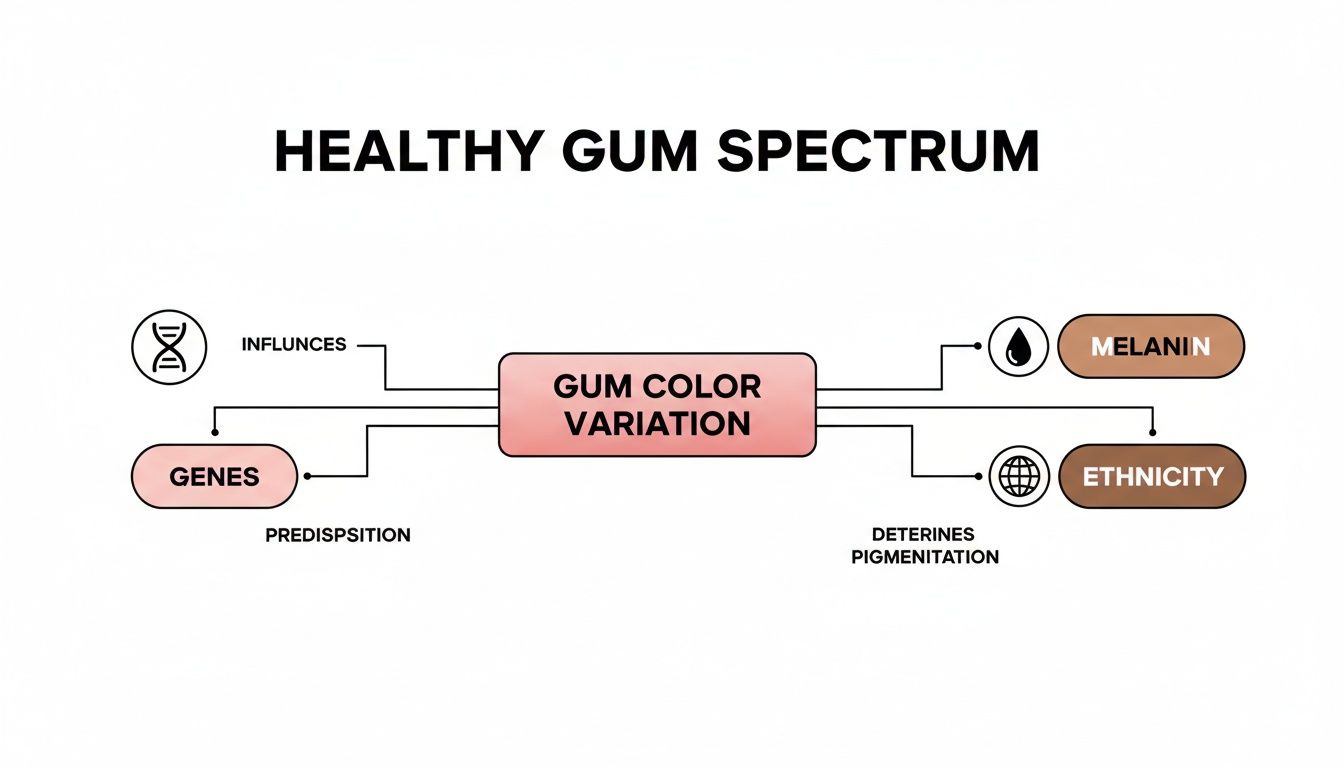
As you can see, “healthy” isn’t one-size-fits-all. It’s a spectrum influenced by your unique biological makeup.
Connecting Your Gums To Your Overall Health
Your gums don’t exist in a vacuum. Changes in their colour are often a window into your wider health. Whether it’s the bright red of early gum disease or the paleness linked to anaemia, your gums offer a crucial glimpse into your wellbeing.
Ignoring these signs is like ignoring the check-engine light on your car dashboard—it’s a risk you really shouldn’t take.
With services like Toothfairy, getting a professional opinion is simpler and more affordable than ever. You don’t have to guess what a change in your gum colour means. A quick video call with a qualified dentist can translate those warning signs into a clear plan of action, ensuring you get the right care, right when you need it.
How to Perform a Monthly Gum Health Check
Becoming your own best health advocate starts with knowing what to look for in the mirror. You don’t need any fancy tools or years of training to keep an eye on your oral health—just a few minutes each month can make all the difference. A regular self-check helps you spot subtle changes in your healthy gum colour and texture long before they turn into bigger problems.
Think of it as routine maintenance for your smile. By taking a moment to perform a simple gum health check, you’ll get to know what’s normal for you, making it much easier to recognise the earliest warning signs. This habit is your first line of defence, helping you catch potential issues when they’re still easy to fix.
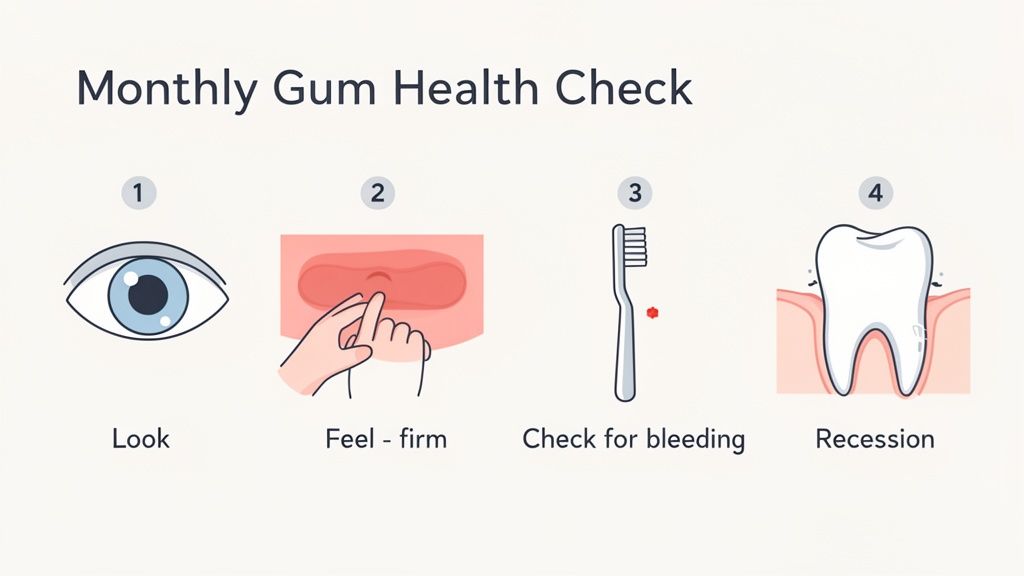
Your Simple Four-Step Gum Check
Set aside five minutes in a well-lit room, ideally in front of a bathroom mirror. This quick routine will help you become completely familiar with your own mouth, making anything out of the ordinary stand out immediately. Just follow these four steps once a month.
-
Look Closely at the Colour
Gently pull your lips and cheeks back to get a clear view of all your gum tissue. Have a good look at the colour around every single tooth, both top and bottom. Is it the consistent, healthy shade you’re used to, whether that’s coral pink or a naturally darker brown? Keep an eye out for any new patches of red, white, or unusual darkness that weren’t there last month. -
Assess the Texture and Feel
Using a clean finger, gently press on your gums. Healthy gums should feel firm and springy, fitting snugly around your teeth like a collar. If they feel soft, spongy, or puffy, that’s often a sign of inflammation. The surface should also have a subtle texture, almost like an orange peel (we call this ‘stippling’). -
Check for Bleeding
Healthy gums don’t bleed. Simple as that. After you brush and floss, check for any pink or red in your saliva or on your toothbrush. Bleeding is one of the most common signs of gingivitis, the very first stage of gum disease, and it’s a direct message that your gums are irritated. -
Examine the Gum Line
Take a look at where your gums meet your teeth. Do your teeth seem to be getting longer? This can be a sign of gum recession, where the tissue starts to pull away and expose more of the tooth. A healthy gum line should be consistent, creating a neat, scalloped edge around the base of each tooth.
Interpreting Your Findings
Once you’ve done your check, what does it all mean? Don’t worry, you’re not meant to diagnose yourself. The whole point is just to notice when something looks or feels different from your baseline normal.
Here’s a quick guide to what you might see:
- A consistent, healthy gum colour? Fantastic. That’s a great sign of healthy tissue and good oral hygiene.
- Redness and swelling? This usually points to inflammation, likely from plaque building up. It’s a good reminder to be extra thorough with your brushing and flossing.
- Bleeding when you brush? This is a clear red flag for active irritation and the start of gum disease.
- Receding gums? This is a more advanced issue that definitely needs a professional eye to prevent further damage.
Remember, the purpose of a self-check is not to self-diagnose but to self-detect. Noticing a change is your cue to seek a professional opinion before a minor issue has the chance to escalate.
When to Connect with a Dentist
If your monthly check shows anything that worries you—a new colour, bleeding that won’t stop, or a change in texture—it’s time to act. Waiting around for your next six-month check-up could allow the problem to get worse.
This is exactly where Toothfairy offers a smarter, faster solution. Instead of waiting and worrying, you can use the app to connect instantly with a UK-registered dentist. A quick virtual consultation lets you show the dentist exactly what you’ve found and get professional advice straight away. It’s an affordable, accessible way to stay on top of your gum health, protecting both your smile and your overall wellbeing.
Keeping Your Gums Healthy and Naturally Coloured
Getting and keeping that healthy gum colour isn’t something that just happens—it’s an ongoing commitment. Think of it like tending to a garden; your gums need consistent attention to stay vibrant and flourish. It’s a combination of solid daily habits, smart lifestyle choices, and knowing when to call in the professionals.
So, let’s walk through the essentials for both preventing issues and restoring your gums to their natural, healthy best.
The Foundation: Your Daily Home Care
What you do at home, every single day, is your most powerful tool against the things that cause gum discolouration, like inflammation and infection. Mastering these basics is the key to preventing problems before they even have a chance to start.
- It’s how you brush that matters: Simply brushing twice a day isn’t enough. Use a soft-bristled brush and angle it at 45 degrees toward your gum line. Gentle, circular motions will clean your teeth and the delicate gum tissue without causing any damage.
- Don’t ever skip the floss: Flossing is non-negotiable. It’s the only way to get rid of the plaque and bits of food stuck between your teeth and just under the gum line, where your toothbrush can’t reach. This is crucial for stopping plaque from building up and causing red, swollen, or bleeding gums.
- Add an antiseptic mouthwash: A good therapeutic mouthwash can be a great addition to your routine. It helps to cut down on plaque, prevent or reduce gingivitis, and kill off the bacteria that lead to gum trouble in the first place.
These simple habits are what break the cycle of plaque and inflammation, which is absolutely vital for keeping your gums a healthy, consistent pink or their natural darker shade.
How Your Lifestyle Affects Your Gums
Beyond your daily routine, your broader lifestyle choices have a huge impact on the health and colour of your gums. What you eat, drink, and whether you smoke directly affects the resilience of your gum tissue.
For instance, a diet packed with vitamins C and K—think leafy greens, citrus fruits, and berries—is fantastic for supporting the connective tissues in your gums. On the flip side, a diet high in sugar and acidic foods just feeds the very bacteria that cause gum inflammation.
Smoking is, without a doubt, one of the worst things you can do for your gums. It dramatically reduces blood flow to the gum tissue, which can hide early warning signs of gum disease like bleeding. At the same time, it causes those distinctive brown stains known as smoker’s melanosis. Quitting is the single best step you can take for both your gum colour and your overall health.
When to Bring in the Professionals
Sometimes, even with the most diligent home care, you need a professional to get your gums back on track. A routine dental cleaning, for example, is the only way to remove hardened plaque (tartar) that a toothbrush just can’t shift.
If gum disease has already taken hold, you might need more advanced treatments. For more severe cases that have altered your gum colour, treatments like osseous surgery may be recommended to reshape the bone supporting the tooth and restore gum health.
This is a growing concern here in the UK. Recent data shows a worrying trend: the proportion of adults with obvious tooth decay shot up by 13 percentage points to 41% between 2009 and 2023. This is directly linked to gum health, as an astonishing 93% of adults showed signs of periodontal issues like bleeding—a key factor that turns healthy pink gums to an inflamed red. You can discover more insights about these oral health conclusions.
Toothfairy’s Smarter Path to a Healthy Smile
Cosmetic treatments like teeth straightening should never compromise your gum health. Unfortunately, some direct-to-consumer aligner brands can overlook this, providing ill-fitting trays that irritate the gums and cause inflammation. This can quickly turn healthy pink gums into a sore, angry red.
At Toothfairy, we’re firm believers that a beautiful smile has to be a healthy one. That’s why our dentist-led approach puts gum health at the centre of your entire teeth straightening journey.
Here’s how we look after your gums:
- Professional Oversight: A UK-registered dentist prescribes and oversees every single treatment plan.
- Virtual Check-ins: Through our app, your dentist regularly checks in on your progress, paying close attention to the health and colour of your gums.
- Expert Guidance: If any hint of irritation or inflammation pops up, your dentist is on hand to give you immediate advice to get it sorted, ensuring your gums stay healthy while your teeth align.
It’s a smarter, more affordable way to straighten your teeth, giving you the confidence that when you reveal your new smile, it’ll be framed by healthy, beautifully coloured gums. It’s the peace of mind that comes from knowing an expert is looking after your whole mouth, not just moving your teeth.
Got Questions About Your Gums? We’ve Got Answers.
It’s only natural to have questions when you start paying closer attention to your gum health. So, let’s round things off by tackling some of the most common queries we get from patients about gum colour and what it all means.
Think of this as a quick chat with your dentist. We’ll clear up some common concerns and reinforce what we’ve covered, making sure you know what to look for in your own smile and when it’s time to get a professional opinion.
Can My Gums Go Back to Healthy Pink After Gum Disease?
Yes, they absolutely can! The trick is to catch gum disease early, in its first stage, which is called gingivitis. At this point, the redness and swelling are just signs of inflammation, and the condition is completely reversible with the right approach.
So, how do you turn things around? It starts with a thorough professional cleaning to get rid of the plaque and hardened tartar that are causing all the trouble. After that, it’s all about maintaining a great at-home routine – we’re talking proper brushing and, crucially, flossing every single day. If things have progressed further, you might not be able to reverse all the underlying damage, but treatment can stop the disease in its tracks and make a huge difference to how your gums look and feel.
A Toothfairy dentist can give you an initial diagnosis right through the app and map out a personalised plan to get your gums healthy again.
Are Dark Spots on My Gums Always a Bad Sign?
Not at all. For many people, especially those with darker skin tones, it’s completely normal to have natural pigmentation in their gums, much like freckles on your skin. These harmless brown or black patches are caused by melanin and are known as physiologic pigmentation.
The most important thing is to keep an eye out for changes. If you’ve always had these spots, they’re probably just part of what makes your smile unique. But if new spots suddenly appear, or if you notice existing ones changing in size, shape, or texture, that’s a signal to get them checked out.
New dark spots could be linked to smoking, certain medications, or other health issues. A quick virtual check-up on the Toothfairy app is a great way to get professional peace of mind or find out what to do next.
How Does Teeth Straightening Affect My Gum Colour?
This is a fantastic question, as your gums can be significantly affected by teeth straightening if it isn’t managed correctly. Ill-fitting aligner trays, which can sometimes be an issue with certain direct-to-consumer brands, can constantly rub against your gums. This friction causes irritation, leaving your gums looking red, swollen, and unhappy.
That’s precisely why the Toothfairy approach is different. Our clear aligner treatments are managed from start to finish by UK-registered dentists who see your gum health as a top priority.
- Dentist-Led Plans: Your entire treatment is prescribed and watched over by a real dental professional.
- Regular Virtual Check-ins: We use our app for regular check-ins where your dentist will be specifically looking at how your gums are doing.
- Immediate Professional Advice: If any irritation pops up, your dentist is right there to give you guidance straight away, ensuring your gums stay healthy and pink while your teeth get straighter.
Is It Safe to Get a Dental Opinion for My Gums on an App?
Absolutely. Toothfairy is a CQC-regulated healthcare provider, which means we’re held to the highest clinical standards. We were founded by dentists, and our platform uses secure, patented technology for safe and professional virtual consultations.
For many common gum problems, a high-quality video call is incredibly effective. Our dentists can clearly see your gum colour, check for swelling or recession, and spot other visual clues. From there, they can give you advice on the spot, prescribe medication if it’s needed, or let you know if you should pop in for an in-person visit. It’s a reliable and convenient way to get expert dental care without the hassle of long waiting times.
Your gum health is a cornerstone of your overall wellbeing, so don’t leave it to guesswork. With Toothfairy, a UK-registered dentist is always just a tap away, ready to help with your gum colour, cosmetic goals, or any dental worries. It’s simply a smarter, more affordable way to look after your smile.
Ready for that peace of mind? Learn more about our dentist-led care at Toothfairy.
Last updated on February 13, 2026

Toothfairy Care Team
Toothfairy, is the world's smartest dental app, that connects patients to a dentist for a range of issues, from emergencies, cosmetics, prescriptions to virtual exams.
Toothfairy Care Team
Toothfairy, is the world's smartest dental app, that connects patients to a dentist for a range of issues, from emergencies, cosmetics, prescriptions to virtual exams.