Finding Emergency Dental Care Near Me When You Need It Most

When a sudden, searing dental pain strikes, the first thought that rips through your mind is, “Is this a real emergency?”
It’s a question that often comes with a shot of adrenaline and a wave of panic. The short answer? If you're dealing with severe pain you can't manage, bleeding that won't stop, or a tooth that's been knocked clean out, you need to see a professional. Fast. In these moments, finding emergency dental care near you isn't just a good idea—it's critical for preventing bigger problems down the line.
What Counts as a Dental Emergency and What to Do Right Now
That gut-dropping moment when a tooth gets knocked out or a relentless throb takes over your jaw is genuinely scary. The most important thing you can do is take a breath and quickly figure out what you're up against. Is it a full-blown emergency, or is it an urgent problem that can wait a few hours?
Knowing the difference means you can take the right action straight away, which could be the very thing that saves your tooth.
Defining a True Dental Emergency
A true dental emergency is anything that poses a risk to your overall health or could lead to losing a tooth permanently. These are the situations where waiting is not an option.
Keep an eye out for these red flags, as they almost always demand immediate professional help:
- Severe, Unrelenting Pain: A toothache so bad that over-the-counter painkillers don't even touch it. This could easily be a sign of a serious infection or abscess.
- A Knocked-Out Tooth: This is probably the most time-sensitive dental emergency there is. Your chances of saving the tooth drop dramatically after the first hour.
- Uncontrolled Bleeding: If you've got bleeding in your mouth that hasn't stopped after 10-15 minutes of firm, gentle pressure, you need to be seen.
- Swelling in Your Jaw or Face: Major swelling can signal a dangerous infection that has the potential to spread. This is not something to ignore.
On the other hand, something like a lost filling or a small chip in a tooth (as long as it doesn't hurt) is what we’d call an urgent issue. It needs to be sorted soon, but it probably doesn’t warrant a trip to A&E in the middle of the night.
This flowchart can help you decide whether your symptoms mean you should head to A&E or seek urgent dental advice first.
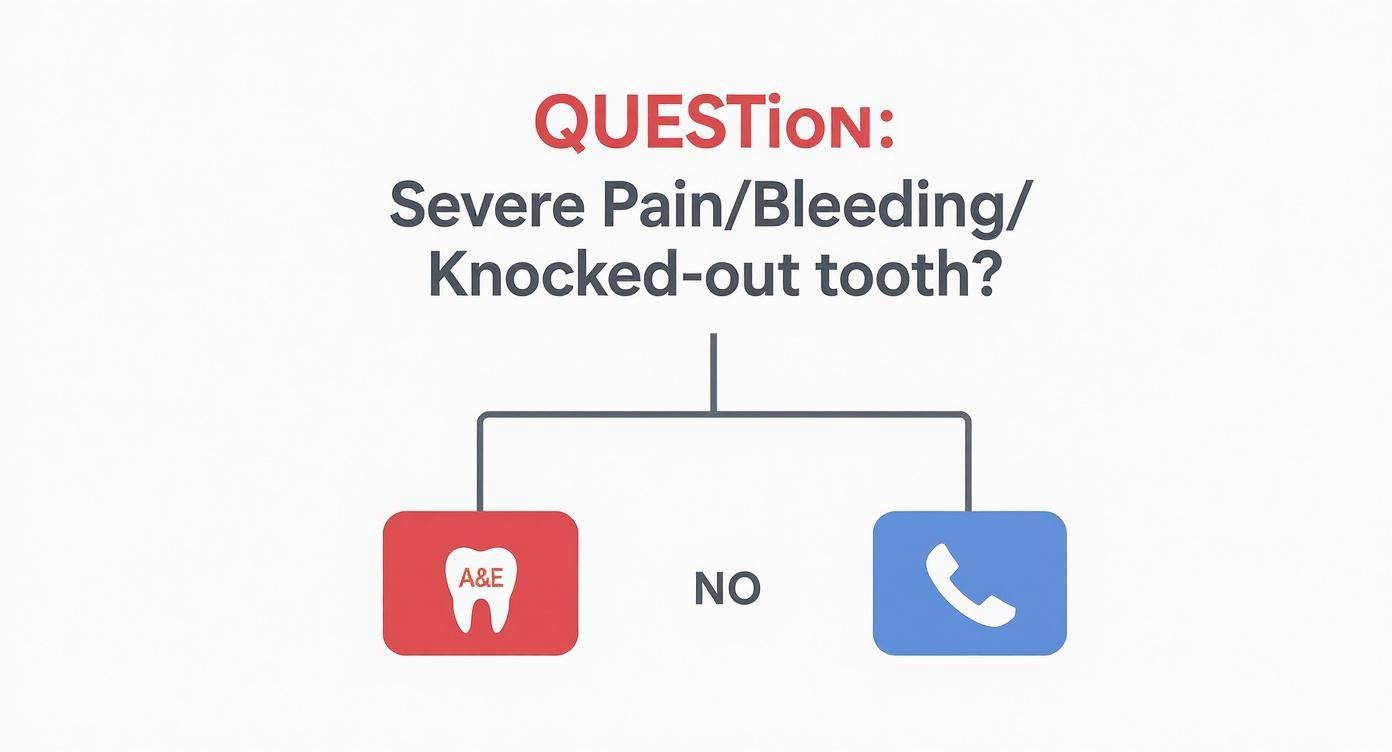
The main takeaway here is pretty simple: if it feels life-threatening—like severe trauma, unstoppable bleeding, or swelling that could affect your breathing—get to A&E immediately. For most other urgent problems, a dentist should be your first port of call.
Dental Emergency Triage: Should You Go to A&E?
When you're in pain and panicking, it’s hard to think clearly. Use this quick guide to assess your symptoms and decide whether to manage at home, seek urgent dental care, or head straight to A&E.
| Symptom | What It Could Mean | Your Immediate Next Step |
|---|---|---|
| Knocked-Out Adult Tooth | A time-sensitive trauma. | Go to an emergency dentist or A&E immediately. Handle the tooth by the crown (not the root) and store it in milk. |
| Severe, Persistent Toothache | A dental abscess or deep infection. | Call an emergency dentist. Avoid A&E unless you also have a high fever or facial swelling. |
| Heavy, Unstoppable Bleeding | Trauma to gums, tongue, or cheek. | Go to A&E straight away. This needs immediate medical attention. |
| Swelling in Jaw or Face | A serious, spreading infection. | Go to A&E. This could compromise your airway or become a systemic infection. |
| Lost Filling or Crown | The tooth is exposed and vulnerable. | Call a dentist for an urgent appointment. It’s not an A&E issue unless the pain is unbearable. |
| Chipped or Cracked Tooth | Varies from cosmetic to severe. | Call a dentist. If there's no pain, it can wait for a regular appointment. If painful, seek urgent care. |
Remember, A&E is for life-threatening or severe trauma cases. For most dental-specific issues, a dentist is far better equipped to provide the specialised care you need.
For so many of these urgent situations, getting a quick, professional diagnosis is the most important first step. This is where services like Toothfairy have become invaluable. They offer on-demand video consultations, letting you speak with a qualified dentist in minutes who can assess your situation and tell you exactly what to do next—all without you leaving your home.
This kind of immediate access bridges the gap between panic and having a clear plan. It's a smarter, more affordable way to handle dental emergencies, cosmetic work, or even teeth straightening.
Finding Emergency Dental Treatment in the UK: What Are Your Options?
When a dental emergency strikes, finding someone—anyone—to help can feel like an impossible task. You’re in agony, and the last thing you need is to spend hours calling around only to hear "sorry, we're fully booked." Let's walk through the usual routes for finding emergency care and be frank about the roadblocks you might face, before exploring a much faster alternative.
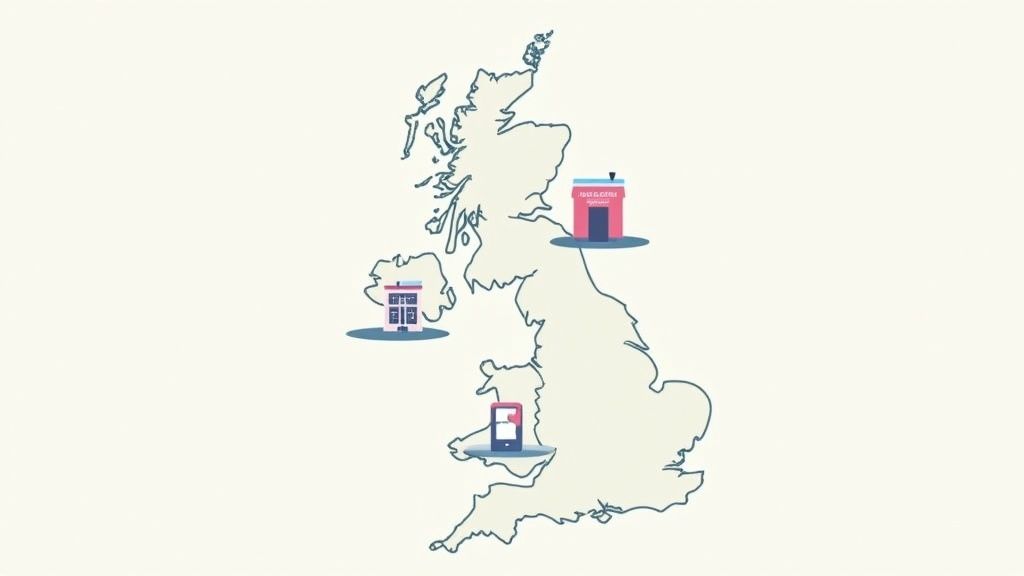
Your first thought is probably to ring your own dentist. If it’s during normal working hours, they should have a system in place to assess your situation. They’ll either squeeze you in or point you towards a partner practice that handles urgent cases.
If it’s after hours, you’ll likely get an answering machine message directing you to call NHS 111.
Trying to Navigate the NHS
The NHS does offer urgent dental services for people who need immediate care. Your main port of call is NHS 111, which you can reach online or by phone. They'll ask about your symptoms and, if they agree it's an emergency, will try to refer you to an urgent dental treatment centre.
But here’s the reality many people face: this process can be incredibly frustrating. The UK is in the middle of a major dental care crisis. Access to NHS dentists has become so difficult that it's now a public health issue, with some projections showing that over 40% of adults could struggle to get the treatment they need.
This has led to vast 'dental deserts' where almost no practices are taking on new adult NHS patients. Waiting times for emergency appointments can be agonizingly long. You can read more about the shocking state of UK dental access on wecovr.com.
Let's be honest: even with a genuine, painful emergency, getting an NHS appointment quickly is a real challenge. The long delays and lack of available slots often leave people feeling stranded and in pain.
This isn’t a knock on the dedicated NHS staff, but a reflection of a system that’s been pushed to its breaking point.
A More Direct Route to Help
When the traditional options are a dead end, you need a faster, more dependable solution. This is where a modern approach can completely change the game. An on-demand service like Toothfairy bypasses the system entirely.
Instead of battling with phone queues or waiting for a call that might never come, you connect straight to a qualified dentist through a video call on your phone.
This offers some massive advantages when you're in a tight spot:
- Instant Assessment: A professional dentist can diagnose your problem in minutes, not hours or days.
- Prescriptions Sorted: If you need antibiotics for a nasty infection or stronger painkillers, the dentist can send a prescription straight to your local pharmacy.
- Direct Referrals: Need to see someone in person? They can give you a referral letter for a specialist or help you find a local clinic with availability.
For many dental emergencies, getting that immediate expert advice is exactly what's needed. It's a smarter and often more affordable way to understand the problem and get a solid plan in place, without all the stress of the old system.
What to Do Before Your Emergency Dental Visit
When you're in the throes of a dental emergency, the pain can make it tough to think straight. I get it. But taking a few minutes to get organised before your appointment—whether it's face-to-face or a video call—can make a world of difference. It helps you stay calm and ensures the dentist can give you the best care, fast.
Before you even pick up the phone, grab a pen and paper or open the notes app on your mobile. We're going to make a quick list.
This simple act can be a lifesaver. When you’re in pain and flustered, it’s easy to forget something vital. Having your notes ready helps the dentist get a clear picture right away and make a more accurate diagnosis.
Getting Your Details in Order
When you have your key information ready to go, the dental team can get straight to solving your problem. This is especially true for a virtual consult, where the dentist is relying completely on what you tell and show them.
Here’s a quick rundown of what to have on hand:
- Your Medical History: Any major health conditions? Think diabetes, heart issues, or anything else that might be relevant. Just the headlines.
- Current Medications: List everything you're taking, including the dosage. Don't forget over-the-counter painkillers or supplements.
- Known Allergies: This is a big one. Be sure to mention any allergies, especially to things like penicillin or local anaesthetics.
- Dental Insurance: If you're covered, have your policy details handy.
This isn't just admin; it's about your safety. Certain health conditions or medications can impact how you heal or react to treatment, so it’s crucial information for the dentist to have.
Pro Tip for Video Consults: Take a few clear, well-lit photos of the problem area before your call. A good photo often gives the dentist a much better view of swelling, a crack, or discolouration than a live video feed can.
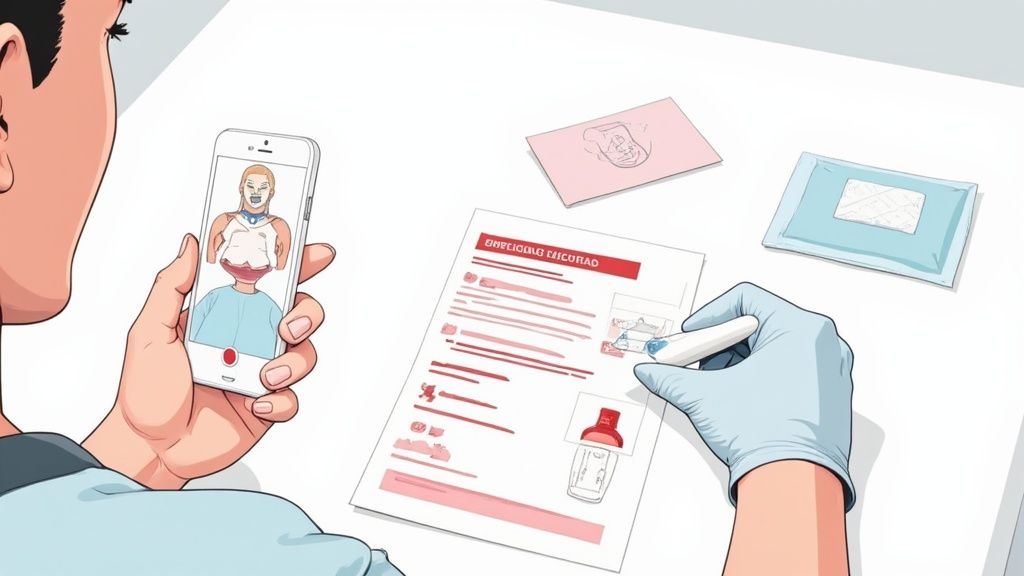
Services like Toothfairy have made it incredibly straightforward to get that initial expert assessment right from your phone. When you're searching for emergency dental care near me, knowing that immediate, professional advice is this accessible can be a huge relief.
Questions You Should Ask the Dentist
When you finally connect with the dentist, don't be shy. This is your chance to get the clarity you need to feel in control. You have every right to ask questions until you're confident you understand what's happening.
I always recommend patients ask things like:
- What exactly do you think is wrong?
- What are my treatment options, and which one do you think is best for me?
- Can you give me an idea of the costs involved?
- What can I do for pain relief at home, and what’s the aftercare?
A little bit of prep turns a scary, stressful situation into a manageable one. It makes you an active partner in your own care, ensuring you and your dentist are on the same page to get you out of pain and on the road to recovery.
What's This Going to Cost Me? A Look at Emergency Dental Fees
When you're in agony, the last thing you want to be thinking about is the bill. But let's be realistic—the fear of a massive, unexpected cost is a huge source of anxiety for most people. Getting a handle on the potential costs for emergency dental care in the UK can help you think clearly when every second counts.
Your options really boil down to two main routes: the NHS or private care. The price tags are worlds apart, so knowing what you're walking into can prevent a nasty shock later.
NHS Urgent Treatment Charges
If you’re able to get an urgent appointment with an NHS dentist, the pricing is straightforward. Right now, a course of urgent dental treatment in England costs a flat £26.80.
This single payment covers your assessment and whatever immediate care is needed to get you out of pain. That might be a temporary filling, draining an abscess, or getting a prescription for antibiotics. It's a simple, one-off fee designed to solve the immediate problem. Just keep in mind, this fee won't cover any follow-up work; that would be charged under a different NHS treatment band.
Navigating Private Dental Fees
Going private is your ticket to faster care, but the costs are far less predictable. Unlike the fixed NHS fee, private clinics set their own prices, and they can vary dramatically.
So, what drives the price up? A few key things:
- Your Postcode: Unsurprisingly, clinics in big cities like London or Manchester tend to charge more to cover their higher running costs.
- The Time of Day: An appointment on a Sunday evening will always be more expensive than one on a Tuesday morning. You're paying for the convenience.
- The Treatment Itself: A quick prescription is one thing. An emergency root canal or a tricky extraction is a completely different ball game, and the bill will reflect that.
Because of all this, just getting a private emergency consultation can set you back anywhere from £80 to over £200—and that’s before they’ve even started any treatment.
This is exactly why a service like Toothfairy can be such a game-changer. You start with an affordable, fixed-price video call. You get a proper diagnosis and professional advice without committing to a pricey in-person visit right away. It puts you back in the driver's seat, letting you figure out the best next step without the pressure of a ticking meter.
Beyond the treatment itself, don't forget about the potential impact on your income. It's worth knowing where you stand with things like Occupational Sick Pay if you need to take time off. A dental emergency is stressful enough without adding money worries to the mix. Having a clear picture of all the costs involved, from the clinic to your payslip, lets you focus on what really matters—feeling better.
The Struggle to Find an NHS Emergency Dentist is Real
Ever found yourself frantically Googling "emergency dental care near me" late at night, only to hit a wall of answerphones and "no appointments available" messages? You're not alone. It's a frustratingly common experience across the UK.
Getting a timely NHS appointment for an urgent dental problem has become a genuine national challenge. It’s not just a minor inconvenience; it's a systemic issue leaving millions of people in pain and feeling like they have nowhere to turn.
Why Are the Waiting Lists So Long?
For years, the demand for NHS dental services has simply outpaced the supply. Think of it as a bottleneck – the number of people needing immediate care is far greater than the number of available appointments, and the queue just keeps getting longer.
Even with recent government initiatives to create more urgent slots, the reality on the ground hasn't changed much for patients. NHS England has been working to improve access, but as officials themselves admit, services are still not back to pre-pandemic levels. You can read more about these efforts on the UK government's official page.
This chronic shortage means that for many, waiting just isn’t an option. When you're dealing with the agony of a dental abscess or have just knocked out a tooth, every hour feels like a lifetime. The traditional routes can often feel like a dead end, leaving you to either suffer through the pain or pay for expensive private care.
The heart of the issue is simple: the conventional system just wasn't built for the on-demand world we live in. When you’re in serious pain, you need a solution now, not an appointment in a few days' time.
It's Time for a Different Approach
When you understand the immense pressure the system is under, it becomes clear that we need new solutions. Waiting for a callback from NHS 111 while you’re in debilitating pain is an experience no one should have to endure. This is exactly where a service like Toothfairy comes in.
Instead of trying to navigate a complex and overloaded system, you can get straight to the point and connect with a qualified dentist on a video call in minutes. It gives you an immediate, reliable, and affordable first step.
From there, you can get a professional diagnosis, a prescription sent directly to your local pharmacy, or a clear plan for in-person treatment without all the frustrating delays.
For the countless people who can't get the care they need through the usual channels, this kind of direct access is a lifeline. It’s about taking back control when you’re in a crisis and getting the help you need, right when you need it.
Looking After Yourself After Your Emergency Treatment
Getting out of that immediate, intense pain is an incredible relief. But what you do in the hours and days that follow is just as critical for a good outcome. Proper aftercare isn't just a suggestion; it’s your roadmap to a quick, smooth recovery and helps you avoid any frustrating complications.
You’ve already done the hard part by getting the problem seen to. Now, a little bit of care will make sure that treatment really sticks. This is about more than just pain management – it's about giving your mouth the best possible chance to heal without a hitch.
Keeping Comfortable and Protecting the Area
It’s completely normal to feel some tenderness or sensitivity after a dental procedure. Your dentist will have given you specific instructions, but here are a few solid tips that almost always help.
- Pain Relief: For most things, a simple over-the-counter anti-inflammatory like ibuprofen does the trick. The key is to take it as directed, often before the pain really kicks in.
- Cold Compresses: A cold pack or even a bag of frozen peas wrapped in a tea towel is your best friend for the first 24 hours. Apply it to your cheek for 15 minutes on, then 15 minutes off. It's a game-changer for reducing swelling.
- Take It Easy: Your body heals when it rests. Try to avoid any heavy lifting or strenuous exercise for the rest of the day. Getting your heart rate up can sometimes increase bleeding or throbbing.
Your main job is to leave the treated area alone. It's tempting to poke it with your tongue or finger to see how it feels, but resist the urge! Be extra gentle when brushing near the site, too.
A critical part of aftercare is knowing what comes next. Don't leave your emergency treatment as a one-off fix. True dental health is about connecting that immediate solution to your long-term wellbeing.
The Importance of a Follow-Up
Your emergency appointment was all about getting you out of immediate trouble. But it’s often just the first step. That emergency extraction might be the precursor to a dental implant, or a temporary filling will need to be swapped for a permanent one down the line.
This is why follow-up care is so non-negotiable.
Booking that next appointment ensures the root cause of the problem is fully sorted, stopping it from coming back to bite you later. This is where a service like Toothfairy really shines. You can easily schedule a video check-in to see how you're healing or get a referral for any further restorative work you might need. It’s a brilliant way to bridge the gap between an urgent fix and a sustainable, long-term dental health plan.
Your Emergency Dental Questions, Answered
When a dental problem strikes, your mind can race with questions and worries. Getting clear, practical answers is the first step to feeling in control and making the right decision about finding emergency dental care near me. Let's tackle some of the most common queries we hear from patients in distress.
How Quickly Can I Actually See a Dentist?
This is usually the number one question, and honestly, it all comes down to the path you choose. Trying to find a same-day NHS appointment for an emergency can feel like searching for a needle in a haystack simply because the demand is so high. Private clinics are often a better bet for speed, but you'll pay a premium for that availability, especially after hours.
If you need advice right now, an on-demand video consultation is often the quickest solution. A service like Toothfairy can have you talking to a qualified dentist in a matter of minutes, giving you an immediate assessment and a plan of action without the anxious wait.
What if This Happens on a Saturday Night?
Dental emergencies seem to have a knack for showing up at the most inconvenient times, like over a weekend when your regular dentist is closed. The standard advice is to call NHS 111, but as we’ve already touched on, that doesn’t always lead to a swift appointment.
This is where virtual care really proves its worth. Imagine getting a proper diagnosis, a prescription for strong painkillers or antibiotics sent to your local pharmacy, and a referral for follow-up treatment, all from your sofa. It turns a weekend of worry into a manageable situation.
"The ability to speak to a professional dentist within minutes on a Saturday night is invaluable. It removes the panic and provides a clear plan, which is exactly what you need in that moment."
This isn't just an anecdotal problem; the struggle for access is real. NHS dentists delivered over 35 million treatments, with urgent cases accounting for roughly 10% of that. Yet, by mid-2023, only 40% of adults had managed to see an NHS dentist in the previous two years. That’s a huge gap. You can dig into the numbers yourself by looking at the official NHS dental statistics in England on the NHSBSA site.
Will I Definitely Need a Follow-Up Appointment?
In almost every case, yes. It's crucial to understand that an emergency visit is about putting out the fire—it stops the immediate pain and stabilises the problem. It’s the first, vital step, but it's very rarely the final one.
Think of it this way:
- A temporary filling is just that—temporary. It will need to be replaced with a permanent one.
- An infection managed with antibiotics still needs a root canal to treat the source.
- A gap left by an extracted tooth will likely need a long-term solution like a bridge or implant.
Emergency care is the first chapter of your recovery, not the whole story. Getting that follow-up care sorted is non-negotiable for your long-term oral health.
When you're facing a dental emergency, you need answers fast. Toothfairy provides on-demand video consultations with qualified UK dentists to give you immediate advice, prescriptions, and peace of mind. Get the expert care you need without the wait at https://www.toothfairyapp.co.uk.
Last updated on December 7, 2025

Dr. Deepak
ToothFairy Care Team.
Dr. Deepak
ToothFairy Care Team.