Dental Crown Fell Off? Your Calm Guide to Next Steps
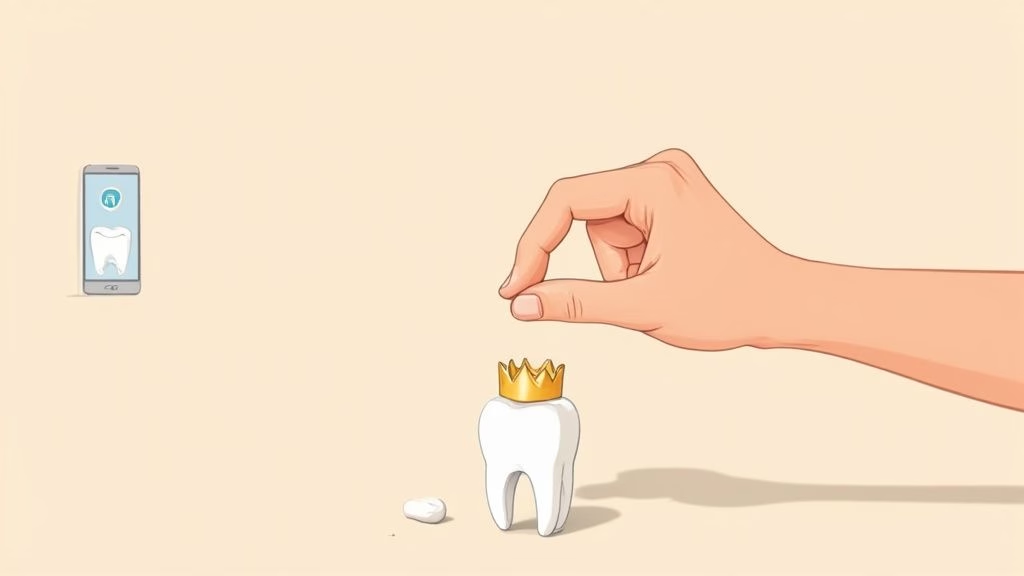
That moment of realisation—a loose, foreign object in your mouth that turns out to be your dental crown—can be quite a shock. It’s an unnerving feeling, but what you do in the next few minutes is really important. The key is not to panic. A calm head will help you protect the exposed tooth, save the crown, and manage any discomfort until you can see a dentist.
Think about it this way: your tooth is suddenly exposed. Without its protective cap, the sensitive inner structure is vulnerable to everything from bacteria to hot and cold temperatures, not to mention the pressure of chewing. Taking the right steps right away is about more than just finding the crown; it’s about safeguarding your tooth and the investment you’ve made in your dental health.
Your Immediate Action Plan After a Crown Falls Off
Retrieve and Protect Your Crown
First things first: find the crown. If it’s still in your mouth, carefully take it out so you don’t accidentally swallow or inhale it. It happens more often than you’d think.
Once you have it, give it a gentle rinse under lukewarm water. Avoid hot water, and definitely don’t use any harsh soaps, toothpaste, or chemicals. A simple rinse is all it needs. After it’s clean, pop it into a small, safe container—an old pill bottle or a little zip-lock bag works perfectly. This keeps it from getting lost or crushed. Bringing the crown with you to the dentist gives you the best chance of having it simply re-cemented, which is a huge time and money saver.
Assess the Situation and Stay Safe
With the crown safely stashed away, take a moment to look at the tooth in a mirror. Does anything look broken or jagged? It’s normal to feel some sensitivity to air or temperature, so don’t be alarmed if you do.
To keep the area clean, gently swish with a warm saltwater rinse—about half a teaspoon of salt dissolved in a glass of warm water is perfect. Steer clear of any alcohol-based mouthwashes for now, as they can really sting the exposed tooth surface.
The flowchart below gives you a quick visual guide on what to do, whether you’ve managed to find your crown or not.
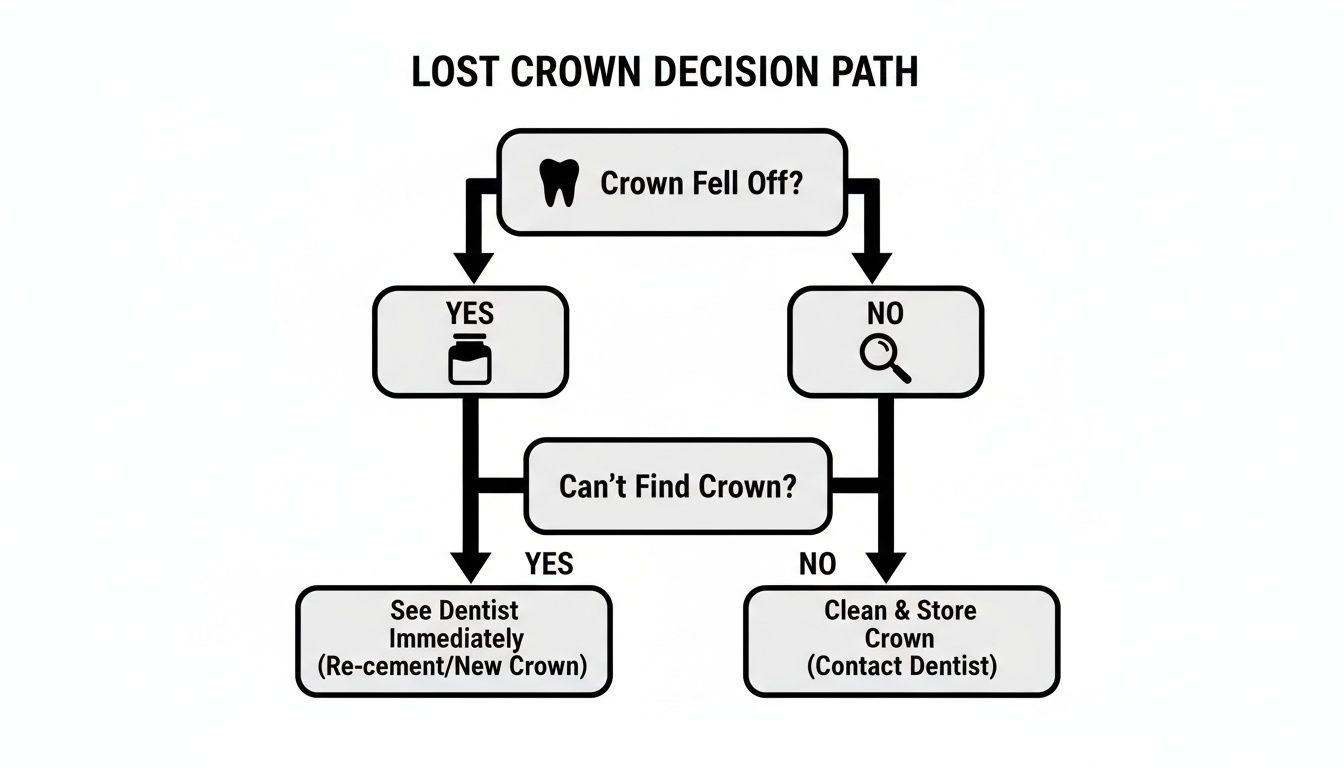
This chart helps simplify your next steps. While finding the crown is the ideal scenario, the most important thing is always to get professional advice from your dentist.
To make things even clearer, here’s a quick summary of what you should and shouldn’t do in the immediate aftermath.
Immediate Action Plan Do’s and Don’ts
| Action | What to Do (The ‘Do’s’) | What to Avoid (The ‘Don’ts’) |
|---|---|---|
| Handling the Crown | Carefully remove it from your mouth. Rinse it with warm water. Store it in a safe container. | Don’t scrub the crown or use harsh cleaners. Don’t wrap it in a tissue where it can be thrown away. |
| Caring for the Tooth | Gently rinse your mouth with warm salt water. Chew on the opposite side of your mouth. | Don’t use strong, alcohol-based mouthwash. Don’t chew sticky or hard foods on that side. |
| Temporary Fixes | Use dental cement from a pharmacy for a temporary hold only if you feel confident and there’s no pain. | Don’t use superglue or other household adhesives. They’re toxic and can damage your tooth permanently. |
| Next Steps | Call your dentist immediately to book an appointment. Explain the situation clearly. | Don’t ignore it. An exposed tooth is vulnerable to decay and further damage. |
Following these simple guidelines can make a huge difference in protecting your tooth and ensuring a smooth, straightforward fix when you get to the dentist’s chair.
So, Why Did My Crown Fall Off Anyway?
That horrible moment when you feel a crown come loose always sparks the same question: what just happened? Was it that chewy sweet, or is there a bigger problem? Getting to the bottom of why it happened is the key to making sure the fix actually lasts.
A crown is basically glued onto your tooth with a special dental cement. While it’s incredibly strong, it’s not invincible. After years of service, this cement can simply start to break down and lose its grip. But more often than not, it’s a bit more complicated than just old age.
Problems With The Tooth Underneath
Your natural tooth is the foundation holding the crown in place. If that foundation starts to crumble, the crown has nothing to hold onto. One of the most common culprits here is what we call secondary decay – a new cavity that forms right at the margin where the crown meets your tooth.
Sneaky bacteria can work their way into tiny, invisible gaps, starting to rot the tooth from underneath. Before you know it, there isn’t enough solid tooth structure left for the crown to hang on to, and off it comes. It’s a silent process you probably won’t feel until it’s too late.
Then there’s the sheer force we put our teeth through. Certain habits put a huge amount of stress on crowns and the cement holding them:
- Grinding Your Teeth (Bruxism): Lots of us grind or clench our teeth, especially at night when we don’t even realise it. That constant, heavy pressure can slowly break down the cement or even crack the crown or the tooth itself.
- Chewing on Hard Things: A classic mistake. Biting down on ice, hard-boiled sweets, or things you shouldn’t be chewing (like a pen lid) can create a sudden, sharp impact that’s enough to fracture the cement seal.
- A Knock to the Face: It goes without saying that an impact from playing sports or an accident can easily knock a crown clean off, no matter how well it was fitted.
When the Original Dental Work is the Issue
Sometimes, the problem has nothing to do with your tooth or your habits. It can stem from the original procedure itself. If the crown wasn’t a perfect fit from day one, it never had a truly secure seal. Similarly, if the cement didn’t bond properly to the tooth or the crown, it was only a matter of time before it gave way.
Unfortunately, issues with dental treatment are on the rise. England’s Parliamentary and Health Service Ombudsman noted a staggering 66% increase in complaints about NHS dentistry between 2017 and 2023, with poorly fitted crowns being a common theme. When a restoration doesn’t fit properly or the follow-up care is lacking, a crown falling off is often the result. You can find out more about the rise in UK dental complaints and their causes.
“Think of a loose crown as a symptom, not the actual problem. It’s a red flag from your tooth telling you that something underneath needs urgent attention—be it decay, excessive force, or a poor fit—before the situation gets more serious and more expensive.”
Figuring out the ‘why’ is crucial. It changes the conversation you have with your dentist from “Can you just stick this back on?” to “What’s the real issue here, and how can we stop this from happening again?”. Knowing the cause helps you both decide if a simple re-cementing will do the trick, or if there’s a bigger problem that needs sorting out first.
How to Manage Pain and Sensitivity at Home
When a dental crown comes off, it exposes the inner part of your tooth, the dentine. This layer is full of tiny, microscopic tubes that lead straight to the nerve. Suddenly, things like cold air, a hot drink, or even gentle pressure can send a sharp, jarring pain signal right to the tooth’s core. It’s an awful sensation, but there are definitely things you can do to get the discomfort under control while you wait to see your dentist.

For most people, the first port of call is the medicine cabinet. Over-the-counter painkillers like paracetamol or ibuprofen can work wonders. Ibuprofen is particularly useful here because it’s an anti-inflammatory, which means it helps reduce any swelling or irritation in the gum tissue around the tooth. Just be sure to follow the dosage instructions on the packet.
If you’re in this situation, you’re far from alone. The 2021 UK Adult Oral Health Survey revealed that 10% of adults experienced pain when biting. What’s really telling is the 87% spike in sales of at-home crown repair kits during the pandemic. It shows just how common this problem is and how many people need a quick fix.
Adjust Your Diet for Comfort
What you eat and drink can make the difference between manageable sensitivity and excruciating pain. The main goal is simple: don’t shock the exposed nerve.
- Go for Soft Foods: Anything that doesn’t require much chewing is ideal. Think scrambled eggs, soups, yoghurts, and smoothies.
- Embrace Lukewarm: Extreme temperatures are your biggest enemy right now. That steaming hot cup of tea or ice-cold glass of water will likely trigger a nasty jolt of pain. Room-temperature drinks are the way to go.
- Sidestep Sugar and Acid: Sugary foods and acidic drinks (like fizzy pop or fruit juice) can seriously irritate the exposed dentine and feed the bacteria you’re trying to keep at bay.
Gentle Cleaning and Soothing Rinses
Keeping the area clean is vital for preventing infection, but you have to be delicate. A warm saltwater rinse is one of the oldest and most effective tricks in the book.
Simply mix half a teaspoon of salt into a glass of warm water. Swish it gently around your mouth for about 30 seconds, a couple of times a day. This is a brilliant way to clean the tooth and soothe irritated gums without the harsh sting of an alcohol-based mouthwash.
Knowing when to use hot or cold can also make a big difference in managing dental discomfort. For more on this, it’s worth understanding the difference between heat and cold therapy. By combining these simple at-home strategies, you can turn a painful waiting game into a much more bearable experience.
Getting Professional Help Without the Wait
When your crown comes off, the last thing you want is to spend hours ringing around trying to find a dental practice that can actually see you. Let’s be honest, trying to secure an emergency appointment in the UK can be a real headache, adding a whole new layer of stress when you’re already worried about your tooth.
This is where a more modern approach to dental care really shines, offering a much smarter, faster path to getting the help you need.
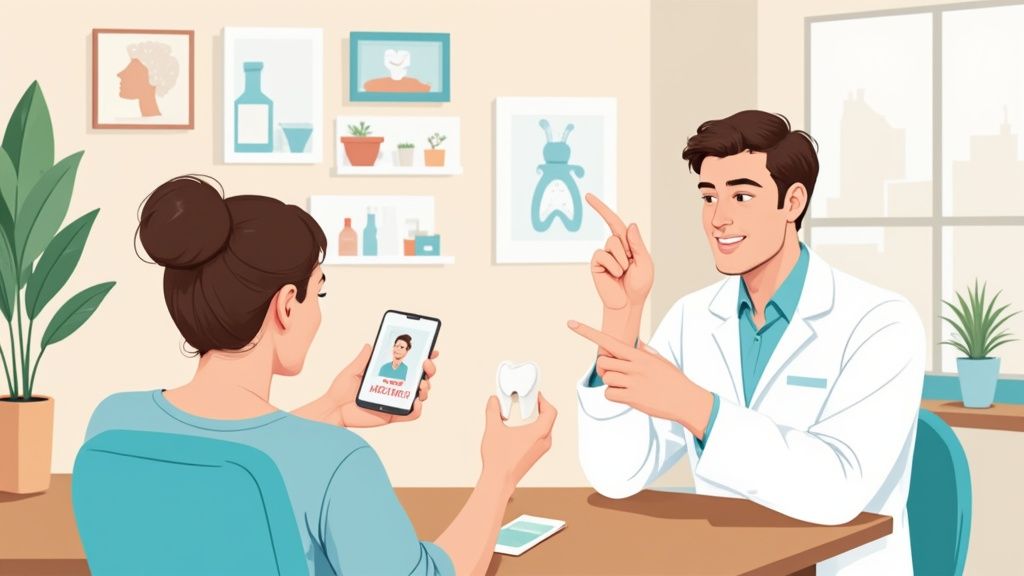
Instead of getting stuck in a phone queue or anxiously waiting for a callback, you can get immediate advice from a qualified professional right from your own sofa. It’s a way to bypass the usual bottlenecks and get some much-needed peace of mind.
The Power of an Emergency Video Consultation
Imagine this: within minutes of your crown coming loose, you’re connected directly with a UK-registered dentist. With a service like Toothfairy, this isn’t just a vague possibility; it’s precisely how dental emergencies can be handled now. An emergency video consultation lets a dentist see what’s going on using your phone’s camera.
This isn’t about dealing with a generic chatbot or a call centre agent. You’ll be speaking one-on-one with a real dentist who can:
- Visually inspect the tooth: They can look for any obvious signs of a fracture or serious decay underneath the crown.
- Assess your crown: You can show them the crown itself, and they can give you a professional opinion on whether it looks reusable.
- Provide personalised advice: Based on what they see, they’ll give you specific instructions for temporary care and managing any pain.
- Determine the urgency: Crucially, they can tell you just how quickly you need an in-person appointment, helping to prevent any unnecessary panic.
This initial video assessment is a complete game-changer. It delivers immediate, expert guidance without the anxiety of waiting for a clinic to open or for an appointment slot to free up.
For most people, the biggest fear is the unknown. A video consultation replaces that uncertainty with a clear, professional action plan. More often than not, it confirms the situation is manageable and not the catastrophe it first feels like.
Why This is a Better Solution
Let’s face it, traditional routes can be slow and clunky. Toothfairy, on the other hand, was designed by dentists to solve these exact problems by making expert care more accessible, whether you’re looking for cosmetic treatments, straighter teeth, or urgent care.
When a dental crown falls off, our service provides immediate benefits. You get a direct line to a professional who can prescribe any necessary medications, like painkillers or antibiotics if there are signs of infection. The prescription is sent straight to your local pharmacy, saving you a trip and getting you relief much faster.
Using a service like Toothfairy gives you a clear, calm assessment from a professional who genuinely understands what you’re going through. It’s the smarter way to handle a dental hiccup, ensuring you get the right advice right away and putting you back in control.
You can learn more about how to connect with a UK dentist online via the Toothfairy app and see just how simple it is to get the help you need.
What Will the Dentist Do, and What Will It Cost?
So, you’ve navigated the initial panic of a lost crown and spoken to a dentist. What happens next, and what should you expect to pay? The path forward really hinges on two things: the state of the crown and the health of the tooth underneath.
In a perfect world, it’s a simple fix. If your crown is in one piece and the tooth is healthy and decay-free, your dentist can often just clean everything up and re-cement it. This is your best-case scenario – quick, easy, and the most affordable option by far.
But let’s be honest, it’s rarely that straightforward. A crown usually comes loose for a reason, and that underlying issue needs to be sorted out first.
When Just Sticking It Back On Isn’t an Option
Sometimes, the old crown is a write-off, or the tooth itself needs some serious TLC before it’s ready to hold a crown again. A classic example is when decay has crept in under the edge of the old crown, eating away at the tooth structure. Before anything else can happen, the dentist has to meticulously remove all that decay and often rebuild the tooth with a new filling to create a solid, stable base.
You’ll likely need a brand-new crown if:
- Your original crown is damaged – think cracks, chips, or just significant wear and tear.
- The dentist finds a fair bit of decay hiding underneath.
- The original crown never really fit properly in the first place, which is probably why it came off.
Crafting a new crown is a two-step process. First, your dentist takes new impressions and fits a temporary crown to keep the tooth safe. Then, a dental lab gets to work creating your permanent, custom-made crown, which you’ll have fitted at a second appointment.
Getting to Grips with UK Dental Costs
The bill for fixing a lost crown can swing wildly. It all depends on what work is needed and whether you’re being treated by the NHS or a private dentist. Trying to figure out the costs can feel a bit like guesswork, so let’s break it down.
Here’s a key bit of advice: a simple re-cement might feel like a quick win, but if there’s an underlying problem like decay, it’s just a sticking plaster. Tackling the root cause is always the smartest and most cost-effective decision for your long-term dental health.
This table gives you a rough idea of what to expect, comparing typical NHS and private fees in the UK.
Typical UK Costs for Crown Repair and Replacement
| Treatment | Typical NHS Fee Band (England) | Estimated Private Fee Range |
|---|---|---|
| Re-cementing an existing crown | Band 2: £70.70 (often part of a broader course of treatment) | £80 – £150 |
| New filling and re-cementing | Band 2: £70.70 | £150 – £300+ |
| New replacement crown | Band 3: £319.10 | £650 – £1,200+ (depending on material) |
As you can see, the costs can escalate quickly, especially in the private sector. This is where modern dental solutions like Toothfairy really come into their own. By offering direct online consultations and transparent pricing for treatments, we help you sidestep the hefty overheads that often inflate private dental bills. It’s a much more straightforward and budget-friendly way to get the high-quality cosmetic or emergency dental care you need, without any confusing fee structures.
Keeping Your Crown Secure for the Long Haul
A well-fitted dental crown is a serious investment in your smile, designed to protect your tooth for years, if not decades. When one comes loose, it’s unsettling, and it’s definitely something you don’t want to go through again. The good news is, you have a lot of control over making sure it stays put.
It all starts with understanding just how much protection a solid crown offers. A study in the British Dental Journal really put this into perspective. It looked at teeth that had root canals and found that over the study period, none of the 67 crowned teeth failed. In stark contrast, teeth without crowns failed at a rate of one in twenty each year. That shows you just how vital a secure crown is for a tooth’s survival. You can read more about these findings on crown longevity for yourself.
Get Your Daily Hygiene Dialled In
Your toothbrush and floss are your crown’s best friends. It’s not just about brushing twice a day, but how you clean, especially around the margin—that tiny seam where the crown meets your tooth. Plaque loves to hang out there, and if it’s left alone, it can lead to decay underneath, destroying the very foundation your crown is attached to.
Flossing is absolutely essential, but your technique needs a slight tweak. Snapping floss up and out can easily catch the edge of a crown and gradually loosen it over time. Instead, try this:
- Gently slide the floss down between your teeth as you normally would.
- Then, instead of pulling it back up, simply release one end and pull the floss out from the side.
This small change makes a big difference. It cleans the space effectively without constantly yanking on the crown, helping to preserve that all-important cement seal.
Be Smart About What You Eat
Your diet has a direct impact on all your dental work. Crowns are tough, but they’re not invincible. Some foods place a huge amount of stress on them and the cement holding them in place.
Think carefully about anything excessively hard or sticky. Chewing on ice, crunching down on hard-boiled sweets, or wrestling with tough toffees can create enough force to either crack the porcelain or break the bond. It’s not about giving up your favourite foods, just being a bit more mindful.
Shield Your Crown from Grinding
If you grind or clench your teeth—a common condition called bruxism—you’re putting your crown under immense pressure, often for hours while you sleep. This is one of the top reasons crowns fail. The most effective way to tackle this is with a custom-made night guard from your dentist.
A night guard creates a soft, protective barrier between your upper and lower teeth. It absorbs the grinding forces, so your crown doesn’t have to. It’s a simple, comfortable solution that can prevent a world of pain and expensive repairs down the line.
Whether you need advice on cosmetic work, a smarter and more affordable way to straighten your teeth, or urgent help with a dental emergency, Toothfairy provides a modern solution. Connect with qualified UK dentists from the comfort of your home and get the expert care you deserve, without the wait. Learn more and book your consultation at https://www.toothfairyapp.co.uk.
Last updated on December 15, 2025

Dr. Deepak
ToothFairy Care Team.
Dr. Deepak
ToothFairy Care Team.