Broken Tooth Temporary Fix At Home

That sudden, sickening crunch of a tooth breaking is a feeling no one wants. It’s a moment of sheer panic. But what you do right away can make a huge difference, and a solid broken tooth temporary fix starts with simple, calm first aid.
The goal is to clean the area, stop any bleeding, and find the broken bits if you can. Getting these first steps right is key to managing the pain and stopping things from getting worse while you sort out professional help.
Your First-Aid Plan for a Broken Tooth
That sharp, unexpected crack is enough to make anyone’s heart race, but let’s focus on what you can control. Rather than dwelling on the damage, let’s walk through a clear, actionable plan to get you through the immediate aftermath safely. Your first priorities are simple: stabilise the tooth, get the pain under control, and get ready for what comes next.
Manage Pain and Bleeding
First things first, let’s get you comfortable and deal with the immediate shock of the injury.
- Rinse Carefully: Gently swish some warm salt water around your mouth. All you need is about half a teaspoon of salt dissolved in a glass of warm water. This will help clean the area without being too harsh and reduces the chance of an infection taking hold.
- Stop Any Bleeding: If it’s bleeding, grab a piece of sterile gauze or even a clean, damp tea bag and apply gentle, steady pressure to the spot. Hold it there for 10-15 minutes, or until the bleeding stops.
- Ease the Pain: Over-the-counter painkillers are your friend here. Paracetamol or ibuprofen can really take the edge off that initial throbbing pain. Just be sure to stick to the dosage instructions on the packet.
Protect the Damaged Tooth
Once the pain and bleeding are under control, the next job is to protect what’s left of the tooth from any more harm.
A broken tooth often leaves sharp edges that can easily cut your tongue, cheek, or lip. The break also exposes the sensitive inner parts of your tooth, which is why it might suddenly scream at you when you breathe in cold air or drink something warm. If you can find the piece that broke off, that’s a huge win – your dentist might even be able to bond it back on.
A Crucial Tip: If you find the broken fragment of your tooth, pop it into a small container with a bit of milk or your own saliva. Whatever you do, don’t let it dry out. Keeping it moist helps the cells on the fragment stay alive, which dramatically increases the odds of a successful repair.
Here in the UK, we all know how tough it can be to get an NHS dental appointment quickly. This has led to more and more people having to find temporary solutions at home. In fact, NHS 111 data for 2023/24 showed that calls for dental problems rocketed to over 1.2 million – that’s an average of 3,327 calls every single day. This really drives home how important it is to know these first-aid steps. You can read the full NHS report to get a better sense of the challenges with dental care access right now.
The table below breaks down these critical first steps into a simple, at-a-glance guide.
Immediate First Aid for a Broken Tooth
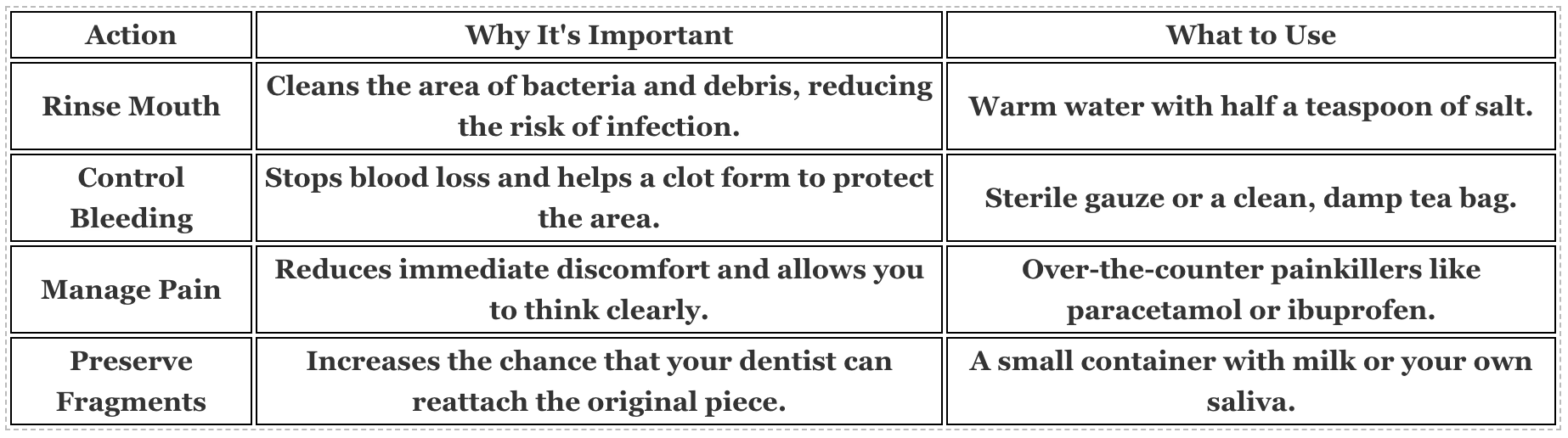
Taking these steps within the first hour can significantly improve the outcome and keep you more comfortable until you can see a professional.
This flowchart helps you visualise what to do straight away, depending on whether you’re dealing with pain or bleeding.
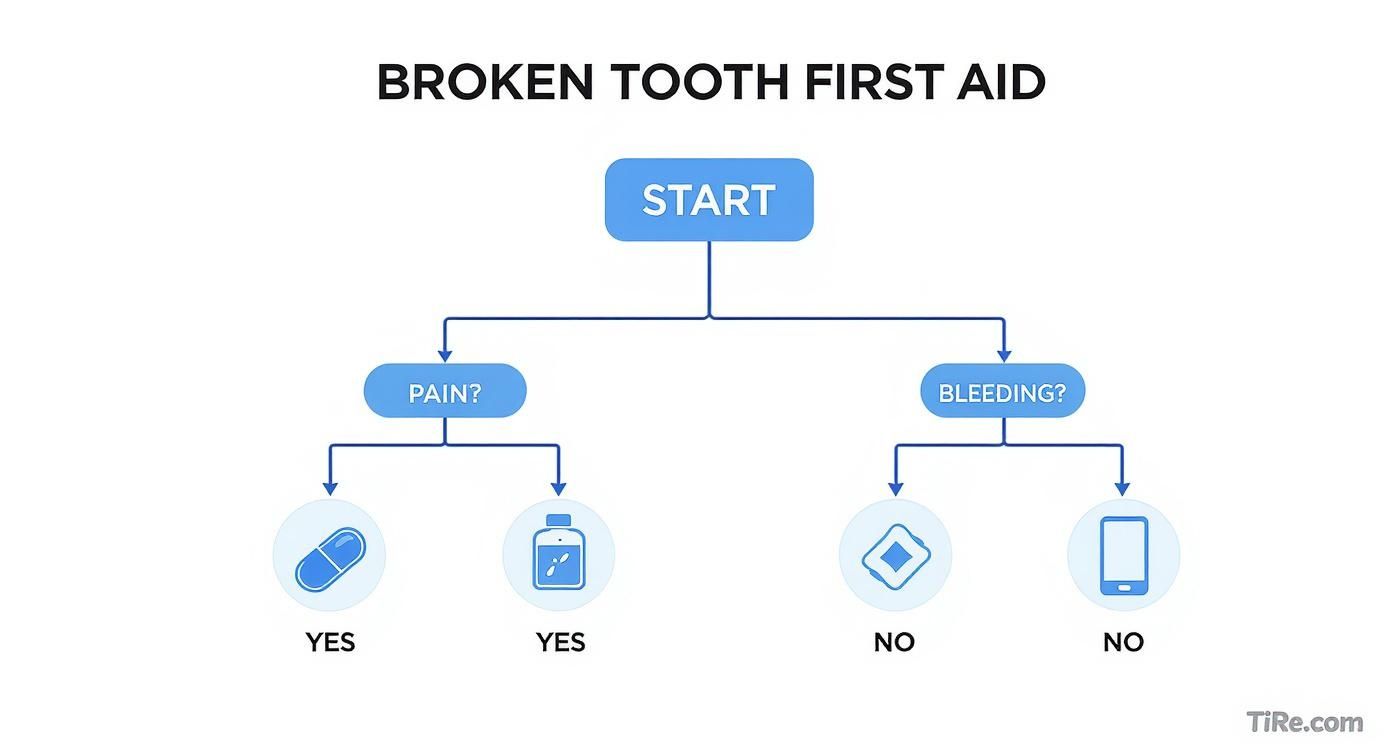
As you can see, the right initial response depends on your main symptom. It guides you to focus on either pain management or bleeding control as your very first step.
Safe At-Home Temporary Fixes
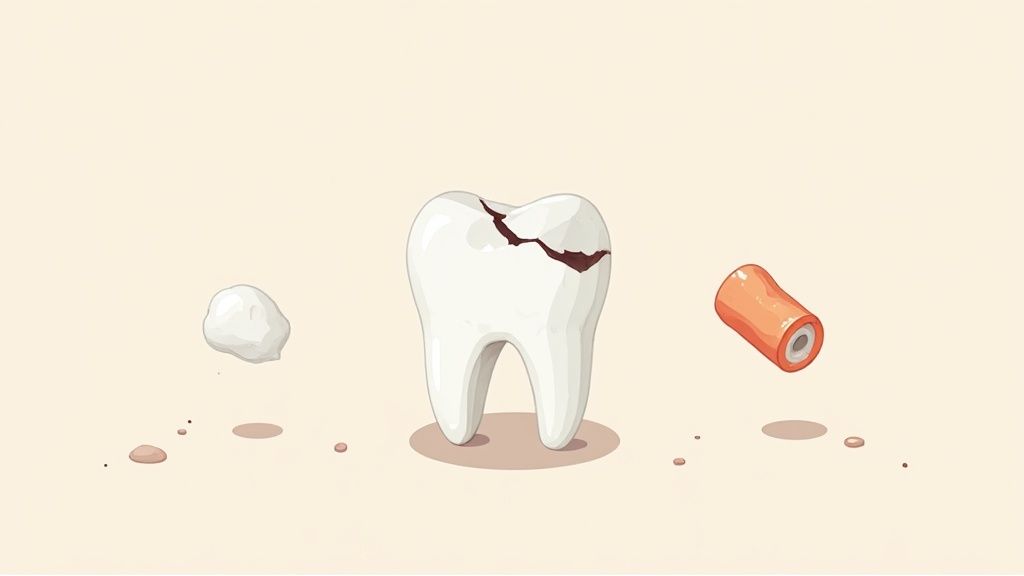
Once you’ve dealt with the immediate pain and bleeding, your next thought is likely, “What can I do about this now?” You need to protect the damaged tooth. This isn’t about fixing it for good, but about shielding it from further harm and making yourself more comfortable until a dentist can see you. Think of it like putting a plaster on a cut – it’s a crucial temporary barrier.
The goal of a broken tooth temporary fix is twofold: cover any sharp edges that could cut your tongue or cheek, and seal the sensitive inner parts of the tooth from air, bacteria, and temperature shocks.
Choosing Your Temporary Shield
You can find a few effective short-term options at most pharmacies, usually tucked away in the dental care aisle.
Your best bet is an over-the-counter temporary dental cement. These kits are made specifically for this kind of emergency. They’re generally easy to handle, harden quite quickly, and provide a reasonably durable cover that can smooth over a sharp edge or fill a small chip.
If you can’t get your hands on a dental kit, other items can work in a pinch. Orthodontic wax is a fantastic alternative. It’s soft, easy to mould, and designed to be in your mouth. Just warm a small piece between your fingers and gently press it over the damaged part of the tooth.
And if you’re truly stuck with nothing else, a piece of sugar-free chewing gum can offer a very brief reprieve. Chew it until it’s soft and then press it onto the tooth (make sure the tooth is dry first!). This is a last resort, mind you, as it won’t last long at all.
Comparing At-Home Temporary Fixes
With a few options available, it helps to know which one might be best for your specific situation. Here’s a quick rundown of what you might find at the chemist or already have at home.
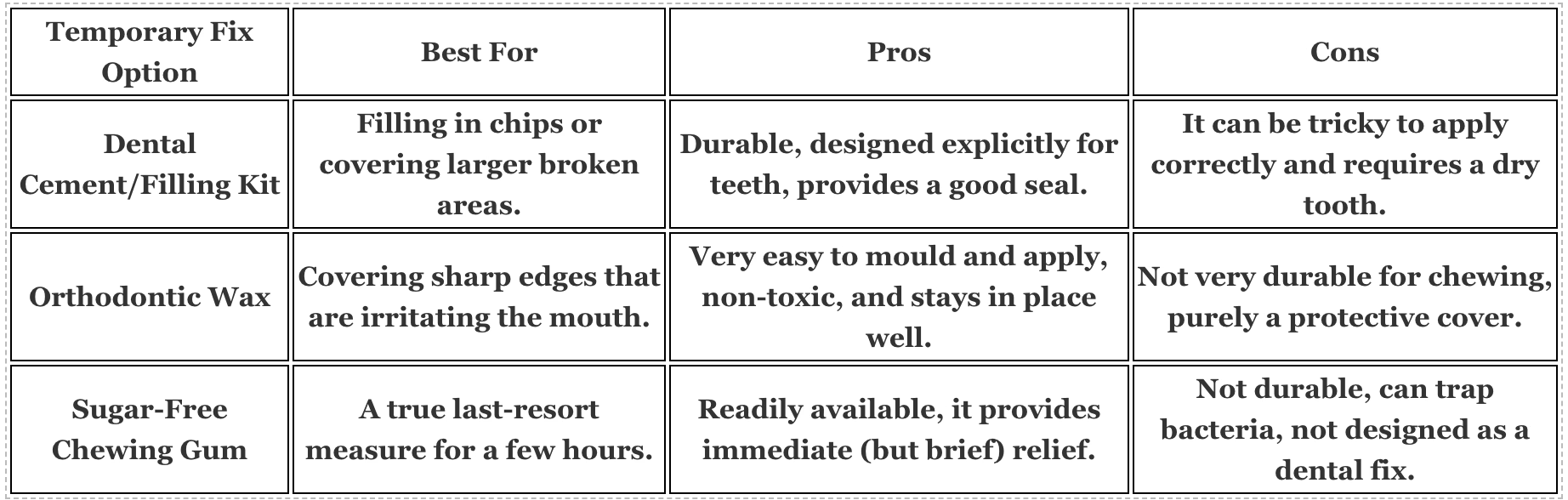
Ultimately, a proper dental cement kit is the superior choice for both protection and durability while you wait for an appointment.
How to Apply Your Temporary Fix
Before you put anything on the tooth, you need to prep the area. Gently rinse your mouth with warm salt water, then carefully pat the tooth dry with a clean bit of gauze or a cotton bud. Moisture is the enemy here – a dry surface is absolutely essential for getting the material to stick.
If you’re using a dental cement kit:
- Read and follow the package instructions to the letter.
- Mix the material if needed and roll a small amount into a ball.
- Gently but firmly press it into the damaged area, making sure it fills the gap without creating a high spot.
- Bite down very carefully to check that your bite feels normal before the material sets completely.
These at-home fixes have become a real necessity for many. The struggle to get a timely NHS appointment is well-documented. In the North West of the UK, for instance, a staggering 94% of NHS dental practices were not accepting new adult patients, with some waiting lists stretching beyond 12 months. You can explore more data on NHS dental access in England to see just how widespread the issue is. This situation often forces people to rely on these temporary solutions to manage pain while they wait.
Important Reminder: These are not permanent solutions. They are designed to buy you time and protect your tooth for a few hours or, at most, a few days. The real damage is still there and needs to be assessed by a qualified dentist to prevent infection, more breakage, or even losing the tooth. Your next step should always be getting a professional opinion, even if it’s a quick video call with a service like Toothfairy, to figure out what to do next.
Common Mistakes to Avoid With a Broken Tooth
When a tooth breaks, it’s easy to panic and make a bad situation worse. What you don’t do in these first few moments is just as crucial as what you do. The right moves can keep things manageable, but a few common mistakes can turn a simple fix into a painful and expensive ordeal.
The absolute worst thing you can do is reach for the superglue. I know it sounds tempting – a quick dab to stick the fragment back on – but it’s incredibly dangerous. Household glues are full of toxic chemicals that have no business being in your mouth. Not only can they poison you, but they can also permanently damage the tooth structure, making a professional repair much harder, if not impossible.
Don’t Make the Pain Worse
A broken tooth often leaves the sensitive inner layers exposed, and the nerve underneath is on high alert. Your goal is to soothe it, not send it into shock.
Sudden temperature changes are the enemy here. That sip of icy water or a hot cup of tea can send a lightning bolt of pain straight through your jaw. For now, stick to lukewarm drinks and soft foods. Think room-temperature water and things that don’t require much chewing.
It’s also natural to want to poke at the sharp edge with your tongue or finger to see how bad it is. Resist the urge. You’re just introducing bacteria to a vulnerable area and could easily make the fracture worse or knock out any temporary filling you’ve managed to apply. Just leave it alone.
Habits That Can Lead to Bigger Problems
It’s tempting to try and carry on as normal, but you need to protect that damaged tooth until a dentist can see it.
- Stop chewing on that side of your mouth. It sounds obvious, but it’s an easy mistake to make. Any pressure on the weakened tooth could cause the crack to deepen or another piece to shear off.
- Don’t use your teeth as tools. Ripping open a packet or biting a tag off clothing is never a good idea, but it’s especially risky when a tooth is already compromised.
- Don’t put off getting professional advice. A temporary fix is exactly that—temporary. Even if the pain fades, ignoring the problem gives bacteria a direct route into your tooth, which can lead to a nasty infection or a painful abscess down the line.
Delaying proper care is a huge mistake. In the UK, we’re seeing a worrying rise in hospital admissions for dental emergencies, especially among kids. In 2024/25, a staggering 21,162 children aged 5 to 9 were admitted for tooth decay—that’s 65% higher than any previous year on record. This is often the end result of a small problem that wasn’t treated properly. You can learn more about the rise in childhood dental hospitalisations to understand why professional follow-up is so critical.
When Your Broken Tooth Is a Real Emergency
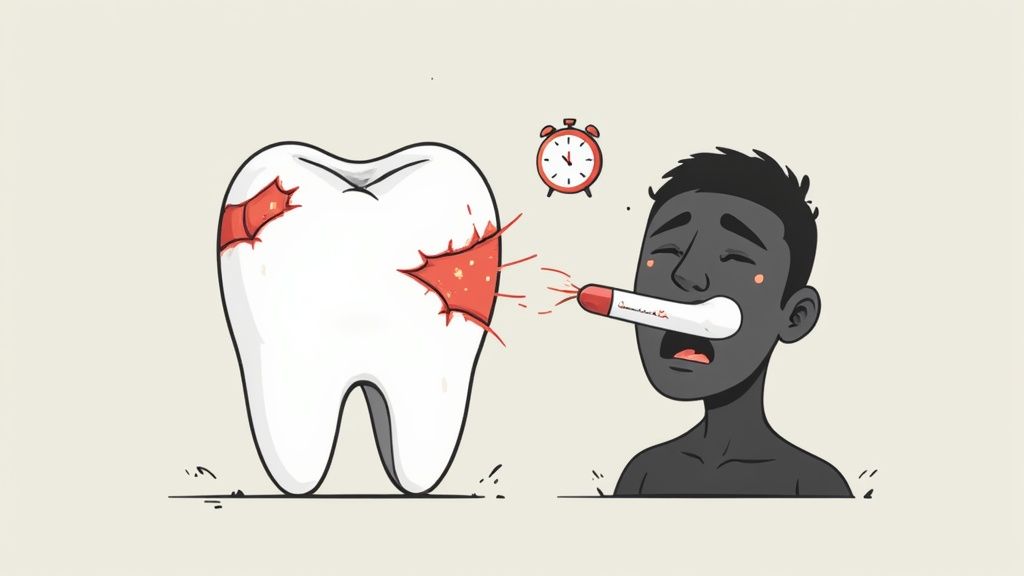
A tiny chip on a tooth is one thing, but some breaks are far more serious. It’s vital to know when you’re dealing with a genuine dental emergency that needs a professional right now. A temporary fix can only get you so far, and understanding the difference between a simple inconvenience and a major red flag is key to protecting your overall health.
Ignoring the serious signs can lead to some nasty complications that spread well beyond your mouth. So, how do you know when it’s time to panic? It really comes down to a few key symptoms. If any of these sound familiar, you need to get professional advice, and fast.
Spotting the Red Flags
The most obvious warning sign is severe, relentless pain. I’m not talking about a bit of sensitivity, but that deep, throbbing ache that over-the-counter painkillers just won’t shift. Pain at that level is your body screaming that the damage is deep, likely hitting the nerve of the tooth.
Another clear sign of an emergency is if a large chunk of your tooth has broken off. If you can see the yellowish layer of dentin, or worse, the reddish inner pulp, you need immediate help. This kind of major break leaves the delicate nerve completely exposed to bacteria and a high risk of infection.
Your body is pretty good at telling you when something is seriously wrong. If you start developing a fever, notice swollen glands in your neck, or see any swelling in your face or gums, the problem has moved beyond your tooth. This is now a systemic issue that needs urgent medical or dental attention.
When a broken tooth involves this kind of pain or trauma, knowing where to find emergency dental services is crucial for getting the care you need without delay.
When to Seek Immediate Care
Some symptoms simply cannot be ignored. Waiting to see if things get better is a gamble you don’t want to take, as the situation can escalate quickly into something much more dangerous.
You absolutely need to seek immediate care if you have:
- Intense, Throbbing Pain: The kind that wakes you up at night and doesn’t respond to your usual painkillers.
- Signs of Infection: Any swelling in your face, jaw, or around the tooth is a major warning. A bad taste that won’t go away, pus, or a fever are also serious signs.
- Exposed Pulp: If you look at the tooth and can see the pink, fleshy tissue inside, you’re looking at a direct route for bacteria to cause a painful abscess.
- Difficulty Breathing or Swallowing: This is a rare but life-threatening symptom. It suggests a spreading infection is starting to block your airway. Don’t hesitate—go straight to A&E.
In these urgent situations, a service like Toothfairy can be a real lifeline. They offer emergency video consultations, letting a qualified dentist see the damage and tell you exactly what to do next, all from your own home.
Getting Proper Professional Care The Smart Way
Let’s be clear: any fix you do at home is just a temporary stopgap. It’s a fantastic bit of first aid, but it’s not the final solution. The real goal is to get a professional, permanent repair from a qualified dentist. Here’s how you can do that without the usual stress and panic.
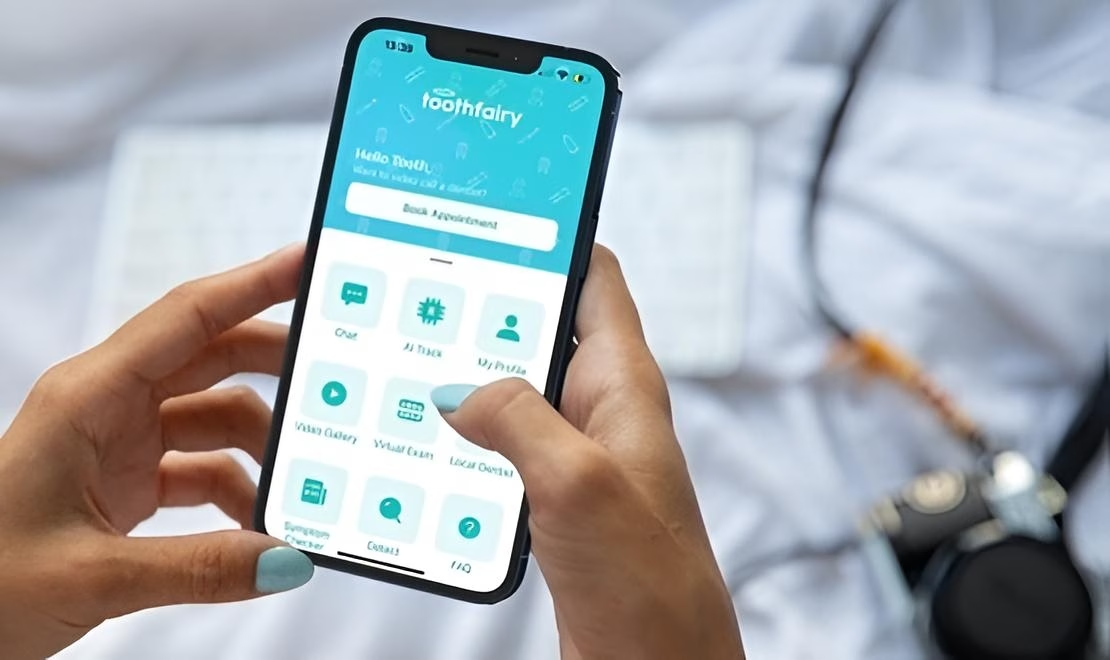
Instead of frantically ringing around trying to find an emergency in-person slot, services like Toothfairy have completely changed the game. You can jump on an urgent video call with a dentist from your own living room, often within a matter of minutes.
Why You Can’t Skip the Dentist
That temporary patch is brilliant for getting you out of immediate trouble, but it doesn’t solve the root cause of the problem. A broken tooth is a compromised tooth. It’s now vulnerable to infection, at risk of breaking even more, and could even lead to tooth loss if you ignore it.
Getting a professional opinion isn’t just a good idea; it’s absolutely essential for protecting your long-term oral health. The old way meant a panicked search for an open appointment, a stressful journey, and a long wait in a clinical-smelling room. Thankfully, modern dentistry offers a much less daunting path.
The Power of an Urgent Video Consultation
Picture it: that sharp edge is digging into your tongue and a dull throb is starting to build. Instead of just worrying, you open an app and are face-to-face with a UK-registered dentist almost instantly. That’s the real magic of tele-dentistry.
With a Toothfairy video consultation, here’s what you can expect:
- An Instant Triage: The dentist can look at the damage through your phone’s camera and give you a professional take on how serious it is. No more guesswork.
- Quick Prescriptions: If there’s a risk of infection or the pain is becoming unmanageable, they can send an electronic prescription for antibiotics or stronger painkillers straight to your local pharmacy.
- A Solid Action Plan: You’ll hang up the call knowing exactly what your next steps are. This could be booking a specific type of follow-up treatment or simply getting advice on how to manage things until a routine appointment.
This immediate access to expert advice is a game-changer. It perfectly bridges the gap between your DIY fix and a proper, long-term solution, replacing anxiety with a clear, dentist-approved plan.
This is especially helpful because a simple-looking chip can sometimes hide a much deeper fracture below the surface. Once you’ve got the immediate situation under control, learning about how to professionally fix a chipped tooth will give you a better idea of what the dentist might suggest for a permanent repair.
A Modern Approach for All Dental Needs
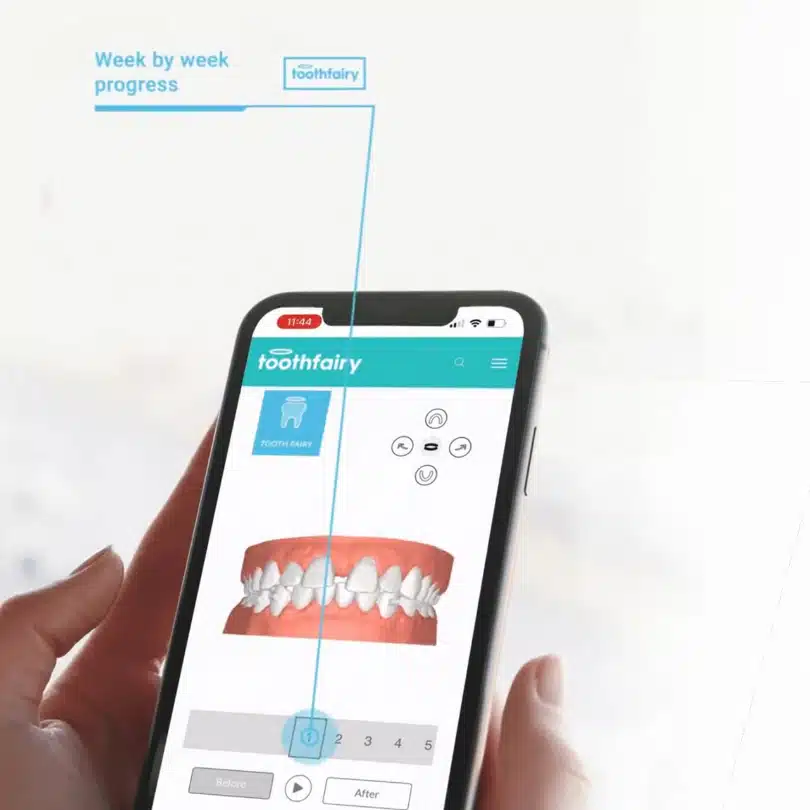
This smarter, more convenient way of thinking isn’t just for emergencies. If you’re looking into cosmetic treatments like teeth straightening, platforms like Toothfairy are often a more affordable and practical choice compared to older, more rigid systems.
Some well-known aligner brands still rely on lots of expensive, time-consuming in-person visits. With virtual monitoring, the whole process becomes far more efficient and fits into your real life. Whether it’s a broken tooth or a smile you want to improve, getting expert care shouldn’t feel like a chore.
Got Questions About Your Broken Tooth? We’ve Got Answers
When a tooth breaks, your mind is probably racing with questions. It’s a stressful situation, and having clear, reliable information can make all the difference. Let’s tackle some of the most common concerns we hear from patients.
How Long Can I Really Wait to See a Dentist?
This is the big one, isn’t it? A temporary fix is great for getting you through the immediate aftermath, but it’s not a permanent solution. If it’s a tiny chip and you’re not in any pain, you should still book a dental appointment within the week. Don’t let it slide.
However, if you’re in a lot of pain, your face is swelling, or a big chunk of the tooth has sheared off, this is much more urgent. You really need to get professional advice within 24 to 48 hours. A deep crack or an exposed nerve is an open invitation for bacteria, and a nasty infection can take hold faster than you’d think.
Is There Any Chance My Broken Tooth Will Heal Itself?
I wish I could say yes, but unfortunately, teeth can’t heal themselves like bones do. The enamel—that tough outer shell—has no living cells to regenerate or repair the damage. Once it’s chipped, cracked, or broken, that’s it. A dentist is the only one who can fix it.
A word of caution: if the pain suddenly disappears, don’t assume the problem has fixed itself. It’s more likely the nerve inside the tooth has died, which can lead to a serious (and often painless) abscess. Always, always get a broken tooth checked, even if it stops hurting.
What if I’ve Swallowed the Broken Bit?
First off, try not to panic. This is incredibly common. A small piece of tooth is almost certain to pass through your digestive system without any issues at all. The main downside is that your dentist won’t have the fragment to see if it can be reattached.
The only real danger, though it’s very rare, is inhaling the piece into your lungs. If you find yourself coughing uncontrollably or struggling to breathe after the incident, seek immediate medical help to make sure that hasn’t happened.
Should I Still Be Brushing My Teeth?
Yes, absolutely. Keeping your mouth clean is more important than ever to prevent infection from setting in around the damaged tooth. You just need to be a bit more careful.
Use a soft-bristled toothbrush and be very gentle around the broken area. No vigorous scrubbing. Rinsing with warm salt water after you brush is also a great way to soothe the area and keep it clean. Your aim is to keep bacteria away without knocking off your temporary patch-up job or causing more damage.
Breaking a tooth is always alarming, but it doesn’t need to turn into a full-blown crisis. By taking the right steps immediately and seeking professional advice quickly, you can manage the situation without the drama.
For an expert opinion on what to do next, you can connect with a qualified UK dentist in minutes through a Toothfairy on-demand video consultation. We’ll help you get from a temporary fix to a proper, long-term solution. Find out more at https://www.toothfairyapp.co.uk.
Last updated on December 1, 2025

Toothfairy Care Team
Toothfairy, is the world's smartest dental app, that connects patients to a dentist for a range of issues, from emergencies, cosmetics, prescriptions to virtual exams.
Toothfairy Care Team
Toothfairy, is the world's smartest dental app, that connects patients to a dentist for a range of issues, from emergencies, cosmetics, prescriptions to virtual exams.