Braces Price in UK Your Complete Cost Guide
Thinking about straightening your teeth? The first question that probably springs to mind is, "How much are braces in the UK?" The truth is, there's no single price tag. You could pay anything from nothing at all – if you're eligible for free NHS treatment under 18 – to upwards of £7,000 for high-end private care.
The final figure really comes down to two things: the type of brace you go for and how much work your teeth need.
A Quick Guide to Braces Prices in the UK
Deciding to get a straighter smile is a big step, and getting a handle on the costs is a crucial part of that journey. The price isn't set in stone; it's more of a scale that depends on the technology used, how long you'll need the treatment, and whether you go down the NHS or private route.
For most adults, private treatment is the way to go. This opens up a whole world of options, from the traditional metal "train tracks" to more subtle ceramic braces or even completely hidden lingual braces. Then you have the modern clear aligners, offered by various brands, which have become popular because they're discreet and convenient.
Your Options at a Glance
But not all clear aligner systems are created equal, especially when it comes to cost. High-street brands often carry a hefty price tag to cover expensive clinic appointments and overheads. This is where smarter, more affordable ways to straighten teeth, like Toothfairy, are really shaking things up.
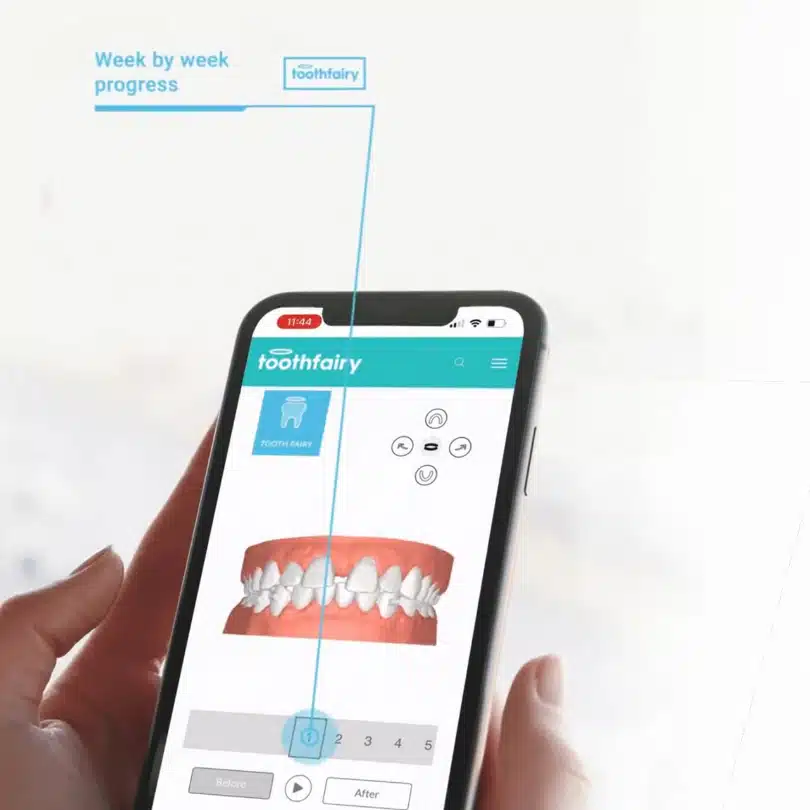
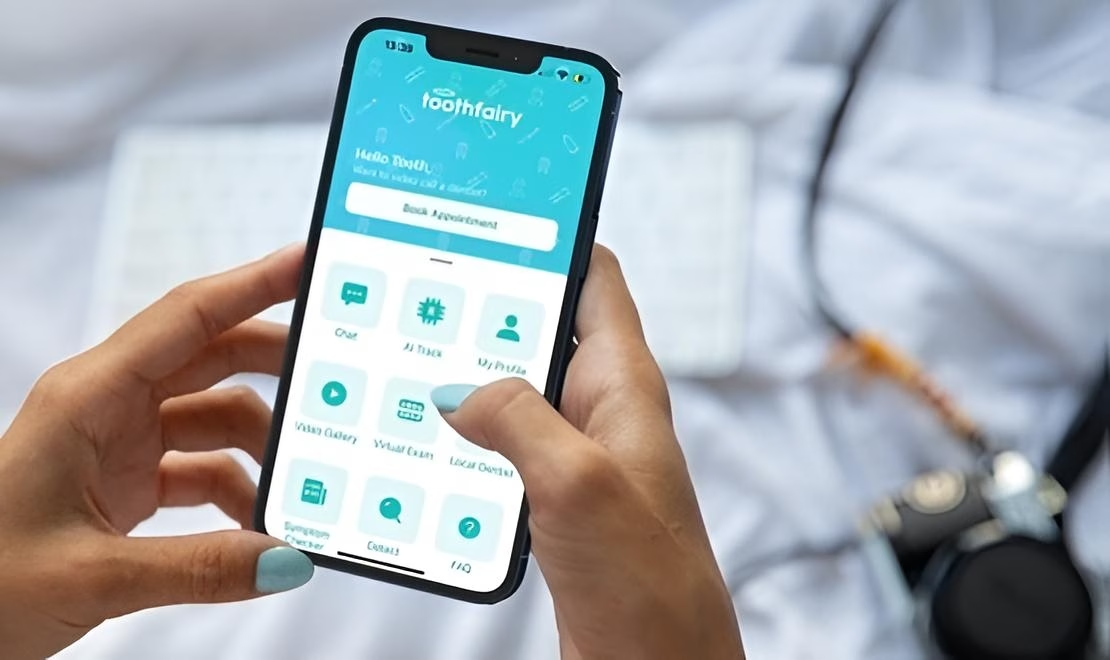
By using an app to connect you directly with UK-registered dentists for remote supervision, many of the traditional clinic costs are stripped away. This makes professional teeth straightening much more affordable, without cutting corners on safety or quality.
To give you a clearer picture, let's break down the typical costs.
Average UK Braces Cost at a Glance
This table gives you a quick snapshot of what you can expect to pay for different types of braces through private treatment. Think of it as a starting point to help you see how the options stack up before we dive into the details of each one.
| Brace Type | Typical Private Cost Range | Ideal For |
|---|---|---|
| Traditional Metal Braces | £1,800 – £3,500 | Very effective for complex cases; the most budget-friendly fixed option. |
| Ceramic Braces | £2,500 – £4,500 | A more discreet look with the power of fixed braces. |
| Lingual Braces | £4,000 – £7,000+ | Completely invisible, as they are fitted to the back of your teeth. |
| In-Clinic Clear Aligners | £3,000 – £5,500 | Removable and subtle, but requires regular trips to the clinic. |
| Toothfairy Clear Aligners | From £1,199 | A smarter, more affordable remote option for mild to moderate straightening. |
As you can see, the costs vary quite a bit. What's right for you will depend on your budget, how complex your case is, and whether you prefer a fixed brace or the flexibility of a removable aligner.
Breaking Down the Cost of Each Brace Type
When you're trying to figure out the price of braces in the UK, the first thing to know is that not all braces are created equal. The single biggest factor that will influence the final bill is the type of brace you choose. Each option strikes a different balance between aesthetics, effectiveness, and, of course, cost.
Let's get into the real-world costs of the most common types of braces you'll find, from the old-school workhorses to the latest tech-driven solutions.
Traditional Metal Braces: The Dependable Choice
When most of us picture braces, it’s the traditional metal ones that come to mind. These are the classic "train tracks," built from high-grade stainless steel brackets and wires. They’ve stuck around for a reason: they are incredibly strong and efficient, making them brilliant for correcting even the most complex dental problems, from severe crowding to major bite issues.
But their biggest selling point for many is the price. In the private sector, metal braces are consistently the most budget-friendly fixed orthodontic option you can get.
- Average Private Cost: £1,800 – £3,500
- Best For: All kinds of alignment issues, especially tricky cases, and anyone looking for the most cost-effective fixed solution.
- Key Consideration: While they get the job done brilliantly, they are the most noticeable type of brace.
This visual breakdown shows the different cost pathways you can take for dental treatment here in the UK.
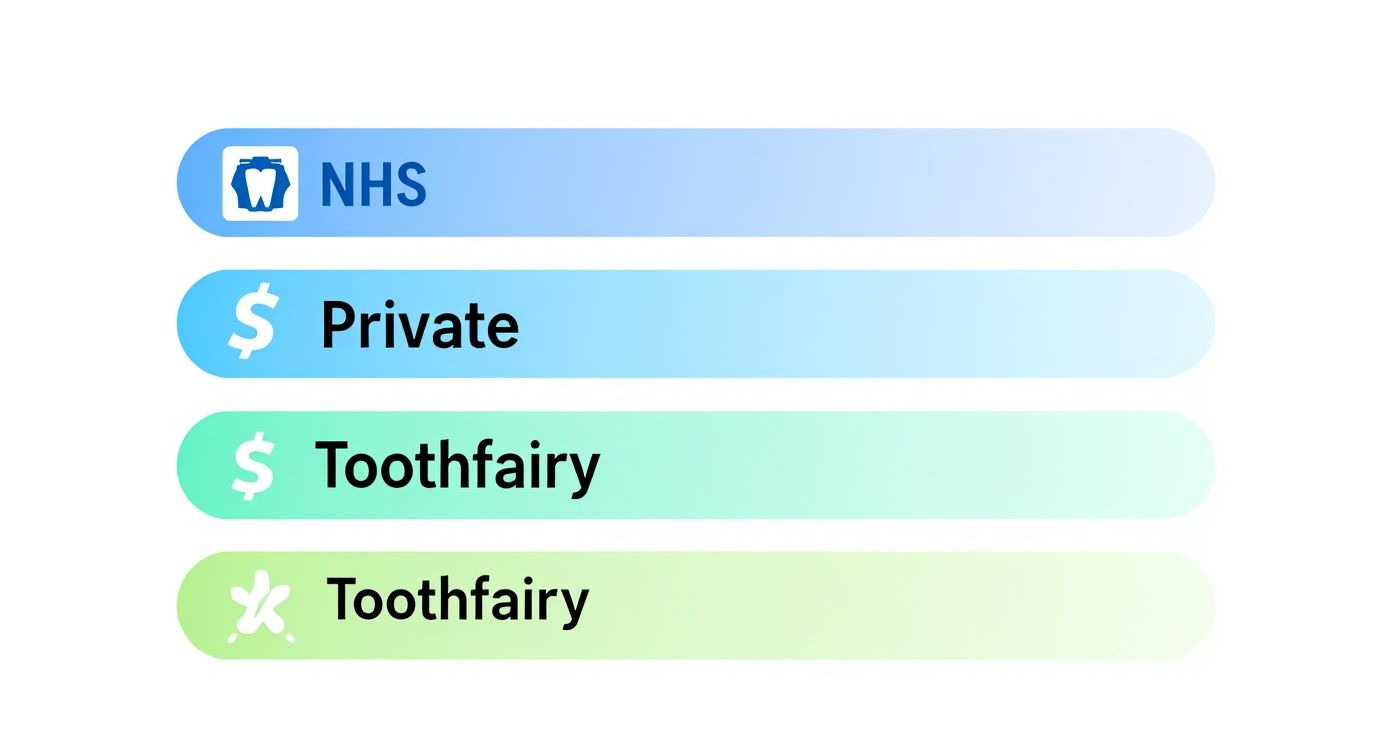
As you can see, app-based routes like Toothfairy can offer a much more affordable starting point compared to what you'd typically expect to pay at a private clinic.
Ceramic Braces: A More Discreet Alternative
For those who need the corrective power of a fixed brace but would rather not have a mouth full of metal, ceramic braces are an excellent middle ground. They work in exactly the same way as their metal cousins, but the brackets are made from a clear or tooth-coloured ceramic material. This means they blend in with your natural teeth, making them far less obvious.
This cosmetic upgrade does come at a slightly higher cost. This is down to the more expensive materials and the extra care required when fitting and adjusting them.
Ceramic braces offer a fantastic compromise. You get the robust, reliable function of traditional braces but with a much more subtle appearance during treatment. It’s no surprise they're a popular choice for adults who feel a bit self-conscious about wearing very visible braces.
Lingual Braces: The Truly Invisible Option
If being discreet is your absolute top priority, then lingual braces are the ultimate solution. These are completely custom-made braces where the brackets and wires are fitted to the back of your teeth. The result? They're completely hidden from view. Unless you decide to tell them, no one will ever know you're straightening your teeth.
This level of customisation, plus the complex fitting process that has to be done by a specialist orthodontist, makes lingual braces the most expensive option on the market. The price tag reflects the advanced tech and specialist skill involved.
- Average Private Cost: £4,000 – £7,000+
- Best For: Anyone who wants the effectiveness of a fixed brace with maximum discretion.
- Key Consideration: They're the priciest option and can take a bit of getting used to, as they sit right next to your tongue.
Clear Aligners: The Modern, Flexible Approach
Clear aligners have completely changed the game, offering a removable and nearly invisible way to straighten your teeth. They consist of a series of custom-fitted plastic trays that you wear over your teeth, gently nudging them into their ideal position over time. When it comes to cost, however, the price can vary wildly.
Over the last ten years, private orthodontic treatment in the UK has become steadily more expensive. Traditional metal braces now sit between £1,800 and £3,835, with ceramic braces ranging from £2,845 to £4,490. Some in-clinic clear aligner brands push the budget even further, with average prices falling between £3,015 and £5,045.
A big reason for the high cost of some aligner brands is the overheads that come with running physical clinics and the multiple in-person appointments you need. This is where modern services like Toothfairy offer a much smarter, more affordable way forward.
By using an app for your consultations and to monitor your progress, Toothfairy cuts out all those expensive clinic visits. This direct-to-you model means the savings are passed straight on, making professionally supervised teeth straightening far more accessible without ever cutting corners on care from UK-registered dentists. A good first step is always reviewing a detailed price list for any service you're considering to get a full picture of the financial commitment.
NHS vs. Private Braces: What’s the Real Difference in Cost and Care?
When you’re looking to straighten your teeth in the UK, you’re essentially faced with two paths: going through the National Health Service (NHS) or opting for private treatment. Figuring out which is right for you is a big deal, as the choice doesn't just affect the final braces price in UK, but also your entire treatment experience.
One route is often thought of as the “free” option, but the reality is far more nuanced. The other offers speed and choice but requires a direct financial investment. Let’s break down exactly what you get with each.
How NHS Orthodontic Treatment Works
The NHS provides a vital service, offering orthodontic treatment to ensure children and young people get the essential dental care they need. The key thing to understand, though, is that it’s designed to fix a genuine clinical need, not to perfect a smile for cosmetic reasons. This means there's a strict set of rules to qualify.
- Who is eligible? NHS braces are almost exclusively for patients under the age of 18.
- Is it guaranteed? Not at all. An orthodontist uses a formal rating system, the Index of Orthodontic Treatment Need (IOTN), to score how severe the dental issue is. Only those with a high score, proving a clear health requirement, will be approved.
- What's the catch? The biggest hurdle is the waiting list. It’s a significant issue, and depending on where you live, the wait to even start treatment can stretch from many months into years.
For most adults, getting braces on the NHS just isn't a possibility unless there's a severe medical complication. This reality means the vast majority of adults wanting a straighter smile need to look at private options.
The Advantages of Private Orthodontic Care
Going private throws the doors wide open to a world of options the NHS route simply doesn't have. It puts you firmly in the driver's seat, letting you decide everything from the type of braces you get to exactly when you start your journey. For anyone who doesn't qualify for NHS care, or simply isn't prepared to wait, it’s the most direct path to a new smile.
The main benefits of choosing private care are clear:
- No Waiting Lists: You can get started almost immediately after your first consultation.
- More Choice of Braces: You aren't stuck with traditional metal "train tracks." Private treatment gives you access to discreet options like tooth-coloured ceramic braces, completely hidden lingual braces, or modern clear aligners.
- Greater Flexibility: Appointments are far more accommodating. You'll often find evening and weekend slots that can fit around a busy work or school schedule.
The truth is, NHS funding for orthodontics is stretched thin and highly selective. It plays a crucial role for children with serious dental health problems, but the private sector has stepped up to meet the huge demand from everyone else looking for accessible and convenient smile correction.
Bridging the Gap with Modern Solutions
This stark difference between long NHS waits and pricey traditional private clinics has left a huge gap in the market. It’s a gap that innovative providers like Toothfairy are now filling. By using an app-based platform, Toothfairy connects you with UK-registered dentists for remote supervision. It’s a professional, safe, and convenient alternative that’s also much more affordable.
This model effectively bridges the gap, delivering the high-quality care you'd expect from a private clinic but making it more accessible by cutting out the overheads of a physical practice. For many people, it strikes the perfect balance between professional oversight, modern convenience, and a much more manageable braces price in UK.
The orthodontic landscape in the UK is definitely shifting. NHS braces are limited to under-18s who meet specific clinical needs, and even then, only about 25-30% of children who apply are actually accepted. This has created a situation where over 70% of orthodontic treatments in the UK are now privately funded. With NHS waiting times hitting two years in some areas, it’s no surprise that more families are seeking faster, more reliable private options. You can explore more on this topic in Zental UK's in-depth article on orthodontic trends.
Understanding What’s Really Included in Your Final Bill
That initial quote for braces? It's often just the headline price. The final braces price in UK is rarely one single figure. Instead, it’s a total built from several different parts that can really add up. To get a true sense of the investment, you need to look past the sticker price and understand all the variables that will shape your final bill.

Think of it like planning a big holiday. The flight might be the main expense, but you also have to factor in hotels, transfers, and daily spending money. Orthodontic treatment works in a similar way, with a few "hidden" costs that can catch you out if you aren't prepared.
How Case Complexity Shapes the Price
The single biggest influence on the cost of your braces is how complex your dental situation is. It stands to reason that a simple case of minor crowding will be quicker and cheaper to sort out than a severe misalignment that also requires major bite correction.
Your orthodontist is looking at a few key things:
- Severity of Misalignment: Are your teeth just a little bit crooked, or are we talking about significant crowding, gaps, or rotation?
- Bite Correction: Do you have an overbite, underbite, or crossbite that needs attention? Fixing the way your jaw aligns is a much more involved process than just straightening teeth.
- Treatment Duration: The more complex the problem, the longer the treatment will take. That means more appointments, more adjustments, and, you guessed it, a higher overall cost.
This is exactly why a personalised consultation is so important. It gives a professional the chance to assess the full scope of work required, which then directly translates into the final price.
The Impact of Your Location
It might sound odd, but the clinic's postcode can also play a role in what you pay. Just like house prices, the cost of running a dental practice is far higher in big city centres like London or Manchester compared to a smaller town.
These higher overheads – from rent and business rates to staff wages – often get passed on to patients. While it might not be the deciding factor for you, it’s worth keeping in mind that a clinic in a prime urban spot may come with a premium for its convenience.
Understanding all potential costs upfront is crucial. An all-inclusive quote should cover everything from your initial scans to your final set of retainers. If it doesn’t, you need to ask why and factor in those extra expenses yourself.
The 'Extras' That Add Up
Beyond the braces themselves, a few other services are essential for a successful result, and they aren't always included in that first quote. Knowing about these potential add-ons is the best way to avoid bill shock down the line.
Essential Questions for Your Consultation:
Before you sign on the dotted line, make sure you get straight answers to these questions. This little checklist will help you uncover any hidden costs and make sure the quote you’re getting is genuinely transparent.
- Initial Consultation Fee: Is this first appointment free, or is there a charge? Many clinics ask for around £100 for the initial assessment.
- Diagnostic Records: Does the quote cover essential X-rays, 3D scans, or photographs? These can set you back anywhere from £50 to £300.
- Retainers: Are retainers included in the package? They are absolutely vital for keeping your new smile straight and can cost between £60 and £400 per set.
- Repair Appointments: What’s the plan if a bracket breaks or a wire comes loose? Are emergency repair visits covered, or will you be charged for them each time?
- Aftercare: Does the plan include follow-up appointments once the braces are off?
Asking these questions empowers you to compare different providers properly. A quote that seems cheaper at first might actually end up costing more once you add in all the necessary extras. In contrast, modern solutions like Toothfairy tend to offer a more inclusive package from the get-go, bundling digital scans, aligners, and remote monitoring into one clear price and getting rid of many of these traditional hidden fees.
How to Make Your New Smile More Affordable
Investing in a straighter smile is one of the best things you can do for your confidence, but let's be honest, the cost can be a real worry. The good news is that a high-ticket braces price in UK clinics isn't your only path forward. With a bit of smart planning and by looking at some modern alternatives, getting the smile you've always wanted can be much more manageable than you might think.
From flexible payment plans to choosing a more efficient way of getting treatment, there are several practical ways to bring the cost down without cutting corners on quality or professional care. Let's walk through how you can make your new smile a reality without breaking the bank.
Exploring Your Payment Options
Most private dental clinics know that orthodontic work is a big investment, so they almost always have options to help you spread the cost. This can make that initial lump sum feel a lot less daunting, and it's always worth asking what they offer during your consultation.
Here’s what you’re likely to find:
- Upfront Payment Discounts: Some clinics will knock a small percentage off the total bill, maybe 5-10%, if you can pay for the whole treatment in one go. If you’ve got the savings, it’s a simple way to reduce the final figure.
- In-House Payment Plans: Many orthodontists let you pay in monthly instalments over the treatment period, often with no interest. This breaks down a large cost into smaller, more predictable chunks that are easier to budget for.
- Third-Party Financing: You might also find practices that work with external finance companies to offer loans for dental work. These can sometimes let you spread payments even longer, but always check the interest rates – they can add a fair bit to the overall cost.
Does Dental Insurance Cover Braces?
In the UK, dental insurance can sometimes help with orthodontic costs, but it's far from a sure thing. Most basic policies are designed for routine check-ups and minor fixes, not comprehensive teeth straightening. If you're hoping insurance will soften the braces price in UK, you'll need to hunt for a more specialist plan.
When you're looking at a policy, dig into the details for an "orthodontic benefit." Pay close attention to the lifetime maximum payout and any waiting periods, as you often need to have the policy for a year or two before you can even make a claim. For most people, the monthly premiums and benefit caps mean insurance only takes a small bite out of the total bill.
The most effective way to lower the cost of straightening your teeth often isn't about finding discounts, but about choosing a more efficient and modern treatment model right from the start.
How to Genuinely Lower the Overall Cost
While payment plans make the cost feel more manageable, they don’t actually reduce the price tag. To truly save money, you need to think a little differently about how and where you get your treatment. This is where comparing your options and looking at newer ways of doing things really pays off.
1. Get Multiple Quotes
Never just go with the first price you're given. It’s always a good idea to book consultations with a few different providers to compare not just their prices, but their proposed treatment plans. This will give you a much clearer picture of the going rate for the work you need.
2. Choose a Smarter Treatment Model
This is easily the biggest opportunity to save. Think about it: traditional orthodontic clinics have huge overheads. They have to pay for high-street rent, reception staff, and all that expensive equipment. Naturally, those costs are passed on to you in the price of your treatment.
In contrast, teledentistry platforms like Toothfairy are built on a much leaner model. By using a secure app for your consultations and progress checks, we cut out the need for most of the costly and time-consuming trips to a physical clinic. This allows us to pass those significant savings directly on to you. You still get a full treatment plan designed and monitored by UK-registered dentists, just without the traditional clinic price tag. It's an approach that makes professionally guided smile correction more accessible and affordable than ever.
Answering Your Top Questions About Braces Prices
Even with all the costs broken down, it’s completely normal to have a few more questions rattling around. Getting to grips with the finer details of the braces price in UK is the last hurdle before you can move forward with confidence. To help you out, we’ve rounded up the most common queries we hear and answered them in plain English.
Think of this as your final checklist. It’s here to clear up any last-minute uncertainties and help you make a smart decision for both your smile and your wallet.
How Can I Get an Exact Price for My Braces?
The only way to get a firm, accurate price is to have a professional consultation. This is the one step you can't skip, whether it’s an in-person visit at a local clinic or a remote assessment with a service like Toothfairy. Any price you see online is just a ballpark figure; the final cost will always come down to your individual dental needs.
During a consultation, a dentist or orthodontist will look at several key things:
- The severity of any crowding, gaps, or wonky teeth.
- The general health of your teeth and gums.
- Whether you need any bite correction (for example, for an overbite or underbite).
This detailed check-up is what allows them to build a treatment plan just for you, which in turn determines the final cost. To make sure there are no hidden surprises, always ask if the quote is all-inclusive and covers things like consultations, scans, retainers, and any potential follow-up appointments.
Are Retainers Included in the Initial Price?
This is a fantastic question, and the answer is usually no. Retainers are a separate but essential cost you absolutely have to factor in. Once your braces come off, your teeth have a pesky habit of trying to wander back to their old spots. Retainers are the only thing that will keep them in line, protecting the investment you've just made.
The cost for a set of retainers typically falls somewhere between £100 and £400, depending on whether they're fixed or removable and where you get them. Some modern providers might bundle the first set into their package price, but it’s crucial to confirm this upfront so you're not caught out later.
Think of retainers as the insurance policy for your new smile. Not wearing them is like buying a new car and skipping the insurance—it’s a risk that just isn’t worth taking after all your effort.
Is It Cheaper to Get Braces on Just My Top Teeth?
It seems logical, doesn't it? Treating just one arch of teeth—what we call single-arch treatment—should be cheaper, and sometimes it is. If your issues are very minor and only affect your top or bottom teeth, it could be a viable, more affordable route.
However, most orthodontists will advise against it. Your teeth are a team; they're designed to work together as a complete system. Straightening only the top row can mess up how your upper and lower teeth meet, potentially creating an unstable bite. This can lead to bigger problems down the line, like jaw pain or uneven wear on your teeth. That's why dentists almost always recommend treating both arches together for a stable, functional, and long-lasting result.
Are Remote Clear Aligners Good Value for Money?
When you look at what you get for the price, remote clear aligners make a very strong case for themselves, especially for people with mild to moderate alignment issues. They achieve fantastic results at a much lower cost than you’d find at a traditional clinic.
The value really comes from their streamlined model. Services like Toothfairy don't have the huge overheads that come with running a physical clinic. By using an app for consultations and tracking your progress, they pass those savings directly on to you, making the braces price in UK far more manageable. Crucially, you still get a treatment plan that's designed and overseen by a qualified UK dentist, so you know you're in safe hands.
Of course, more severe or complex cases might still need the heavy-lifting power of fixed braces. But for the huge number of people simply wanting a straighter smile, remote aligners offer an unbeatable mix of affordability, convenience, and professional expertise. They’ve really bridged the gap between expensive private treatments and the need for a smarter, more modern way to straighten teeth.
Ready to discover a more affordable and convenient path to your dream smile? With Toothfairy, you can start your journey with a free online consultation, get a personalised treatment plan from a UK-registered dentist, and have your clear aligners delivered straight to your door.
Find out if you're a candidate today!
Last updated on December 3, 2025

Dr. Deepak
ToothFairy Care Team.
Dr. Deepak
ToothFairy Care Team.