Best At‑Home Teeth Aligners 2026: Value, Speed, 24/7 Dental Support

Introduction to At‑Home Teeth Aligners
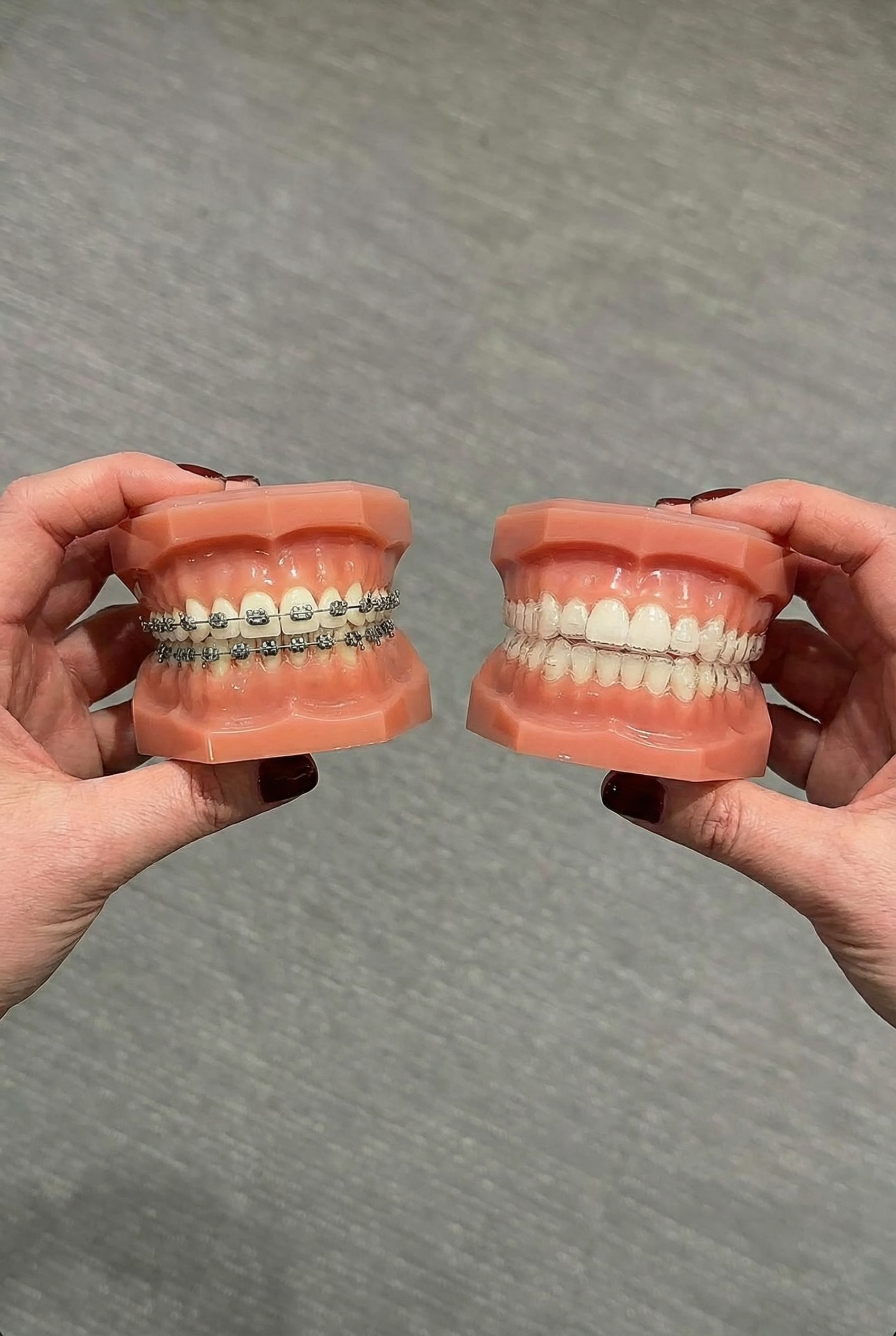
Clear aligners have transformed adult orthodontics by making teeth straightening faster, more discreet, and easier to access than traditional braces. At‑home teeth aligners are custom‑made, removable trays that gently shift teeth into better alignment—without constant clinic visits.
The clear aligner market, valued at around $2.4 billion in 2022, is projected to exceed $3 billion by 2026—growth powered by digital monitoring and demand for flexible, dentist‑supervised options. These systems are especially suited to busy adults with mild or moderate crowding or spacing who want affordable straightening with expert clinical input.
In 2026, the best solutions don’t just deliver results quickly—they offer transparent pricing, digital convenience, and round‑the‑clock dentist access.
Clinical Oversight Models Explained
Choosing an aligner provider isn’t only about price or speed; it’s about safety and proper dentist supervision. There are three main oversight models:
| Model | Description | Ideal For | Estimated Range | Considerations |
|---|---|---|---|---|
| Direct‑to‑Consumer (DTC) | Fully remote planning and monitoring. | Mild cases; budget users. | £900–£1,200 | Minimal dental input; higher risk of overtreatment. |
| Hybrid | In‑clinic scan or consultation followed by remote check‑ins. | Mild–moderate cases seeking a balance of safety and convenience. | £1,200–£2,000 | More accurate fitting; mid‑level oversight. |
| Dentist‑Supervised (Full Clinical) | Managed entirely in‑office under orthodontist guidance. | Moderate–complex cases. | £3,000–£7,000 | Highest safety; longest timelines. |
Most at‑home aligners are safe for mild to moderate corrections. Complex bite issues still require in‑person oversight to prevent complications.
Treatment Scope and Speed Comparisons
Clear aligners correct issues like mild crowding, spacing, and small overbites or underbites. Complex movements involving jaw alignment or severe rotations need orthodontic involvement.
Typical treatment durations vary by brand and case complexity:
- Direct‑to‑consumer or hybrid systems: about 4–6 months.
- Dentist‑supervised or in‑office aligners: 9–12 months or longer.
A professional assessment, ideally including X‑rays, is essential before starting any plan to confirm eligibility and reduce the chance of under‑ or overtreatment.
Pricing and Value Assessment
Cost depends on clinical supervision level, treatment complexity, and package contents. Compare inclusions as carefully as price:
| Brand | Price Range | Key Inclusions |
|---|---|---|
| Toothfairy | £1,499–£1,899 | Dentist‑led planning, 24/7 support, retainers, 0% finance |
| AlignerCo | $1,095 | Impression kit, retainers, financing |
| Invisalign | $3,000–$7,000 | In‑office visits, attachments, and full supervision |
| Reveal | $2,000–$5,000 | Payment plans, ‘clarity guarantee,’ retainers |
At‑home aligners can cost up to 60% less than braces, but real value lies in verified dentist oversight, included retainers, and transparent aftercare—not just headline pricing.
Guarantees, Retainers, and Aftercare Policies
After treatment, retainers prevent teeth from shifting back. A retainer is a custom‑fitted appliance that holds your new smile in place. Without consistent use, relapse can occur within months.
When comparing policies, look for:
- Complimentary post‑treatment retainers.
- Refinement aligners or retreatment guarantees.
- Low replacement fees for lost or damaged retainers.
- Documented aftercare and easy access to dentists.
Insufficient aftercare often triggers costly retreatments. Selecting a provider with clear retention and follow‑up care safeguards both results and spend.
Detailed Comparison of Leading Aligner Brands
Toothfairy
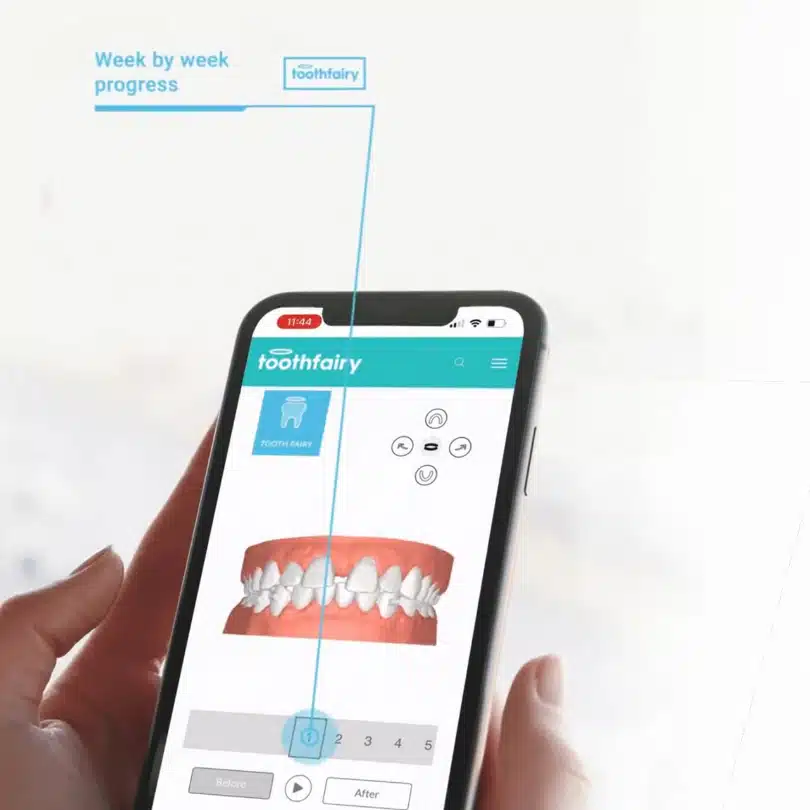
Toothfairy is the UK’s first health‑regulated, NHS‑validated digital dental brand, offering at‑home aligners backed by real dentists. Treatments are fully supervised by GDC‑registered clinicians via secure video calls, and patients have 24/7 access to support through the award‑winning Toothfairy App. The service pairs affordability and speed with continuous dentist supervision—ideal for professionals needing care that fits around their schedule.
Invisalign
Invisalign remains the most established dentist‑supervised aligner system. Its patented SmartTrack material allows controlled movement and comfort, making it suitable for moderate to severe cases. It involves in‑office check‑ups and carries a premium price of roughly $3,000–$7,000, reflecting its level of clinic oversight and durability.
AlignerCo
AlignerCo offers one of the least expensive at‑home systems, for about $1,095. With remote monitoring, flexible payment terms, and night‑only options, it suits mild corrections and tight budgets. Most treatments complete within four to six months.
Candid
Candid runs a hybrid model starting with an in‑clinic 3D scan before switching to remote monitoring through an AI‑enabled platform. It merges clinical accuracy with digital convenience, fitting for mild‑to‑moderate needs under dentist review.
SureSmile
SureSmile aligners are dentist‑delivered only, using advanced imaging for precise treatment planning. Optional add‑ons such as whitening offer comfort and aesthetic benefits. While costlier and less remote, they remain a good option for complex cases.
Impress/Reveal
These aesthetic‑focused systems attract design‑conscious adults. Impress offers three tiers of treatment lasting from 3 to 9 months, while Reveal—priced between $2,000 and $5,000—maintains exceptional clarity after daily use. Both combine predictability with sleek presentation.
Choosing the Right Aligner Based on Your Needs
Choosing an aligner starts with your bite type and lifestyle. Use this simple process:
- Confirm eligibility through a professional consultation or X‑ray.
- Identify your case type—mild, moderate, or complex.
- Set priorities such as speed, support, or cost.
- Review aftercare—retainers, warranties, and guarantees.
For busy adults, hybrid and fully digital services like Toothfairy provide the best balance of dentist supervision, flexibility, and transparent pricing. Patients with complex orthodontic needs should consider in‑office options such as Invisalign or SureSmile.
Frequently Asked Questions
How do clinical oversight levels affect treatment safety and outcomes?
Dentist supervision ensures each tooth movement is safe, reducing risks and improving final alignment. As a dentist‑led, health‑regulated provider, Toothfairy maintains continuous oversight throughout treatment.
What factors influence treatment duration with at‑home aligners?
Timeframes depend on case complexity, daily wear consistency, and whether a dentist tracks progress remotely—as with Toothfairy’s continuous monitoring.
Why is retainer inclusion important after treatment?
Retainers preserve your new smile by preventing teeth from drifting back, maintaining long‑term results and value.
Can at‑home aligners handle complex bite issues effectively?
Most are suitable for mild to moderate corrections; complex misalignments should be managed in person by a dentist or orthodontist.
How can 24/7 dental support improve the at‑home aligner experience?
Round‑the‑clock access to a dentist provides reassurance and timely advice—Toothfairy’s 24/7 app ensures help is always just a message away.
Last updated on April 2, 2026

Toothfairy Care Team
Toothfairy, is the world's smartest dental app, that connects patients to a dentist for a range of issues, from emergencies, cosmetics, prescriptions to virtual exams.
Toothfairy Care Team
Toothfairy, is the world's smartest dental app, that connects patients to a dentist for a range of issues, from emergencies, cosmetics, prescriptions to virtual exams.