Sensitive Teeth After Whitening And How To Find Relief
That sharp, sudden ‘zing’ you feel after whitening is a common, temporary reaction. It happens because the whitening agent makes your tooth enamel more porous for a short time, exposing the sensitive layer beneath. This is a normal part of the process, not a sign of permanent damage.
Understanding Why Teeth Whitening Can Cause Sensitivity
If you’ve ever felt that tell-tale twinge after a whitening treatment, you’re certainly not alone. Experiencing sensitive teeth after whitening is incredibly common, and knowing a bit about the science behind it can really help put your mind at ease. It’s not about damage; it’s all about temporary changes to your tooth’s structure.
The active ingredients in most whitening gels, usually hydrogen peroxide or carbamide peroxide, get the job done by gently penetrating your tooth’s hard outer layer, the enamel. Once inside, they work their magic by breaking down the discoloured molecules that cause stains, revealing a brighter, whiter shade underneath.
The Role of Dentinal Tubules
During this whitening process, the active ingredient temporarily makes the enamel a bit more porous. This action exposes the layer underneath called dentin, which is filled with thousands of microscopic channels known as dentinal tubules. These tiny tubes are filled with fluid and act as direct pathways to the tooth’s nerve centre, the pulp.
When these channels are open, external triggers that you wouldn’t normally notice—like a cold drink, a hot coffee, or even a gust of cool air—can disturb the fluid inside them. This fluid movement sends a signal straight to the nerve, resulting in that all-too-familiar, sharp ‘zing’ of sensitivity.
Think of it like opening tiny windows on your teeth. For a short time, the nerves inside are more exposed to the outside world, making them react more intensely than usual. This is a temporary state while your teeth recover and rehydrate.
To give you a clearer picture, let’s break down the key aspects of whitening sensitivity.
Understanding Whitening Sensitivity At A Glance
 This table shows that while sensitivity is common, it’s typically a short-lived and manageable side effect directly linked to the whitening process itself.
Research backs this up. A comprehensive dental study, often referenced in UK dental resources, found that approximately 57% of individuals who whiten their teeth experience some level of sensitivity. The good news? For 90% of those people, the discomfort is temporary and fades within a day or two as the tooth naturally rehydrates.
Why Professional Guidance Matters
The intensity of this sensitivity often comes down to two main things: the concentration of the whitening agent and the current state of your dental health. Over-the-counter kits or the whitening add-ons from some specific aligner brands often use a one-size-fits-all approach, which can simply be too strong for many people’s teeth.
This is exactly why a dentist-led approach is the smarter, safer path. A professional can properly assess your teeth and gums, recommending a customised treatment with the right gel strength and application time for you.
At Toothfairy, our dentist-prescribed whitening plans are designed from the ground up to minimise sensitivity, ensuring your journey to a brighter smile is as comfortable as it is effective. We believe cosmetic dental work should be both affordable and expertly guided.
Immediate Soothing Strategies That Actually Work
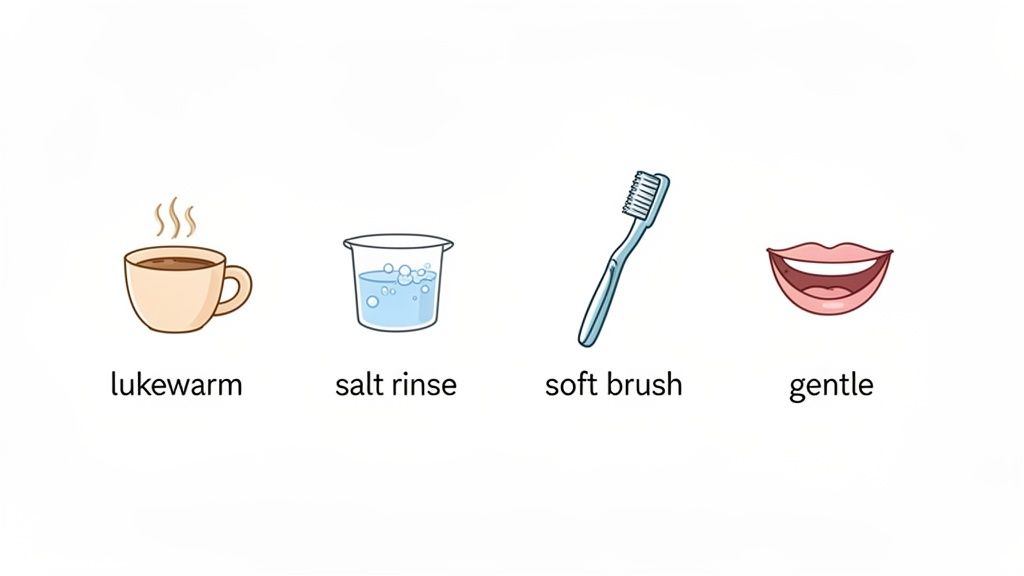
So you’ve just whitened your teeth and now you’re feeling that all-too-common sensitivity. It can be incredibly distracting, but the good news is you can get on top of it quickly. These aren’t complicated procedures, just some simple, practical steps you can take right now to calm things down and protect your teeth while they recover.
That first 24 to 48 hours after a whitening treatment is the most crucial period. Your teeth are at their most vulnerable, so a little extra care goes a long way. The easiest first step is to simply manage the temperature of what you eat and drink.
Mind the Temperature
Think lukewarm. That sudden “zing” of pain is often triggered by extreme temperatures, so avoiding very hot or icy cold food and drinks is your best bet. Let that morning coffee cool down a bit before you sip, and maybe hold off on the ice cream for a couple of days. Sticking to room-temperature items gives your dental nerves a well-deserved break.
Next up, a classic remedy that really does the trick.
Use a Gentle Oral Rinse
A warm saltwater rinse can be incredibly soothing for irritated gums and teeth. Just mix half a teaspoon of salt into a glass of warm water, swish it around your mouth for about 30 seconds, and then spit it out. It’s a natural anti-inflammatory that helps cleanse your mouth gently, without any harsh ingredients.
Remember, the goal right now is soothing, not scrubbing. Aggressive actions or products will only worsen the sensitivity. Gentleness is key to a comfortable recovery.
You’ll also want to make a few small tweaks to your usual brushing routine for the next day or two.
Adjust Your Brushing Technique
If you’re not already using one, now is the time to switch to a soft-bristled toothbrush. Hard bristles can feel like sandpaper on sensitised enamel and gums. When you brush, use gentle, circular motions instead of aggressive back-and-forth scrubbing.
You could also take an over-the-counter anti-inflammatory, like ibuprofen, which can help reduce the nerve inflammation causing the discomfort. While this offers temporary relief, the oral-specific remedies are your first line of defence. For a deeper dive, you can find many essential tips for comfort after whitening to help you through it.
Building Your Post-Whitening Comfort Routine
Once the initial sting has faded, it’s time to think about the next few days. Creating a solid home-care routine after whitening is your best bet for managing any lingering sensitivity and protecting that brilliant new smile. This isn’t about just gritting your teeth and bearing it; it’s about actively soothing your teeth and helping them recover.
The foundation of this routine? A good, specialised toothpaste. You’ll want to look for products specifically designed for sensitive teeth, as they have active ingredients that genuinely provide relief.
Choose Your Toothpaste Wisely
The secret ingredient in most effective desensitising toothpastes is potassium nitrate. It works by seeping into those tiny channels in your dentine and actually calming the nerve inside the tooth. Think of it as a soothing balm that gets right to the source of the zing, with the relief building up each time you brush.
Another great ally in your bathroom cabinet is a fluoride mouthwash.
Remineralise and Strengthen Your Enamel
Fluoride is fantastic for rebuilding and strengthening tooth enamel in a process we call remineralisation. When you use a fluoride mouthwash after whitening, you’re essentially helping to plug up those temporarily open pores in your teeth, which creates a stronger barrier against anything that might trigger sensitivity. It not only eases the discomfort now but also makes your teeth tougher in the long run.
Of course, what you put in your mouth is just as important as what you put on your teeth.
The first couple of days after whitening are absolutely crucial. Your enamel is more porous than usual, making it a sponge for both stains and sensitivity triggers. Be gentle with your teeth during this window to stay comfortable and lock in your brighter shade.
Your food and drink choices can either be a soothing friend or a major foe to your newly whitened teeth.
Be Mindful of Acidic Foods and Drinks
For at least 48 hours after your treatment, it’s a very good idea to steer clear of highly acidic foods and drinks. These can really aggravate sensitivity and can even start to dull your whitening results before you’ve had a chance to enjoy them.
- Citrus Fruits: Oranges, lemons, and grapefruits are top of the “avoid” list.
- Fizzy Drinks: The carbonic acid in sodas can be a real shock to sensitive teeth.
- Wine and Coffee: Both are acidic and notorious for staining, a double-whammy you want to avoid right now.
Here in the UK, getting sensitive teeth after whitening is incredibly common. Studies have shown that it affects a huge number of people, with some estimates putting it anywhere from 30% to over 78%. That number might sound alarming, but remember, the discomfort is almost always temporary. A smarter, guided approach like Toothfairy’s—which pairs dentist-prescribed, lower-strength whitening gels with 24/7 virtual dental support—turns this common side effect into a predictable and easily managed part of the journey. You can read more about the effectiveness and sensitivity of teeth whitening here.
By combining the right products with a few simple dietary tweaks, you can create a post-whitening routine that puts your comfort first without compromising that fantastic new smile. It’s all about working with your body’s natural recovery process.
How To Prevent Sensitivity On Your Next Whitening
Just because you’ve had sensitive teeth after whitening once doesn’t mean you’re doomed to repeat the experience. A little forward-planning can make all the difference, letting you get that brighter smile without the painful zingers. The trick is to be proactive and smart about your approach before you even start.
The best strategy is to dial back the intensity of the whitening treatment itself. Most sensitivity comes down to the concentration of the whitening agent, which is usually hydrogen or carbamide peroxide. A stronger gel isn’t necessarily better if it leaves you wincing in pain.
Tailor the Treatment to Your Teeth
Think of it like this: you wouldn’t jump straight to the heaviest weight in the gym on day one. Your teeth need a similar warm-up. Opting for a whitening gel with a lower peroxide concentration is one of the easiest and most effective changes you can make. It might take a few extra sessions to get to your dream shade, but you’ll get there comfortably.
You can also play with the application time. If the instructions say to leave the trays in for an hour, why not start with 30 minutes? See how your teeth feel. You can always build up the time gradually, finding that perfect balance between brilliant results and zero discomfort.
The key here is personalisation. The one-size-fits-all approach you get with over-the-counter kits or some aligner add-ons completely ignores individual sensitivity levels, which is a recipe for unnecessary pain. Professional oversight means your whitening plan is built just for you.
This simple flowchart can help you think through your post-whitening care to keep sensitivity at bay.
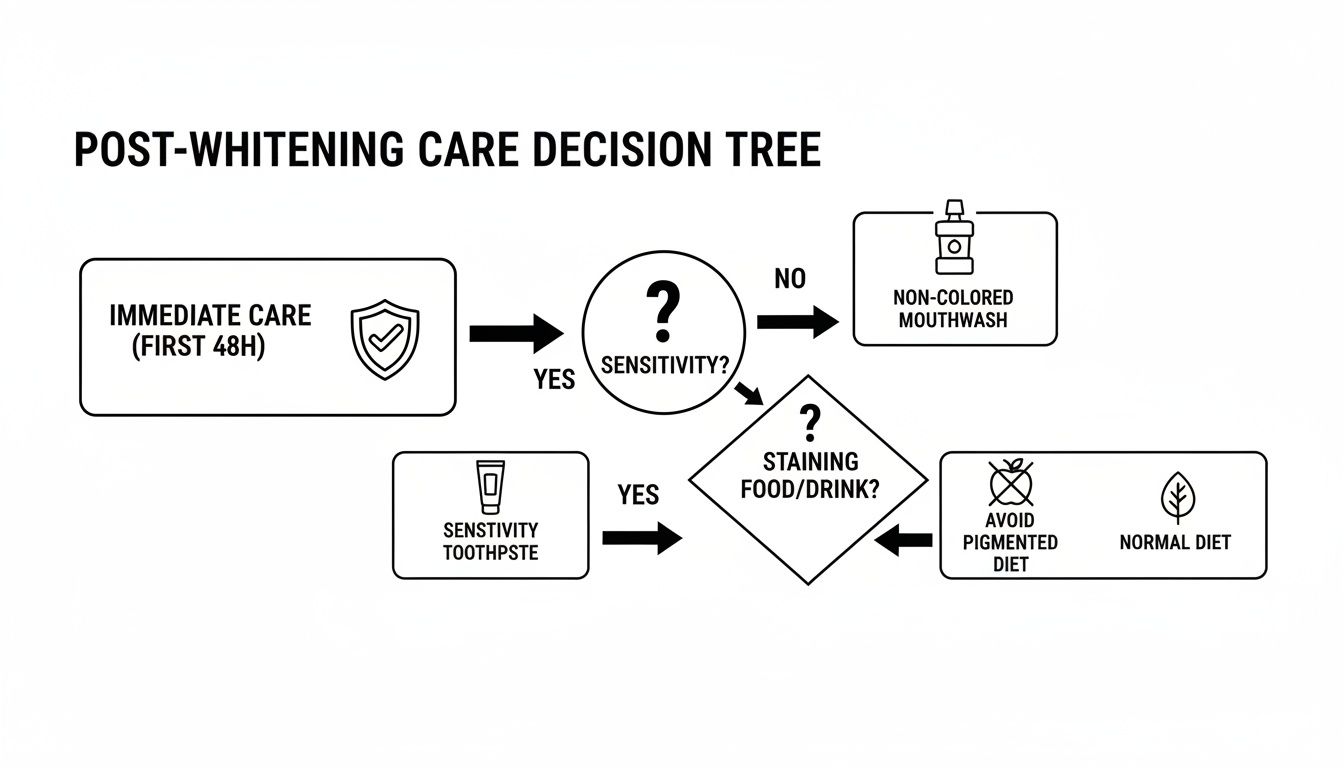
Choosing the right toothpaste, mouthwash, and foods creates the ideal environment for your teeth to recover happy and healthy.
Why Professional Guidance Is Your Best Defence
This is exactly where having a dentist on your side is a game-changer. A professional can properly assess your teeth, looking for tell-tale signs like gum recession or thin enamel that make you more prone to sensitivity. Armed with that knowledge, they can create a whitening protocol that’s genuinely customised.
For instance, a dentist might suggest:
- Using a desensitising agent: They can recommend a product containing potassium nitrate to use for a week or two before you even begin whitening. This helps to soothe the nerves inside your teeth ahead of time.
- Ensuring a perfect fit: Custom-made whitening trays are non-negotiable for sensitive teeth. Unlike baggy, ill-fitting generic trays, they ensure the whitening gel stays exactly where it should be—on your teeth and, crucially, off your sensitive gums.
This kind of tailored approach dramatically lowers the risk of pain. In the UK, professionally managed whitening using a 10% carbamide peroxide gel (which is regulated by the MHRA) results in sensitivity for less than 50% of people. Compare that to a high-dose 35% hydrogen peroxide treatment, where nearly 100% of users report sensitivity. You can learn more about the risks associated with different whitening concentrations.
It’s this smarter, safer approach that we champion at Toothfairy. We provide dentist-prescribed whitening with effective, gentle concentrations, all monitored by a dental professional virtually. This means your journey to a whiter smile isn’t just a success, it’s also safe and comfortable—taking the gamble out of generic products.
Knowing When to Speak with a Dentist
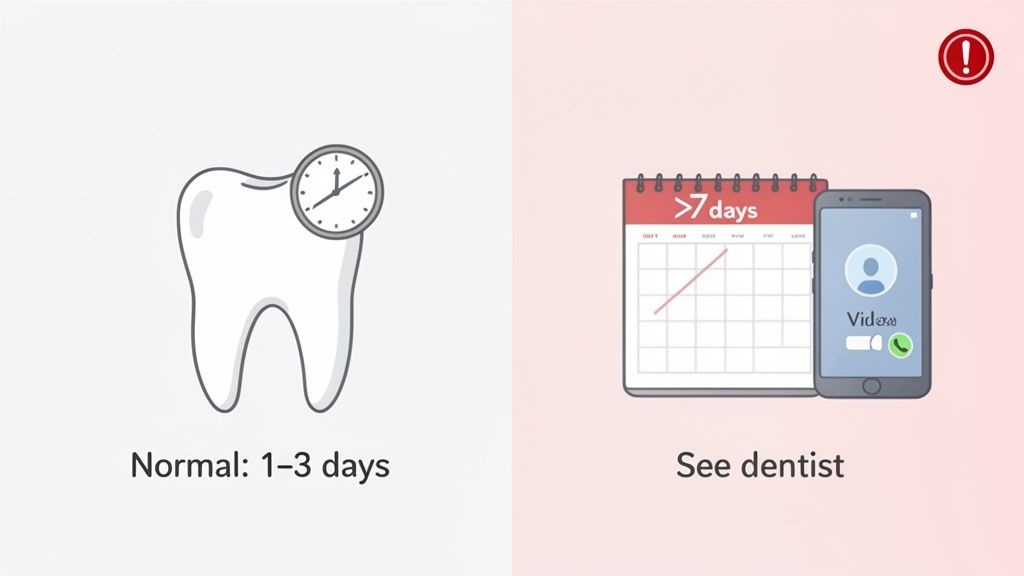
Most of the time, the twinges you feel after whitening are just a temporary side effect that will pack its bags within a day or two. But it’s crucial to know the difference between a normal reaction and a sign that something else might be going on. Knowing what to expect can save you a lot of worry.
A bit of mild sensitivity is par for the course. We’re talking about those sharp little ‘zings’ when cold air hits your teeth or you take a sip of an icy drink. For most people, this discomfort completely vanishes within 24 to 72 hours as your teeth settle down and rehydrate. This is the standard, expected timeline.
Recognising Red Flags
So, when does temporary discomfort become a cause for concern? The alarm bells should start ringing if the pain is severe, constant, or hangs around for more than a week. Persistent pain like this isn’t normal and could point to an underlying issue, like an undetected cavity or gum recession, that the whitening process has simply brought to light.
Gum irritation is another thing to keep an eye on. A little soreness where the gel might have touched the gums is common, but it should clear up quickly.
Here are the clear signs that it’s time to get a professional opinion:
- Persistent Pain: Any sensitivity that drags on for longer than one week.
- Severe Discomfort: The pain is intense or throbbing and starts to interfere with your day-to-day life.
- Lasting Gum Irritation: Your gums stay white, red, or sore for more than a couple of days.
- Localised Pain: You feel a sharp, focused pain in one specific tooth, rather than a general sensitivity across your smile.
When in doubt, getting a professional’s reassurance isn’t just helpful—it’s the smartest move for your long-term oral health. Don’t just hope for the best if something feels genuinely wrong.
The Value of On-Demand Dental Access
This is exactly why having quick access to a dental professional can be such a game-changer. Instead of anxiously waiting days for an appointment, you can get support right away.
Services like Toothfairy’s 24/7 virtual support let you connect with a qualified UK dentist straight from your phone. Whether you are dealing with a dental emergency or just need a quick chat to confirm your symptoms are normal, having an expert on-demand takes the stress and guesswork out of the equation. It ensures you get the right advice, right when you need it most.
Got Questions About Whitening Sensitivity? We’ve Got Answers
Even with all the right advice, it’s completely normal to have a few questions about tooth sensitivity after whitening. Getting straight, honest answers is the best way to feel confident and in control as you work towards a brighter smile. Let’s tackle some of the most common queries we hear.
How Long Will My Teeth Feel Sensitive After Whitening?
For most people, this is a very temporary thing. The sensitivity you feel should really only stick around for 24 to 48 hours after a treatment. Think of it as your teeth just needing a little time to rehydrate and settle down.
If you find the discomfort is more intense than you expected, or if it drags on for more than three days, it’s wise to press pause on the whitening and have a chat with your dentist. Lingering pain isn’t part of the standard process, so it’s always best to get it checked out.
Can Teeth Whitening Actually Cause Permanent Damage?
Here’s the good news: when you whiten your teeth the right way—especially with professional guidance—it does not cause permanent damage. That zinging sensation is just a temporary reaction from your tooth nerves, not a sign that your enamel is being stripped away.
The real risk comes from overdoing it with whitening products or using unregulated, high-strength gels you might find online. This is precisely why listening to a dentist is so crucial; they’re there to help you get the results you want while protecting your teeth for the long haul.
Is It Okay to Whiten If I Already Have Sensitive Teeth?
Yes, you absolutely can, but it needs a much more thoughtful, careful plan. This isn’t the time to grab a generic kit from the chemist and hope for the best.
If you already deal with sensitivity, a dentist-led approach isn’t just a good idea—it’s essential. A dentist can create a plan that tackles sensitivity before you even start, making the whole experience much more comfortable.
They can work with you on a personalised strategy, which might include things like:
- Switching to a desensitising toothpaste for a couple of weeks leading up to your treatment.
- Using a gentler, lower-concentration whitening gel prescribed just for you.
- Tweaking how often and for how long you apply the whitening trays.
Why Is Professional Whitening So Much Safer Than Store-Bought Kits?
It all boils down to three things: safety, effectiveness, and a personalised plan. Dentist-prescribed whitening is in a totally different league from the off-the-shelf kits or the add-ons you might get from an aligner company.
A dentist always starts with a proper check-up to make sure whitening is even a good idea for you—a step that one-size-fits-all kits completely miss. Then, they provide custom-fitted trays, and this part is key. These trays make sure the gel covers your teeth perfectly and, more importantly, keeps it away from your gums, preventing irritation. It’s this professional oversight that makes the journey both safe and successful.
Ready for a brighter smile without the guesswork? With Toothfairy, you get a professional, dentist-prescribed whitening plan designed for your comfort and amazing results. Learn more about our safer, smarter whitening solutions here.
Last updated on February 14, 2026

Toothfairy Care Team
Toothfairy, is the world's smartest dental app, that connects patients to a dentist for a range of issues, from emergencies, cosmetics, prescriptions to virtual exams.
Toothfairy Care Team
Toothfairy, is the world's smartest dental app, that connects patients to a dentist for a range of issues, from emergencies, cosmetics, prescriptions to virtual exams.