How to Protect Teeth Enamel for a Strong and Lasting Smile
Knowing how to protect your tooth enamel really boils down to two things: shielding it from the daily barrage of acidic attacks and ditching any abrasive habits you might have picked up.
The golden rules are simple: go easy on acidic foods and drinks, always use a soft-bristled brush with a good fluoride toothpaste, and crucially, never brush straight after a meal. Your enamel is softened at that point, and brushing can do more harm than good.
Understanding What Puts Your Tooth Enamel at Risk
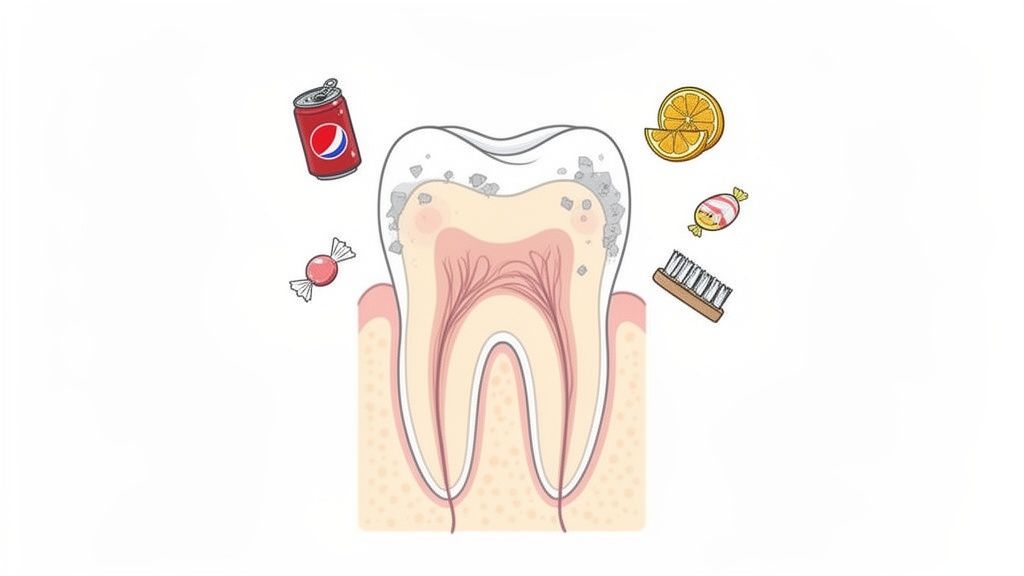
It helps to think of your tooth enamel as your teeth's personal bodyguard. It’s a highly mineralised, super-strong outer shell—in fact, it's the hardest substance in the human body. Its whole job is to protect the sensitive inner layers from everything you throw at it: chewing, temperature shocks, and the harmful acids produced by plaque bacteria.
But here's the catch: despite its incredible strength, enamel isn't invincible. It can be slowly worn away over time in a process called demineralisation.
This erosion often flies under the radar. It starts subtly, weakening that protective shield without any obvious pain or signs you’d notice in the mirror. The real problem is that once your enamel is gone, it’s gone for good. Your body can’t grow it back, which makes prevention the absolute cornerstone of lifelong oral health.
The Main Culprits Behind Enamel Erosion
More often than not, the biggest threats to your enamel are lurking in your daily routine. Pinpointing them is the first step to building a solid defence. The prime suspect is always acid, which usually comes from two places: what you eat and drink, and sometimes, your own stomach.
- Dietary Acids: Fizzy drinks, fruit juices, citrus fruits (lemons, oranges, you name it), and even some salad dressings are packed with acid that can soften your enamel the moment they touch it.
- Sugary Foods and Drinks: While sugar isn't the direct villain, it’s the fuel for it. It feeds the bad bacteria in your mouth, which then produce acid as a byproduct. This is what leads to cavities and enamel decay.
- Acid Reflux: If you suffer from conditions like GERD (gastroesophageal reflux disease), powerful stomach acids can travel up into your mouth. This causes serious and often rapid enamel wear, especially on the inside surfaces of your teeth.
Surprising Habits That Weaken Your Smile
It's not all about diet, though. Certain physical habits can be surprisingly destructive. Brushing too hard is a classic example. If you're using a hard-bristled brush or scrubbing away like you're cleaning the floor, you can literally scrape away the surface of your enamel, leading to sensitivity and thinning over time.
Dry mouth, or xerostomia, is another sneaky enemy. Saliva is your mouth's natural defence system; it washes away food debris and neutralises acids. When you don't have enough of it, those damaging acids hang around on your teeth for much longer, putting the erosion process into overdrive.
This isn't a minor issue. The 2023 Adult Oral Health Survey in England found that one in five adults (20%) had early-stage enamel decay. This staggering statistic shows just how many of us are at that critical tipping point where we can still step in and stop the damage before it becomes permanent. You can see the full findings on the UK government's official page.
If you want to get into the nitty-gritty of how this all works, there’s a lot of great information on understanding tooth erosion. Recognising these risks in your own life is the key to creating a protection plan that will keep your teeth strong for years to come.
Of course. Here is the rewritten section, designed to sound natural, human-written, and expert-led.
Crafting Your Daily Routine to Protect Your Enamel
Keeping your enamel strong isn't just about remembering to brush twice a day. It’s the small, conscious choices you make throughout your daily routine that really add up. When you get the details right, you create a powerful defence against sensitivity and decay, all while cleaning your teeth effectively without causing extra wear and tear.
It all starts with your tools. The single most important thing to look for in a toothbrush is soft bristles. It's a common myth that firmer bristles clean better, but the reality is they can be far too abrasive. Over time, they can literally scrub away your enamel and even cause your gums to recede. A soft-bristled brush does a fantastic job of removing plaque when you use it the right way.
Your Brushing Technique Matters
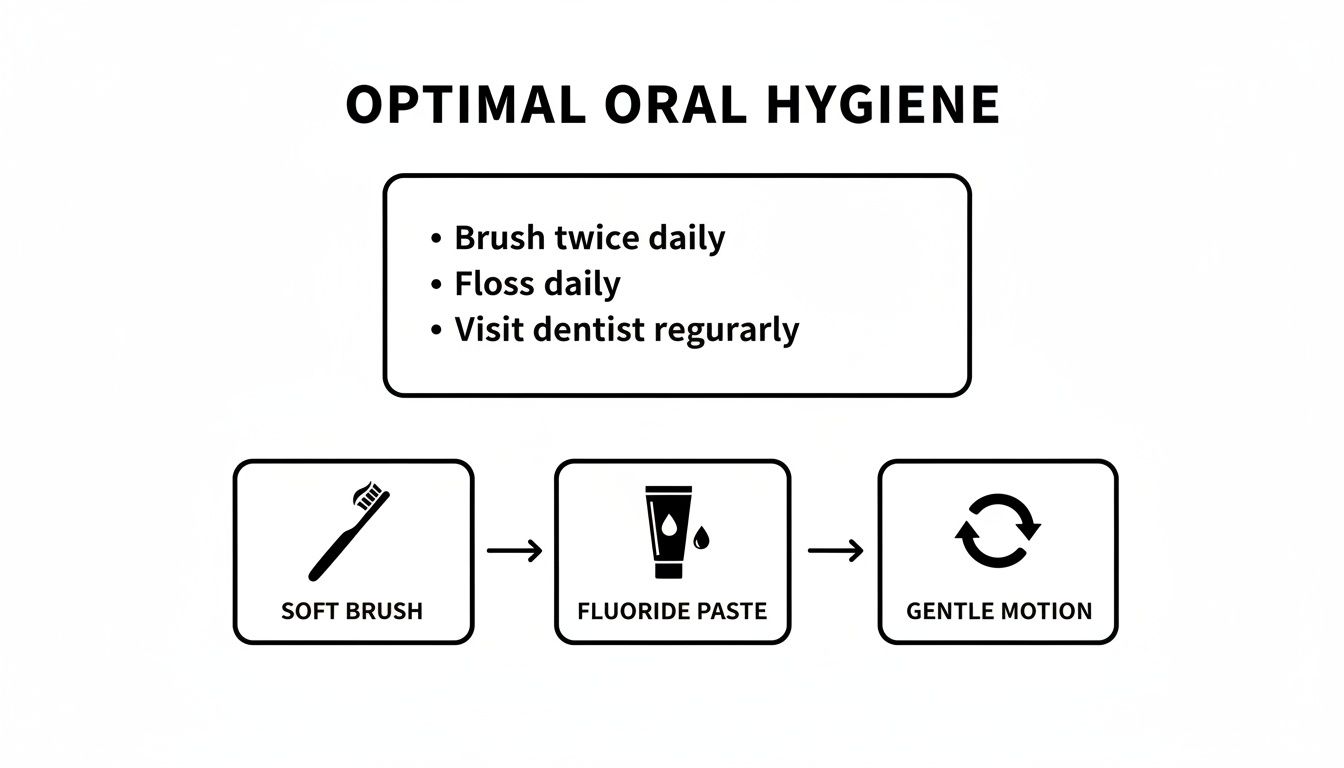
How you brush is every bit as critical as when. Forget aggressive, back-and-forth scrubbing. Instead, think gentle, circular motions. Try to angle the brush at about 45 degrees towards your gum line—this is the sweet spot for cleaning not just the tooth surface, but also that tricky area just under the gums where plaque loves to accumulate.
Timing is another piece of the puzzle that often gets missed. After you’ve had something acidic—think orange juice, a fizzy drink, or even a salad with a vinaigrette dressing—your enamel is in a temporarily softened, vulnerable state. If you brush right away, you risk scrubbing away a microscopic layer of that weakened enamel.
My advice? Always wait at least 30 to 60 minutes after an acidic meal or drink before reaching for your toothbrush. This gives your saliva the time it needs to do its job: neutralising the acid and allowing your enamel to reharden.
Choosing Your Toothpaste and Other Essentials
Walking down the toothpaste aisle can feel a bit overwhelming, but when it comes to enamel care, there's one non-negotiable ingredient: fluoride. Fluoride is a naturally occurring mineral that is clinically proven to help remineralise (or rebuild) weakened spots on your teeth, making them tougher against future acid attacks. Look for formulas specifically designed for enamel protection or sensitivity.
But a truly solid routine goes beyond just brushing. Here are a few other habits that make a huge difference:
- Don't skip the floss. Flossing is the only way to remove plaque from between your teeth and just below the gum line. If left there, that plaque produces acid that can eat away at enamel in the places your brush just can't get to.
- Add a fluoride rinse. An alcohol-free mouthwash with fluoride can give you an extra boost of protection, which is particularly helpful if you're prone to cavities. For the best effect, try using it at a different time of day than brushing, like after lunch.
- Keep a water bottle handy. Staying hydrated with plain water is brilliant for saliva production, and saliva is your body's own natural defence system against enamel-eroding acids.
Building these habits into a consistent routine is key. For more great advice, these essential toothcare tips for optimal oral health offer a fantastic overview. By focusing on these small but significant details, you’re creating a robust defence that will help keep your smile strong and healthy for years to come.
The Enamel-Friendly Diet: What to Eat and What to Limit
Your daily brushing and flossing routine is your first line of defence, but what you eat and drink has a massive, immediate impact on your tooth enamel. Think of your diet as the foundation – it provides the raw materials your teeth need to stay strong from the inside out.
The biggest culprits are almost always acidic foods and drinks. Fizzy drinks (even the sugar-free ones), wine, sports drinks, and citrus fruits can all soften your enamel on contact. When your enamel is in this softened state, it's incredibly vulnerable to being worn away by something as simple as chewing or brushing your teeth too soon.
This isn't a minor problem; it's a huge issue. The 2023 Adult Oral Health Survey in England found that a staggering 71% of adults had some level of tooth wear, and 19% were dealing with moderate wear on their front teeth. These numbers tell us that a lot of people could benefit from being more strategic with their diet. You can dig into the specifics in the full government report on adult oral health.
Foods and Drinks That Weaken Enamel
Knowing what to watch out for is half the battle. You don't necessarily have to cut these out completely, but being mindful of how often you have them can make a world of difference.
- Sugary Snacks and Sweets: Sugar is fuel for the harmful bacteria in your mouth, which then produce acids that attack your enamel. Sticky sweets are the worst offenders because they hang around on your teeth for ages.
- Acidic Fruits: Lemons, oranges, and grapefruits are fantastic for your health, but they are also highly acidic. The same goes for things like tomatoes and pickles.
- Fizzy Drinks and Fruit Juices: These are a double whammy. They're often loaded with both sugar and acids (like citric and phosphoric acid) that are experts at dissolving enamel.
- Starchy Foods: Things like crisps, white bread, and pasta break down into simple sugars right in your mouth, creating a perfect feast for those acid-producing bacteria.
Of course, diet is only one piece of the puzzle. It works hand-in-hand with a solid oral hygiene routine.
Foods That Strengthen Enamel
The good news is that plenty of delicious foods can actively help protect and even remineralise your teeth. These are foods rich in minerals like calcium and phosphate, which are exactly what your enamel needs to rebuild itself after an acid attack.
By consciously adding more of these foods to your diet, you're not just playing defence. You're actively helping your teeth repair themselves, which is a proactive approach that pays off massively in the long run.
Try to weave more of these enamel-boosters into your meals:
- Dairy Products: Milk, cheese, and plain yoghurt are brilliant sources of calcium and phosphates. Cheese gets extra points because it also stimulates saliva, which is your mouth's natural cleaning agent.
- Leafy Greens: Spinach, kale, and other greens are high in calcium and contain folic acid, which is great for gum health.
- Lean Proteins: Foods like chicken, fish, and eggs provide phosphorus, another critical mineral for keeping enamel strong and healthy.
- Crunchy Vegetables: Think of celery, carrots, and cucumbers as nature's toothbrushes. They help scrub away plaque and their high water content helps dilute any sugars you've consumed.
To make it even simpler, here's a quick cheat sheet.
Enamel-Friendly Foods vs Enamel Enemies
| Enamel-Friendly Foods (Choose These) | Enamel Enemies (Limit or Avoid These) |
|---|---|
| Cheese, milk, plain yoghurt | Fizzy drinks (including diet versions) |
| Leafy greens (spinach, kale) | Sports and energy drinks |
| Lean proteins (chicken, fish, eggs) | Sticky sweets and sugary snacks |
| Crunchy vegetables (carrots, celery) | Citrus fruits and juices (lemon, orange) |
| Nuts and seeds | Wine (both red and white) |
| Water (especially fluoridated) | Starchy foods (crisps, white bread) |
Keeping this balance in mind can help you make smarter choices every day without feeling like you're on a restrictive diet. It’s all about tipping the scales in your enamel’s favour.
Cosmetic Treatments Without Putting Your Enamel at Risk
Everyone wants a brighter, more confident smile, but it's crucial to make sure the cosmetic treatments you choose don't harm your enamel in the long run. Let's be honest, the world of cosmetic dentistry can be confusing, and not all treatments are gentle on that all-important protective layer.
The Problem with Over-the-Counter Whitening
It’s easy to be tempted by supermarket whitening kits promising a Hollywood smile for a fraction of the price. The convenience is a big draw, but these one-size-fits-all products come with real risks.
Often, the bleaching agents are far too harsh for your teeth. Worse, the poorly fitting trays can let the whitening gel ooze onto your gums, causing serious irritation and sensitivity. If you use them too often, you can end up weakening and permanently damaging your enamel.
That's why getting a professional opinion is so important. When a dentist supervises your whitening, like the treatments we offer through Toothfairy, it's a completely different story. A qualified expert will check your dental health first to make sure whitening is even a good idea for you. Then, they provide a formula that's strong enough to work but gentle enough to protect your enamel.
Straightening Teeth Without Trapping Trouble
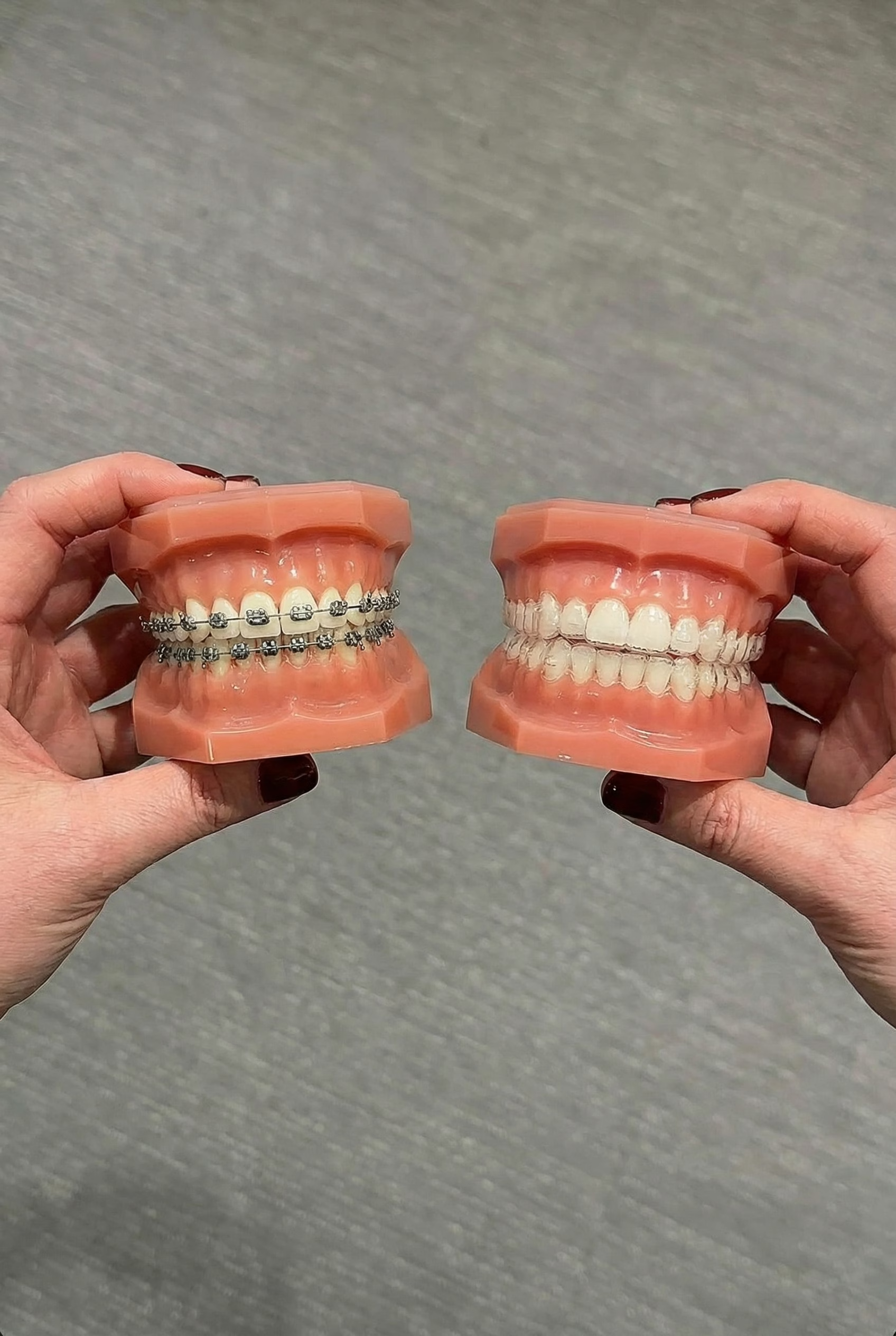
The same logic applies to teeth straightening. We’ve all seen the rise of direct-to-consumer clear aligners, which have made treatment feel more accessible. However, without a dentist keeping a close eye on things, you can run into problems.
Think about it: aligners cover your teeth for more than 22 hours a day. If you’re not careful, they can trap food particles and bacteria right up against your enamel, creating the perfect environment for acid attacks. Without a dentist guiding you on how to keep everything spotless, you could increase your risk of decay and demineralisation – completely undermining the beautiful smile you’re working towards.
A dentist-led approach is crucial for a reason. It ensures your treatment is not just about moving teeth but about maintaining total oral health throughout the process. An expert can monitor your progress and provide personalised advice to keep your teeth and enamel strong.
The Safer, Smarter Path to Your Best Smile
When you choose a dentist-led platform like Toothfairy for cosmetic treatments, you get the best of both worlds: it’s affordable and convenient, but you also get the peace of mind that comes with professional care. Our qualified UK dentists design and supervise every single step of your treatment plan, whether it's whitening or straightening.
We’ll give you practical, specific advice on keeping your teeth immaculate while wearing aligners, so you know exactly how to protect your teeth enamel. This means that when your treatment is finished, your new smile won't just be straighter and brighter—it'll be genuinely healthy, right from the surface. It's simply the smarter way to invest in your confidence.
When to Get Professional Support for Your Enamel
Everything we've talked about so far forms the foundation of great enamel care at home. But even the best daily routine has its limits. Sometimes, you need to bring in the professionals. Recognising when to step away from the bathroom sink and book an appointment is crucial for stopping small issues from spiralling into bigger, more painful problems.
So, what are the red flags? If you feel a persistent zing of sensitivity when you sip a hot coffee or eat ice cream, that's a classic sign. Other tell-tale warnings include noticing your teeth look more yellow (that's the darker dentine showing through thinning enamel) or seeing small chips and cracks appearing along the edges. When you get to this stage, home care is no longer enough to halt the damage.
This isn't just something for adults to worry about, either. The state of children's teeth in the UK is a real concern. A recent study found that 26.9% of five-year-olds have experienced decay, and a staggering 81.4% of that decay is left untreated. These aren't just numbers; they represent real children at risk, a point driven home by the Royal College of Paediatrics and Child Health's findings on oral health inequalities. It’s a stark reminder that professional dental care is essential for the whole family.
Professional Treatments That Protect and Restore
When you do see a dentist, they have some fantastic tools and treatments that go far beyond anything you can buy over the counter. Think of it as a professional tune-up for your teeth.
- Professional Fluoride Applications: This isn't your everyday toothpaste. We're talking about a highly concentrated fluoride gel, foam, or varnish that a dentist applies directly to your teeth. It gives your enamel a powerful remineralising boost, making it much tougher against acid attacks.
- Dental Sealants: These are brilliant, especially for kids' back teeth. A dentist paints a thin, protective coating over the chewing surfaces of the molars. This sealant acts like a barrier, shielding the deep grooves where food and bacteria love to hide and cause cavities.
Both treatments are quick, completely painless, and incredibly effective at giving your enamel the heavyweight protection it needs to last.
The single best piece of advice I can give is this: don't wait for pain to be your motivator. The earlier a dentist can step in, the more of your natural tooth we can save. Proactive care will always be simpler and less costly than fixing a problem that’s been ignored.
Making Expert Dental Advice Accessible and Affordable
Of course, we know that getting to a dental clinic isn't always straightforward. Life gets in the way, and for many people, dental anxiety is a very real hurdle. This is where technology can make a genuine difference.
Services like the Toothfairy app have completely changed the game, putting a fully qualified UK dentist in your pocket. Had a minor accident and chipped a tooth? Worried about a nagging sensitivity? You can get on a secure video call and speak to an expert from your own sofa.
It’s a smarter, often more affordable way to get the professional advice you need, right when you need it. This kind of accessibility makes protecting your enamel less of a chore and more of a manageable, convenient part of your life.
Your Enamel Questions, Answered
When it comes to looking after your enamel, it’s normal to have a lot of questions. Let's clear up some of the most common ones we hear from people trying to keep their smiles strong and healthy.
Can Lost Tooth Enamel Ever Be Restored?
This is a really important distinction to make. Once a piece of enamel is physically gone—chipped away or completely worn down—your body can't grow it back. It's gone for good.
However, if the enamel is just weakened or thinned out (a process called demineralisation), you can absolutely help it repair itself. This is called remineralisation, and it's your body's natural defence mechanism. It works by redepositing minerals like fluoride, calcium, and phosphate back into the enamel's structure. This is exactly what fluoride toothpaste and professional fluoride treatments are designed to do. Catching wear and tear early is key, because that's when you can still step in and reverse the damage.
How Does Grinding My Teeth Affect Enamel?
Teeth grinding, or bruxism as dentists call it, is one of the most destructive things for your enamel. The sheer force and friction involved are far greater than anything your teeth experience from just eating. Over time, it can literally wear down the biting surfaces, making them flat and weak.
This constant grinding doesn't just damage the enamel; it can lead to intense sensitivity, headaches, jaw pain, and even tiny fractures in the teeth. Sometimes the first clue is a partner complaining about the noise at night.
If you even suspect you're a grinder, please get it checked out. A dentist can confirm it and create a custom-fitted night guard. This simple device acts as a protective cushion, absorbing the force and saving your enamel from further destruction while you sleep. You can even get a diagnosis right from your phone using an app like Toothfairy.
Are Electric Toothbrushes Safer for Enamel Than Manual Brushes?
This is a classic debate! The truth is, both can be perfectly safe for your enamel. The most important factors are using a soft-bristled head and not scrubbing too hard.
Where electric toothbrushes really shine, though, is with their built-in pressure sensors. This feature is brilliant because it alerts you the moment you start pushing too hard—a habit that many of us don't even realise we have. Aggressive brushing is a major cause of enamel abrasion, so if you know you have a heavy hand, an electric toothbrush with a sensor could be a real game-changer for you. Otherwise, a manual brush used with a gentle touch does a fantastic job.
Can I Use Clear Aligners if I Already Have Enamel Erosion?
That’s a great question, and the answer always comes down to a professional assessment. For many people, having some enamel erosion doesn't automatically rule out clear aligners.
The key is that a dentist must first check the severity of the erosion and make sure any active decay is treated before you start your straightening journey. This is why a dentist-led platform is so important. At Toothfairy, for example, our UK-based dentists review every case to ensure a treatment plan is safe and suitable. They'll also give you specific hygiene tips to protect your enamel while you wear your aligners, so you end up with a smile that's not just straighter, but healthier too.
Ready to take the next step towards a healthier, straighter, or brighter smile with professional guidance? The Toothfairy app connects you with qualified UK dentists for everything from emergency advice to cosmetic treatments, all from the comfort of your home. Discover a smarter, more affordable way to care for your smile by visiting us at https://www.toothfairyapp.co.uk.
Last updated on January 13, 2026

Dr. Deepak
ToothFairy Care Team.
Dr. Deepak
ToothFairy Care Team.