How to Improve Workplace Productivity and Boost Team Performance

If you want to boost productivity, the answer isn't piling on more hours. It's about creating a smarter, more supportive work environment. This means getting to the root of what’s holding your team back, from poor wellbeing to clunky internal processes, and making strategic investments in their health and how they work.
The Real Cost of Wasted Time in the Modern Workplace

Let's be honest: the traditional eight-hour workday is more of a guideline than a reality. While your team might be at their desks for a full day, the actual output often tells a different story. There’s a huge gap between hours logged and meaningful work accomplished, and it’s not down to a lack of effort. It’s because the modern workplace is riddled with hidden drains on time and energy.
This productivity gap isn't just an abstract concept; it has real, tangible consequences. You see it in missed deadlines, stretched budgets, and projects that always seem to be behind schedule. But the damage goes far beyond the balance sheet.
The Hidden Toll on Team Morale
When people feel constantly busy but see little to show for it, their morale plummets. This vicious cycle of inefficiency breeds frustration, disengagement, and, ultimately, burnout. Your best performers become demoralised, collaboration breaks down, and the creative spark your business relies on starts to fade.
The real challenge is to change the conversation entirely. Productivity isn't about squeezing more out of your people. It's about building an environment where focused, high-impact work can actually happen by systematically removing the obstacles that get in their way.
Here in the UK, the problem is especially stark. Research reveals the average employee is only truly productive for 2 hours and 53 minutes of their eight-hour day. That’s a shocking statistic, and it highlights a massive efficiency problem that UK businesses can’t afford to ignore. You can read more about these workplace productivity stats and see how other companies are fighting back.
To get a clearer picture of what we're up against, let's map out the common culprits behind lost time and the high-level solutions we'll explore in this guide.
Common Productivity Killers vs High-Impact Solutions
| Common Productivity Bottleneck | Impact on Business | Strategic Solution Area |
|---|---|---|
| Unnecessary Meetings | Wasted hours, context switching, project delays. | Process Optimisation |
| Poor Workspace Design | Constant distractions, lack of focus, decreased collaboration. | Environment & Tools |
| Inadequate Health Support | High absenteeism, presenteeism, reduced cognitive function. | Employee Wellbeing & Benefits |
| Work-Life Imbalance | Burnout, low engagement, high staff turnover. | Flexible Work & Culture |
As you can see, the issues are interconnected, but so are the solutions. By focusing on the foundational elements of how and where your team works, you can create a positive ripple effect across the entire organisation.
Shifting Focus to Foundational Wellbeing
A crucial first step is to treat employee wellbeing as the bedrock of productivity. When your team members are struggling with health issues—big or small—their ability to concentrate and perform is severely compromised. This is where modern health benefits stop being a simple "perk" and become a powerful strategic tool.
Think about the impact of something as common as a dental emergency. A sudden toothache can completely derail an employee's day, leading to an unplanned absence. Even worse is "presenteeism"—they're physically at their desk but are so distracted by pain that they can't focus on their work.
By tackling these foundational issues head-on, you stop fighting daily fires and start building a resilient, focused, and genuinely productive workforce. It’s an investment in your people that pays back in pure output.
This is where innovative solutions like Toothfairy can make a tangible difference. By offering on-demand access to dental care, you can eliminate a major source of distraction and absenteeism. Whether it's a quick virtual consultation for an emergency or convenient remote monitoring for cosmetic dental work like straightening teeth, you give employees the power to resolve health issues without disrupting their work. It's often a smarter and more affordable way to get the care they need.
This kind of strategic support translates directly into reclaimed hours and a healthier, happier, and more productive team.
Finding the Real Drains on Your Team's Productivity
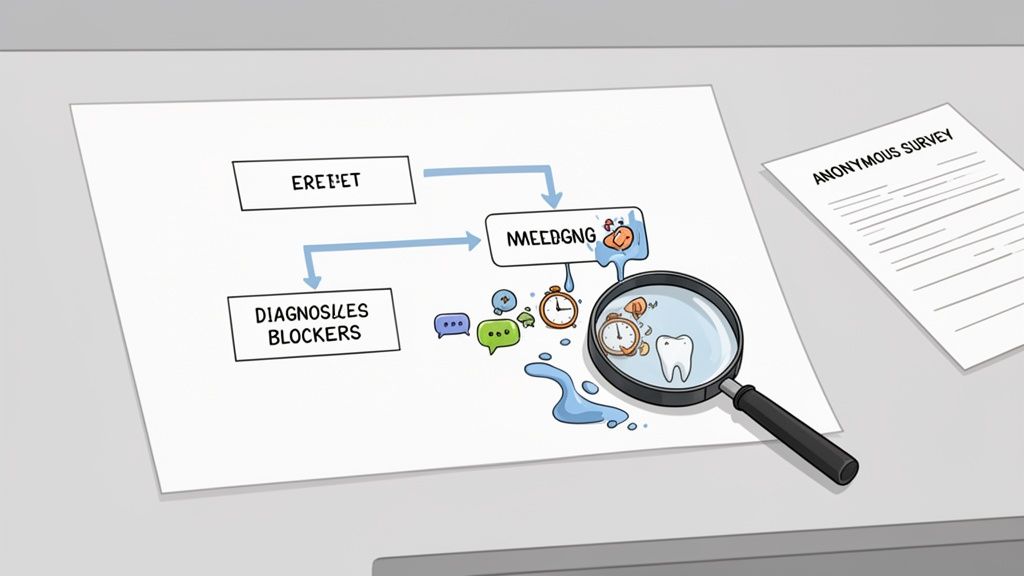
Before you can boost your team’s output, you need to play detective. Too many managers jump straight to solutions without understanding the problem, wasting time and money on fixes that don't stick. The first step is to stop guessing and start digging to find the precise bottlenecks draining your team's energy and focus.
Most of these productivity killers aren't dramatic; they're the small, everyday frustrations buried in routines we take for granted. To find them, you'll need to combine objective process analysis with some honest, direct feedback from the people doing the work.
Map the Workflow to See the Friction
Start by getting visual. Pick a core process—like launching a new product or onboarding a client—and literally map it out from start to finish. Note down every single handover, approval, and task.
This simple exercise is incredibly revealing. You might suddenly see that a two-hour delay is consistently caused by waiting for a single sign-off, or that two different team members are doing the exact same data entry. These are the small friction points that, when added up, grind momentum to a halt.
Once you have your map, share it with your team. Ask them point-blank: "Where does this feel clunky? What part of this process makes you groan?" Their perspective is gold; they see the bottlenecks you can't from a 10,000-foot view.
Get Honest Feedback with Anonymous Surveys
Process maps show you what is broken, but they don’t always tell you why. Often, the biggest blockers are cultural. People may not feel comfortable speaking up about a toxic meeting culture or overwhelming stress levels, so you need to give them a safe way to do it.
Anonymous surveys are perfect for this. Keep it simple and ask targeted questions that get right to the heart of the matter:
- On Meetings: "What percentage of the meetings you attended last week actually helped you move your work forward?"
- On Workload: "On a scale of 1-10, how sustainable is your current workload?"
- On Tools: "If you could have one tool or resource to make your job easier, what would it be?"
- On Life: "What's one thing outside of work that's made it hard to focus this month?"
The answers will give you a real, human-centric view of what’s actually going on. You might discover your "quick syncs" are derailing everyone's focus, or that a few key people are struggling with personal issues you had no idea about.
A workplace wellness study revealed something fascinating: employees who rarely exercised had a 50% higher rate of presenteeism (being at work but not productive) than their active colleagues. An anonymous survey can uncover the why behind this—high stress, lack of time—so you can address it before it kills productivity.
Conduct a Ruthless Meeting Audit
Let's be honest: meetings are the number one productivity sinkhole in most companies. It's time for an audit. For just one week, get your team to track every meeting and evaluate it against a few simple criteria:
- Purpose: Was there a clear agenda and goal?
- People: Did every single person in the room need to be there?
- Outcome: Did it end with a clear decision and action items?
- Time: Could that 60-minute slog have been a 15-minute huddle? Or better yet, an email?
The patterns that emerge after a week are usually impossible to ignore. You'll see pointless recurring meetings and invites with a dozen "optional" attendees. This data gives you the hard evidence needed to enforce new rules, like "no agenda, no meeting" and empowering people to decline invites where they aren't essential.
Track Absence Patterns for Deeper Insights
Finally, look at your absence data as a story, not just a statistic. Are you seeing lots of unplanned, last-minute time off? Are sick days often clustered around specific issues?
For example, a sudden spike in dental emergencies is a huge red flag. A single toothache can easily wipe out an employee's focus and an entire day's work. By spotting this trend, you move from tackling a vague "absence problem" to solving a specific, preventable issue.
This is where a strategic benefit like Toothfairy makes a tangible difference. Instead of an employee taking a full sick day for a dental emergency, they can get a 20-minute virtual consultation with a dentist instantly. Offering remote monitoring for treatments like teeth straightening also means they don’t have to take a half-day off for a routine check-up, unlike with some specific aligner brands. This data-led approach lets you proactively support your team's wellbeing and protect your company’s bottom line.
Driving Results with People-First Strategies
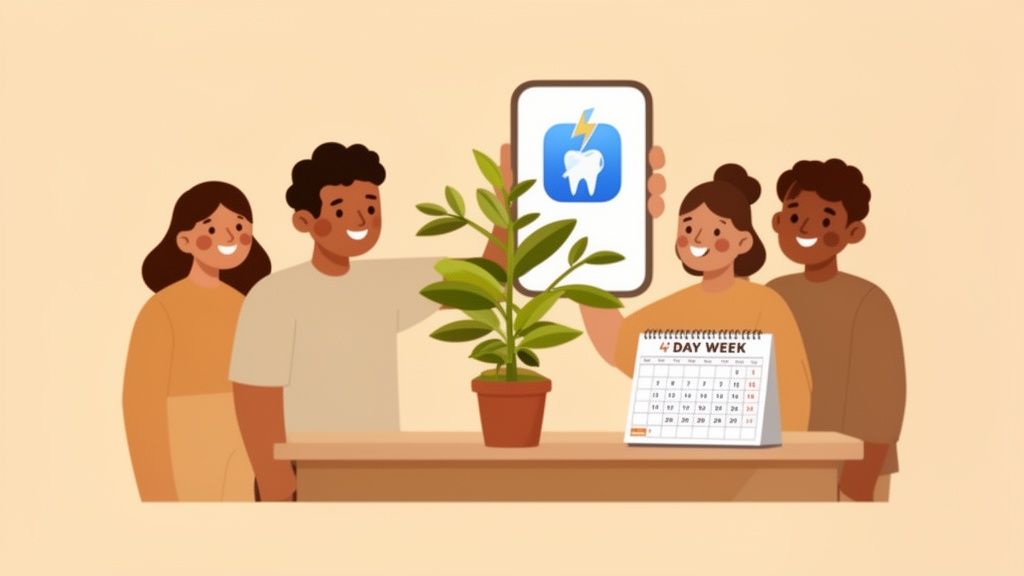
Once you’ve pinpointed what’s draining your team’s time, it’s time to shift from diagnosis to action. The most powerful solutions aren’t about enforcing stricter processes; they’re about putting your people first.
Great performance isn't just about efficiency hacks. It’s a direct result of investing in your team's wellbeing. When people feel supported, respected, and healthy, their ability to deliver exceptional work skyrockets. This means looking past the spreadsheets and workflows to the actual human experience of their job.
So, how can you structure the workday and your benefits to genuinely reduce stress and remove barriers to focus? The answer often lies in two key areas: offering real flexibility and modernising how you support your team’s health.
Embrace Flexibility and Autonomy
Let's be honest, the rigid nine-to-five, five-day work week is a relic. For many roles, it's an arbitrary constraint that kills creativity and wrecks work-life balance. Smart companies are catching on that trusting employees to manage their own time pays off in both morale and output.
This isn’t just a feel-good theory; the data is compelling. The UK's four-day week trials produced incredible results: 39% of employees reported feeling less stressed, and a massive 71% experienced less burnout. Most importantly, productivity held steady or even improved in 90% of the companies that took part.
You don't have to flip a switch overnight. You can ease into a more flexible model by introducing:
- Core Hours: Set a block of time for essential collaboration, maybe 10 am to 3 pm, and let your team manage the rest of their day.
- Hybrid Models: Give people the best of both worlds with a mix of in-office and remote work days.
- Compressed Weeks: Let staff work their full hours over fewer days, giving them a longer weekend to properly recharge.
Modernise Your Benefits to Solve Real-World Problems
A truly people-first approach means your benefits package needs to do more than just tick boxes. Standard health plans often miss the real-world issues that pull your team away from their work. One of the biggest, and most overlooked, productivity killers? Dental health.
A sudden toothache isn't just painful; it can wipe out an entire day of work and cause huge amounts of stress. This is where innovative services like Toothfairy offer a direct and powerful solution. By giving your team instant virtual access to dentists, you turn a major disruption into a minor blip on the radar. An employee can get professional advice on a dental emergency within minutes, right from their desk, instead of losing a whole day.
This focus on practical support is what sets modern benefits apart. It's about solving the immediate problems that directly impact your team's ability to show up and do their best work.
For employees considering cosmetic dental work, Toothfairy offers a smarter way to straighten teeth without the constant disruption of clinic visits. Many specific aligner brands require frequent in-person appointments, but Toothfairy’s virtual check-ups save hours of travel and waiting room time. It's a clear, tangible way to give time back to your people.
A people-first strategy is about anticipating your team’s needs and providing tools that genuinely make their lives easier. When you remove a major source of pain and logistical hassle, you free them up to focus on what they do best.
Of course, a supportive environment isn't just about policies and benefits. It also comes down to the physical workspace. A comfortable, safe office is crucial for focus and wellbeing. This includes everything from ergonomic chairs and good lighting to improving workplace air quality to minimise health-related distractions.
When you combine flexible work policies with modern, practical health benefits, you create a powerful system of support. You're sending a clear message: you trust your team and are invested in their wellbeing. And that, ultimately, is the most reliable path to sustained, high-level productivity.
Fine-Tuning Your Workflows and Tools
Now that you’ve laid the groundwork for a healthier, more supported team, it's time to look at the other side of the coin: the systems they use every day. A motivated team can still be held back by clunky software and inefficient processes. This is where we shift our focus from the people to the process, sharpening the tools and workflows that dictate the daily grind.
Getting this right isn't about throwing money at the most expensive new platform. It’s about creating an environment where your team can do their best work without friction. The right tool should feel like a natural extension of their workflow, not just another password to remember.
Streamline Your Work with the Right Technology
A solid project management platform is non-negotiable for modern teams. Tools like Asana, Trello, or Monday.com can transform messy email threads and confusing spreadsheets into a single source of truth. Everyone can see project status, deadlines, and who’s responsible for what at a glance.
The trick is to find a platform that complements how your team already works. A highly visual team might click instantly with Trello's card-based system, while an engineering or analytics team may need the robust reporting features found in Asana.
When processes are this clear, ambiguity disappears, and so does the time wasted on chasing updates. The physical workspace plays a role here, too. You can learn more about smart office design to boost workplace productivity to see how your office layout can complement your digital workflows.
Take Back Your Calendar with Smarter Meeting Habits
Meetings are the silent productivity killers in most organisations. A badly run meeting doesn't just eat up an hour; it shatters concentration and pulls people away from deep, meaningful work, causing a ripple effect that wastes even more time. It’s time to set some firm ground rules.
Here are three simple but powerful rules to start with:
- No Agenda, No Attendance: If the organiser hasn't circulated a clear agenda with a specific goal, the meeting shouldn't happen. Simple as that.
- Invite Only the Essentials: Every single person in the room (or on the call) should have a clear reason for being there. Empower your team to politely decline invitations if their presence is optional.
- Default to 25 or 50 Minutes: Parkinson's Law is real: work will always expand to fill the time you give it. By scheduling shorter meetings, you force the conversation to be more direct and decisive.
Take a look at your team's calendars. You'll likely be shocked by how many hours are blocked out for recurring meetings with questionable value. Clawing back just 20% of that time is like giving every employee an extra day per month for focused work.
Bridge the Skills Gap to Unleash Your Team's Potential
The best tech in the world is useless if your team doesn't know how to use it, or if they’re constantly off sick. This is why investing in both skills and health is crucial for productivity. The UK faces a real challenge here, with training investment lagging behind EU averages and a staggering 37% of workers feeling over-qualified for their roles.
Modern, digital-first health benefits are a key part of this operational toolkit. A service like Toothfairy, for example, helps keep the human engine of your business running smoothly. Think about it: an employee using the app for cosmetic dental work can have their teeth straightening progress monitored remotely. That means no more half-days taken out of the office for simple check-ups, which is a direct saving of valuable work time.
Ultimately, it’s about building a complete ecosystem. When your people have the right skills, the best tools, and the health support they need to show up and perform, you create an operation that’s not just productive, but truly resilient.
Your 90-Day Plan to Transform Productivity
Knowing what to do is one thing, but actually making it happen requires a clear, structured roadmap. This 90-day plan is designed to turn your productivity strategy from a good idea into a reality, focusing on impactful changes you can roll out in manageable phases. Think of it less as a rigid set of rules and more as a practical playbook to build momentum and drive real results.
This timeline gives you a bird's-eye view of the core pillars of an optimised workplace: supporting your people, sharpening their tools, and consistently upskilling the team.
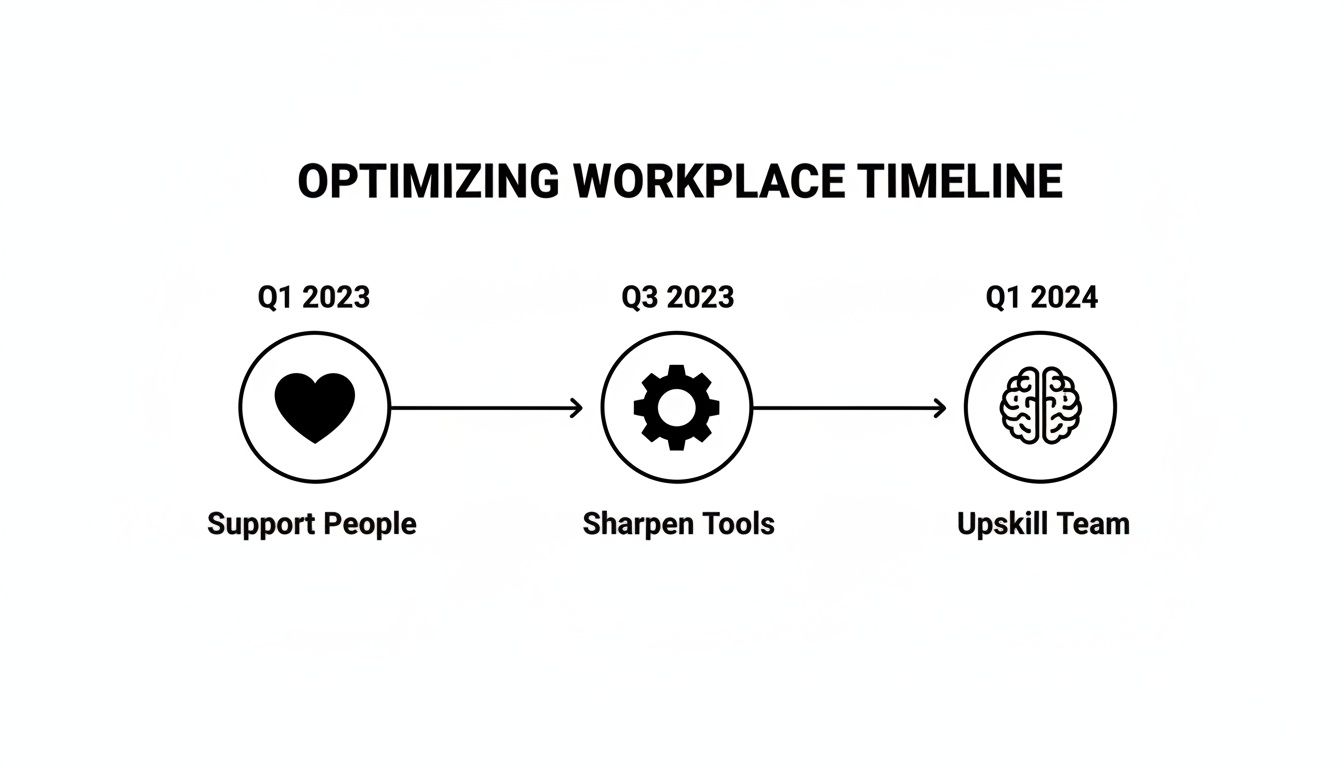
As the visual shows, creating a high-performance environment isn't a one-off project. It's a continuous process of investing in your team's wellbeing, refining how they work, and helping them grow their skills.
To bring this to life, here’s a phased approach that I’ve seen work time and again.
The First 30 Days: Quick Wins and Solid Groundwork
The first month is all about building a solid foundation and scoring some quick, visible wins. This is where you get everyone on board by showing you’re serious, gathering real data, and tackling the most obvious productivity drains. Your main goal here is to establish a new baseline and get the team invested in the changes to come.
Your checklist for this phase should include:
- Launch a Productivity Audit: Get those anonymous surveys out there. You need a real pulse on team morale, workload, and what's actually causing frustration.
- Run a Meeting Audit: For one full week, get a clear picture of how many meetings are happening, who is in them, and whether they lead to decisions. The data will likely surprise you.
- Set New Meeting Rules: Based on what you find, implement a few non-negotiable rules immediately. My favourite is "no agenda, no meeting." Empower your staff to decline invites that are clearly a waste of their time.
By the end of this period, you’ll have moved from guesswork to evidence. The small tweaks to meeting culture alone will start freeing up calendars, creating a positive buzz and proving you mean business.
Days 31-60: Rolling Out High-Impact Initiatives
With your foundational data in hand, month two is for implementing more significant, structural changes. Now you can introduce new policies and benefits that directly address the core issues you found, like burnout or health-related sick days. The key here is clear communication—don’t just launch things and hope for the best.
Focus your energy on these key actions:
- Introduce a Flexible Work Policy: Whether it’s a hybrid model, core hours, or a trial of a four-day week, roll it out with clear guidelines so everyone knows what to expect.
- Launch a Modern Health Benefit: This is the perfect moment to introduce a high-impact benefit that solves a real problem, like Toothfairy. It directly tackles the absenteeism and presenteeism caused by dental emergencies—a surprisingly common, but often overlooked, productivity killer.
- Develop a Communication Plan: Don't just send an email about the new benefit; sell it to your team. Explain how Toothfairy saves them time on dental emergencies or even routine cosmetic dental work, which is a much smarter approach than the multiple clinic visits some brands require.
The goal in this phase is to show your team you're investing in them as people, not just as cogs in a machine. A well-communicated benefit launch signals a genuine commitment to their wellbeing, and that's a powerful motivator.
At the end of day 60, you'll have tangible policies and benefits in place that actively support a more productive and healthier work environment.
Days 61-90: Measuring, Refining, and Iterating
The final 30 days are all about measurement and refinement. You’ve made some big changes, and now you need to understand what's working, what isn't, and why. This phase is about listening, learning, and fine-tuning your approach for long-term, sustainable success.
Your priorities for this final stretch are:
- Gather Team Feedback: Send out short follow-up surveys and have informal chats. Ask specific questions like, "How has the new flexible policy affected your work-life balance?" or "Have you used the new dental benefit, and what was your experience?"
- Measure the Initial Impact: Compare key metrics against your baseline from day one. Look for shifts in unplanned absences, project completion times, and self-reported stress levels.
- Refine and Iterate: Use the feedback and data to make small adjustments. Maybe the core hours for your flexible policy need a slight tweak, or perhaps the team needs another reminder about how on-demand dental care through Toothfairy can save them a trip to the dentist.
By day 90, you won't have a "perfect" system—because there's no such thing. What you will have is a living, breathing productivity strategy that responds to your team's needs. You'll have successfully shifted from just identifying problems to actively solving them, creating a powerful cycle of continuous improvement that will pay dividends for a long time to come.
90-Day Productivity Transformation Plan
Here’s a simplified table to help you track your progress and stay focused on the most important actions during each phase of your transformation.
| Phase (Days) | Key Actions | Success Metrics |
|---|---|---|
| 1-30 | – Deploy employee productivity & morale survey. – Conduct a one-week meeting audit. – Implement new meeting rules (e.g., agendas required). |
– Survey completion rate (>75%). – Baseline data established for meetings per week. – Reduction in average meeting duration. |
| 31-60 | – Roll out a clear flexible working policy. – Launch a new health benefit like Toothfairy. – Communicate the value and use-cases of new benefits. |
– Employee uptake of flexible options. – Benefit registration rate (>40%). – Anecdotal feedback on new policies. |
| 61-90 | – Conduct follow-up pulse surveys. – Compare KPIs against the Day 1 baseline. – Hold team sessions to discuss what’s working and what isn’t. |
– Reduction in unplanned absences (5-10%). – Improved scores on employee satisfaction surveys. – A clear list of refinements for the next quarter. |
This plan provides a clear structure, but remember to stay flexible. The goal is progress, not perfection. Listen to your team, watch the data, and keep moving forward.
FAQs: Your Workplace Productivity Questions Answered
As managers start digging into workplace productivity, the same few questions always seem to pop up. Let's tackle them head-on with some practical, real-world advice to help you make changes that actually stick. This isn't about theory; it's about navigating the common hurdles you'll face when building a more efficient and supportive place to work.
Everything Feels Unproductive. Where Do I Even Begin?
When you’re staring at a mountain of inefficiency, it's easy to feel overwhelmed. My advice? Don't jump into action. Start with a diagnosis. Before you invest a penny in new software or rewrite the company handbook, get a real sense of what's going on.
A simple, anonymous survey is your best friend here. Ask your team about their morale, workload, and what their biggest daily frustrations are. This gives you solid data to work with, not just guesswork. You'll likely spot one or two "quick wins"—like fixing a chaotic meeting schedule—that can make an immediate difference, build momentum, and show your team you're serious about listening.
How Can I Get Senior Leadership to Invest in Wellbeing?
The trick is to stop talking about wellbeing as a "perk" and start framing it as a core performance metric. You need to connect the dots between health and business outcomes using cold, hard data. A great place to start is tracking unplanned absences and calculating the direct cost of that lost productivity.
It’s not just about sick days. A study on workplace wellness found that employees who rarely exercised had a 50% higher rate of presenteeism—that is, being physically at work but mentally checked out—than their active colleagues. That’s the kind of statistic that proves wellbeing isn’t just a "nice-to-have"; it directly hits the bottom line.
When you pitch a solution like a modern dental benefit, lead with the return on investment. Explain how on-demand virtual dental care can slash the number of sick days taken for dental emergencies. Point out that it also saves hours of lost productivity when employees are seeking cosmetic dental work, as it can eliminate the frequent, disruptive clinic visits associated with some aligner brands.
I'm Worried Flexible Working Will Make My Team Less Productive. Will It?
That's a very common fear, but the evidence we have now points overwhelmingly in the other direction. When you roll it out properly, with clear expectations and goals, flexible work actually fuels autonomy and trust—two incredibly powerful motivators. People feel respected and more in control of their lives, which leads to less burnout and much higher engagement.
Productivity was never really about the number of hours someone spent chained to a desk; it's always been about focused, quality output. When you let people work during their peak energy hours, you often get better work done in less time.
What if My Team Resists These Changes?
Look, people are naturally resistant to change. It's human nature, especially if they've seen other big initiatives come and go with no real impact. The best way to get around this is with transparency and involvement.
Don't just announce a new policy; share the "why" behind it. Walk them through the data you've collected and show how the changes are designed to solve the very problems they told you about.
Try starting with a small pilot programme and get a few team champions on board to help you lead the charge. When your team sees their own colleagues benefiting and feel like they have a say in how it's rolled out, they are far more likely to get behind it. It stops feeling like a top-down mandate and starts feeling like a genuine team effort.
Ready to make a tangible impact on your team's health and productivity? By offering Toothfairy, you provide a smarter, more affordable way to handle everything from dental emergencies to cosmetic teeth straightening, reducing absenteeism and keeping your team focused. Discover how Toothfairy can protect your employees' oral health and boost your bottom line.
Last updated on January 12, 2026

Dr. Deepak
ToothFairy Care Team.
Dr. Deepak
ToothFairy Care Team.