How to Fix Gap Teeth: Effective, Affordable Solutions
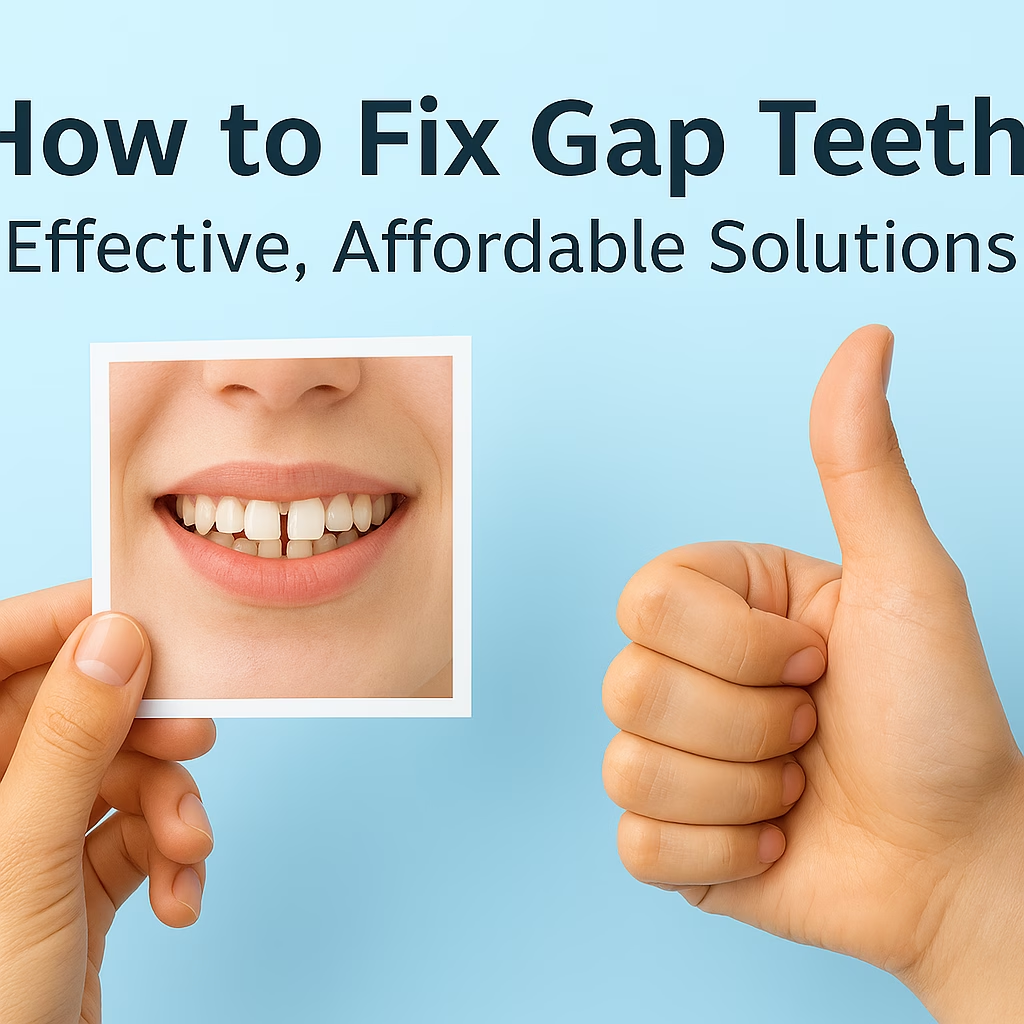
Closing a gap in your teeth might involve orthodontics like clear aligners, cosmetic fixes like bonding or veneers, or sometimes, just tackling an underlying oral health problem. The right path really depends on what’s causing the gap, how big it is, and what you want for your smile. Thankfully, modern dentistry offers smarter, more affordable ways to get you there.
Understanding Why You Have a Gap in Your Teeth
Before we jump into the how, it’s crucial to understand the why. A gap between teeth, clinically known as a diastema, has a root cause, and that cause heavily influences the best way to treat it. Getting to the bottom of it is the first step toward a lasting solution.
If you have a diastema, you’re far from alone. Here in the UK, it affects anywhere from 1.6% to 25.4% of adults, so it’s a very common reason people look for smile improvements. You can find more interesting UK dental trends over at wecovr.com.
Common Causes of Tooth Gaps
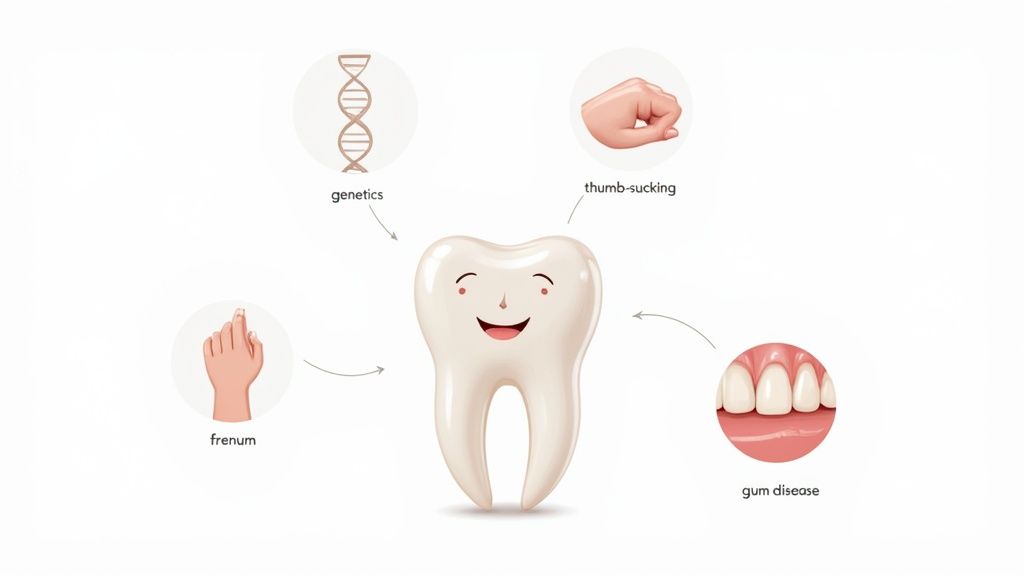
Gaps can appear for all sorts of reasons, and often it’s a mix of your genetics and your life story.
- Genetics and Jaw Size: The simplest explanation is often a mismatch between your jaw size and your tooth size. If your jaw is a bit too large for your teeth, they’ll naturally spread out, leaving spaces between them.
- An Oversized Labial Frenum: That little bit of tissue connecting your upper lip to your gum, right above your two front teeth, is called the labial frenum. If it’s larger than average, it can grow down between the teeth, physically preventing them from closing the gap. This is a classic cause of a diastema between the front two teeth.
- Childhood Habits: Things like persistent thumb-sucking or even the way you swallow can make a difference. An incorrect swallowing reflex, known as a tongue thrust, repeatedly pushes against the front teeth, which can nudge them forward and apart over many years.
- Gum Health: This is a big one. Advanced gum disease, or periodontitis, can damage the bone that holds your teeth in place. As that support structure weakens, teeth can loosen and drift, creating new gaps that weren’t there before.
Getting to the root cause is everything. The treatment for a gap caused by gum disease is completely different from one needed for a gap created by an oversized frenum.
Ultimately, figuring out what’s behind your diastema is the most important piece of the puzzle. It allows you to have a much more meaningful chat with your dentist and ensures the treatment you choose solves the real problem, not just the symptom. It’s the only way to get a healthy, confident smile that truly lasts.
What Are Your Options for Closing a Tooth Gap?
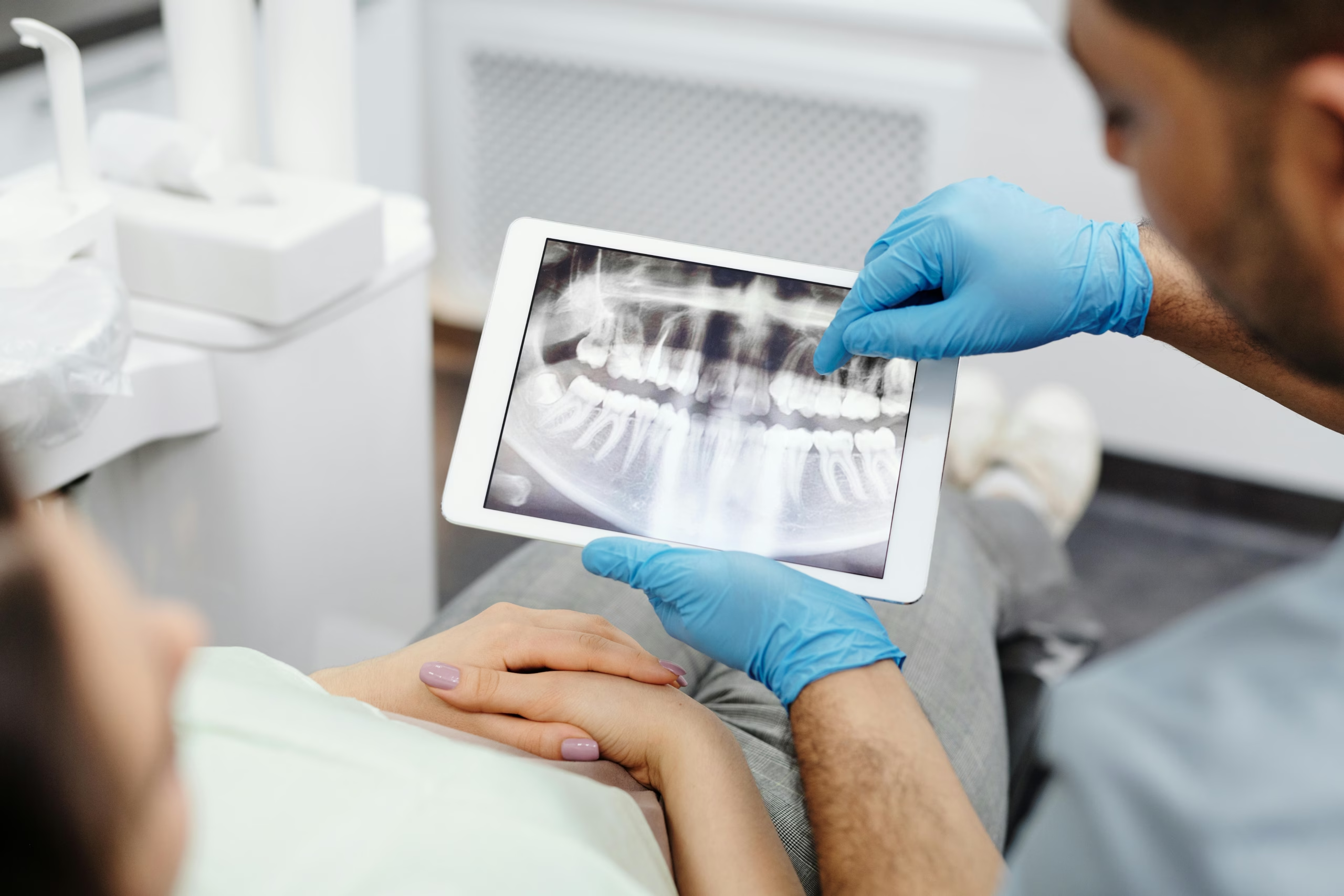
Once you and your dentist have a good handle on what’s causing your diastema, you can start exploring how to fix it. Thankfully, we’ve come a long way in dentistry, and there’s now a whole toolkit of effective solutions to choose from. Let’s walk through the most common ways to close that gap and achieve a smile you feel great about.
Clear Aligners: The Modern, Discreet Choice
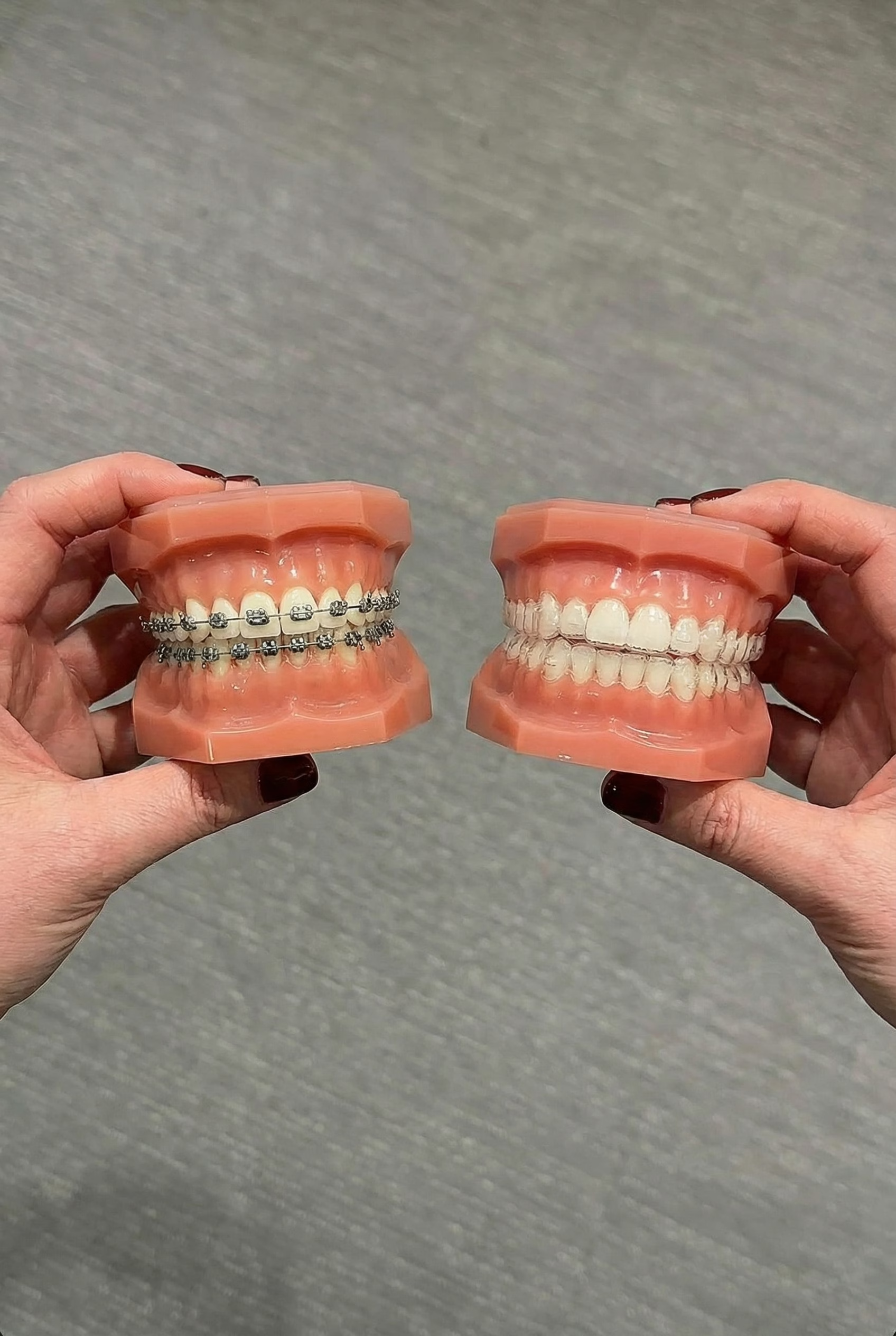
For many people, clear aligners are the go-to solution for closing gaps. These are essentially custom-moulded, transparent plastic trays that fit perfectly over your teeth. By wearing a series of them, you apply gentle, consistent pressure that nudges your teeth into their ideal positions over a matter of months.
The biggest plus? They’re practically invisible. This is a huge deal for adults who want to straighten their teeth without the world knowing. You can go about your professional and social life without feeling self-conscious about a mouth full of metal. It’s a game-changer.
On top of that, Toothfairy has made the whole process incredibly straightforward, using remote monitoring so your progress is tracked by a professional without you needing to constantly visit a clinic. This remote model is a smarter and more affordable way to straighten teeth compared to many big-name brands.
Of course, there’s a catch: it’s all down to you. Clear aligners only work if you wear them. You have to be disciplined and keep them in for 20-22 hours a day, only taking them out to eat, drink (anything but water), and brush your teeth.
- Best for: Mild to moderate gaps where you want a discreet and flexible treatment.
- Pros: Virtually invisible, removable for easy cleaning and eating, and often quicker for straightforward cases.
- Cons: Success depends entirely on your commitment; not always the right tool for very large gaps or complex bite issues.
Traditional Metal Braces: The Tried-and-Tested Powerhouse
There’s a reason traditional braces have been around for so long – they just work. They are the orthodontic gold standard for a reason. By fixing metal brackets to your teeth and connecting them with a wire, an orthodontist gains complete control to close even the most stubborn gaps and sort out complicated bite problems at the same time.
Yes, they are noticeable. But today’s braces are a far cry from the bulky hardware of the past; they’re smaller and much more comfortable. When you have significant spacing or underlying alignment issues that need serious correction, braces are often the most reliable tool for the job.
While incredibly effective, it’s worth remembering that traditional braces are a significant commitment. Treatment can easily take 18-24 months, involving regular in-person visits for adjustments.
Cosmetic Touch-Ups: Dental Bonding & Veneers
What if your gap is small and your teeth are otherwise perfectly straight? In that case, orthodontics might be overkill. Cosmetic dentistry offers a couple of fantastic, much faster alternatives. Toothfairy offers a smarter way to get cosmetic dental work done, helping you connect with dentists for these exact kinds of procedures.
Dental Bonding is a brilliantly simple procedure. A dentist applies a tooth-coloured composite resin directly to the edges of the teeth next to the gap. They then expertly sculpt and polish the material to build the teeth up, effectively closing the space. It’s all done in one appointment, it’s minimally invasive, and it’s one of the most budget-friendly options out there.
Porcelain Veneers are the next level up – a full smile enhancement. These are wafer-thin, custom-crafted shells of porcelain that are permanently bonded to the front of your teeth. Veneers don’t just close gaps; they can completely change the colour, shape, and size of your teeth. It’s a bigger investment, for sure, but the results can be truly transformative and are built to last.
Dental Implants: The Permanent Fix for a Missing Tooth
Sometimes, a gap isn’t from teeth drifting apart, but because a tooth is missing altogether. If that’s your situation, a dental implant is almost always the best long-term solution.
The process involves a surgeon placing a small titanium post into your jawbone to act as an artificial root. Over a few months, your bone fuses with this post, creating a rock-solid foundation. A custom-made crown is then attached, filling the gap with a new tooth that looks, feels, and chews just like the real thing. It’s a brilliant piece of engineering that not only closes the gap but also protects your jawbone and stops neighbouring teeth from shifting out of place.
Comparing Your Options for Fixing Gap Teeth
With several paths to choose from, it can be tricky to know which one is right for you. This table breaks down the main solutions at a glance to help you compare the key factors.
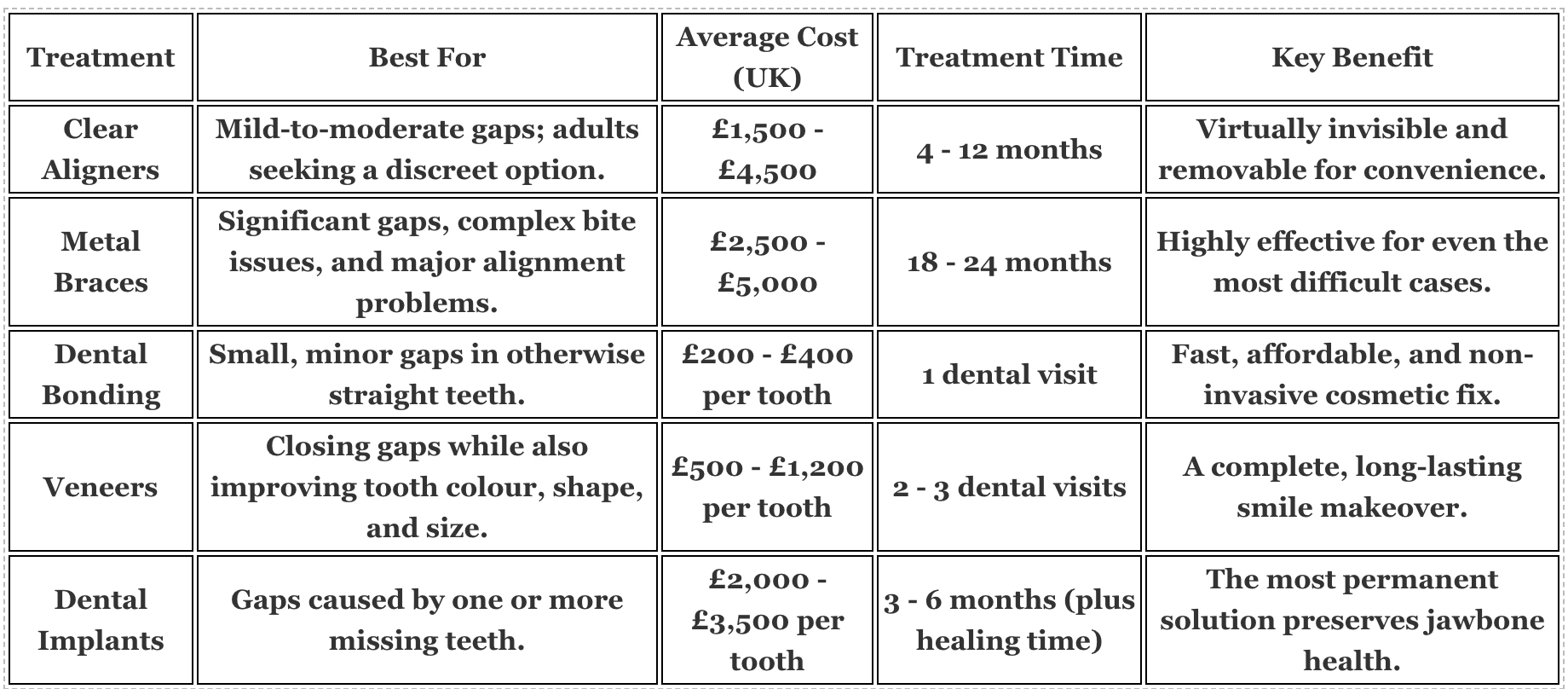
Ultimately, the “best” treatment is the one that aligns with your specific dental needs, your lifestyle, and your budget. Discussing these options with your dentist is the crucial next step to creating a plan that works for you.
How to Choose the Right Solution for Your Smile
With a few different ways to fix a gappy smile, figuring out the best path for you can feel a bit overwhelming. How do you land on a treatment that fits your goals, your budget, and your day-to-day life? It really comes down to asking yourself a few key questions before you dive in.
First, think about what’s really driving your decision. Is the gap something that just bothers you when you see it in photos, or is it genuinely causing issues, like trapping food or affecting your speech? A bit of trapped food might seem like a minor annoyance, but over time it can lead to gum problems. Your answer will help clarify how urgently you need a fix and what kind of solution makes the most sense.
This chart breaks down the decision-making process based on the size of your gap and your budget.
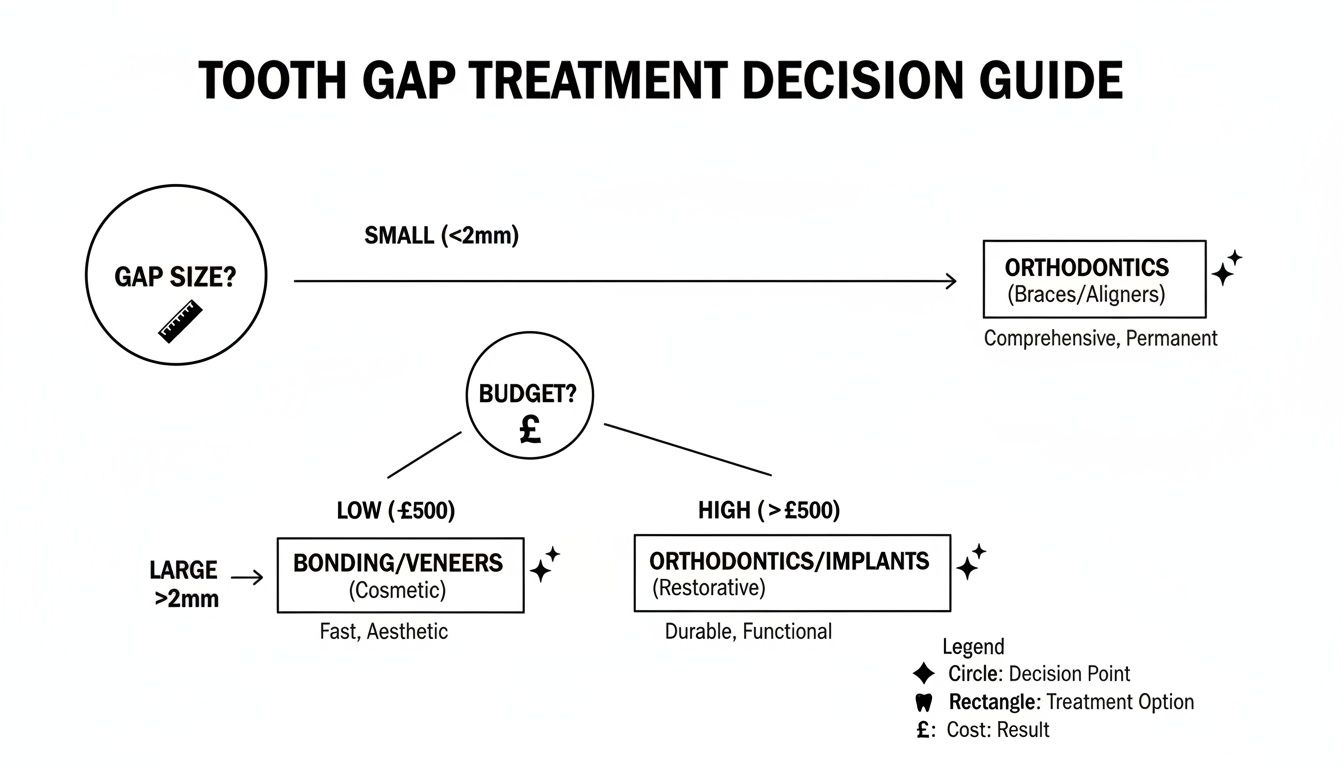
As you can see, smaller gaps often respond well to cosmetic fixes like bonding. For larger spaces, you’ll likely need an orthodontic approach like clear aligners to move the teeth properly and get a result that’s both stable and healthy for the long haul.
Aligning Your Budget and Timeline
Let’s be practical: how much you can invest and how quickly you want to see a change are huge factors. Cosmetic bonding, for example, is a fantastic option for a near-instant and affordable fix for small gaps. On the other hand, orthodontic treatments are a bigger commitment of both time and money, but the trade-off is a comprehensive, lasting correction that addresses the root cause.
It’s worth getting your head around the different treatments out there, including the key differences between popular options like clear aligners versus braces. And when you’re weighing things up, don’t forget that services like Toothfairy offer flexible payment plans. This can make high-quality orthodontic care feel much more manageable by spreading the cost over several months.
Choosing a treatment is always a balance between your dream outcome, what’s realistic for your bank account, and the time you’re prepared to put in. There isn’t one “best” answer—only what’s best for you.
Getting Expert Advice Without the Hassle
Trying to navigate all these choices on your own is tough, and the current state of UK dentistry doesn’t make it any easier. Unfortunately, getting timely dental care has become a real struggle for many. A recent report painted a stark picture, highlighting a massive 5,500 NHS dental vacancies in March 2024. With many of those roles sitting empty for over six months, access to orthodontic treatment has become incredibly limited.
This is exactly where modern teledentistry platforms can offer a much-needed, smarter way forward.
Instead of waiting weeks (or even months) for an in-person consultation, you can get professional, personalised advice right from your own home. Through a remote consultation with a service like Toothfairy, a qualified dentist can take a look at your smile, chat through your goals, and recommend a treatment plan that’s right for you. It’s an approach that cuts out the long waits and puts you firmly in control, giving you the expert guidance you need to make a confident decision. It’s a convenient, modern solution to a very real, nationwide problem.
Your Journey From First Scan to Final Smile
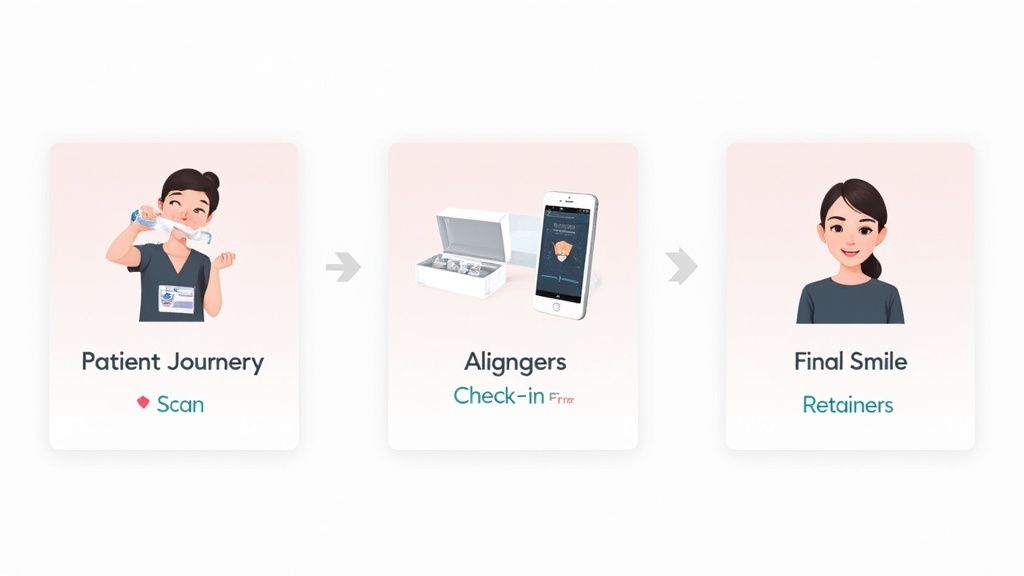
So, you’ve decided it’s time to do something about that gap in your teeth. That’s the first step. But what actually happens next? Let’s pull back the curtain on the entire process, using a modern, convenient approach like Toothfairy to show you how straightforward it can be.
Think of it as a clear path, moving you from that first thought about treatment right through to seeing your final, gap-free smile in the mirror.
The Starting Line: Your Consultation and Scan
It all kicks off with an initial chat. With a service like Toothfairy, this happens entirely online, which saves a huge amount of time and hassle. You’ll answer some questions about what you want to achieve with your smile and provide your dental history. This gives a qualified dentist all the background they need to get started.
Next up, we need to create a perfect map of your teeth. The old way involved biting into trays of messy putty, but thankfully, technology has moved on. Today, it’s a quick and surprisingly comfortable 3D scan. This scan captures every tiny detail of your mouth, building an exact digital model of your teeth. For more complex cases, clinicians often use advanced dental imaging with CBCT scans to get a really precise, three-dimensional view of everything.
This digital model is the blueprint for your personalised treatment plan. You’ll even get to see a 3D simulation showing you exactly how your teeth will move, week by week, to close the gap. It’s a fantastic preview of the final result before you even commit.
Your Treatment Phase: Virtual Check-Ins and Progress
Once you give the green light, your custom-made clear aligners are produced and sent straight to your door. The process is simple: you wear each aligner for a set period, usually one or two weeks, before swapping it for the next one in the series. It’s this sequence that applies gentle, consistent pressure to guide your teeth into their new home.
The real game-changer here is the virtual monitoring. Instead of trekking to a clinic for regular adjustments, a dental professional keeps a close eye on your progress remotely. You’ll share updates and photos through the Toothfairy app, which ensures your treatment is always on the right track, all from the comfort of home. This smarter, more affordable approach makes orthodontic care far more accessible than some aligner brands that demand frequent in-person appointments.
A question I get asked all the time is, “Does it hurt?” It’s not painful, but you’ll probably feel some pressure for the first day or so after putting in a new aligner. Honestly, that’s a good sign—it means the aligner is working and your teeth are moving exactly as they should be.
The Finish Line: Retention for a Lasting Result
When you’ve worn your final set of aligners, the active part of your treatment is complete. The gap is gone, and your teeth are sitting perfectly. But hold on, the journey isn’t quite over. We now come to what is arguably the most critical step of all: retention.
Your teeth have a kind of muscle memory and will naturally want to drift back to where they started. To stop this from happening, you’ll be given a custom-made retainer. Wearing this retainer, particularly at night, is absolutely essential if you want to protect your investment and keep your new smile looking great for life.
Think of it as insurance for your teeth. It locks in all the fantastic results you’ve worked so hard for.
What to Expect: Cost and Treatment Time
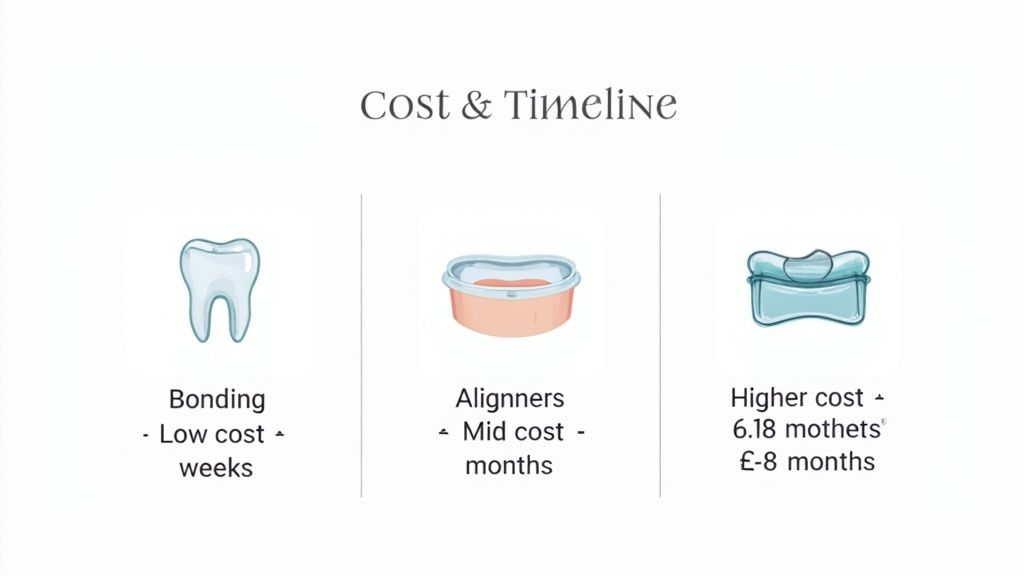
Let’s get straight to it. When considering any dental work, the two big questions on everyone’s mind are always: “How much is this going to cost?” and “How long will it take?” The honest answer is, it really depends on your unique smile and which treatment path you take.
The final cost for closing a gap isn’t a one-size-fits-all figure. It hinges on the size of your diastema and the complexity of the work needed. For instance, closing a tiny gap with a bit of cosmetic bonding is going to be far more budget-friendly than a larger space that requires a full orthodontic treatment plan to align everything perfectly.
It’s important to remember that you’re not just paying for a product. You’re investing in clinical expertise, custom-made materials, and the professional oversight that ensures your results are not only beautiful but also safe and long-lasting.
A Quick Look at Treatment Timelines
The time you’ll need to commit can vary just as much as the price. If you’re looking for a quick fix, cosmetic treatments are your best bet.
- Dental Bonding: This is the speediest option by a long shot. It’s often done and dusted in a single visit to the dentist.
- Porcelain Veneers: You can expect this to take two or three appointments spread over a few weeks.
- Clear Aligners: This is a longer journey. Simpler cases can see results in as little as 4-6 months, but more complex alignment issues could take a year or even longer.
- Traditional Braces: These typically involve the longest commitment, often requiring 18 to 24 months of wear.
Making a Great Smile More Accessible
Looking at those numbers might feel a bit intimidating, but achieving the smile you want is more realistic than you might think. Many modern dental providers recognise the need for financial flexibility and have adapted their services to help.
This is where a provider like Toothfairy comes in. By embracing technology like remote monitoring, they can streamline the process, often making professional orthodontic care more affordable than treatments that demand frequent, time-consuming clinic visits.
What’s more, Toothfairy offers payment plans that let you spread the cost over manageable monthly instalments. This means you can get started on your journey to a gap-free smile right away without the pressure of paying the full sum upfront, putting high-quality, expert-led care comfortably within your budget.
Your Questions Answered: Fixing Gap Teeth
Thinking about closing a gap in your smile is a big decision, and it’s completely normal to have a lot of questions buzzing around. Let’s tackle some of the most common ones I hear from patients, so you can feel confident about taking the next step.
Can a Tooth Gap Come Back After Treatment?
This is a fantastic question, and the honest answer is yes, it can. Teeth have a sort of ‘memory’ and a natural tendency to drift back to where they started. That’s precisely why the retention phase after any kind of teeth straightening is non-negotiable.
Once your treatment with clear aligners or braces is finished, you’ll be given a custom-made retainer. Following your dentist’s instructions for wearing it is the single most important thing you can do. Think of it as insurance for your new smile—it locks in the results and makes sure that gap stays closed for good.
Is Closing a Tooth Gap a Painful Process?
Pain is a big concern for many, but you might be surprised. The level of discomfort really depends on the path you take. With modern clear aligners, for example, most people just feel some mild pressure for the first day or two after switching to a new set. It’s more of an awareness that something is happening than actual pain.
That gentle pressure is a good sign! It means the aligner is doing its job and guiding your teeth into place. It’s temporary and a clear signal that you’re on track.
Cosmetic treatments like dental bonding, on the other hand, are typically painless and can be done in one straightforward appointment. No matter the option, your dentist will always give you a heads-up on what to expect, so you’re never caught off guard.
Are DIY Gap Bands From the Internet Safe?
In a word: no. Please, stay far away from them. As dental professionals, we can’t stress this enough. Using unsupervised elastic bands or other online kits to move your teeth is incredibly risky. They apply forces that are completely uncontrolled, which can cause a cascade of serious, and often permanent, problems.
I’ve seen the damage these can do firsthand. We’re talking about:
- Severe gum infections and receding gum lines
- Damage to the very roots of your teeth
- Permanent, negative changes to your bite
- Worst of all, it can even lead to tooth loss
Properly moving teeth requires careful planning and supervision by a qualified professional. It’s the foundational principle behind a safe and trusted service like Toothfairy.
Will Fixing My Gap Affect How I Talk?
You might notice a slight change in your speech right at the beginning, maybe a small lisp when you first get aligners or veneers. This is simply your tongue getting acquainted with the new hardware in your mouth. For the vast majority of people, this sorts itself out within a week or so as your mouth adapts. It’s a very temporary phase.
Ready to see how you can close your gap with a smarter, more convenient approach? With Toothfairy, your journey to a straighter smile starts right from your living room. You get a professional assessment and a personalised plan, all without the hassle of long waits for appointments.
Learn more and get started with Toothfairy today!
Last updated on December 23, 2025

Toothfairy Care Team
Toothfairy, is the world's smartest dental app, that connects patients to a dentist for a range of issues, from emergencies, cosmetics, prescriptions to virtual exams.
Toothfairy Care Team
Toothfairy, is the world's smartest dental app, that connects patients to a dentist for a range of issues, from emergencies, cosmetics, prescriptions to virtual exams.