Your Guide to Instant Tooth Pain Relief and Modern Dental Care
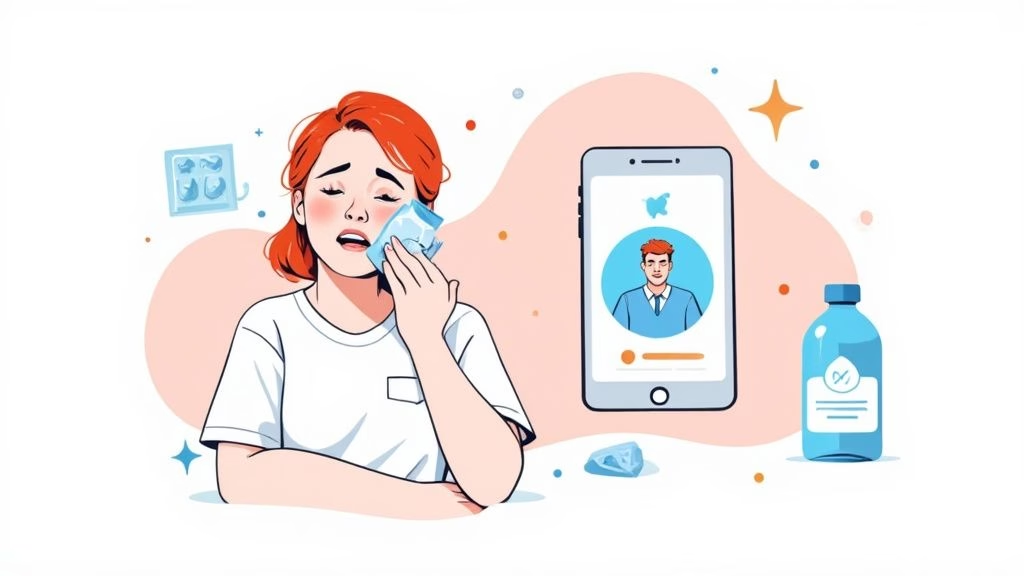
When that sharp, throbbing tooth pain hits, the world stops. All you can think about is finding relief, and fast. The best and safest thing you can do right away is to start with a simple saltwater rinse and then apply a cold compress to your cheek. These two actions alone can offer surprising comfort and give you a moment to breathe and plan your next move.
Finding Immediate Relief for Severe Tooth Pain at Home
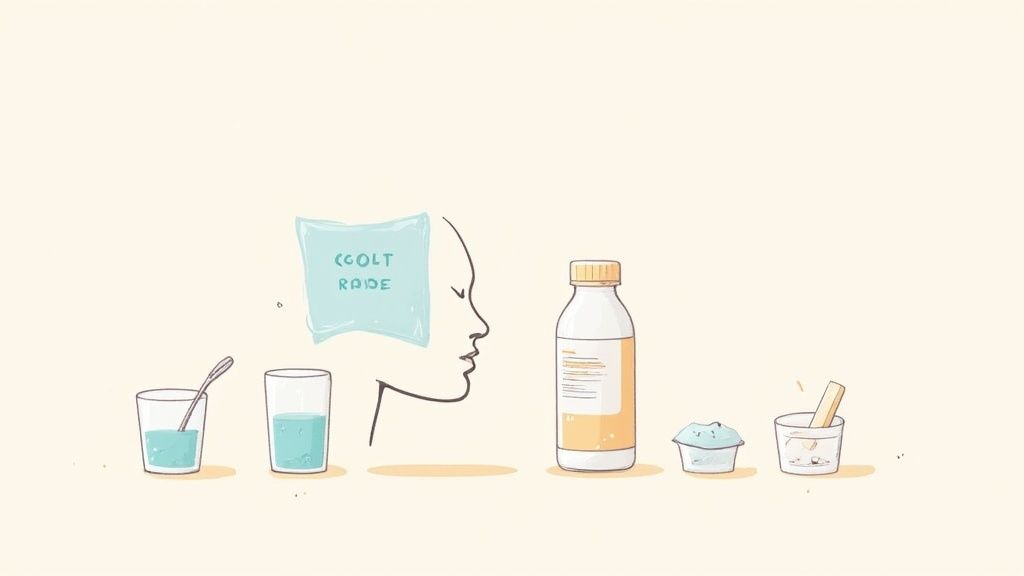
A sudden toothache can completely derail your day, making it impossible to focus, eat, or even think straight. While a dentist is the only one who can fix the root cause, there are several effective things you can do at home to manage the pain until you get professional help.
The aim here is simple: reduce the swelling and interrupt the pain signals your tooth is sending to your brain. This isn't a cure for a cavity or abscess, but it's about making the situation manageable.
Your First Line of Defence
There’s a good reason a saltwater rinse is a time-tested remedy. When you mix half a teaspoon of salt into a glass of warm water, you create a natural antiseptic. Gently swishing it around your mouth for about 30 seconds does a few key things:
- Cleans the area: It helps flush out any tiny food particles that could be wedged around the tooth, causing extra irritation.
- Reduces bacteria: Salt creates an environment that makes it tough for bacteria to thrive, helping to calm down inflammation.
- Soothes sore tissues: The warm, salty water can be incredibly calming for the angry, swollen gums around the painful tooth.
This is a safe and surprisingly effective first step. You can repeat it a few times throughout the day to keep the area clean and take the edge off the pain.
Numbing the Pain with a Cold Compress
Right after you rinse, grab a cold pack. Applying it to the outside of your cheek over the painful area for 15-20 minutes at a time can be a game-changer. The cold works by constricting the blood vessels, which immediately helps to bring down swelling.
Even better, it numbs the local nerve endings. This effectively dulls those sharp pain signals before they can even reach your brain, providing a powerful numbing effect without any medication.
Crucial Safety Tip: Never put ice or a frozen pack directly onto your skin, as you can give yourself an ice burn. Always wrap it in a tea towel or cloth, and make sure to give your skin a rest for at least 15 minutes between applications.
For a clearer picture, here’s a quick breakdown of what you can do at home.
Quick Guide to At-Home Tooth Pain Remedies
This table summarises the most effective at-home methods you can use to get some relief while you wait for a dental appointment.
| Remedy | How It Works | Instructions and Safety Precautions |
|---|---|---|
| Warm Saltwater Rinse | Acts as a natural antiseptic, cleaning the area and reducing inflammation. | Mix ½ teaspoon of salt in a glass of warm water. Swish for 30 seconds, then spit. Avoid swallowing. |
| Cold Compress | Narrows blood vessels to reduce swelling and numbs nerve endings to dull pain. | Wrap an ice pack in a towel. Apply to the cheek for 15-20 minutes at a time. Never apply ice directly to skin or the tooth. |
| OTC Pain Relief | Anti-inflammatories (like ibuprofen) reduce swelling and block pain signals. | Always follow the dosage instructions on the package. Never place aspirin directly on the tooth or gum. |
These steps are designed to make you more comfortable, but remember they are not a substitute for seeing a professional.
Choosing the Right Over-the-Counter Painkiller
If the pain is still breaking through, an over-the-counter (OTC) anti-inflammatory like ibuprofen is often your best bet. Ibuprofen is particularly good for dental pain because it actively reduces the inflammation that's causing the pressure and agony. Paracetamol is another option that can help with pain, but it won’t tackle the swelling.
There's a dangerous old wives' tale about crushing an aspirin and putting it directly on the tooth. Please, never do this. Aspirin is an acid, and placing it on your gum will cause a nasty chemical burn, adding a new, painful problem to the one you already have. Always swallow pain relief medication with water as directed.
For those interested in other approaches while waiting for professional help, exploring natural remedies to relieve toothache pain can offer some additional, temporary relief.
What Your Tooth Pain is Trying to Tell You
Not all toothaches are created equal. The sensation you're feeling—that sharp zing or that deep, dull throb—is actually a clue to what’s going on inside your mouth. Learning to read these signals is the first step in figuring out how urgently you need help.
Think of it this way: your tooth is sending out a distress call. A quick, sharp pain is like a warning flare, while a constant, throbbing ache is more like a full-blown alarm bell. Each one points to a different problem, and some are far more serious than others.
The Sharp, Shooting Pain
Ever get that sudden jolt of pain from a hot drink or a spoonful of ice cream, only for it to disappear a second later? That's a classic sign of tooth sensitivity. It’s your tooth’s way of telling you that its protective outer layer, the enamel, has worn thin.
This often happens when the sensitive inner part of the tooth, called dentin, gets exposed. Common culprits include:
- A small, new cavity just starting to breach the enamel.
- Receding gums leaving the root of your tooth exposed.
- A tiny, hairline crack that you can’t even see.
While it might not feel like a five-alarm fire, this kind of pain is a definite warning sign. It means your tooth’s defences are compromised. If you ignore it, you’re giving a small problem like minor decay the green light to turn into a much bigger, more painful issue.
The Deep, Throbbing Ache
Now, a dull, persistent ache that just won't quit is a different story entirely. If you're dealing with a deep, throbbing sensation—the kind that seems to have its own heartbeat—it often points to an infection deep inside the tooth's pulp, where the nerves and blood vessels live.
You might notice this pain gets significantly worse when you lie down. That's because the change in blood flow increases pressure on the already inflamed, infected tissue. This is a tell-tale sign of a dental abscess, which is a pocket of pus forming at the root of the tooth.
An abscess is a serious infection that will not clear up on its own. It needs to be seen by a dentist immediately to drain the infection and stop it from spreading to your jaw, sinuses, or even into your bloodstream.
This isn't just a matter of discomfort; it’s your body fighting a battle it can't win alone. Trying to tough it out can lead to severe health complications. Getting instant tooth pain relief in this situation means getting a professional diagnosis as quickly as possible. Knowing the difference helps you explain your symptoms clearly to a dentist, leading to a faster, more accurate treatment plan.
Knowing When Tooth Pain Is a True Dental Emergency
While home remedies are great for taking the edge off, it's vital to know when a toothache has crossed the line from a nuisance into a genuine dental emergency. Some symptoms are clear red flags that need a dentist’s eyes on them immediately, not just another saltwater rinse.
Ignoring these warnings isn't just about gritting your teeth through the pain. A seemingly minor tooth infection can escalate frighteningly quickly, spreading to your jaw, your sinuses, or even becoming a systemic infection that puts your overall health at serious risk. Let’s walk through how to tell the difference between simple discomfort and real danger.
Critical Signs You Can't Afford to Ignore
If you experience any of the following symptoms along with your toothache, it’s time to stop what you're doing and seek professional help right away. These aren’t things that will get better on their own; they’re signs of a problem that needs urgent intervention.
- Severe, persistent pain: The kind of throbbing ache that over-the-counter painkillers just won’t touch.
- Facial swelling: You can see noticeable swelling on your cheek, jaw, or even around your eye.
- Fever: The toothache comes with a high temperature, chills, or you’re breaking out in sweats. This is a classic sign your body is fighting a spreading infection.
- Difficulty swallowing or breathing: This is a top-tier emergency. Swelling has likely spread to your throat or neck, and it needs immediate medical attention.
- A nasty taste or smell: A persistent foul taste or smell in your mouth often points to a draining abscess or severe infection.
This chart can help you quickly triage the type of pain you're feeling and what it might mean for you.
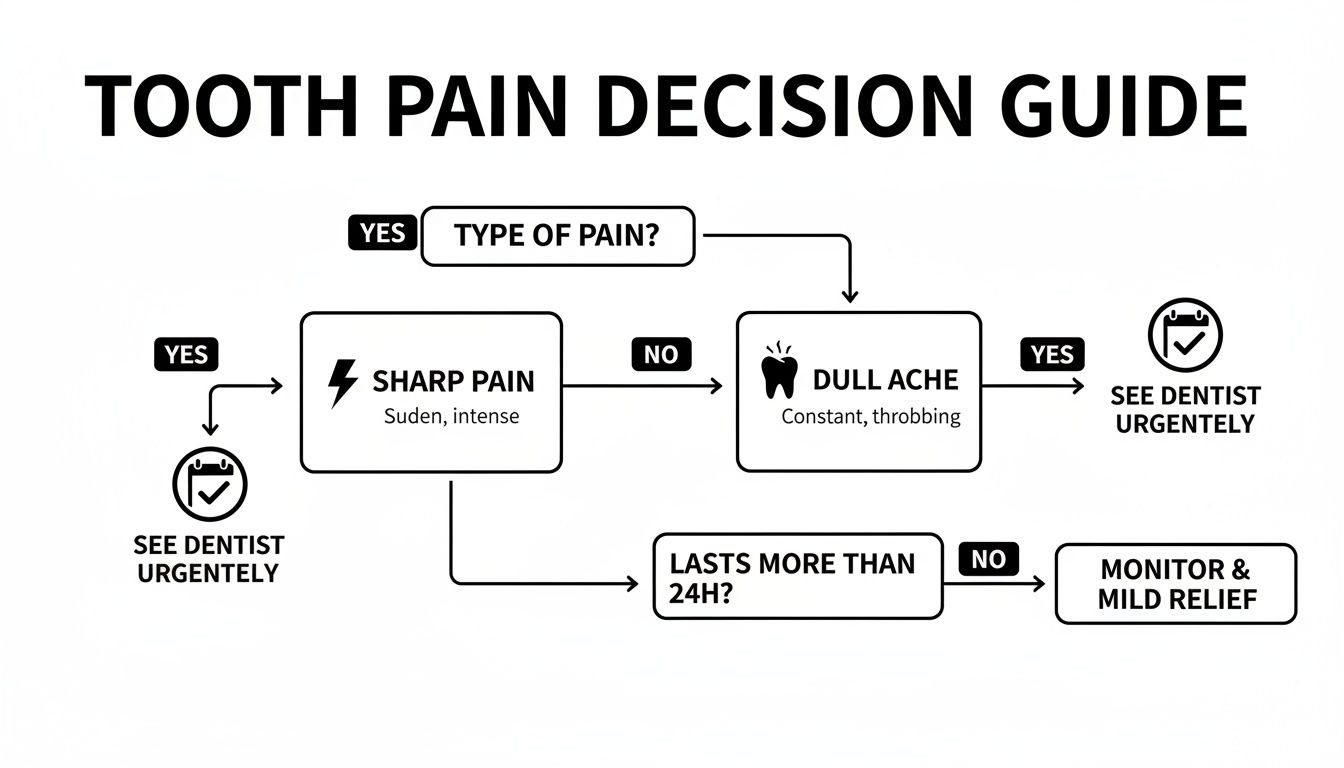
As the infographic shows, while a sharp, fleeting pain is a definite warning shot, it's often the persistent, dull ache that signals a deeper problem needing a dentist's evaluation.
The Real Cost of 'Waiting It Out'
Putting off professional care for a dental emergency does far more than just prolong your agony. Here in the UK, the knock-on effects are huge. A recent survey found that nearly 28% of us have had to take time off work because of dental problems, adding up to a staggering 23 million sick days every single year. You can read more about the impact of dental pain on work attendance at simplyhealth.co.uk.
This data really drives home the urgent need for effective instant tooth pain relief—not just for comfort, but to get people back on their feet and functioning without delay.
When you're in severe pain, waiting is not an option. Immediate access to a professional for diagnosis and guidance can prevent a small problem from becoming a major health crisis.
If you’re on the fence, it’s always better to play it safe. Services like Toothfairy's 24/7 video consultations are a game-changer here. You can get a professional opinion from a UK-qualified dentist, often within minutes, without leaving your home. It’s a fast, affordable way to get an immediate assessment and a clear plan, which could include a prescription for antibiotics or stronger painkillers sent straight to your local pharmacy.
Finding a Dentist in the UK Can Feel Impossible
You're in real pain and you know you need a dentist, but getting an appointment feels like you’ve hit a brick wall. It’s not just you. This is the frustrating reality for millions of people across the UK searching for instant tooth pain relief, only to be told there's an endless waiting list.
The problem is especially bad if you’re trying to get seen on the NHS. Many parts of the country have become ‘dental deserts’, where finding a local practice accepting new NHS patients is a near-impossible task. When you’re in agony, hearing that the next available slot is months away just doesn't cut it.
Trying to Get Help in a Broken System
This crisis in dental access isn't improving. In fact, it's getting worse. Projections show that by 2025, over 40% of UK adults—that's more than 23 million people—will struggle to get the dental care they need. For many, that could mean waiting over nine months for an appointment, which is a dangerously long time when something is seriously wrong. You can read more about the UK dental crisis on wecovr.com.
This desperate situation forces people to look for other options. So, what can you actually do when your local dentists simply aren't taking anyone new?
- Try the NHS 111 Service: If the pain is severe and you can't get through to a practice, calling 111 is the official next step. They can talk through your symptoms and, if your situation is urgent enough, refer you to an urgent dental care centre.
- Head to an Urgent Dental Care Centre: These hubs are set up for emergency cases referred by NHS 111. Just be prepared for a long wait, as they serve a huge area and have to prioritise the most critical patients first.
The struggle to find timely dental care really highlights why we need modern, accessible alternatives. When the traditional system is overloaded, new solutions become a lifeline, not just a convenience.
Smarter Alternatives are Stepping In
This huge challenge is exactly why new ways of delivering dental care are becoming so important. You just can't rely on an overstretched system to guarantee you'll get relief anymore. This is where solutions like Toothfairy come in, offering a direct and immediate alternative. You can connect with a qualified UK dentist on a video call, often within minutes.
This isn't just about a smarter, more affordable way to straighten teeth; it's about providing a vital safety net for dental emergencies, right when you need it the most.
Getting Professional Dental Help in Minutes
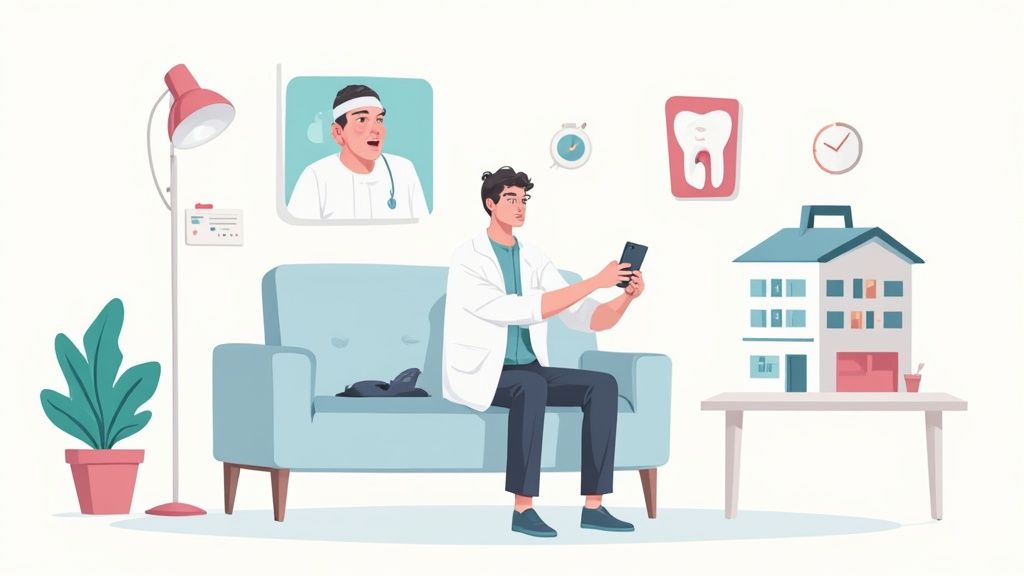
When you're in agony, the last thing you want to hear is that you're on a waiting list. The stress of waiting for a callback from NHS 111 or hoping a local clinic can squeeze you in only makes the pain feel worse. This is where a faster, smarter approach to dental emergencies isn't just nice to have—it's essential.
This is exactly the gap that modern care is designed to fill. A service like Toothfairy offers a direct line to professional help, providing a vital lifeline when traditional routes are out of reach. It’s an immediate, affordable way to get expert guidance without all the uncertainty and waiting.
Connect with a UK Dentist from Home
Think about it: instead of travelling across town to sit in a waiting room, you could be speaking with a qualified UK dentist on a video call, often within minutes of realising you need help. That’s the real power of this approach. From the comfort of your own home, you can use your phone to show a dentist exactly what’s going on.
And this isn't just a casual chat; it's a proper professional consultation. The dentist can perform a visual assessment of any swelling, discolouration, or damage. They’ll ask targeted questions about your symptoms to build a clear picture and provide a probable diagnosis on the spot. This immediate access to expert advice is a huge first step toward getting instant tooth pain relief.
Getting an Immediate Action Plan
Once the dentist has a good idea of what’s causing your pain, they can create a clear, professional action plan just for you. This isn’t generic advice; it’s tailored guidance that could include:
- Urgent prescription medication: If an infection like a dental abscess is suspected, the dentist can send a prescription for antibiotics directly to your local pharmacy. They can also prescribe stronger painkillers than you can buy over the counter.
- Specialised home care advice: You’ll get personalised instructions on how to manage the pain and stop the problem from getting worse while you arrange for any necessary follow-up treatment.
- A clear referral for in-person treatment: The dentist will explain what kind of treatment you likely need—whether it’s a filling, root canal, or extraction—so you’re fully informed when you seek further care.
Getting a prescription sent to your pharmacy in minutes can be the difference between a sleepless night in agony and getting a serious infection under control right away. It puts you back in control of a situation that can feel incredibly powerless.
This immediate, direct support offers a stark contrast to the traditional waiting game. Let’s break down the real-world differences.
Comparing Emergency Dental Care Options
When you're dealing with a dental emergency, every minute counts. The path you choose can have a huge impact on how quickly you find relief. Here's a straightforward comparison between the old-school route and a modern video consultation.
| Feature | Traditional NHS or Private Clinic | Toothfairy Video Consultation |
|---|---|---|
| Wait Time | Hours or even days; long waiting lists are common. | Usually just a few minutes. |
| Accessibility | Limited by clinic hours and how many patients they can see. | 24/7 access from anywhere in the UK. |
| Initial Step | Phone calls, waiting for callbacks, travel to a clinic. | A quick and simple video call from your phone. |
| Immediate Outcome | Often involves waiting in a queue just to be assessed. | Get a probable diagnosis and an action plan in one call. |
| Prescriptions | Requires an in-person visit to obtain. | Sent directly to your local pharmacy if needed. |
As you can see, the differences are significant. A service like Toothfairy offers more than just convenience.
For many people struggling to get seen, it’s a critical lifeline that ensures pain is managed, infections are treated, and professional dental advice is always just a few taps away. It's a smarter, more affordable way to handle dental emergencies and even explore cosmetic options like clear aligners, bypassing the high costs often associated with a specific aligner brand.
Your Questions About Tooth Pain, Answered
When a tooth suddenly starts screaming at you, your mind is probably racing with questions. It's completely normal. Let’s walk through some of the most common concerns I hear from patients, so you can handle the situation with a bit more confidence and find some much-needed relief.
Knowing what to do if the pain spikes, or how to get through the next few hours while you wait for help, can make all the difference. Here are the real-world answers you need when you're looking for instant tooth pain relief.
"My Toothache Is So Much Worse at Night. Why?"
This is incredibly common, and you're not imagining it. Many people find the throbbing gets unbearable as soon as their head hits the pillow.
The reason is simple physics. When you lie down, more blood rushes to your head, increasing the pressure inside the already inflamed and highly sensitive pulp of your tooth. That pressure pushes on the nerve, and the pain ramps up. It's often a tell-tale sign of an underlying issue like a brewing infection or a dental abscess.
If you find yourself in this situation, here’s what to do right now:
- Prop your head up. Don't lie flat. Grab an extra pillow or two to elevate your head above the rest of your body. This simple change can reduce some of that throbbing pressure.
- Reach for a cold compress. Wrap a bag of frozen peas or an ice pack in a tea towel and hold it against your cheek for 15-20 minutes at a time. It helps numb the area and can take the edge off the inflammation just enough to help you drift off.
- Be careful with late-night snacks. Avoid eating or drinking anything just before bed, especially things that are sugary, very hot, or ice-cold, as they can easily trigger a fresh wave of pain.
If that deep, throbbing ache still won't quit despite trying these tips, that’s your tooth telling you it needs professional help—and soon.
"Can I Just Keep Taking Painkillers?"
Over-the-counter painkillers like ibuprofen are fantastic for getting you through a rough patch, but they are strictly a temporary fix. They are designed to manage the symptoms—the pain and swelling—but they do absolutely nothing to solve the root cause of the problem, whether that's decay, a crack, or a nasty infection.
Think of it this way: relying on painkillers for more than a day or two is like putting a plaster on a wound that needs stitches. It hides the problem, but underneath, things are likely getting worse.
Plus, using any medication for too long without a dentist's or doctor's say-so can bring its own set of problems and side effects. The real goal must always be to find out why it hurts and get it treated properly.
"How Do I Cope While Waiting for My Dental Appointment?"
The wait for an appointment can feel like an eternity when you're in agony. Unfortunately, this is a reality for many. NHS statistics from mid-2023 showed that only around 40% of adults in England had seen an NHS dentist in the past two years. With nearly 19% of adults dealing with urgent problems like advanced decay, it's clear that getting timely care is a massive challenge. You can read more about these UK dental access issues at smilelondon.co.uk.
So, what can you do to keep comfortable? Stick with the safe, simple home remedies we've already covered:
- Eat soft foods like soup, yoghurt, or scrambled eggs to avoid putting pressure on the sore tooth.
- Gently rinse your mouth with warm salt water after meals to keep the area clean and soothe the gums.
- Take over-the-counter anti-inflammatories, but be sure to follow the dosage instructions on the packet.
This is where a service like Toothfairy becomes a lifeline. Instead of just waiting and hoping for the best, you can have a video consultation with a qualified dentist almost immediately. They can see what’s going on, give you professional advice, and if you need it, send a prescription for stronger painkillers or antibiotics straight to your local pharmacy. It brilliantly bridges that awful gap between the pain starting and you finally getting into a treatment chair.
Don't let tooth pain dictate your life. With Toothfairy, you can connect with a qualified UK dentist 24/7 via video call for an immediate diagnosis, professional advice, and even prescriptions sent straight to your pharmacy. Get the fast, affordable, and expert care you need right now at https://www.toothfairyapp.co.uk.
Last updated on December 11, 2025

Dr. Deepak
ToothFairy Care Team.
Dr. Deepak
ToothFairy Care Team.